
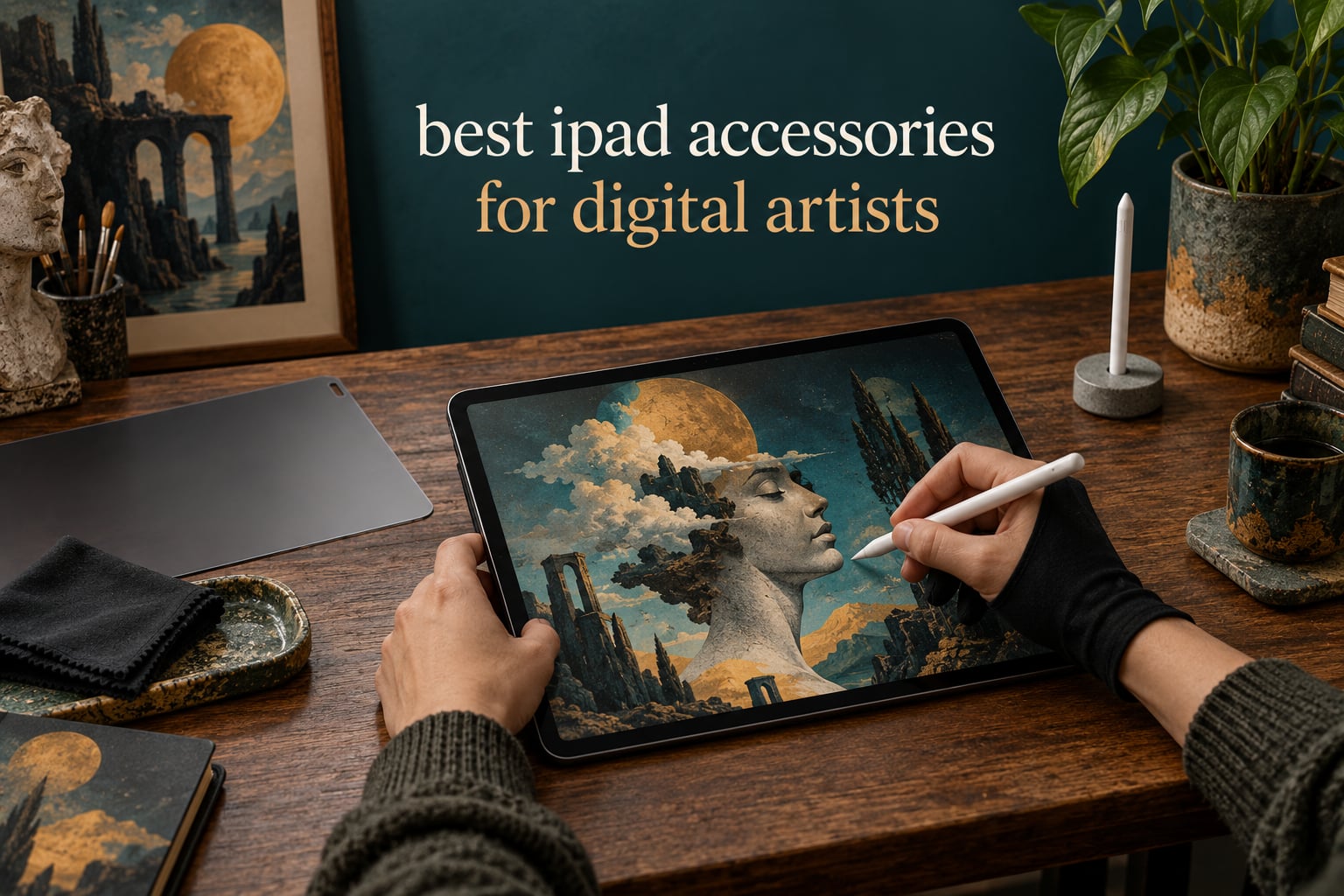
I drew for three hours on a bare iPad last spring and finished with a cramped ring finger, two accidental brush dots, and the specific frustration of a Pencil gliding across frictionless glass while the screen tipped toward my knees. Nothing was wrong with the tablet. It simply was not built for long sessions, and that gap between a capable device and a usable drawing instrument is where every accessory here comes from.
That is the frame for the best iPad accessories for digital artists. Each item below solves one physical flaw of drawing on a tablet: glass with no friction, an unstable angle, a bare hand resting on a screen, tool switching that pulls you out of the canvas, and a Pencil that vanishes into a bag. I use all twelve across desk sessions, couch sketching and travel.
I paint in Procreate, so assume the software is settled. What separates a frustrating session from a four-hour one is the surface under the tip, the angle of the screen, and whether your hand is still comfortable at minute ninety.
Table of Contents
Top 3 iPad Accessories for Digital Artists (October 2026)

Apple Pencil Pro
- Pressure and tilt sensitivity
- Squeeze and barrel roll haptics
- Hover preview
- Magnetic charging

OMOTON PAPERSENSE 2 Pack
- 0.09mm matte PET film
- Paper-like friction
- 9H scratch resistance
- Two-pack

JAMJAKE Stylus Pen
- 1.5mm replaceable tip
- Palm rejection
- 15 hour battery
- 2018-2026 iPad support
Three picks do most of the work for most people. The Apple Pencil Pro is the reference for pressure and tilt response, the OMOTON PAPERSENSE pair is the thinnest paper-feel film here, and the JAMJAKE is the honest answer when you only need tilt sensitivity and palm rejection.
All 12 Picks at a Glance in 2026
| Product | Specs | Action |
|---|---|---|
| Apple Pencil Pro |
|
Check Latest Price |
| JAMJAKE Stylus Pen |
|
Check Latest Price |
 ESR Geo Digital iPad Pencil ESR Geo Digital iPad Pencil |
|
Check Latest Price |
 Artist Drawing Glove Artist Drawing Glove |
|
Check Latest Price |
 MOBDIK Paperfeel Protector MOBDIK Paperfeel Protector |
|
Check Latest Price |
| OMOTON PAPERSENSE 2 Pack |
|
Check Latest Price |
 ELETIUO Bamboo Tablet Stand ELETIUO Bamboo Tablet Stand |
|
Check Latest Price |
 tounee Aluminum Tablet Stand tounee Aluminum Tablet Stand |
|
Check Latest Price |
 HUION Keydial Mini Keypad HUION Keydial Mini Keypad |
|
Check Latest Price |
 BENFEI 9-in-1 Hub Stand BENFEI 9-in-1 Hub Stand |
|
Check Latest Price |
 NXPGKEA 7-in-1 USB C Hub NXPGKEA 7-in-1 USB C Hub |
|
Check Latest Price |
 OMOTON Bluetooth Keyboard OMOTON Bluetooth Keyboard |
|
Check Latest Price |
1. Apple Pencil Pro – the stylus that fixes tool switching
Apple Pencil Pro: Latest Model – Device Compatibility Check Required
Pressure and tilt sensitivity
Squeeze and barrel roll haptics
Hover preview
Magnetic charging
Pros
- Pixel-perfect pressure and tilt response
- Haptic squeeze cuts menu trips
- Low latency strokes
- Magnetic pairing and charging
Cons
- Only recent iPad Pro and Air models
- No case or spare tips in the box
- Hover and squeeze need the newest hardware
This is the only stylus here where pressure drives line weight, which is why it stays the anchor of my kit. The squeeze gesture is what I notice most during long painting sessions, because it changes brush without lifting my hand or breaking eye contact with the canvas.
It weighs 0.68 ounces and the flat-sided body does not roll off a tilted iPad the way a rounder third-party barrel does. Reviewers consistently rate the pressure and tilt response as its strongest trait.
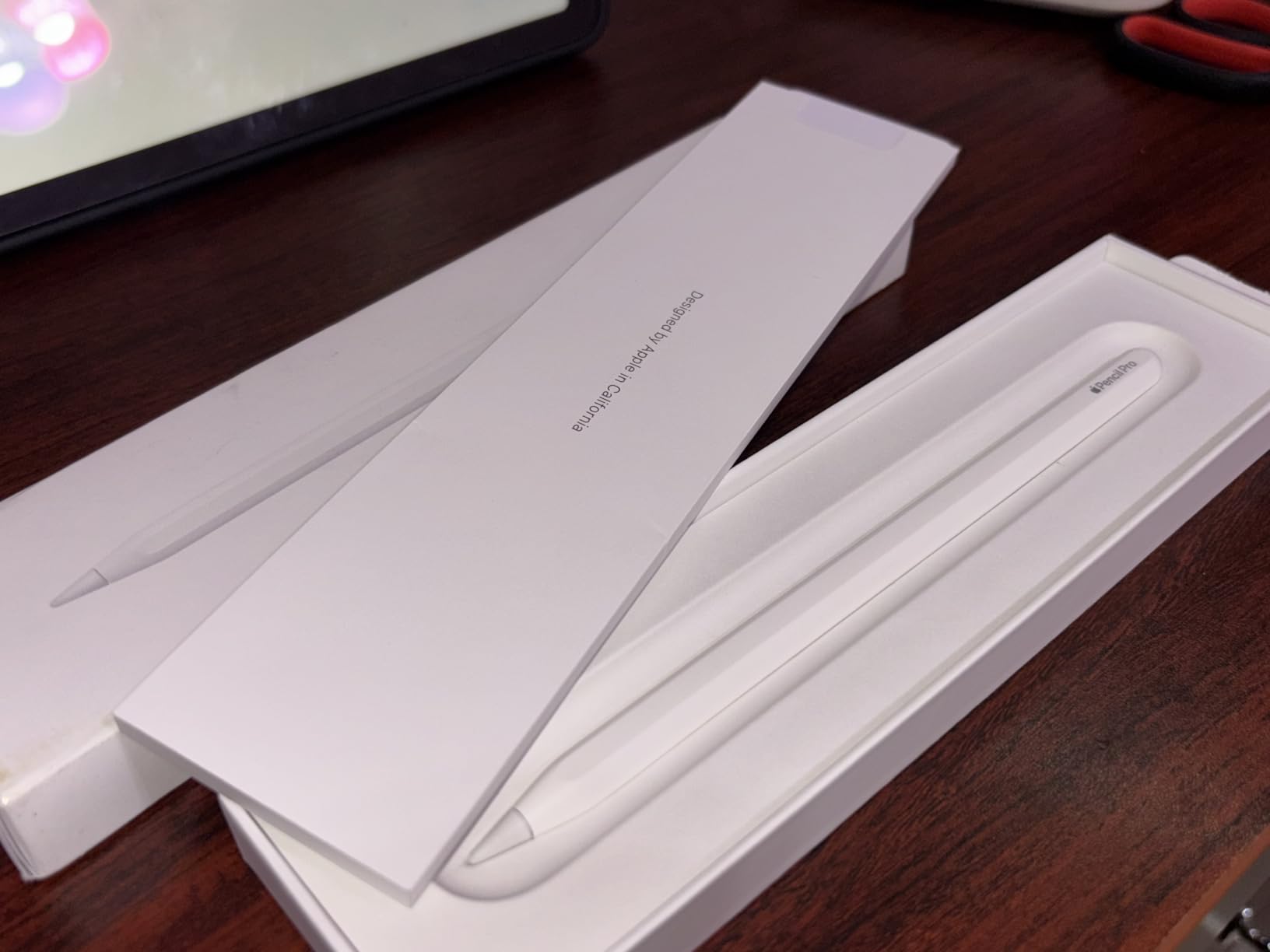
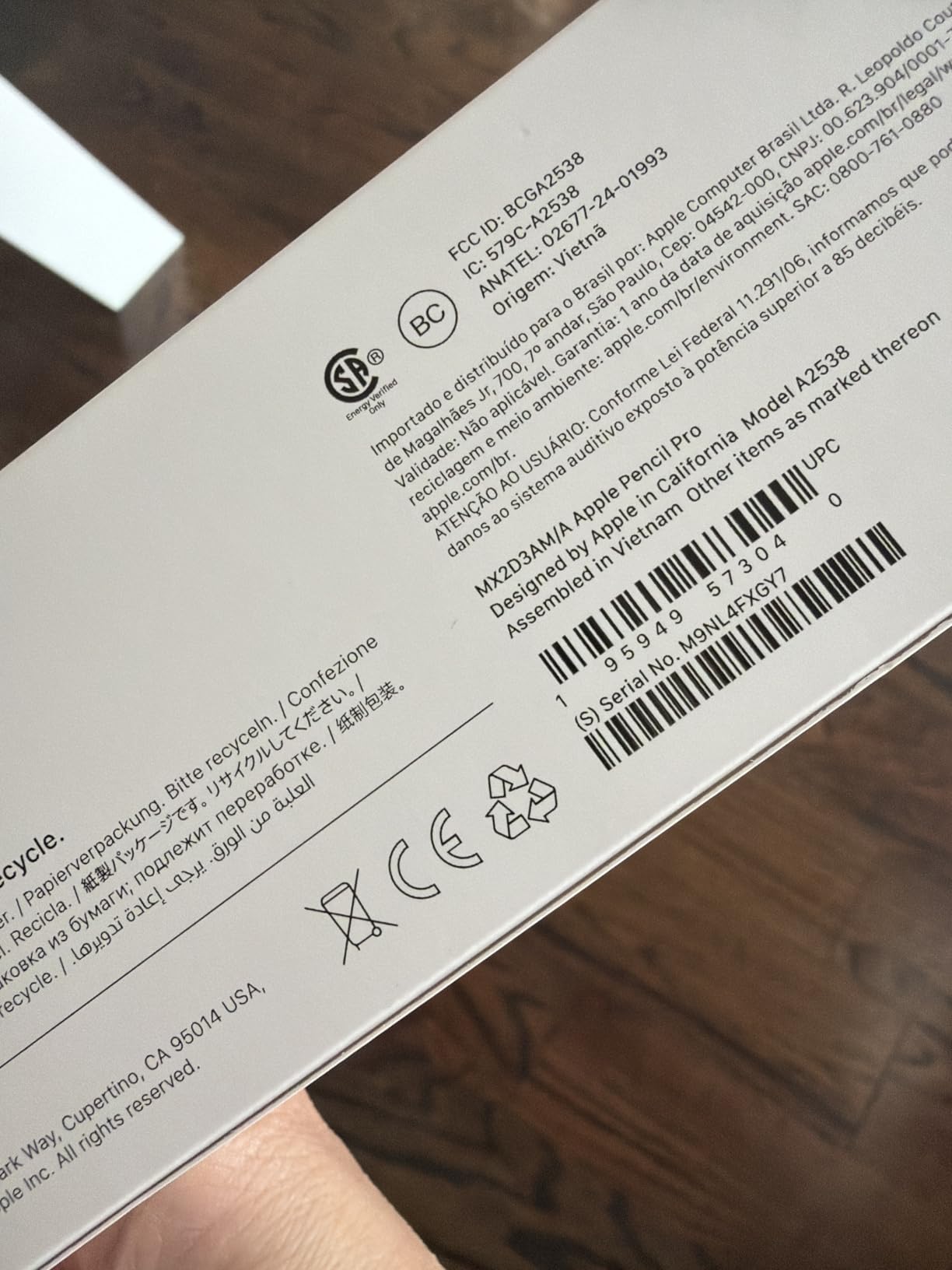
Compatibility is a real catch. It lists iPad Pro 11 and 13 inch on M4 and M5, iPad Air on M2, M3 and M4, and iPad mini with A17 Pro. On anything older this is the wrong purchase, and the same applies to hover and squeeze support.
It also ships with nothing else. No grip, no tips, no pouch, so budget separately if you lean on the barrel.
Who this suits
If you are painting, cel shading, or doing client work where stroke weight carries the drawing, pressure sensitivity is not optional. It is also the only pick here that pairs with current iPad hardware and adds squeeze and barrel roll gestures, which I use constantly during long painting sessions.
What it costs you
On an older iPad it is unusable. If you work mostly with tilt and line work rather than pressure-driven rendering, a third-party stylus covers you for far less and the drawing feels nearly identical.
2. JAMJAKE Stylus Pen – cheap tilt sensitivity for light sketching
JAMJAKE Stylus Pen for iPad 6-11th Gen 2X Fast Charge, Palm Rejection-White
1.5mm interchangeable tip
Palm rejection
15 hours per charge
Tilt sensitivity
Pros
- Widest device coverage here at 2018 through 2026
- 1.5mm tip is precise and tool-free to swap
- Palm rejection lets your hand rest
- 5 to 15 minute charge for about 15 hours
Cons
- No pressure sensitivity so lines never vary in weight
- No magnetic attachment on iPad 10th gen
- No pen cap or port cover
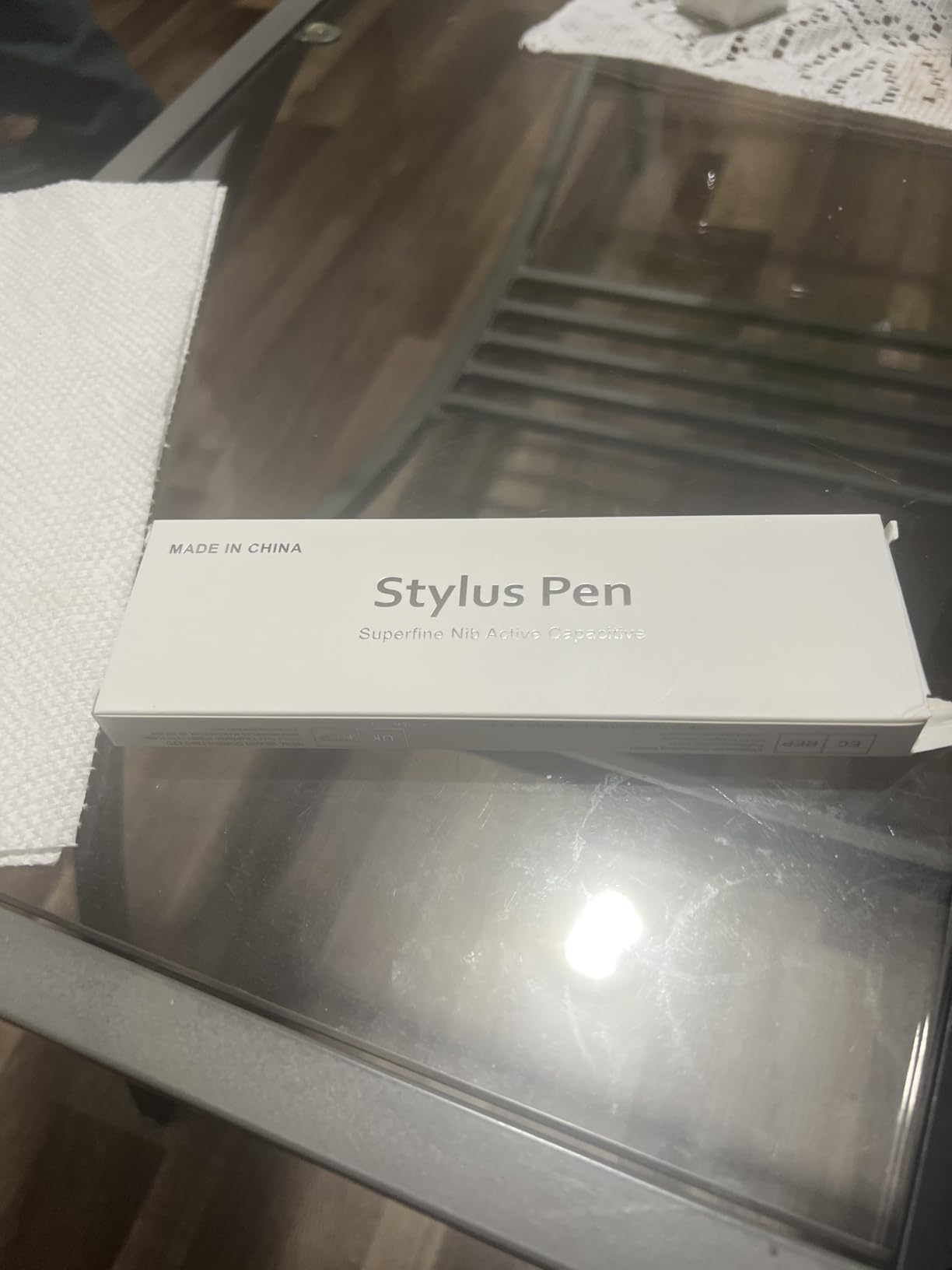
The most-reviewed item in this roundup by a wide margin, and reviewers treat it as a note-taking and light sketching tool rather than an illustration stylus. The 1.5mm tip is genuinely precise for its class, and swapping it needs no tools.
What it does not do is vary line weight with pressure. That single limitation is why it sits below the Apple Pencil Pro for anything I would call painting, and why it works so well for thumbnails, lettering and early blocking-in.
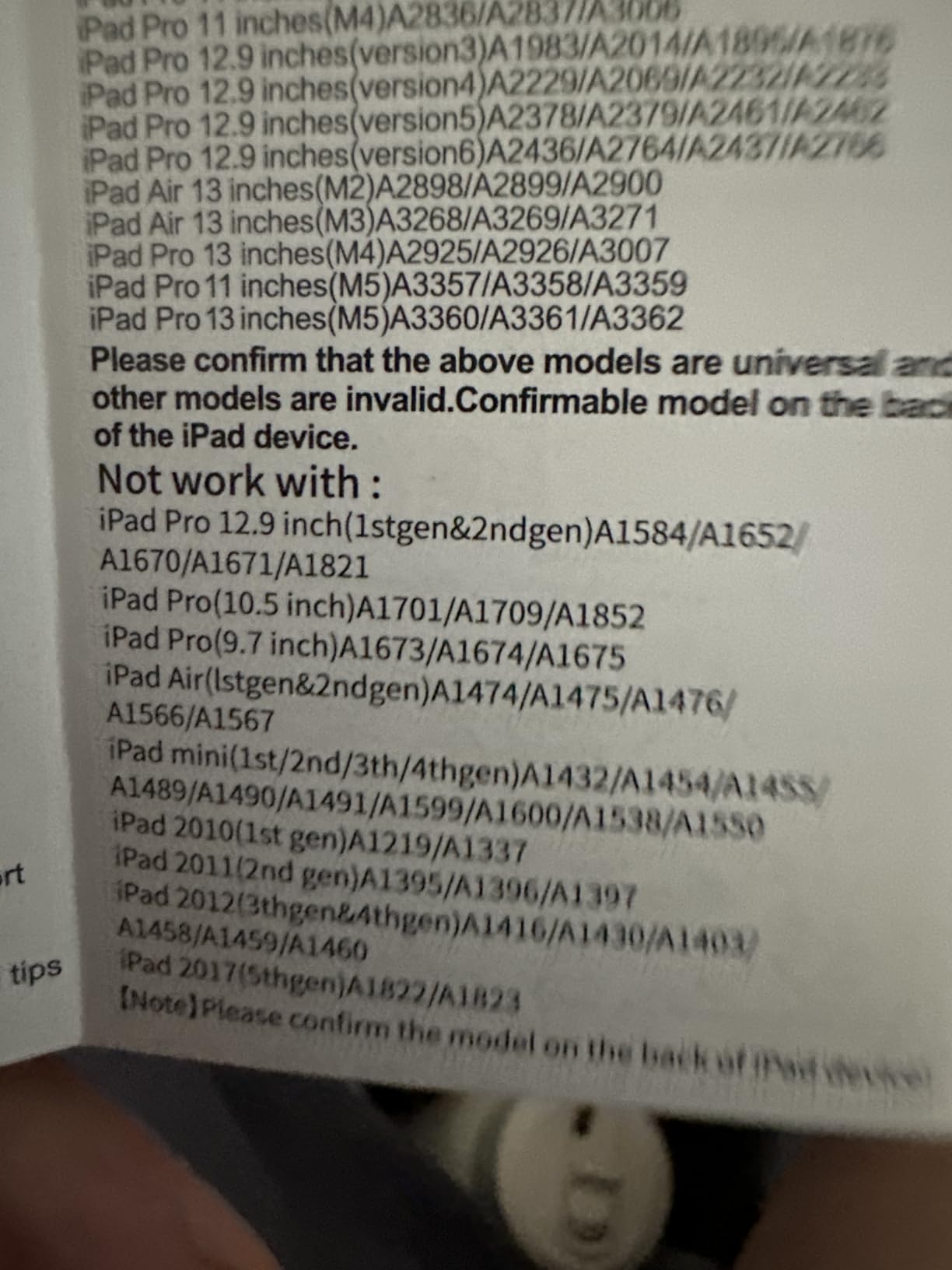
Compatibility is its quiet strength. It works across iPad and iPad Pro models released from 2018 onward, so an older studio tablet can still get a working stylus for very little.
Two notes. It lists a single pressure sensitivity level, so expect no pressure curve in any app. And it will not magnetically attach to iPad 10th generation, which matters if you snap the pen to the tablet before bagging it.
Who this suits
Students, train sketchers, and anyone who wants a cheap backup that lives in a tote bag. The fast charge helps there, since a short top-up gets you most of a working day.
What it costs you
Any job where pressure carries the drawing exposes the gap quickly. It is also a no-go if you need a pen that charges on the tablet, because the magnetic attachment is missing on one generation.
3. ESR Geo Digital iPad Pencil – Apple Pencil shape with Find My
ESR Geo Digital iPad Pencil for iPad 2018-2026, Find My, Easy Shortcuts
Find My network location
Bluetooth shortcut actions
20 minute USB-C charge
Three spare tips
Pros
- Find My solves the lost-pencil problem
- Very close match to Apple Pencil shape and weight
- Tilt sensitivity and palm rejection
- Fast USB-C charging
- Three tips included
Cons
- No pressure sensitivity so stroke width stays constant
- Magnetic attachment without wireless charging
- Spare tips wear faster on paper-feel films
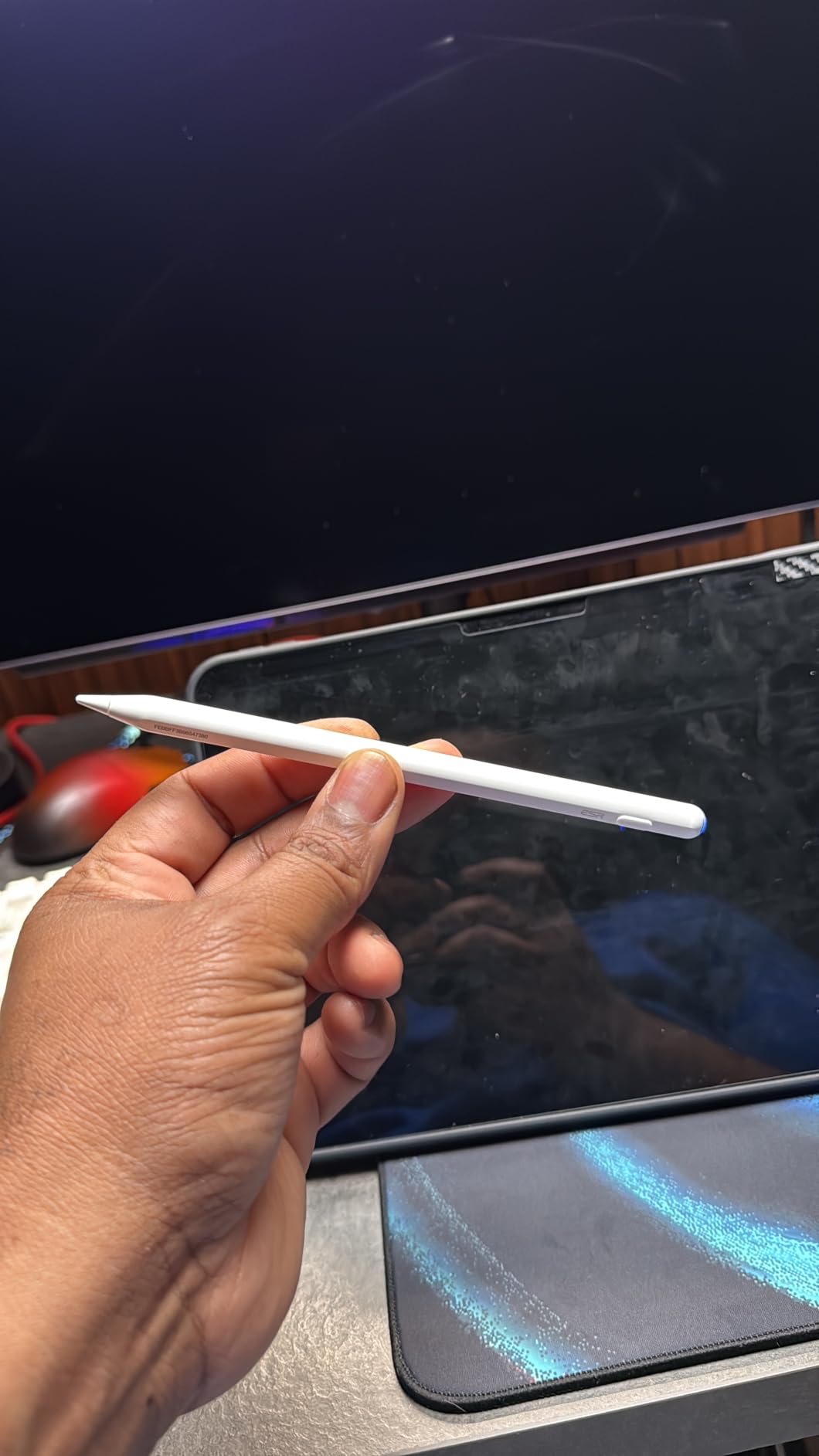
This is the third-party pen recommended most often for people who lost an Apple Pencil in a sofa cushion and never found it. Find My network location support is the reason, and reviewers describe it as the best-value Apple Pencil alternative more than anything else.
It weighs 13 grams, measures 6.54 inches, and is shaped close enough to Apple’s Pencil that muscle memory transfers quickly. Tap for the home screen, double-tap for the task manager, and a full charge in about 20 minutes over USB-C.
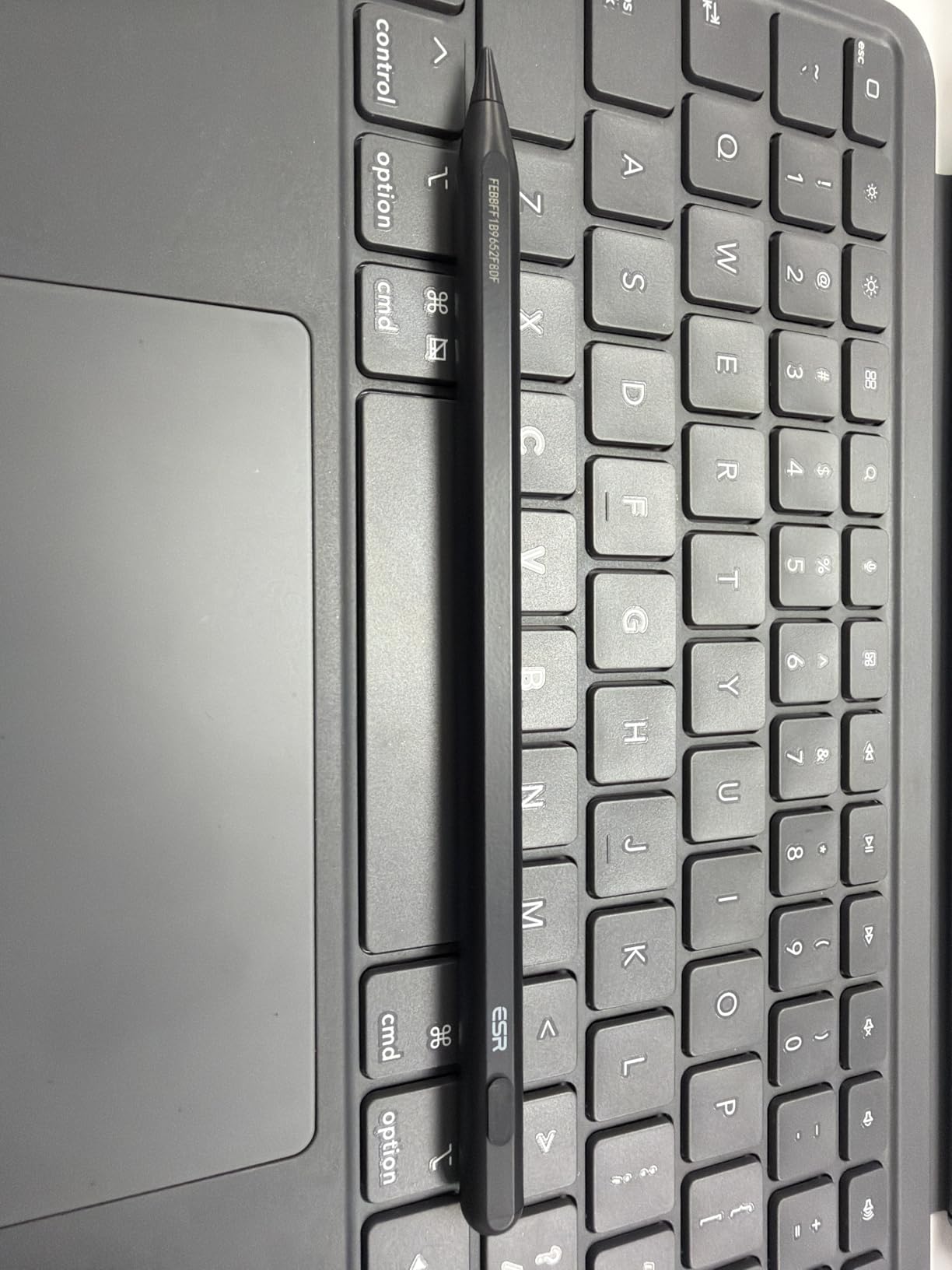
It works on iPads from 2018 onward running iOS 12.2 or later, a wider window than the Apple Pencil Pro offers. Note that it attaches magnetically but does not charge that way, so it is a magnetic rest, not a magnetic charger.
One interaction worth planning for: on a paper-feel protector, the supplied tips wear faster. Keep the three spares somewhere you will find them.
Who this suits
Someone who draws across rooms, loses things, and does not need pressure. The Bluetooth shortcuts and tilt sensitivity cover most line-art and concept work, and Find My removes the frustration stylus owners describe most often in forums.
What it costs you
Constant stroke width is the honest limit. If your style depends on pressure this is not a substitute for the Apple Pencil Pro, however close the shape feels.
4. Artist Drawing Glove – the cheapest fix for accidental taps
Artist Drawing Glove: 3-Layer Palm Rejection for iPad & Drawing Tablets
Three-layer anti-slip design
Ambidextrous two-finger fit
Anti-slip anti-smudge finish
Breathable stretch fabric
Pros
- Stops stray taps and smudged marks
- Ambidextrous so it fits either hand
- Breathable stretch fabric stays cool
- Tight stitching
- Smooth scratch-free glide
Cons
- Sizing chart measures cuff length not wrist
- Can squeak over paper-feel protectors
- Small hands can still get a pinky touch
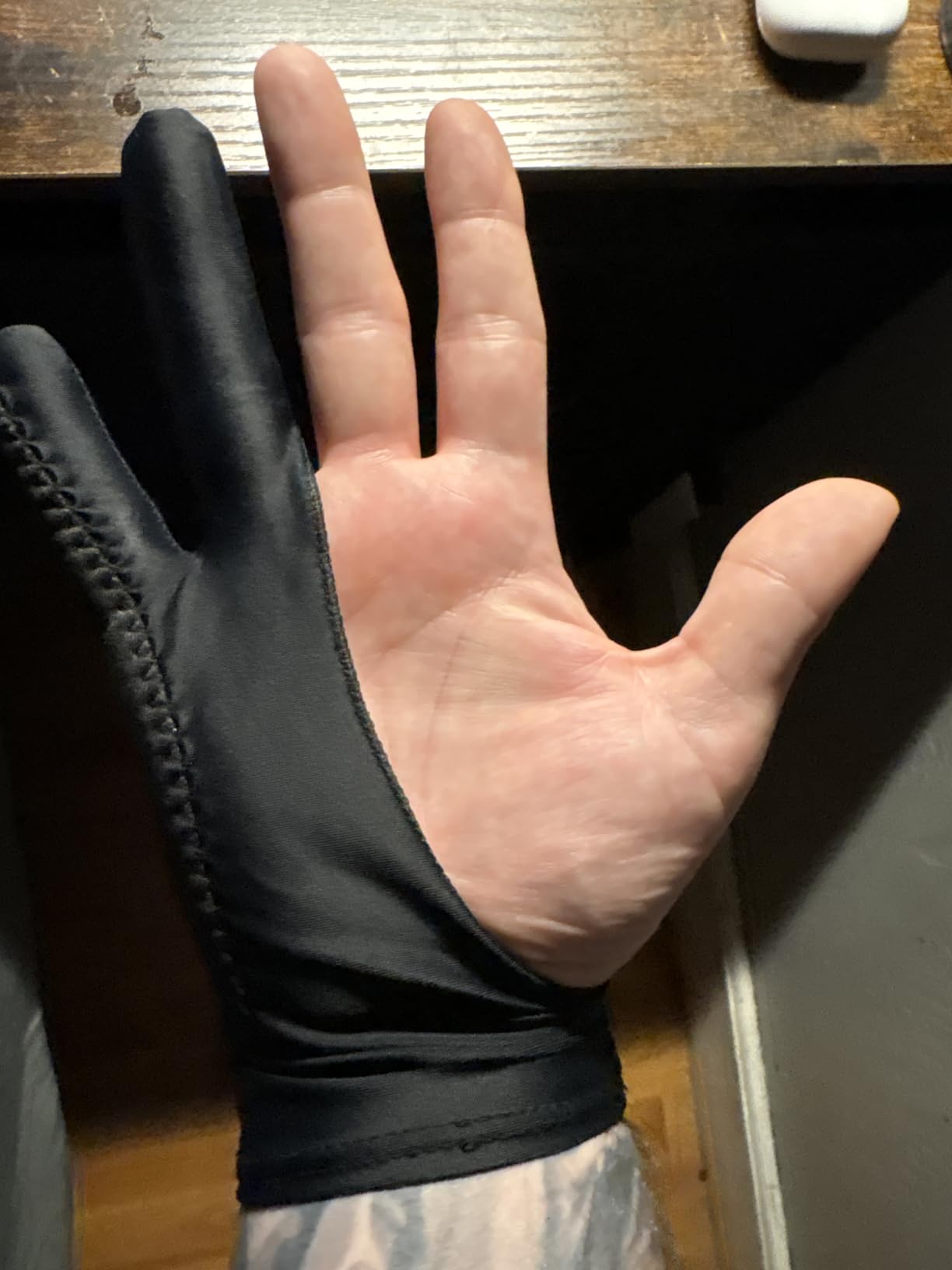
Even with palm rejection on, a resting hand occasionally registers and leaves a dot or smear on the canvas. The two-finger glove blocks touch input entirely while leaving the drawing fingers free.
It is ambidextrous, and the three-layer anti-slip, anti-smudge construction keeps oils off a matte coating. Artists credit it with eliminating accidental contact, and the fabric stays cool rather than sweaty over a long session.
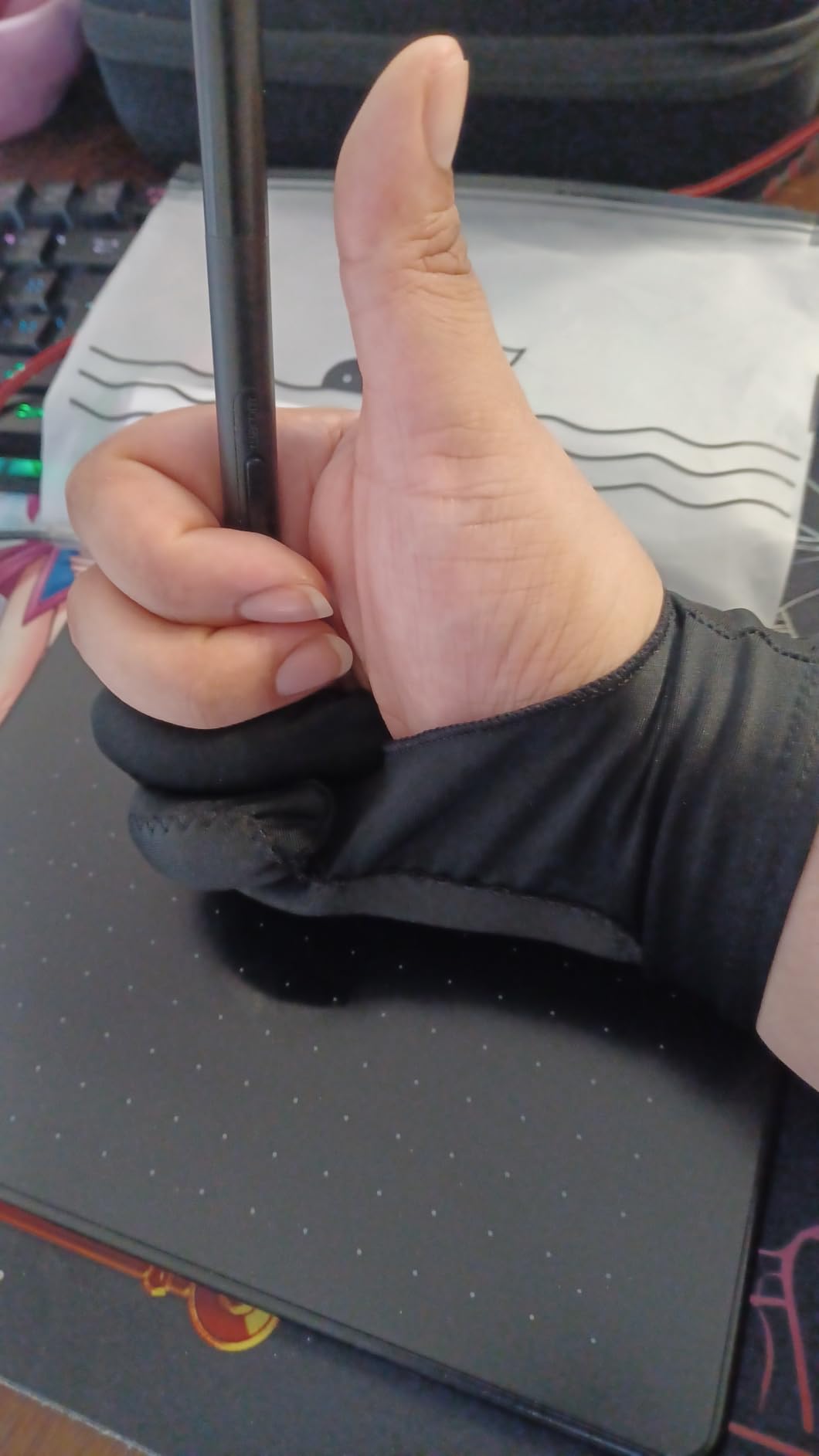
Two warnings. The sizing chart measures cuff length rather than wrist circumference, so measure before ordering and size up if you have small hands. On a paper-feel protector, reviewers report a squeak when the glove glides, which is cosmetic but audible in a quiet room.
If your drawing hand is not the right hand, this is still the right category, but smaller hands occasionally pick up a stray touch from the pinky edge.
Who this suits
Anyone finishing client work where one accidental layer costs real time. It also pairs well with the paper-feel protectors below, since the glove keeps oils off the matte coating.
What it costs you
It does nothing for drawing that feels imprecise, and it does not fix parallax offset, which is a display setting issue. The next section covers calibration if your lines land slightly off the tip.
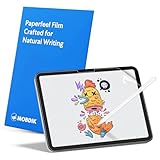
5. MOBDIK Paperfeel Protector – budget matte texture for base iPads
MOBDIK Paperfeel Screen Protector for iPad A16 11th/10th & iPad Air 11
Matte PET textured film
0.17mm thickness
Anti-glare coating
Oleophobic smudge layer
Pros
- Noticeably improves Pencil grip and control
- Very thin film keeps touch sensitivity high
- Anti-glare cuts reflections in bright rooms
- Install kit and video included
Cons
- 3H hardness scratches more easily than glass
- Fits only specific base iPads not Pro models
- Matte layer slightly mutes colour
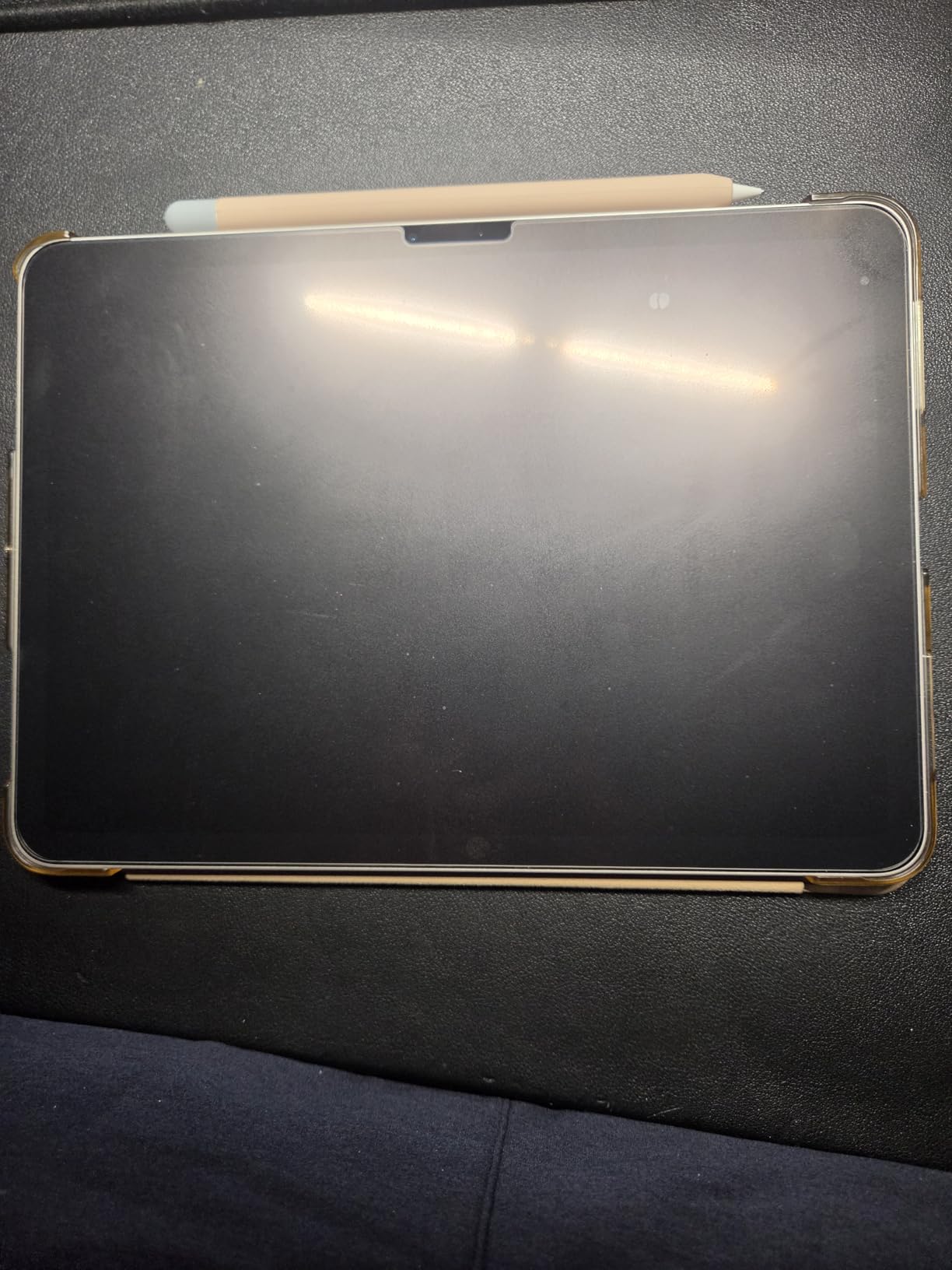
A matte PET protector is the single change that makes an iPad feel less like drawing on a window. The textured surface adds controlled friction so strokes stop skating, and that is the difference between loose sketching and controlled line work.
The film is 0.17mm Japanese PET with a paper-like finish, an anti-glare matte coating and an oleophobic layer that repels smudges. The anti-glare is what makes it viable outdoors and under bright studio lighting.
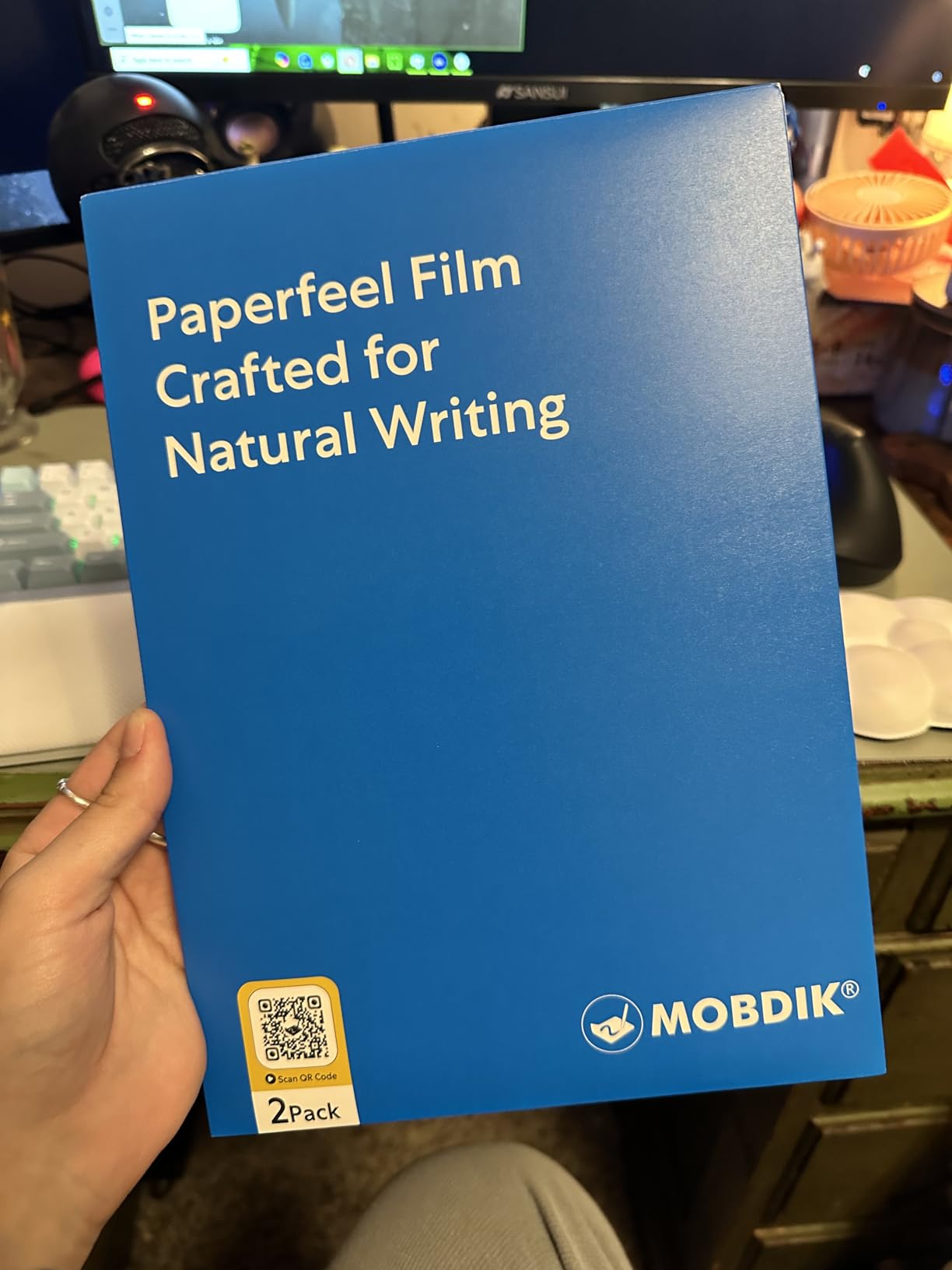
Compatibility is narrower than it first appears. It covers iPad 11th generation with the A16 chip, iPad 10th generation, and iPad Air 11 inch on M2, M3 and M4. If you have an iPad Pro this is the wrong film, which is the most common return reason here.
The honest trade-off is 3H hardness, softer than the 9H film in the next pick, so it marks more easily and the matte layer dims colours slightly. Colour-critical artists often use it for drawing and accept the duller screen.
Who this suits
Anyone on an A16, a 10th generation iPad or an 11 inch Air who wants the paper feel at the lowest entry point. The installation kit and video make first-time film application painless.
What it costs you
Scratches, colour muting, and no fit for Pro models. For large-area colour work the dimming is the issue to weigh, and for an iPad Pro choose the 9H film instead.
6. OMOTON PAPERSENSE 2 Pack – thinnest paper feel for iPad Pro
OMOTON PAPERSENSE 2 Pack Paper Screen Protector for iPad Pro 13 inch M5 M4
0.09mm matte PET film
9H scratch resistance
Paper-like friction
Dust-free install tray
Pros
- Ultra-thin film feels closer to bare glass than rivals
- Real paper-like texture for Pencil control
- 9H scratch resistance
- Alignment tray simplifies install
- Two protectors in the pack
Cons
- Trapped dust can leave persistent bubbles
- Included dust tool misses some specks
- Fits only iPad Pro 13 inch M4 and M5
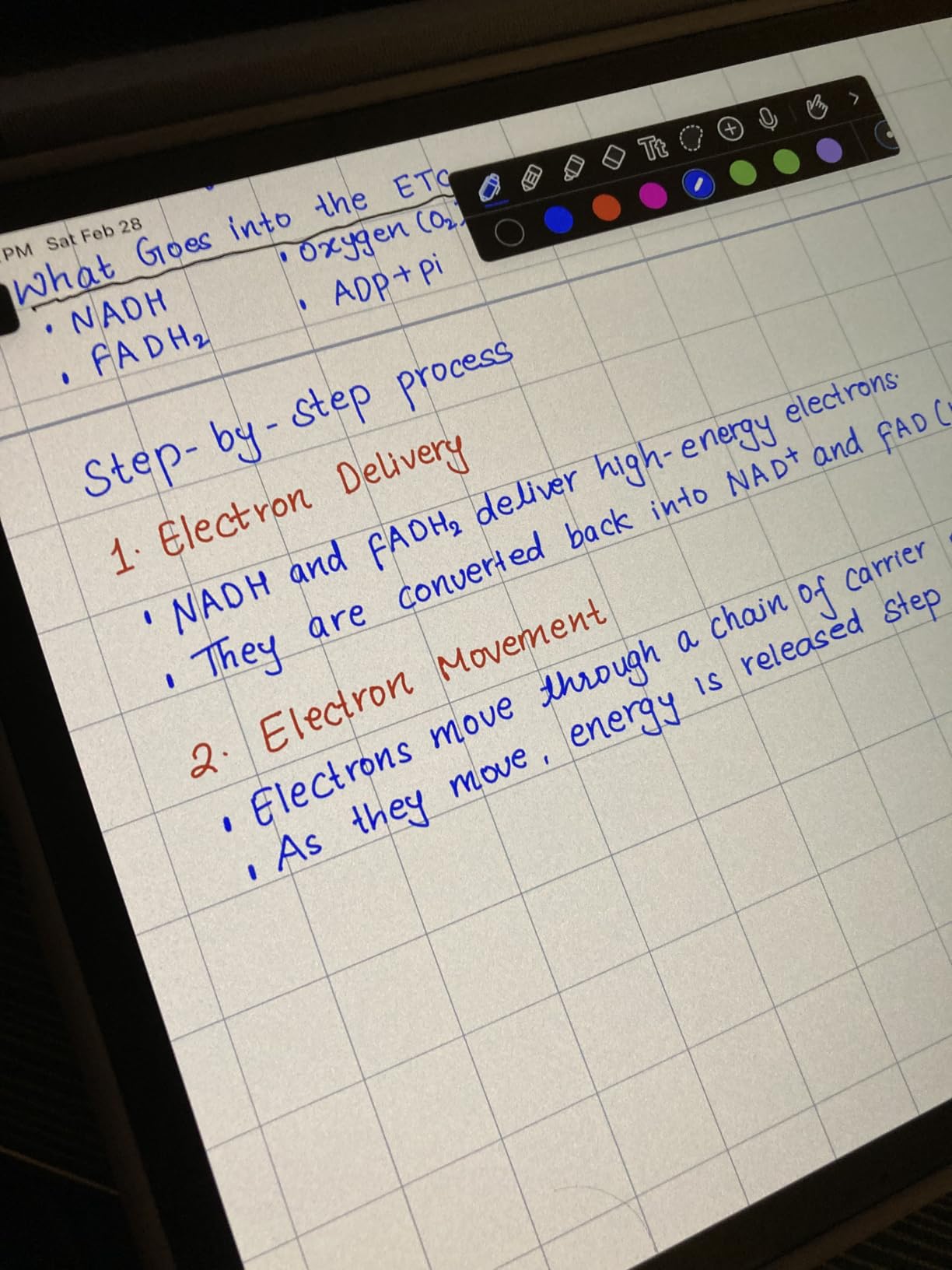
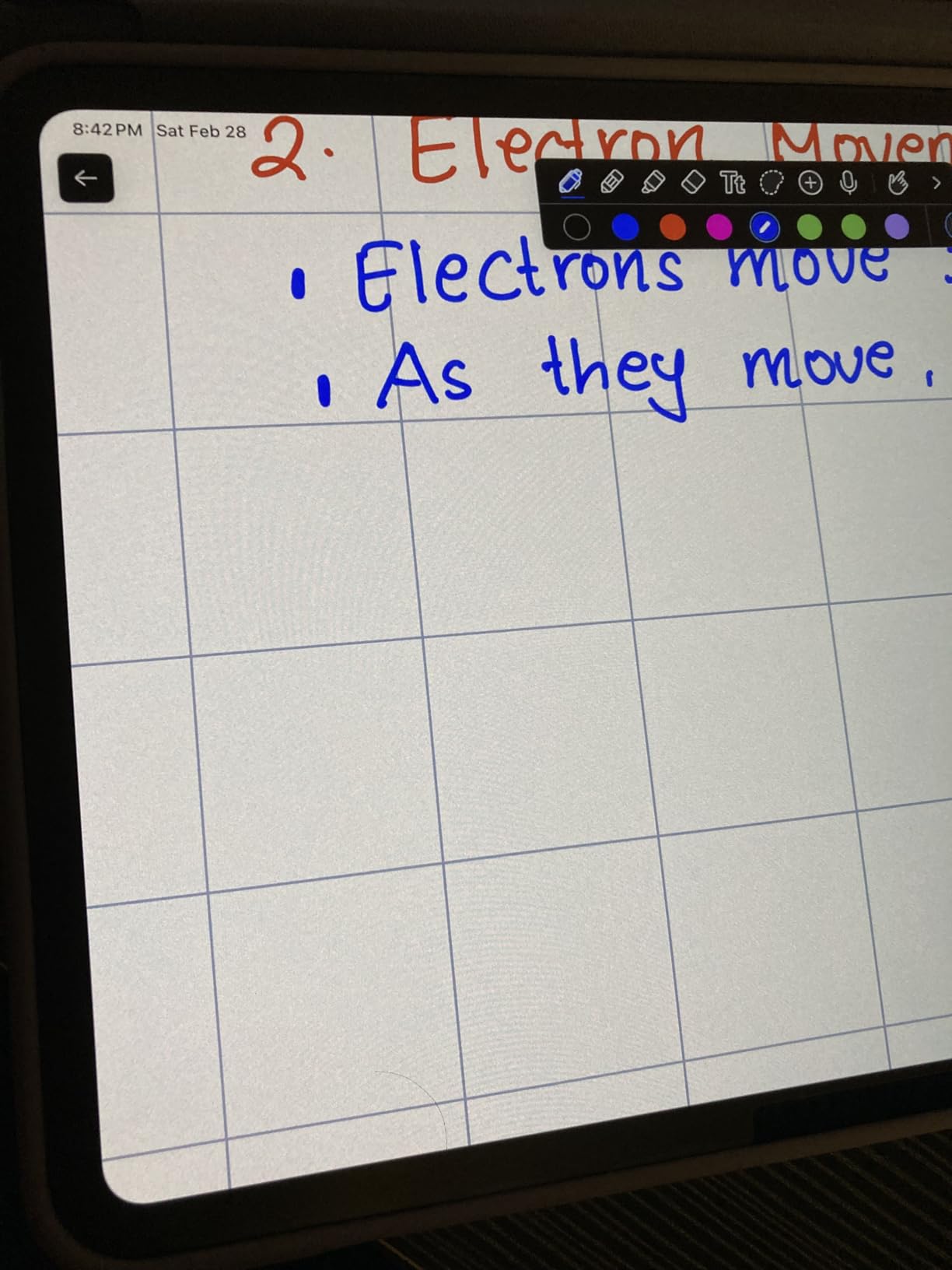
This is the film I recommend to people moving from bare glass. At 0.09mm it is thin enough that touch sensitivity stays high and the texture reads as paper rather than plastic, and the two-pack means replacing a scratched sheet later costs nothing extra.
Artists switching from glass report a clear improvement in Pencil feel and control, plus less tip wear and slippage. The 9H rating is the real differentiator against cheaper matte films, which sit at 3H and mark up quickly.
It is built for the iPad Pro 13 inch on M4 and M5 only, and will not fit the 11 inch Pro or any Air. Check your model, because the cutout differs between sizes and that is where returns come from.
Installation is the only real complaint. Dust trapped in the tray creates bubbles that persist, and the included tool misses some specks. Wipe the glass and work in a dust-free room.
Who this suits
Anyone on the 13 inch Pro who draws daily. Paper feel, 9H durability and a thin film in one package, and the anti-glare coating reduces eye fatigue on a large panel over a long session.
What it costs you
Wrong-size iPads, full stop. On an 11 inch device use the film in the previous section. Also expect a slower, more careful install than a peel-and-stick protector.
7. ELETIUO Bamboo Tablet Stand – desk angles with Pencil charging
ELETIUO Adjustable Tablet Stand with Pencil&Charger Cable Slot,Bamboo Wooden Stand with Multiple Angles,Organizer Desktop Holder for Drawing,Compatible with ipads(Support to 9.7-11″ Devices)
Bamboo and ABS build
Four angle settings
Pencil charging slot
Cable management slot
Pros
- Polished bamboo suits a studio desk
- Holder charges the Apple Pencil while stored
- Cable slot keeps the iPad powered mid-session
- Four angles reduce neck strain
- Folds flat
Cons
- Compatibility stops at iPad Pro 11 third gen
- Larger and heavier than aluminium stands
- Less rigid under heavy tablets
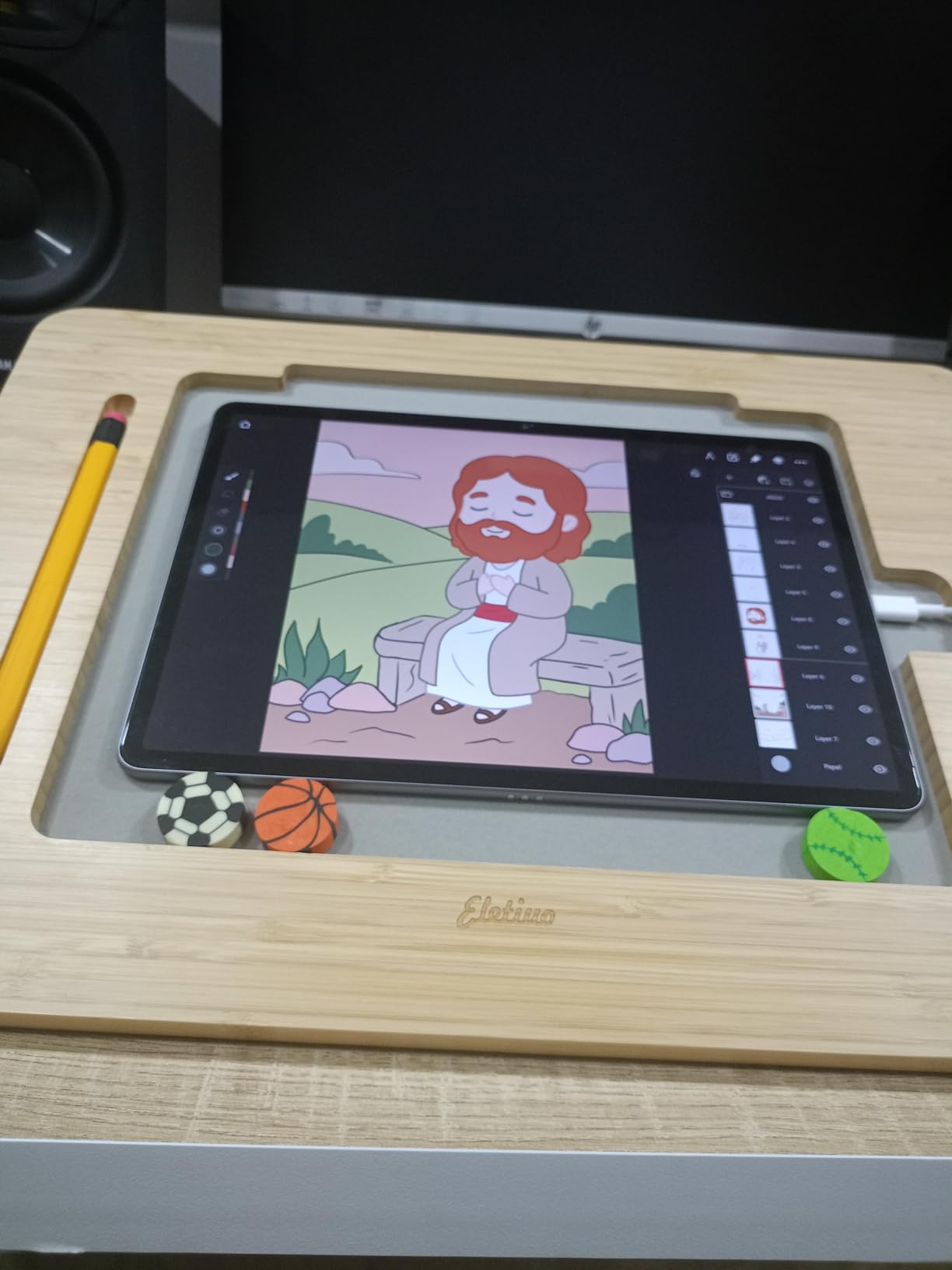
A stand lifts the screen off the desk so you are not looking down at a shallow angle all afternoon, and it stops the tablet sliding while you rest your forearm on the surface. This bamboo model does both while looking like studio furniture rather than a gadget.
It stands 15.6 x 10.8 x 1.4 inches with a 7.2 x 10.1 inch slot, offers four angle settings on an ABS triangular support, and weighs 500 grams. The Pencil holder charges while the Pencil sits in it, and a cable slot keeps the tablet powered.
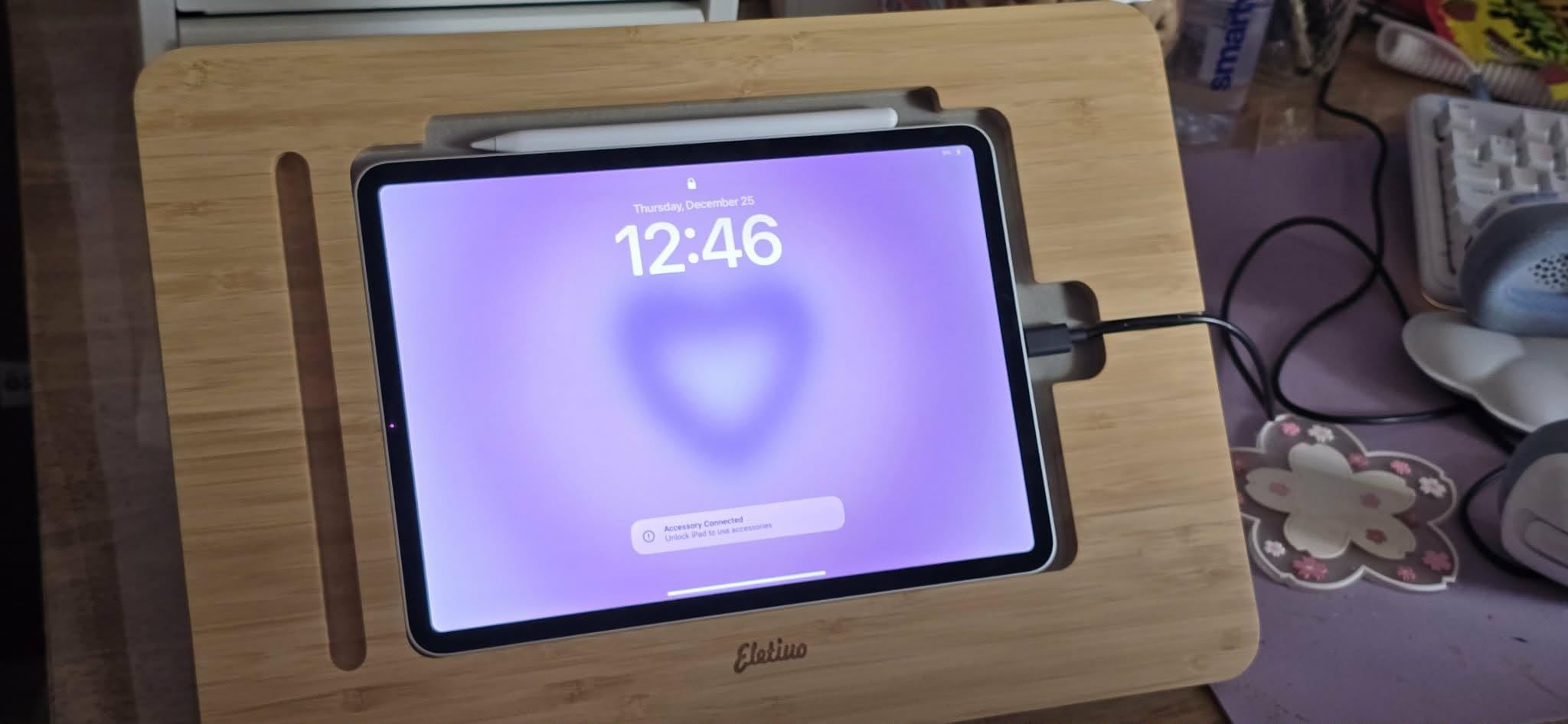
Owners like the charging slot combined with cable management because it clears desk clutter, and the four angles get named specifically as a neck and eye strain fix. It folds flat, so it works as a travel stand in a pinch.
The compatibility list stops at iPad Pro 11 inch third generation and covers 9.7 to 11 inch devices. Newer Pro and Air sizes are unsupported, and the bamboo-ABS frame flexes more than metal under a heavy tablet.
Who this suits
Anyone whose iPad lives on one desk and wants the screen elevated, the Pencil parked and charging, and the cable routed away. For painters who lose charge mid-session, the charging holder earns the footprint.
What it costs you
It is not universal. On a current 11 inch or 13 inch model the slot is the wrong size, and the frame flexes more than an all-metal stand would.
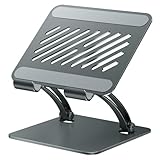
8. tounee Aluminum Tablet Stand – adjustable support up to 16.9 inch
tounee Tablet Holder Stand, Dual Rod Adjustable Aluminum Desktop Stand, Compatible with 4.7-16.9″ iPads, Surface Tablets, Portable Monitors, Kindle & More (Gray)
Locking dual-rod adjustment
All-metal weighted base
Silicone pads
4.7 to 16.9 inch range
Pros
- All-metal base does not wobble
- Locking mechanism holds the angle firmly
- Works from 4.7 to 16.9 inch devices
- Folds flat and travels well
- Silicone pads protect both surfaces
Cons
- Not designed to hold laptops
- Fixed rod width can let small phones sit loose
- Narrower range than an articulated arm
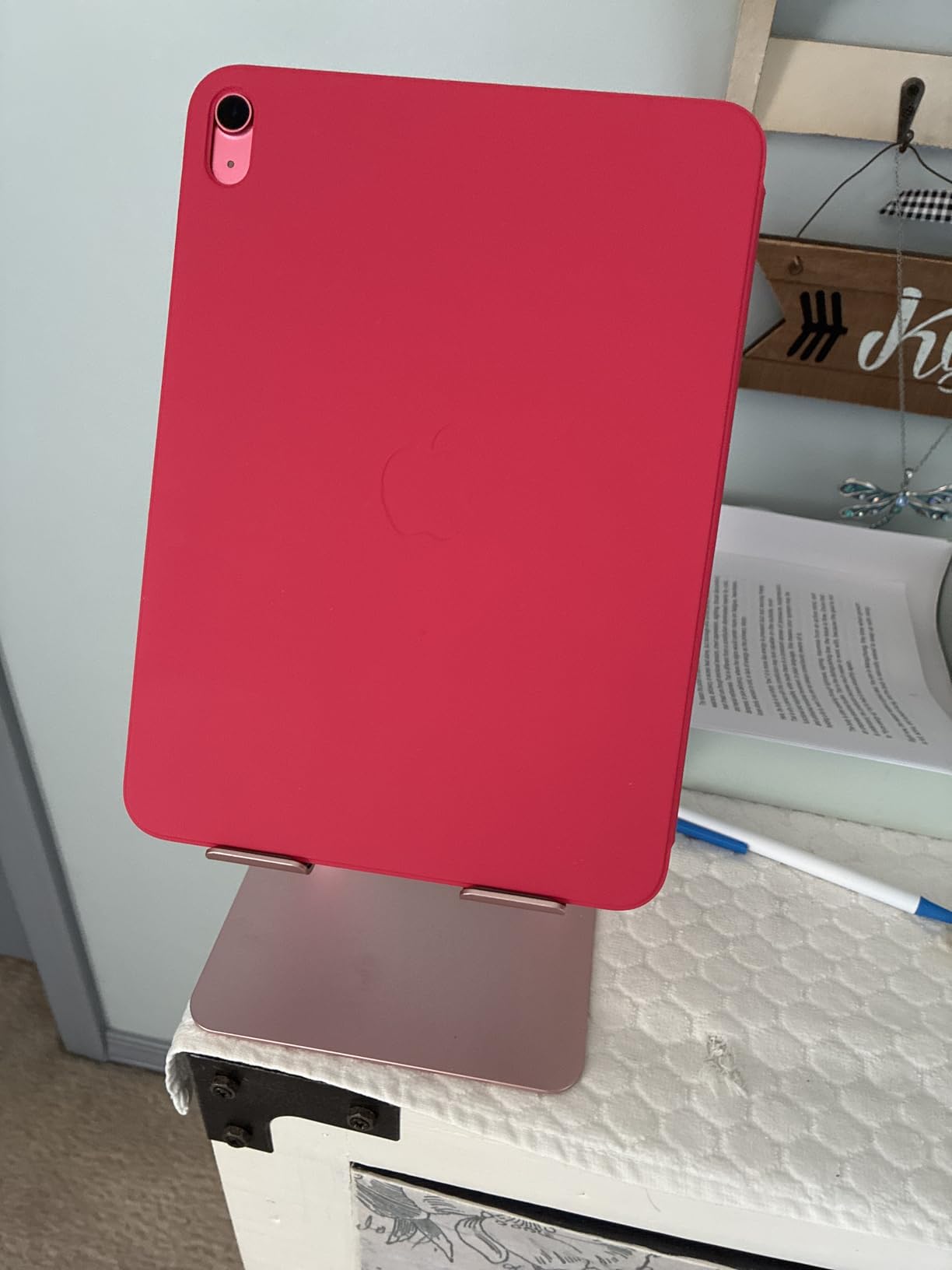
If you moved up to a 13 inch iPad and your old stand could not hold it, this is the answer. The dual-rod mechanism locks both height and angle, so the screen stays where you put it instead of sagging toward the desk mid-session.
Reviewers highlight the aluminium construction, secure angle locking and broad compatibility as the main strengths. It supports 4.7 to 16.9 inch devices, covering every current iPad, portable monitors and e-readers, and it folds flat for travel.
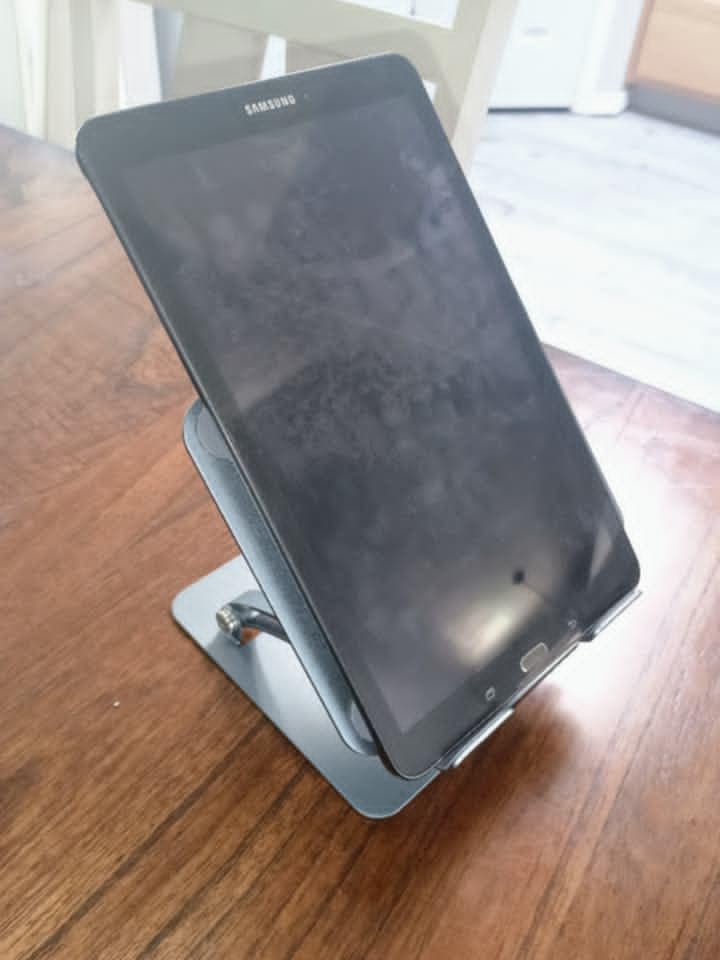
The weighted metal base is what keeps it still. When you push hard on a long thin stroke, a light stand walks across the desk and a wobble changes the angle of your line mid-stroke. This one does not.
Two limits to accept. It is not built for laptops, and the fixed rod width can let a very small phone sit loosely. Adjustment is also narrower than an articulated arm, so you set it once per session rather than constantly.
Who this suits
Anyone drawing on an iPad Pro 13 inch or Air 13 inch. The locking adjustment allows a higher, more upright angle than most tablet stands, which is exactly what reduces wrist strain over a long session.
What it costs you
It is a desktop stand, not a lap or couch solution, and it charges nothing. If you want Pencil charging with a stand, the bamboo model earlier in this list does that within a smaller size range.
9. HUION Keydial Mini Keypad – cutting the menu trips in Procreate
HUION Keydial Mini Bluetooth Programmable Keypad with Dial 18 Shortcut Keys
18 programmable keys
Programmable dial with 3 functions
Bluetooth 5.0
70 hour battery
Pros
- Removes repeated reaching for on-screen menus
- Dial with three assignable functions for brush size and zoom
- Code-free configuration with app profiles
- 70 hour battery
- Works with Mac Windows and other tablets
Cons
- Requires the Huion driver to function
- Software accepts single keystrokes not macros
- Bluetooth can drop after sleep
- Dial can feel janky over time
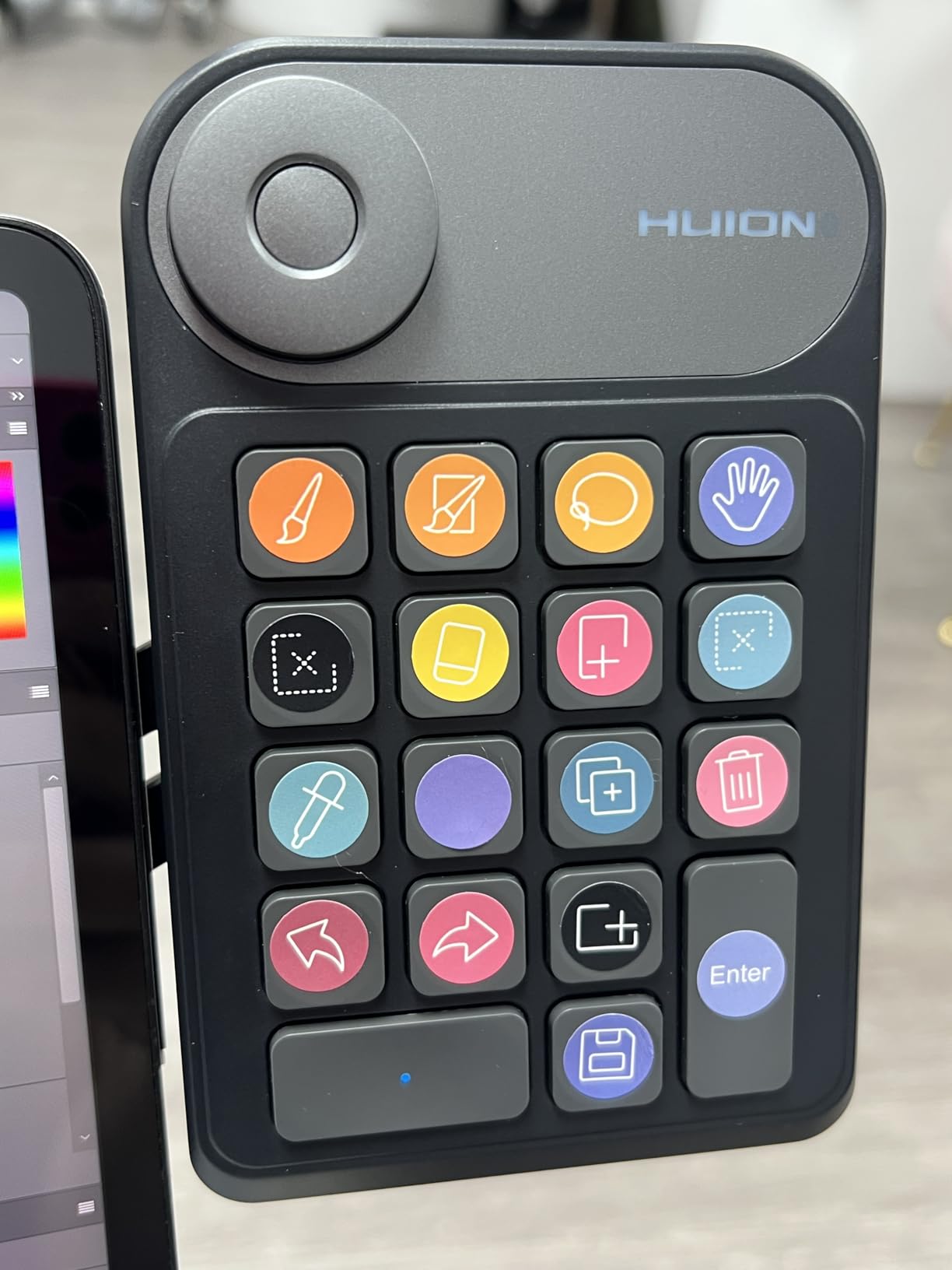
The biggest drag in Procreate is not the Pencil. It is the seconds per tool switch spent hunting through an on-screen menu, which adds up across a hundred brush changes. The Keydial puts 18 programmable keys and a dial under your drawing hand.
I map layer opacity, blend modes, undo, redo, brush size and canvas zoom. The dial carries three switchable functions, and anti-ghosting holds up to five keys at once. Bluetooth 5.0 reaches about 10 meters and the battery runs roughly 70 hours.
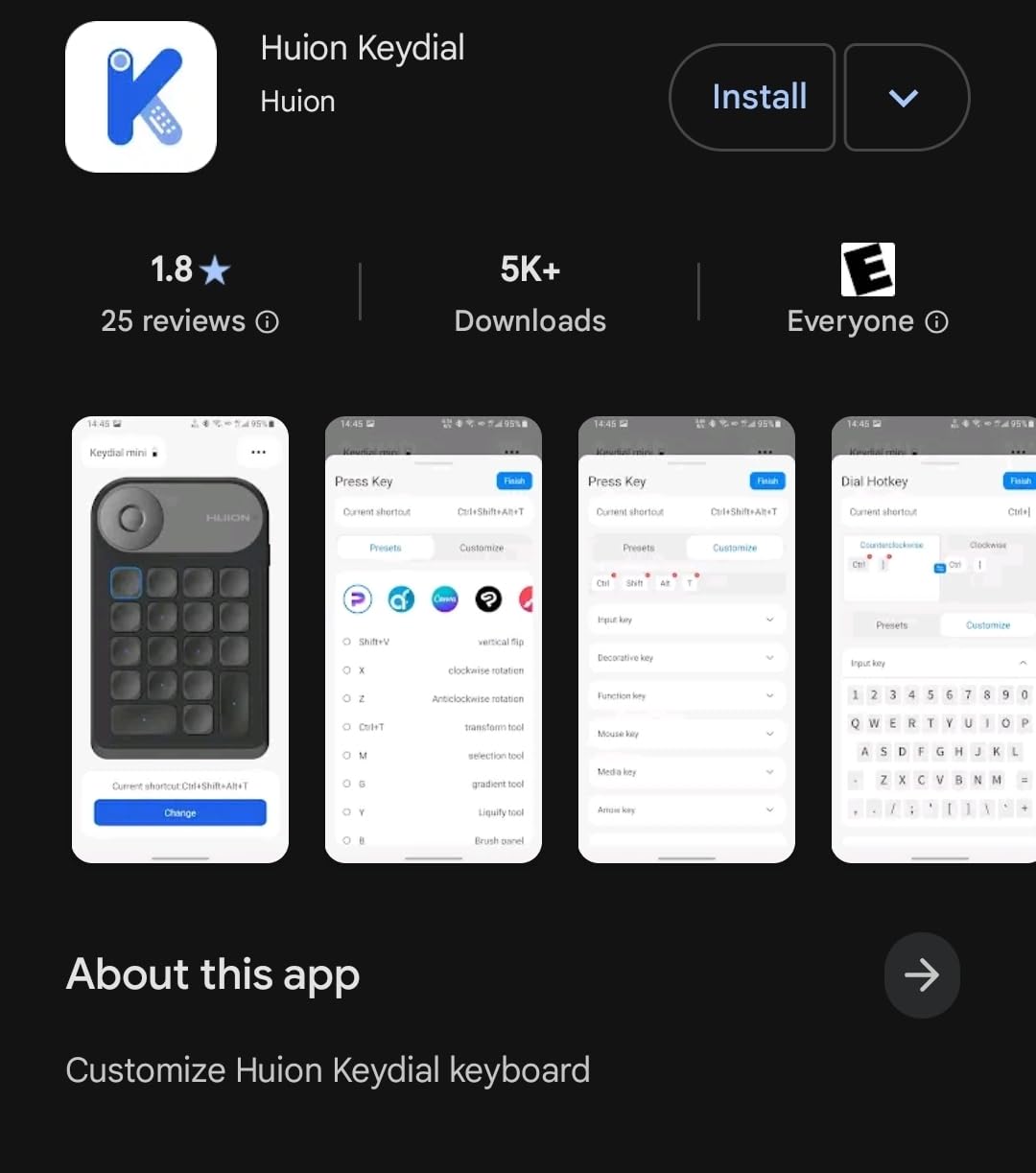
Configuration is code-free through the Huion driver, with per-application profiles so the same keys do different things in Procreate and in a file browser. A preview popup shows current assignments, saving a lot of trial and error.
The dependency is the real caveat. It needs the driver installed, that software accepts single keystroke combinations rather than longer macros, and reviewers report Bluetooth dropouts after sleep. It also cannot be used while charging.
Who this suits
Artists doing layer-heavy illustration or comic work with frequent blend mode changes feel this first. It works with Mac, Windows, Surface Pro and other brands of graphics tablets, so you are not locked into one ecosystem.
What it costs you
If you sketch with three brushes and never touch layer settings, you will not get much from it. And set aside ten minutes for driver setup before your first session.
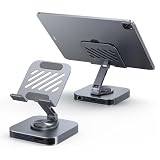
10. BENFEI 9-in-1 Hub Stand – stand and dock in one body
BENFEI USB C Hub Tablet Stand, 9-in-1 Foldable Rotating iPad Docking Station with 4K@60Hz HDMI, Ethernet, 1xUSB-C & 3X USB 3.0, 100W PD, SD/TF Card Reader for iPad Pro/Air/Mini
360 degree rotating stand
4K at 60Hz HDMI
Ethernet and card readers
100W PD pass-through
Pros
- Stable rotating stand combined with a full port hub
- 4K at 60Hz HDMI plus Ethernet
- 100W pass-through charges while connected
- Open-back aluminium resists heat
- Folds flat
- no drivers
Cons
- Requires a USB-C iPad
- Newer model with a smaller pool of owner feedback
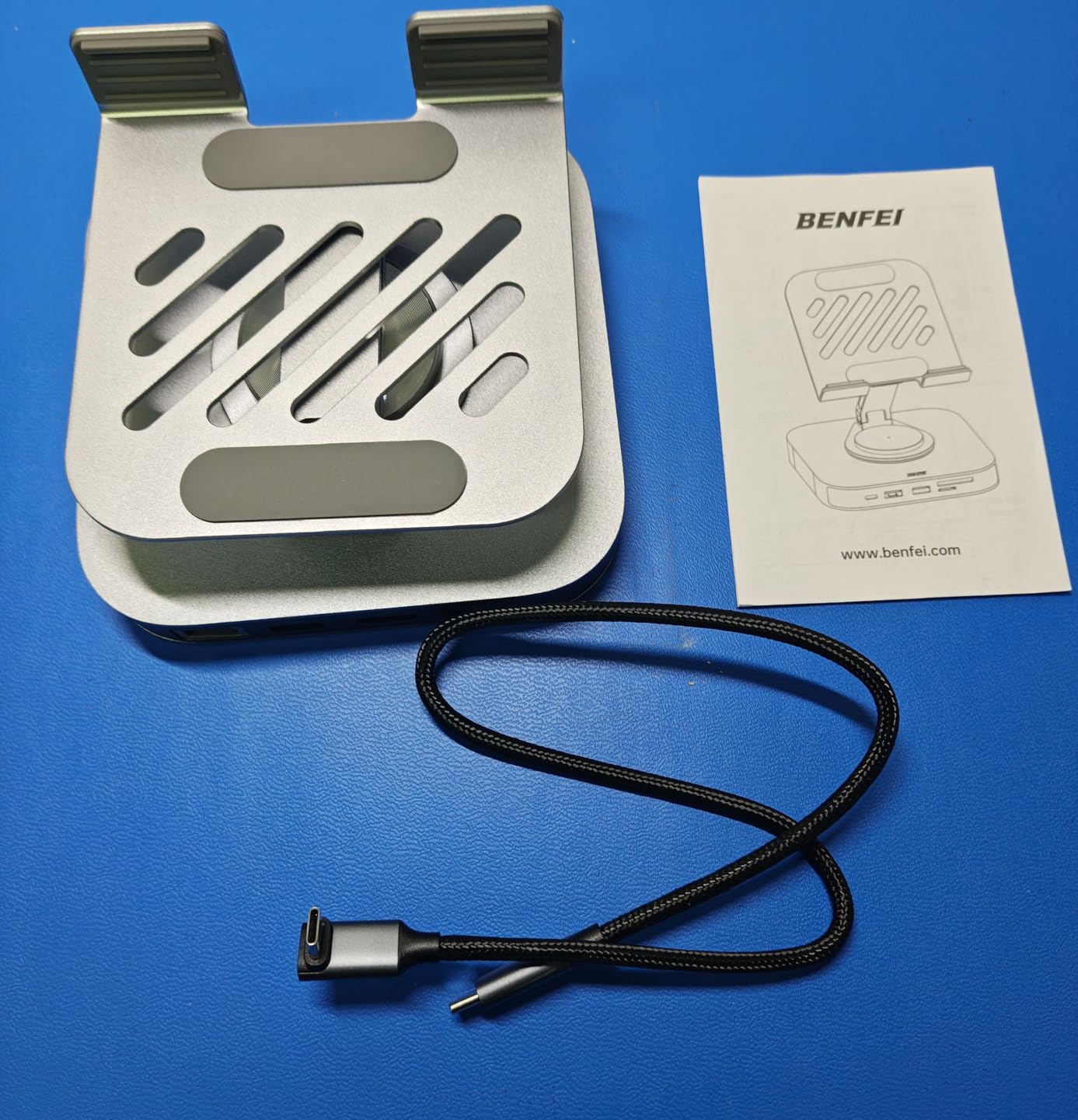
For studio work, a hub turns the iPad from a sketch device into a workstation. The BENFEI does two jobs in one aluminium body: a 360-degree rotating stand and a nine-port dock, so your tablet sits at a comfortable angle with everything already plugged in.
The ports are 4K at 60Hz HDMI, 1000Mbps Ethernet, one USB-C, three USB 3.0, and SD and TF card readers at 170MB per second. The 100W input passes 85W to the tablet, so it charges while the display runs.

Owners like that it removes cable sprawl without a separate stand, and that it runs plug and play with no driver installation. The open-back aluminium design matters more than it sounds, because hubs run hot during sustained use.
It needs a USB-C iPad: Pro from the 5th generation onward, Air from the 5th, mini from the 6th. Lightning-port models are out, and the warranty is worth keeping on a newer listing.
Who this suits
Anyone mirroring their canvas to a larger display, importing scanned references from SD cards, or drawing on a wired connection. The rotating base means you can turn the screen without unplugging anything.
What it costs you
It is pointless for a purely wireless setup, and it only helps if your iPad has USB-C. For basic file import on the move, the smaller seven-port hub below is easier to carry.
11. NXPGKEA 7-in-1 USB C Hub – a pocket port block for travel
iPad Pro USB C Hub, 7-in-1 Multiport Adapter with 4K HDMI for iPad
4K at 60Hz HDMI
USB 3.0 at 5Gbps
SD and microSD readers
100W PD pass-through
Pros
- Turns one USB-C port into seven
- HDMI cards and charging work reliably
- Compact aluminium body sits discreetly
- Doubles as a hub for other USB-C devices
Cons
- Does not fit when a thick case is attached
- Sometimes needs replugging to be detected
- Draws power so it can charge slowly
- Short cable pushes the hub to the edge
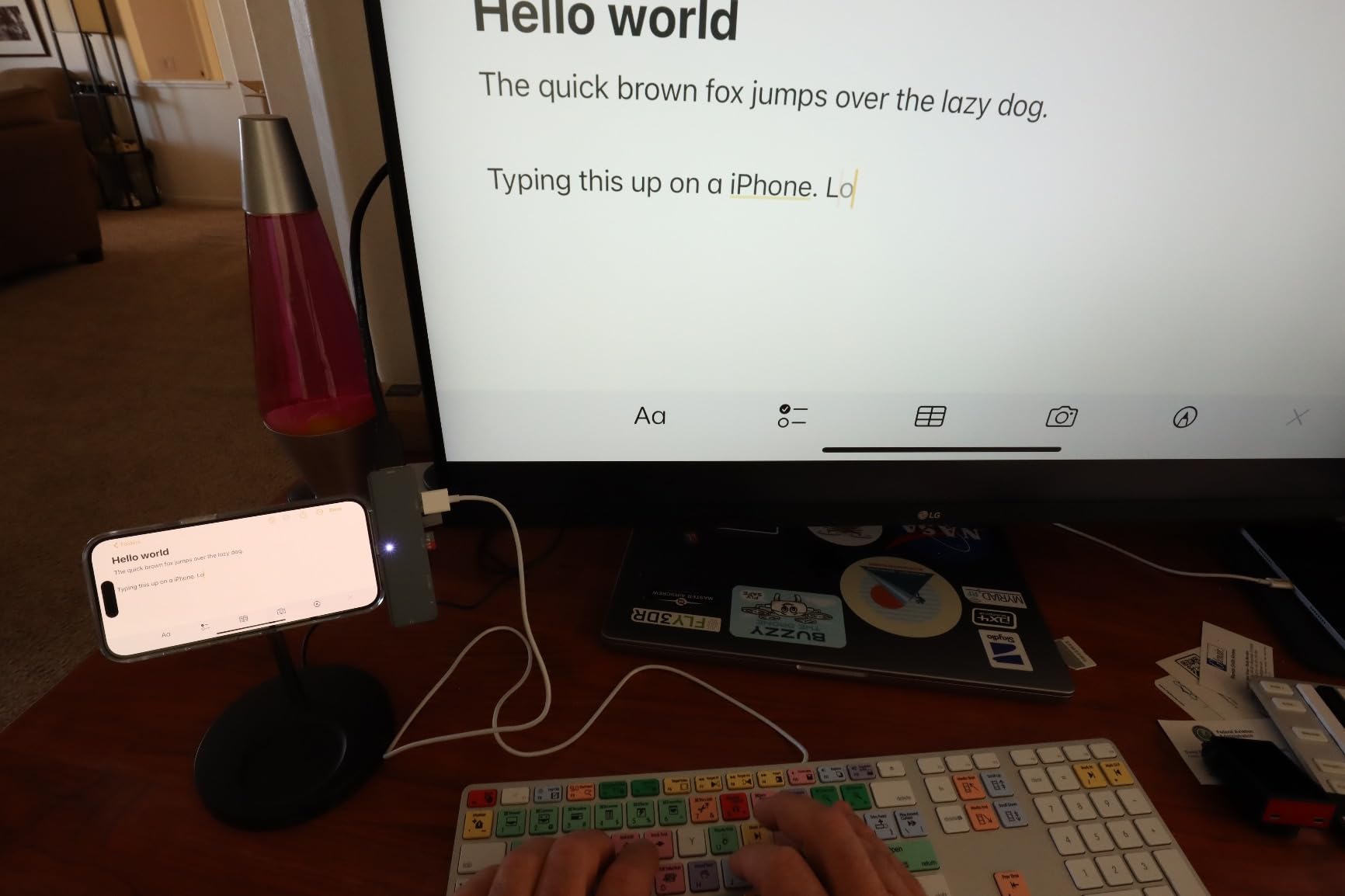
The travel version of this category is a small hub that stays in a bag rather than a dock that lives on a desk. This one gives you HDMI at 4K and 60Hz, USB 3.0 at 5Gbps, SD and microSD readers, a 3.5mm audio jack and 100W pass-through charging.
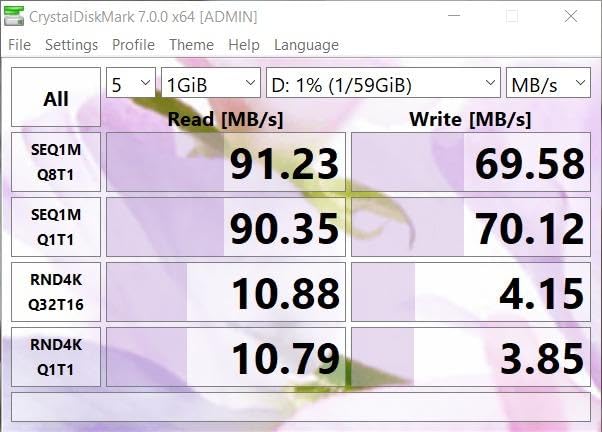
Reviewers confirm it works for media transfer, external displays and audio, and the port count relative to its cost is why most people buy it. The audio jack includes a DAC up to 384kHz, 32-bit, which matters for reference work.
It is listed for iPad Pro 11, 12.9 and 13 inch on M4, M2 and M1, iPad Air 4 and 5, and iPad mini 6. It also works with other USB-C devices, so it stops being an iPad accessory the moment you plug in a phone.
The recurring complaints are physical. It will not seat with a thick case attached, sometimes it needs unplugging and replugging, and the short built-in cable pushes it toward the edge of the tablet.
Who this suits
Drawing in a hotel room, a shared studio or a café. The card readers let you import your own reference files without a cloud round trip, and the small body disappears into a sleeve.
What it costs you
It is not a stand, so you still need something to prop the tablet on. And check case fit before you travel, because a slim folio is fine while a thicker case will not seat properly.
12. OMOTON Ultra-Slim Bluetooth Keyboard – typing and naming layers
OMOTON Ultra-Slim Bluetooth Keyboard for iPad,iPad Pro/Air/Mini,iPhone
78-key QWERTY layout
0.2 inch profile
12 multimedia hotkeys
Bluetooth wireless
Pros
- Ultra-slim at 0.2 inch
- easy to carry in a sleeve
- Stable Bluetooth with responsive keys
- 78 keys plus 12 hotkeys
- Up to 400 hours with auto-sleep
Cons
- Function keys not fully compatible with non-Apple systems
- AAA batteries not included
- Keys are not backlit
A keyboard is not a drawing tool and I would rather say so than sell it as one. What it fixes is the part of the iPad art workflow that has nothing to do with drawing: naming layers, writing file notes, and typing without hunting for an on-screen keyboard mid-session.
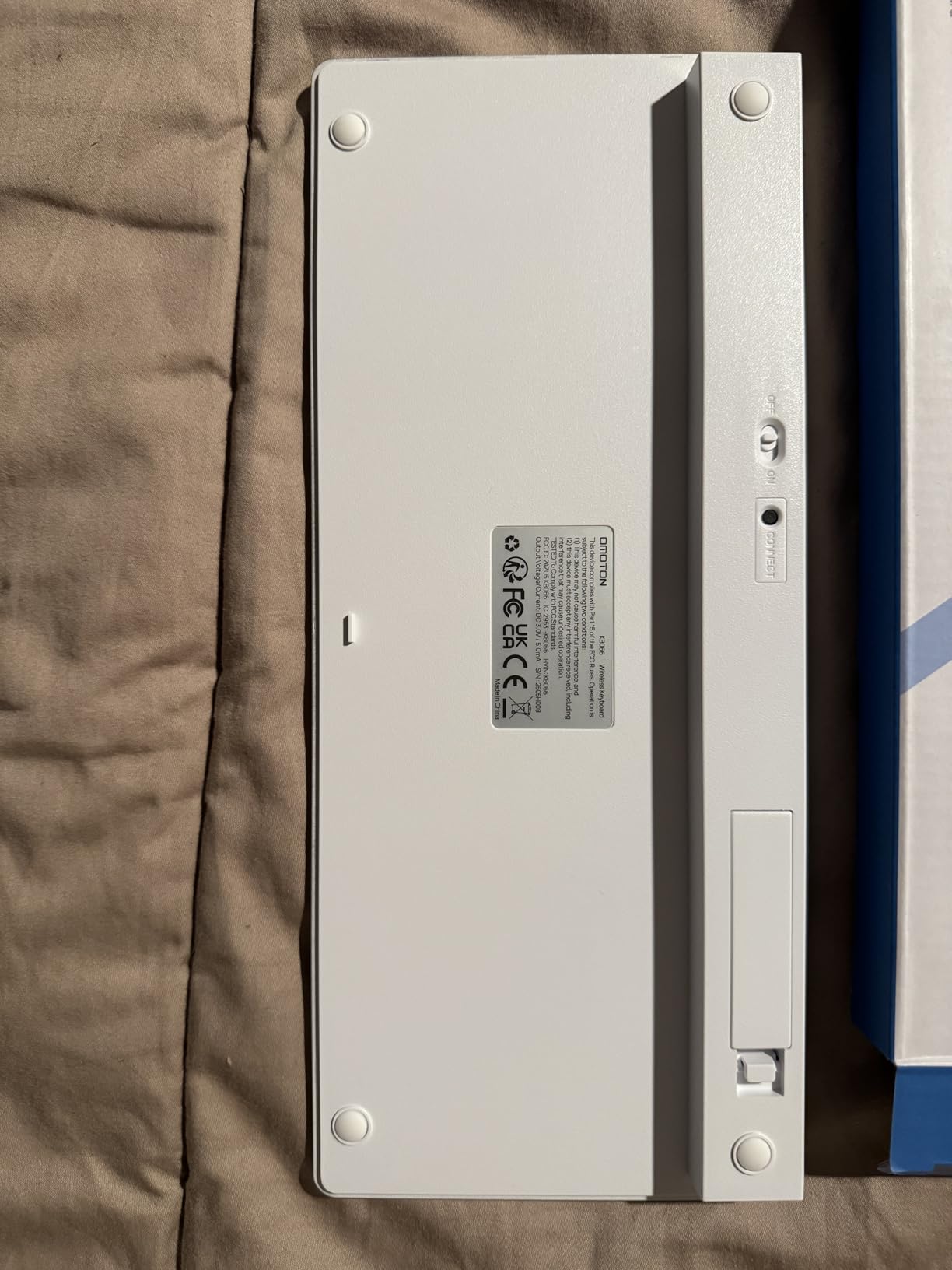
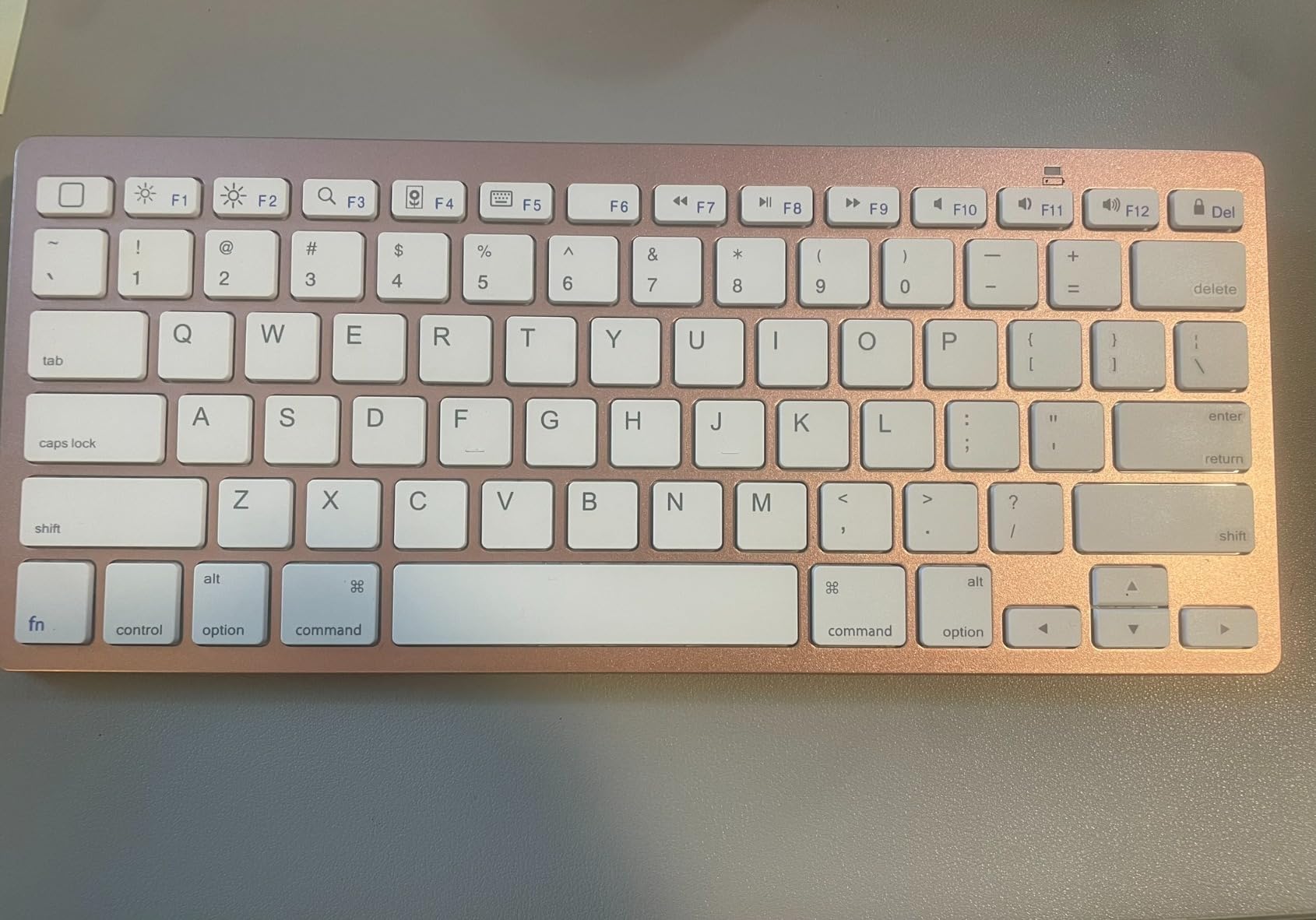
This one is 0.2 inch thin, weighs 280 grams, and runs about 400 hours on two AAA batteries with a 10-minute auto-sleep. The 78-key QWERTY layout includes 12 multimedia hotkeys for volume, brightness and media.
It is listed for iPad A16 11th and 10th generation, iPad Pro 11, 12.9 and 13 inch, iPad Air, iPad mini and recent iPhones, so compatibility is not the problem. Owners favour the thin build and reliable Bluetooth.
The limits are simple. It is not backlit, the function keys behave properly only on Apple systems, and the AAA batteries are not included, so add those to your list on day one.
Who this suits
If you deliver illustration alongside written notes, write client briefs, or keep a written colour reference per piece, this saves real time. It is also the one to buy if you draw on the sofa with the tablet flat.
What it costs you
It is not a shortcut keyboard. If your problem is menu diving during painting, the HUION keypad is the one that changes workflow. Keep the two purposes separate.
How to Choose iPad Accessories for Digital Artists
Most wrong purchases in this category come from buying by brand instead of by the problem you are trying to solve. Four questions decide nearly everything, and the first is the hardest to ask honestly.
Paper feel or drop protection
A matte PET protector gives you friction, control and an anti-glare surface at the cost of some brightness and a 3H to 9H hardness rating. Tempered glass gives you hardness and vibrancy at the cost of a slippery drawing surface. Painters choose texture. If the iPad is mainly for viewing and travel, choose glass.
On tip wear: a rougher matte surface does shorten nib life, and reviewers of the ESR Geo note exactly that with the supplied tips. The fixes are unglamorous. Ease pressure on light line work, buy better replacement tips rather than the cheapest pack, and keep two spares where you draw. Budget for a change once or twice a year with daily drawing rather than treating it as a hidden cost.
Stylus generation and compatibility
No, iPad accessories do not all work with every iPad, and this causes more wasted returns than anything else. The Apple Pencil Pro lists iPad Pro 11 and 13 inch on M4 and M5, iPad Air on M2, M3 and M4, and iPad mini A17 Pro. The third-party styluses here run wider, covering 2018 models onward, but none give you pressure sensitivity.
Screens are equally model-specific. The 13 inch Pro paper-feel film fits only M4 and M5, and the base-model matte film fits only the A16, 10th generation and 11 inch Air. Stands and cases are easiest to get wrong because slot dimensions change between sizes. Check the model number on the back of your iPad before ordering anything sized.
Palm rejection, calibration and parallax offset
Palm rejection is on by default in Procreate and works well, so the glove is a refinement rather than a necessity. It earns its place when you rest your hand flat, draw small-handed, or when one accidental dot would cost you a finished piece.
Parallax offset is the complaint almost no accessory guide covers, and no accessory fixes it because it is a display setting. Your hand and the Pencil tip sit on different planes, so a mark can land slightly away from where the tip appears to touch. Open Settings, Accessibility, Pointer Control, Touch, and use the Calibration tool with the Pencil in a natural drawing grip. This takes two minutes and it resolves the most common reason artists say something feels wrong when nothing is broken.
What you can skip
Plenty. You do not need a keyboard to draw, a hub unless you are importing files or driving an external display, or a second stylus if you already own one with pressure. You do not need a glove if your hand stays clear of the screen, and you do not need a keyboard case, which most artists try once and abandon because it is useless mid-painting.
Also skip buying a protector for a model you do not own, and skip the cheapest third-party stylus expecting illustration-grade results. Those are the two returns I see most often here.
Frequently Asked Questions
Which iPad is best for digital artists?
The iPad Pro with the latest chip gives you the most pressure and tilt headroom, and it pairs with the Apple Pencil Pro, the only stylus here with variable pressure and squeeze gestures. The iPad Air is the better value for most illustrators and supports the same Pencil. Accessories change the answer, because a matte protector and a stable stand matter more than the chip gap for most working artists.
Do all iPad accessories work with every iPad?
No. Stylus generation, screen size and case fit are all model-specific. The Apple Pencil Pro lists iPad Pro 11 and 13 inch on M4 and M5, iPad Air on M2, M3 and M4, and iPad mini A17 Pro. Screen protectors are cut per model, and stands and cases have slot dimensions that differ between sizes. Check your exact model number before ordering.
How do I make my iPad screen feel like paper?
Add a matte or paper-texture screen protector. The textured PET surface adds controlled friction so Pencil strokes stop sliding across bare glass, which gives you far better line control. Most models also gain an anti-glare coating. The trade-off is slightly muted colour and brightness, and a softer surface that scratches more easily than tempered glass.
Will paper texture screen protectors wear out my Apple Pencil tip?
Yes, a rougher matte surface shortens nib life, and reviewers of third-party styluses note that supplied replacement tips wear faster on paper-feel films. You can slow it by easing pressure on light line work, using better replacement tips and keeping spares on hand. Budget for a tip change once or twice a year with daily drawing rather than treating it as an unexpected cost.
What iPad accessories are best for travel?
A case with secure Pencil storage plus a small USB-C hub is the practical pairing. The hub covers importing reference files and driving an external display without a dock, and it works with other USB-C devices too. A Pencil resting magnetically against the tablet is not enough protection in a moving bag, so keep it in a sleeve. For drawing, the two-finger glove is the one accessory worth carrying.
What is the best iPad stand for drawing?
It depends on where and how long you draw. An aluminium desktop stand with locking adjustment is best for a fixed desk and larger screens, because it will not wobble during heavy strokes. A bamboo stand adds Pencil charging for smaller tablets. On the couch or in bed, a lap desk or folio case beats any desktop stand, because angle stability matters more than height.
Conclusion: The Best iPad Accessories for Digital Artists in 2026
Start with three things, not twelve. A paper-feel protector for your exact model, a grip or two-finger glove for your drawing hand, and a stand that will not slide. Those three fix the friction, the accidental taps and the wrist strain that make a capable tablet feel wrong.
Add the Apple Pencil Pro if you paint with pressure on a recent iPad, the HUION keypad once tool switching starts costing real minutes, and the BENFEI hub only if you work wired at a desk. Everything else here is a refinement on a setup that already works.
We earn a commission from qualifying purchases, which does not change the ranking. If a pick stopped earning its place in my kit, it would not be here.