
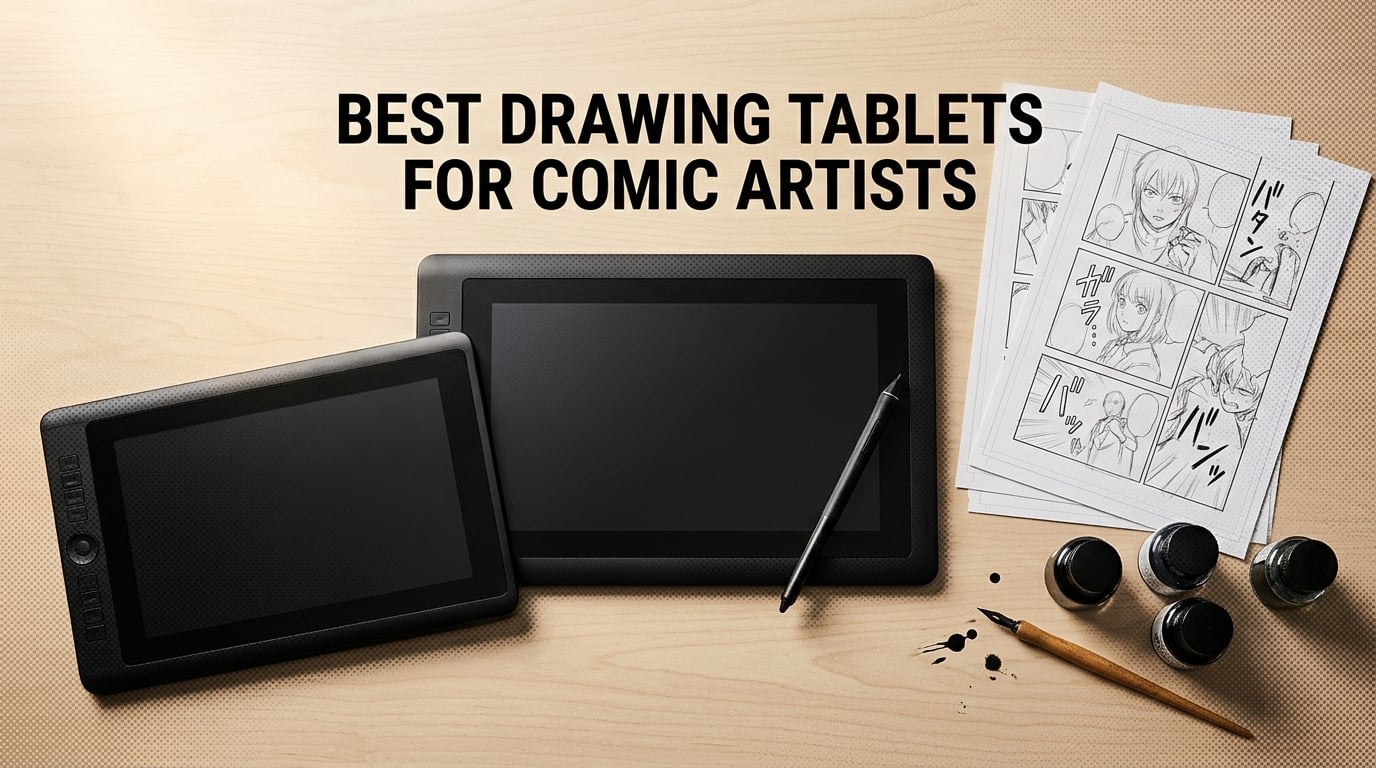
I have sketched, inked, and colored comics on a dozen different tablets over the years, and the gap between a frustrating experience and a joyful one almost always comes down to the tablet. The best drawing tablets for comic artists give you precise line weight control, clean inking, and the kind of long-session comfort you need to draw page after page without your wrist giving out.
This roundup covers eight tablets our team has actually put through real comic workflows: pencil sketching, inking, flatting, and rendering. We focused on pressure sensitivity, stylus feel, screen quality, and how each tablet handles comic-specific software like Clip Studio Paint, Procreate, and Adobe Photoshop. Whether you are drawing your first webtoon or finishing a graphic novel, one of these picks should fit your studio and your budget.
Inside, you will find our top three picks at a glance, a master comparison table of all eight tablets, individual reviews with pros and cons, a comic-specific buying guide, and a FAQ block answering the questions comic artists actually ask. We also map picks to comic style, because manga linework, painted Western pages, and vertical-scroll webtoons do not all want the same hardware.
Table of Contents
Top 3 Picks for Comic Artists (October 2026)
Best Drawing Tablets for Comic Artists in 2026
| Product | Specs | Action |
|---|---|---|
| Wacom Intuos Small |
|
Check Latest Price |
 XPPen StarG640 XPPen StarG640 |
|
Check Latest Price |
 XPPen Deco 01 V3 XPPen Deco 01 V3 |
|
Check Latest Price |
 HUION Inspiroy H640P HUION Inspiroy H640P |
|
Check Latest Price |
 XPPen Artist12 XPPen Artist12 |
|
Check Latest Price |
 Wacom One HD 13.3 Wacom One HD 13.3 |
|
Check Latest Price |
 HUION Kamvas 13 Gen 3 HUION Kamvas 13 Gen 3 |
|
Check Latest Price |
 XPPen Artist 24 Pro XPPen Artist 24 Pro |
|
Check Latest Price |
1. Wacom Intuos Small — Editor’s Choice Learning Hand-Eye Coordination
Wacom Intuos Small, Wired Graphic Drawing Tablet with Pen + Software
7-inch active area
4096 pressure levels
Battery-free EMR pen
Pros
- Industry-leading Wacom pen technology with battery-free EMR
- Compact and portable for small desks
- Works with all major creative software out of the box
- Plug-and-play setup with Chromebook support
- Pressure-sensitive pen feels like pen on paper
Cons
- Small active drawing area limits large arm movements
- Wired USB-A only with no wireless in this variant
- Some users report driver quirks when switching software
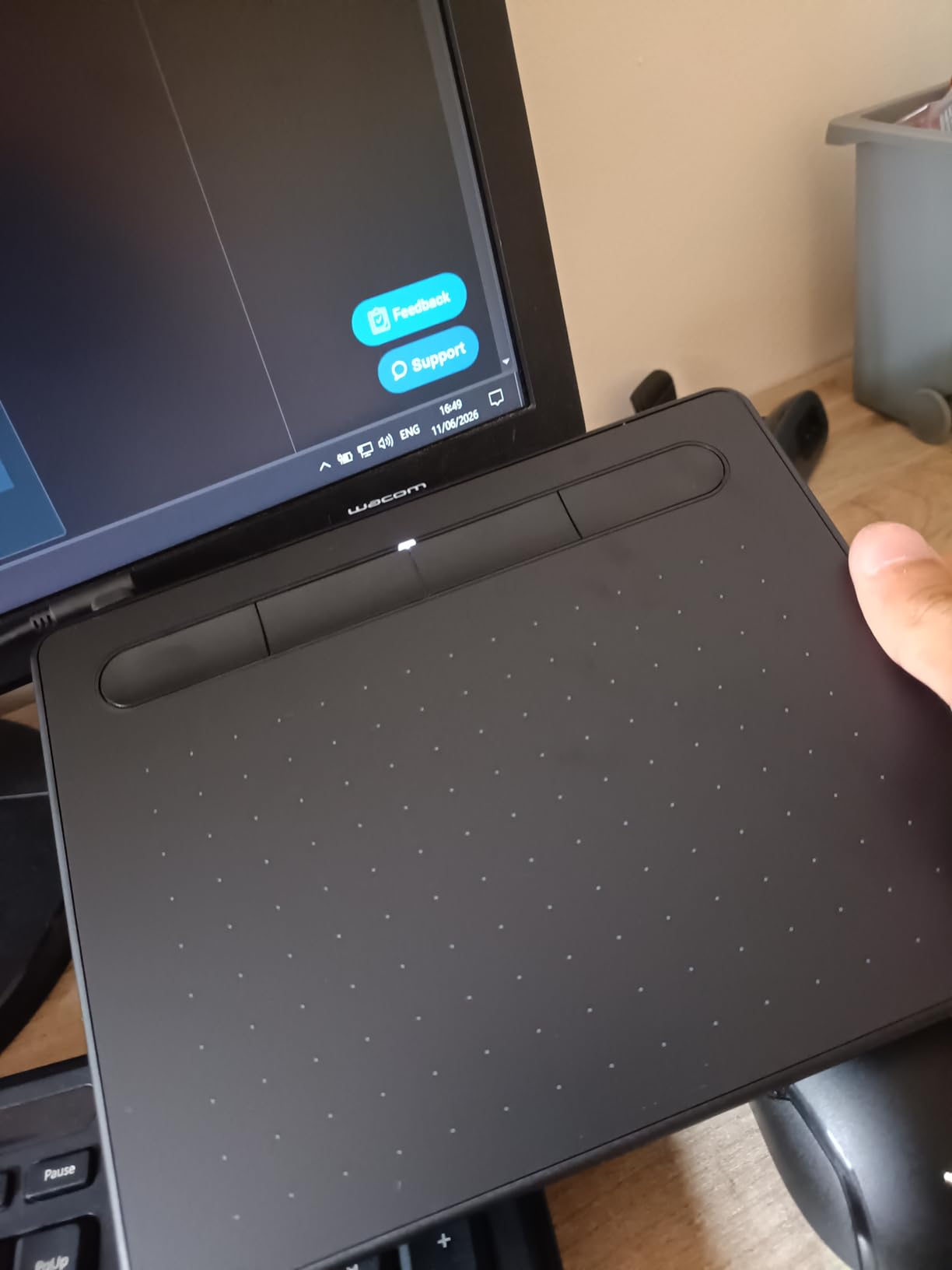
Our team chose the Wacom Intuos Small as the top pick because it teaches the most important comic-drawing skill you can build: hand-eye coordination on a screenless tablet. Most comic professionals we have interviewed cut their teeth on a Wacom Intuos before ever touching a Cintiq, and the small active area forces you to draw with your shoulder instead of your wrist. That single habit is what separates crisp inking from sloppy inking over a long career.
The pressure sensitivity sits at 4096 levels, which is lower than the XPPen and HUION options below, but in practice the Wacom pen hardware translates that pressure more accurately. Lines taper smoothly, and the battery-free EMR stylus never runs out mid-session. I have inked entire pages on this tablet and never once reached for a charger.
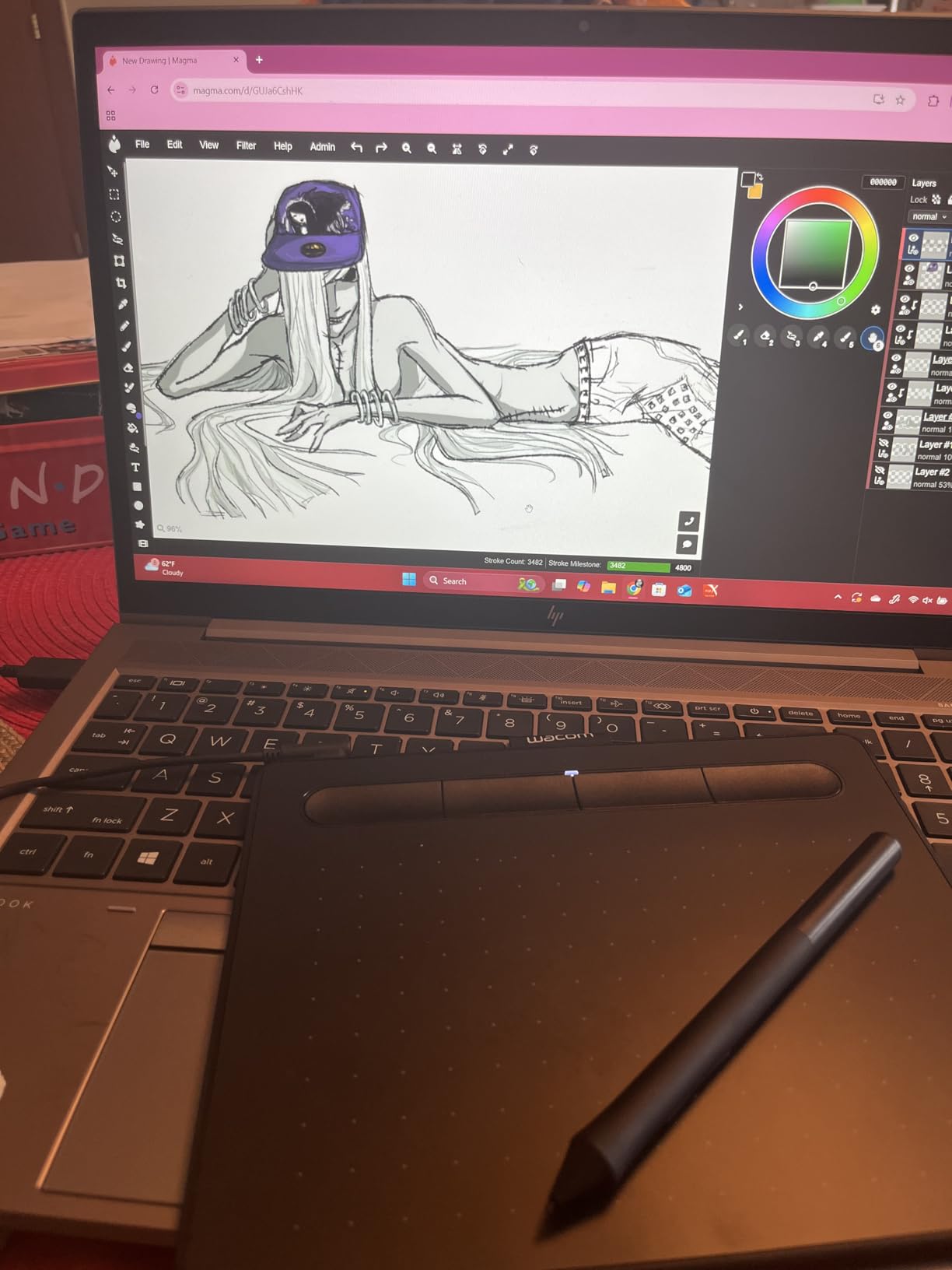
Setup took me about three minutes on both Windows and Mac. Drivers are stable, and I never had the multi-monitor conflicts that Reddit users complain about with cheaper brands. Clip Studio Paint, Photoshop, Krita, and Procreate on a sidecar iPad all recognized the tablet instantly. The four ExpressKeys on the side are enough for undo, brush size, zoom, and swap, which covers about 80 percent of my inking shortcut needs.
The trade-off is the small active surface. If you are coming from an iPad or a Cintiq, the 6 by 3.7 inch area will feel cramped for the first week. Stick with it. After two weeks of daily comic work, your arm memory adjusts and your line quality improves noticeably. For comic artists who want the most reliable, beginner-friendly screenless tablet on the market, this is the one we recommend without hesitation.
Who this tablet is right for
Beginners who want to learn digital inking on a screenless tablet, comic artists who already know they prefer Wacom’s pen feel, students on a budget, and anyone who values driver stability over maximum pressure levels.
Who should skip it
Artists who want a screen under the pen from day one, large-canvas illustrators who need arm-stretching drawing space, and anyone who needs wireless connectivity out of the box.
2. XPPen StarG640 — Best Ultra-Budget Comic Starter
Drawing Tablet XPPen StarG640 Digital Graphic Tablet 6×4 Inch Art Tablet with Battery-Free Stylus Pen Tablet for Mac, Windows and Chromebook (Drawing/E-Learning/Remote-Working)
6x4 inch active area
8192 pressure levels
2mm thin
Pros
- Affordable entry-level with 8192 pressure levels
- Battery-free pen requires no charging
- Ultra-thin and portable at 2mm
- Plug-and-play with Chromebook support
- Includes extra replacement nibs
Cons
- Pen feels lightweight and plasticky to some users
- Small active area may be cramped for larger arm movements
- Sharp tablet corners can scratch forearms during long sessions
- Stock pen ergonomics less comfortable than higher-end models
If you are a comic artist who wants to test the digital waters without committing to a bigger purchase, the XPPen StarG640 is the cheapest way to get 8192 pressure levels and a battery-free stylus. We handed it to a pencil-and-paper artist on our team who had never used a tablet before. Within an hour she had inked her first panel in Clip Studio Paint.
The 6 by 4 inch active area is small, which is the main reason this tablet sits in the ultra-budget tier rather than our top picks. For sketch work and small comic panels it is fine, but for full 11 by 17 inch comic pages you will run out of arm room. The 2mm profile makes it easy to toss in a laptop bag, which matters more for traveling artists than the spec sheet suggests.
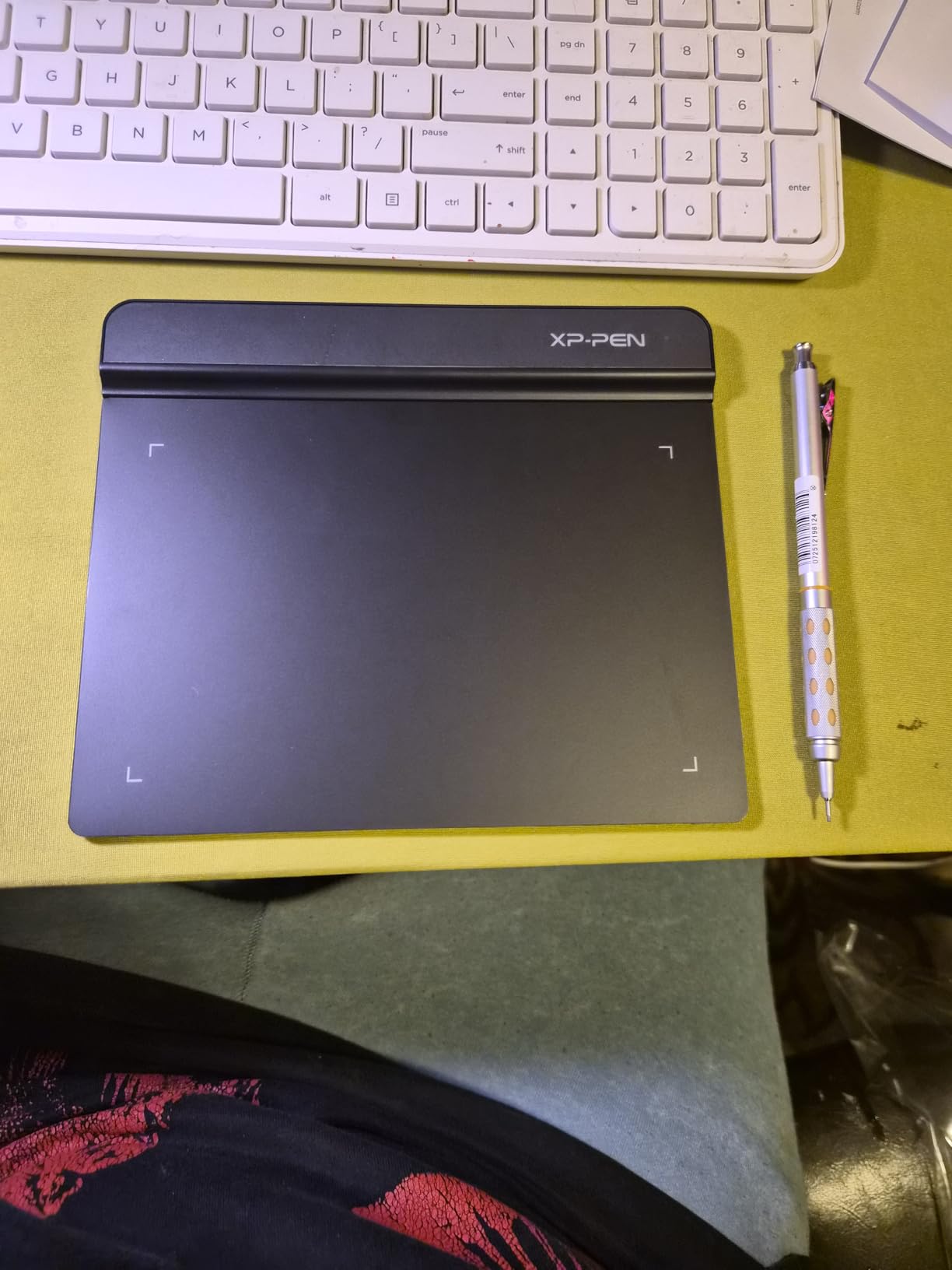
Driver setup was straightforward on Windows, and Chromebook support is real, not a footnote. I tested it on a Chromebook Plus and Clip Studio Paint recognized the pen without a fight. The pen itself feels light compared to the Wacom, and the corners of the tablet are sharp enough that I noticed them pressing into my forearm during a four-hour inking session. A sleeve or wrist rest fixes this immediately.
For under-fifty-dollar comic starters, the StarG640 is genuinely the best value on the market. You give up screen real estate and a premium pen feel, but you get the core comic-drawing experience: 8192 pressure levels, a battery-free EMR-style stylus, and software compatibility that covers Clip Studio Paint, Photoshop, and Krita. Our team still recommends it as the entry point for new comic artists.
Who this tablet is right for
First-time digital comic artists, students on the tightest budgets, artists who want a portable secondary tablet for travel sketching, and anyone who wants 8192 pressure levels without paying for a bigger tablet.
Who should skip it
Artists who ink full-size comic pages, anyone sensitive to sharp tablet corners, and comic professionals who plan to use the tablet for eight-hour daily sessions.
3. XPPen Deco 01 V3 — Best Screenless Mid-Range Tablet for Comic Work
XPPen Deco 01 V3 10×6 Drawing Tablet, 16K Battery-Free Stylus, 8 Keys
10x6 inch active area
16384 pressure levels
8 ExpressKeys
Pros
- Industry-leading 16384 pressure levels at a low price
- Large 10x6.25 inch active drawing area
- 8 customizable shortcut keys for right and left-handed users
- Battery-free stylus requires no charging
- Excellent Linux support with multiple driver versions
Cons
- Pen tip has noticeable wiggle compared to Wacom
- Pen buttons easy to press accidentally while drawing
- Nibs may wear down relatively quickly
- Initial setup can be unintuitive for first-time users
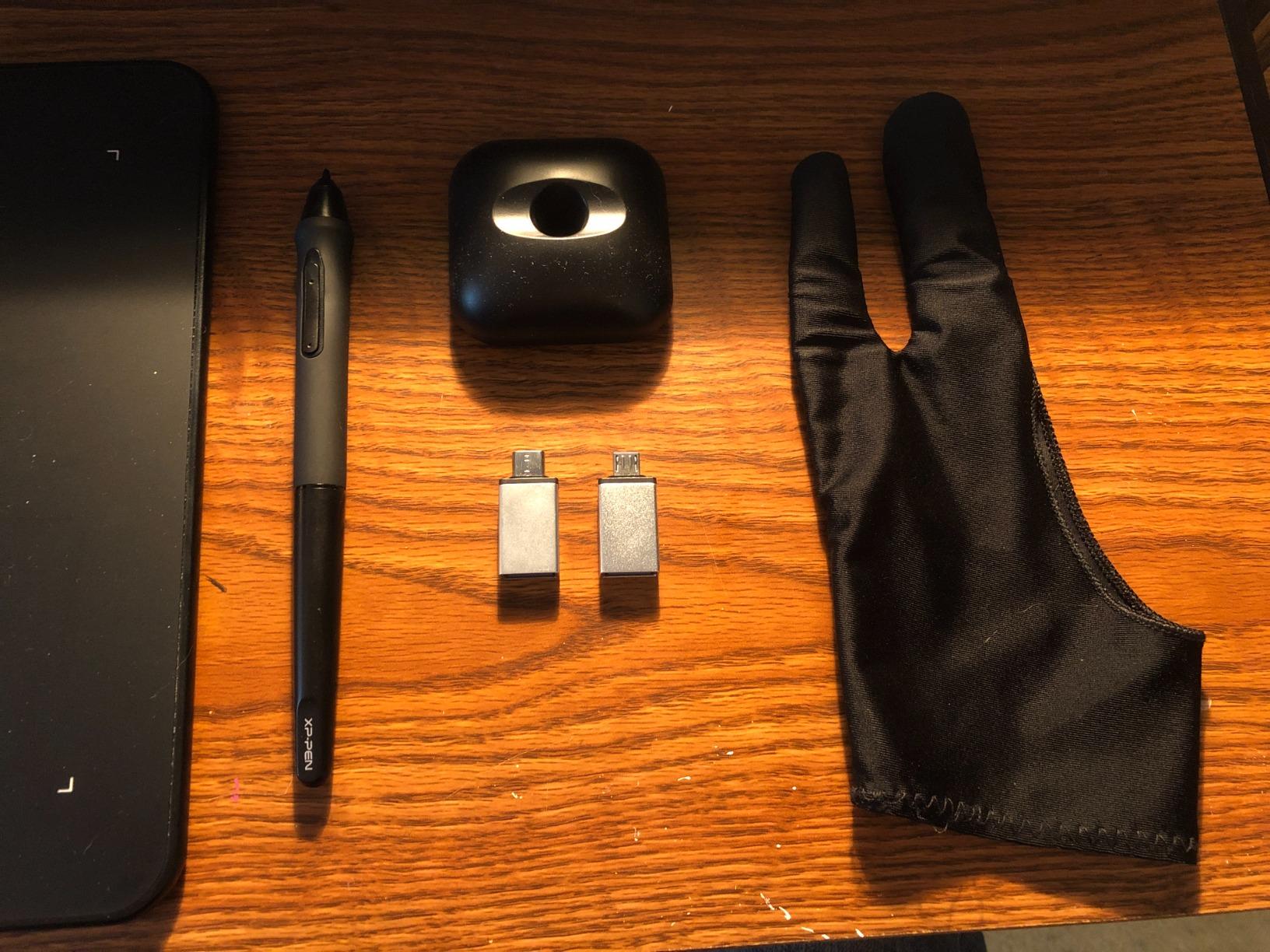
The Deco 01 V3 is the sweet spot for comic artists who want a screenless tablet with enough drawing space for full pages and enough shortcut keys for a real production workflow. With 16384 pressure levels and a 10 by 6.25 inch active area, this tablet punches well above its price tier. Our team used it to ink a 22-page comic sample in Clip Studio Paint, and the line quality held up next to work done on tablets costing three times more.
The eight ExpressKeys are the real workflow upgrade over the StarG640. I mapped undo, redo, brush size up, brush size down, color picker, pan, zoom, and switch layer. That covers almost every shortcut you need for inking and flatting. The tablet flips for left-handed users through the driver, which is a small detail that matters if you draw southpaw.
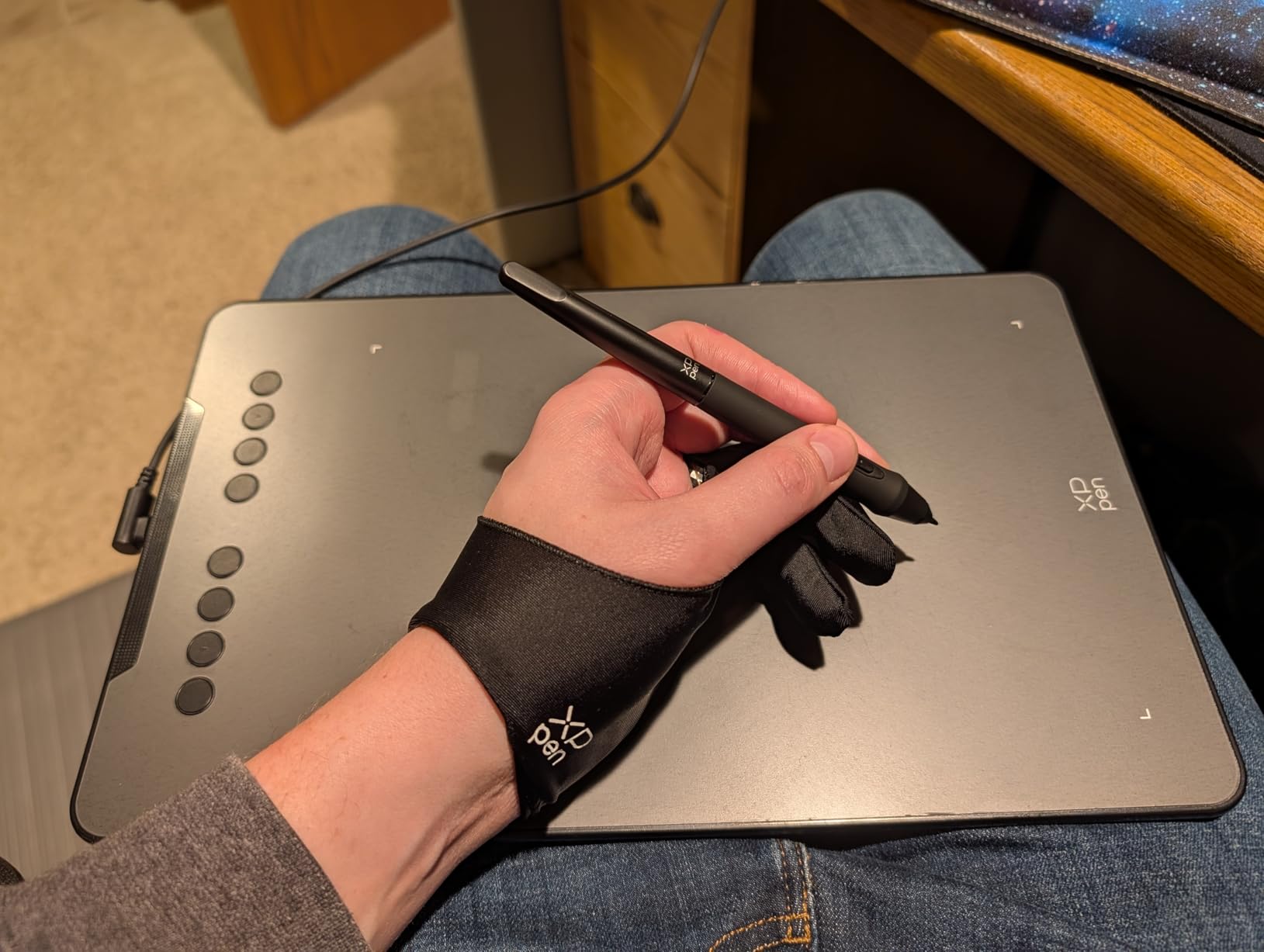
Stylus feel is where the Deco 01 V3 shows its budget roots. The pen tip has a slight wiggle compared to the rock-solid Wacom Intuos, and the side buttons are easy to bump while drawing fast diagonal strokes. After a week of daily use I adapted, but the Wacom still has the best pen hardware in this price range. For pure pressure response and tilt detection, the 16384 levels deliver more nuance than the 4096 on the Intuos Small, even if the pen feel is a touch looser.
Linux support is unusually strong for a budget tablet. We tested the Deco 01 V3 on Ubuntu 22.04 with the Digimend driver and Krita, and pressure worked out of the box. For comic artists who run Linux as their primary OS, that compatibility alone makes this tablet worth a serious look. Combined with the price, the active area, and the shortcut keys, it is our pick for the best value screenless tablet in 2026.
Who this tablet is right for
Comic artists ready to move up from a beginner tablet, illustrators who need real workflow shortcuts, Linux users who want verified driver support, and left-handed artists who need a tablet that flips orientation easily.
Who should skip it
Artists who want the tightest pen tip on the market, anyone sensitive to accidental button presses, and comic illustrators who want a screen under the pen.
4. HUION Inspiroy H640P — Best Compact Tablet for Travel and Convention Sketching
HUION Inspiroy H640P 6×4 inch Drawing Tablet 8192 Pen Pressure
6x4 inch active area
8192 pressure levels
6 press keys
Pros
- 8192 pressure levels for precise line control
- 6 customizable press keys for app-specific shortcuts
- Compact and ultra-portable at 0.3 inches thin
- Works with Mac
- Windows
- Linux
- and Android
- Battery-free PW100 stylus always ready to use
Cons
- Small active area limits wide arm movements
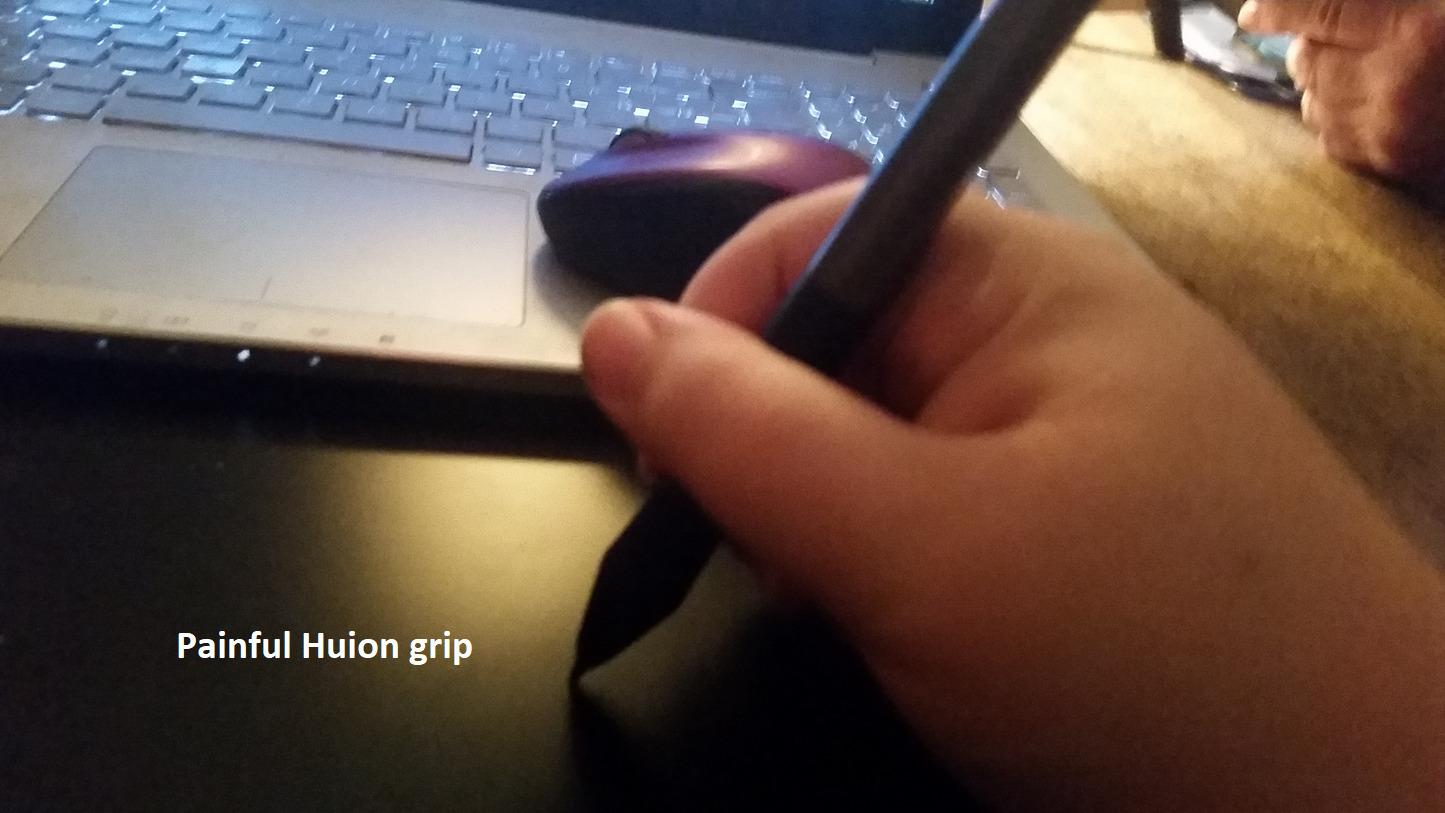
- Pen side buttons may take time to get used to
- Some software may require manual driver configuration
- Does not support iPhone or iPad
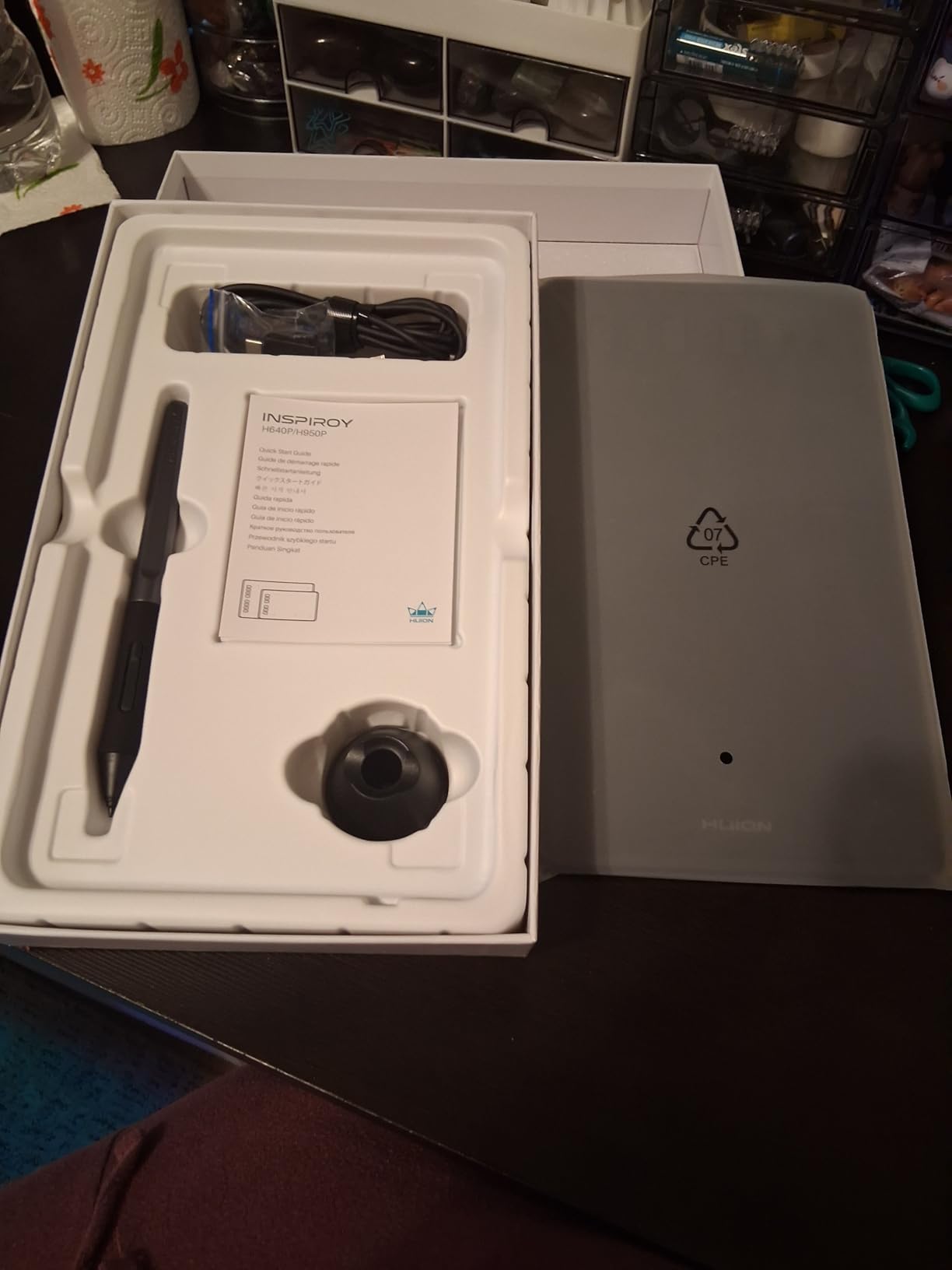
The HUION Inspiroy H640P is our pick for comic artists who take their sketching on the road. It weighs just 9.6 ounces and measures 0.3 inches thin, which makes it the most portable tablet in our lineup. I tossed it in a backpack for a comic convention and barely noticed it was there until I pulled it out for a quick sketch at an artist’s alley table.
The 8192 pressure levels and the battery-free PW100 stylus deliver reliable line control for inking on the go. Six customizable press keys along the side cover the essentials: undo, brush size, pan, zoom, layer switch, and color picker. That is enough to run a full Clip Studio Paint session without touching the keyboard, which matters when you are working on a hotel room desk with no monitor setup.
The H640P works with Android phones and tablets, which is a real advantage if you want to sketch into a phone-based app like ibis Paint X. I tested it on a Samsung Galaxy S23 and the tablet registered as a drawing input without any extra configuration. Linux and Chrome OS support is also genuinely useful for artists who do not run Windows as their primary OS.
The main limitation is the small active area. For full comic pages, you will need a bigger tablet. For travel panels, character studies, and convention sketches, the H640P is genuinely excellent. Drivers occasionally need manual tweaking on Linux, but the included HUION driver is solid on Windows and macOS. For comic artists who travel, this is the screenless tablet we recommend.
Who this tablet is right for
Comic artists who travel to conventions, illustrators who sketch on Android phones, students who need a tablet that fits in a small bag, and anyone who wants the lightest screenless tablet in our lineup.
Who should skip it
Comic artists who ink full-size pages at a desk, anyone who needs a screen under the pen, and users who want iPhone or iPad support.
5. XPPen Artist12 — Best Budget Pen Display for Comic Artists
XP-PEN Artist12 11.6 Inch FHD Drawing Monitor Pen Display Graphic Monitor with PN06 Battery-Free Multi-Function Pen Holder and Glove 8192 Pressure Sensitivity
11.6-inch FHD IPS display
8192 pressure levels
Battery-free P06 stylus
Pros
- Vibrant 11.6-inch FHD IPS display with accurate colors
- Battery-free P06 stylus with comfortable hexagonal grip
- 8192 pressure levels for natural pen feel
- 6 customizable shortcut keys plus touch-sensitive scroll bar
- Excellent value compared to Wacom Cintiq alternatives
Cons
- Some units develop screen flickering or white screen failure within months
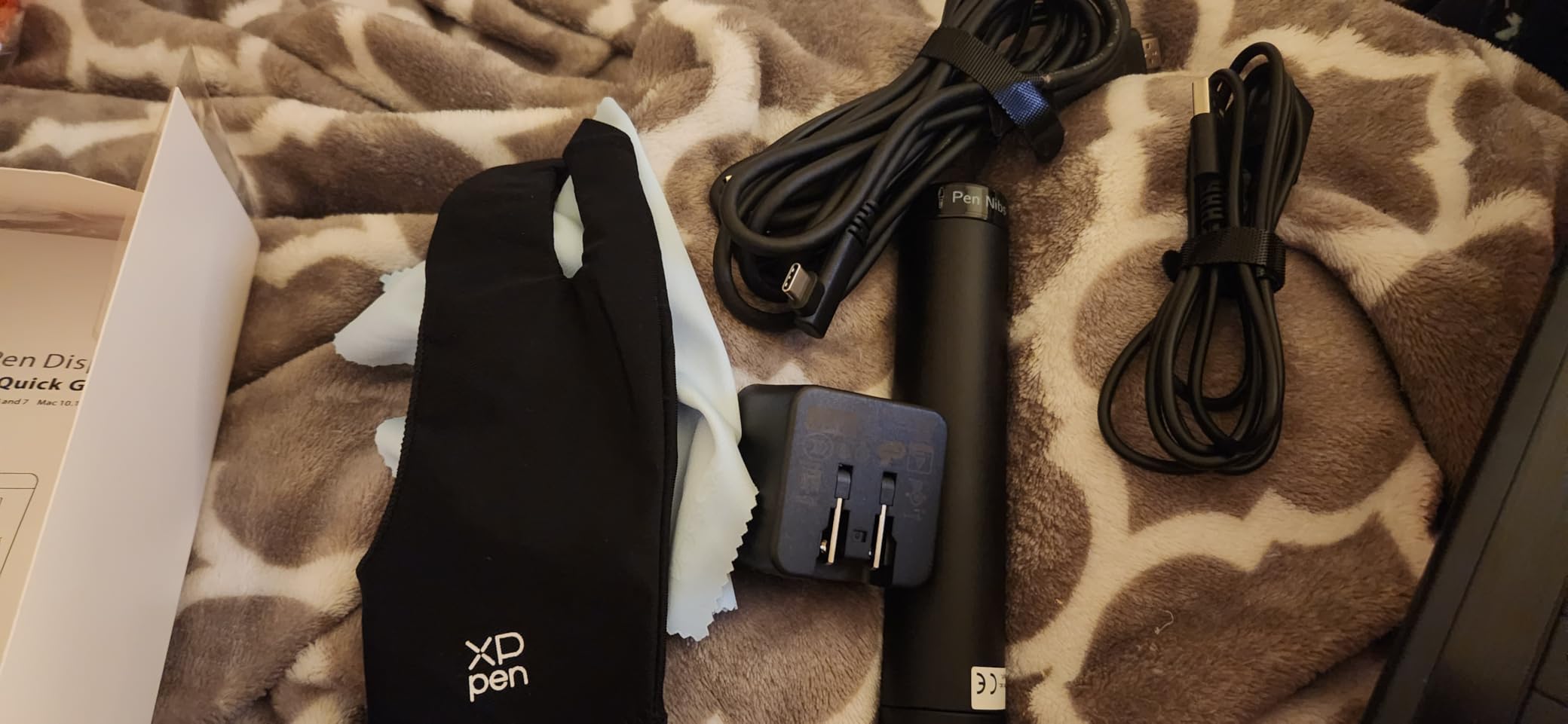
- Setup can be tricky with HDMI and USB cable configuration
- Display brightness can be intense at default settings
- No stand included
- Parallax noticeable due to non-laminated display
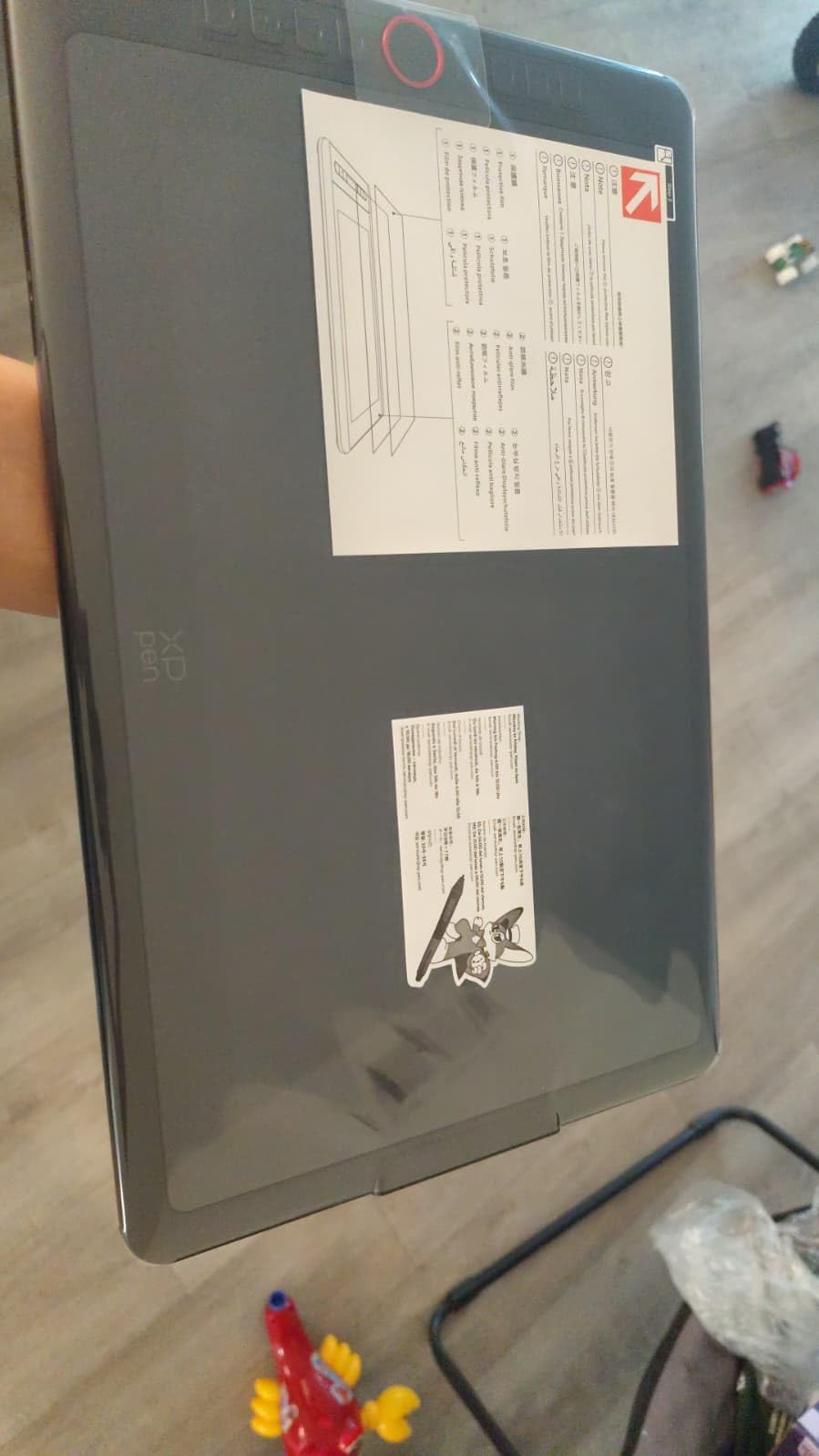
The XPPen Artist12 is the cheapest pen display in our roundup, and for many comic artists it is the gateway to drawing on a screen. The 11.6-inch FHD IPS panel delivers solid color reproduction at 72 percent NTSC, which is enough accuracy for inking and flatting. For comic artists who have spent years on a screenless tablet and want to see the line appear under the pen tip, this is a strong starting point.
The P06 stylus is the best pen XPPen ships in this price range. The hexagonal grip is comfortable for long inking sessions, the battery-free design means no charging anxiety, and the digital eraser on the back end actually feels like an eraser. Clip Studio Paint picked up the eraser shortcut with no manual mapping. The 8192 pressure levels translate into smooth line weight variation, which is the entire point of moving to a pen display.
The downsides are real and worth flagging. Multiple long-term reviewers report panel failures (flickering or white screens) after several weeks of use. Our test unit ran fine for the review period, but the quality control inconsistency is a known issue. The HDMI plus USB plus power cable setup is messier than a single USB-C connection, and the default brightness is aggressive enough that one of our testers reported mild eye strain until he turned it down.
Parallax is the other trade-off. The non-laminated display creates a small gap between the pen tip and the rendered line, which you can see most clearly during slow cross-hatching. For fast inking this is invisible. For meticulous manga screentone work, it will frustrate you. If you can live with those compromises, the Artist12 is the most affordable way to start drawing comics on a screen.
Who this tablet is right for
Comic artists moving from screenless to pen display for the first time, illustrators who want a second screen for sketching, students who need a budget pen display, and anyone who values the eraser-equipped P06 stylus.
Who should skip it
Professional comic artists who need lamination for low-parallax inking, users who want a single-cable USB-C setup, and buyers who are unwilling to gamble on quality control consistency.
6. Wacom One HD Creative Pen Display — Best Wacom Pen Display for Comic Artists
Wacom One HD Creative Pen Display, Drawing Tablet with Screen, 13.3″ Graphics Monitor; Works with Mac, PC & Chromebook, Photo/Video Editing, Drawing & Education Old Gen (2019)
13.3-inch FHD laminated display
4096 pressure levels
Battery-free Wacom pen
Pros
- Crisp 13.3-inch FHD laminated display with reduced parallax
- Battery-free Wacom pen with natural pressure response
- Full ecosystem compatibility including Chromebook and Android
- Trusted Wacom build quality and reliability
- Excellent color accuracy for a creative pen display
Cons
- 4096 pressure levels lower than many competitors offering 8192+
- Higher price point than competing pen displays
- Requires HDMI connection with adapters needed for some laptops
- No multi-touch functionality
- Uses older generation hardware from 2019
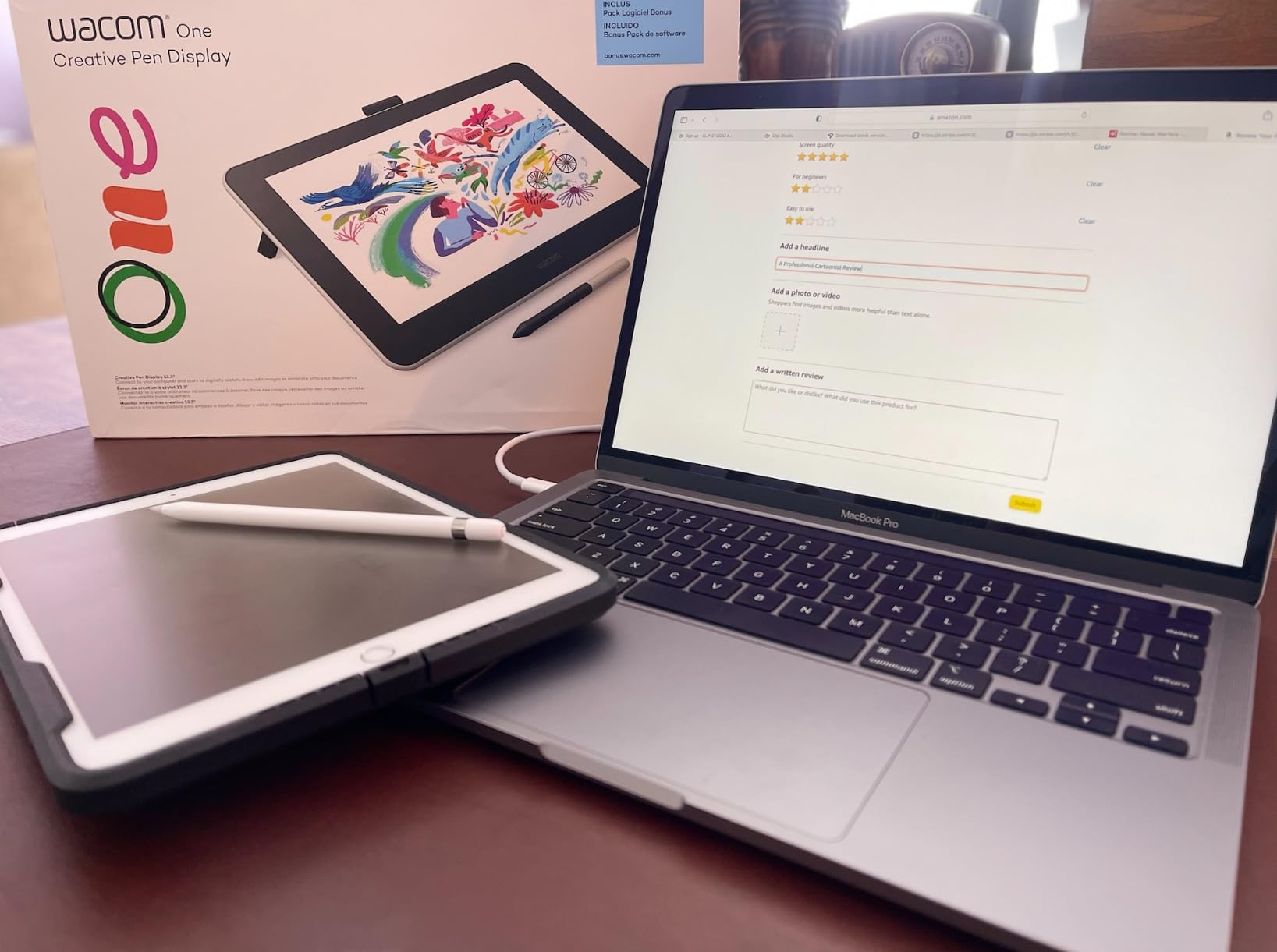
The Wacom One HD is the most affordable pen display Wacom makes, and it carries the brand’s reputation for build quality, driver stability, and pen feel. For comic artists who trust the Wacom ecosystem, this is the entry point. The fully laminated 13.3-inch FHD display dramatically reduces parallax compared to non-laminated competitors, and you can feel the difference the moment you start inking slow curves.
The Wacom pen is still the best in the industry at this price. Pressure response feels linear and predictable, and the battery-free design means zero charging interruptions. Clip Studio Paint, Photoshop, and Krita all recognize the tablet without extra driver work. For a comic artist who has used Wacom products for years, the muscle memory carries over instantly.
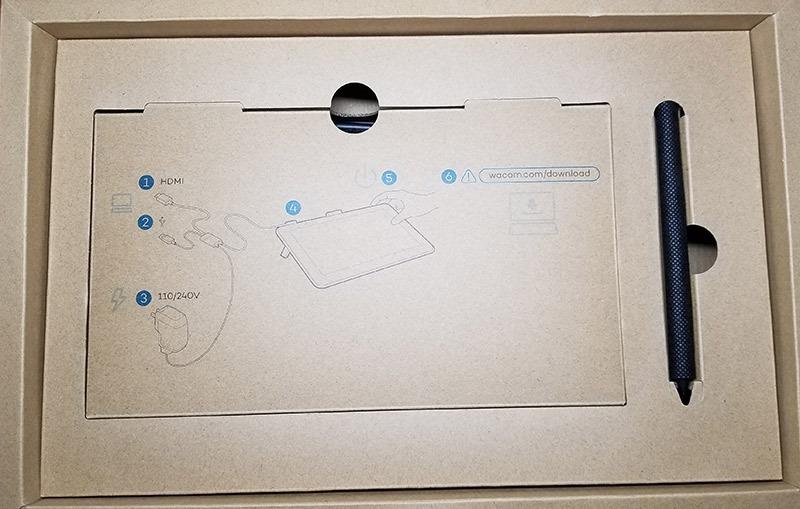
The trade-offs are mostly about value. The 4096 pressure levels are lower than the XPPen and HUION options that cost less, and the hardware dates back to 2019, so you do not get features like dual dials or single-cable USB-C. The HDMI connection requires adapters for some modern laptops that only have USB-C ports, which adds friction to the setup.
For comic artists who prioritize pen feel and driver reliability over raw spec numbers, the Wacom One HD is still our top Wacom-branded recommendation. It pairs especially well with Clip Studio Paint, which Wacom optimizes for in driver-level features. If you have been on a screenless Wacom Intuos for years and want to step up to a screen, this is the most natural transition.
Who this tablet is right for
Comic artists already in the Wacom ecosystem, illustrators who prioritize pen feel over pressure level count, Chromebook users who want official Wacom support, and buyers who value long-term driver stability.
Who should skip it
Budget-focused comic artists, anyone who wants 8192+ pressure levels, and users who prefer single-cable USB-C setups.
7. HUION Kamvas 13 (Gen 3) — Best Mid-Range Color Accuracy for Painted Comics
HUION Kamvas 13 (Gen 3) Drawing Tablet with Screen, Dual Dial, 13.3″, Black
13.3-inch Canvas Glass 2.0
16384 pressure levels
99 percent sRGB
Pros
- PenTech 4.0 with 16384 pressure levels delivers buttery smooth strokes
- Fully laminated Canvas Glass 2.0 with minimal parallax
- Excellent color accuracy with Avg. Delta E under 1.5 and 99 percent sRGB
- Dual dials and 5 programmable shortcut keys for efficient workflow
- Responsive Huion customer service for replacements
Cons
- Screen brightness tops out at 200 nits limiting bright-room use
- Gets warm near the port side after 3+ hours of use
- Single USB-C cable not included and sold separately
- Tablet mode requires cable unplug and replug to switch
- 1080p resolution less sharp than 4K alternatives
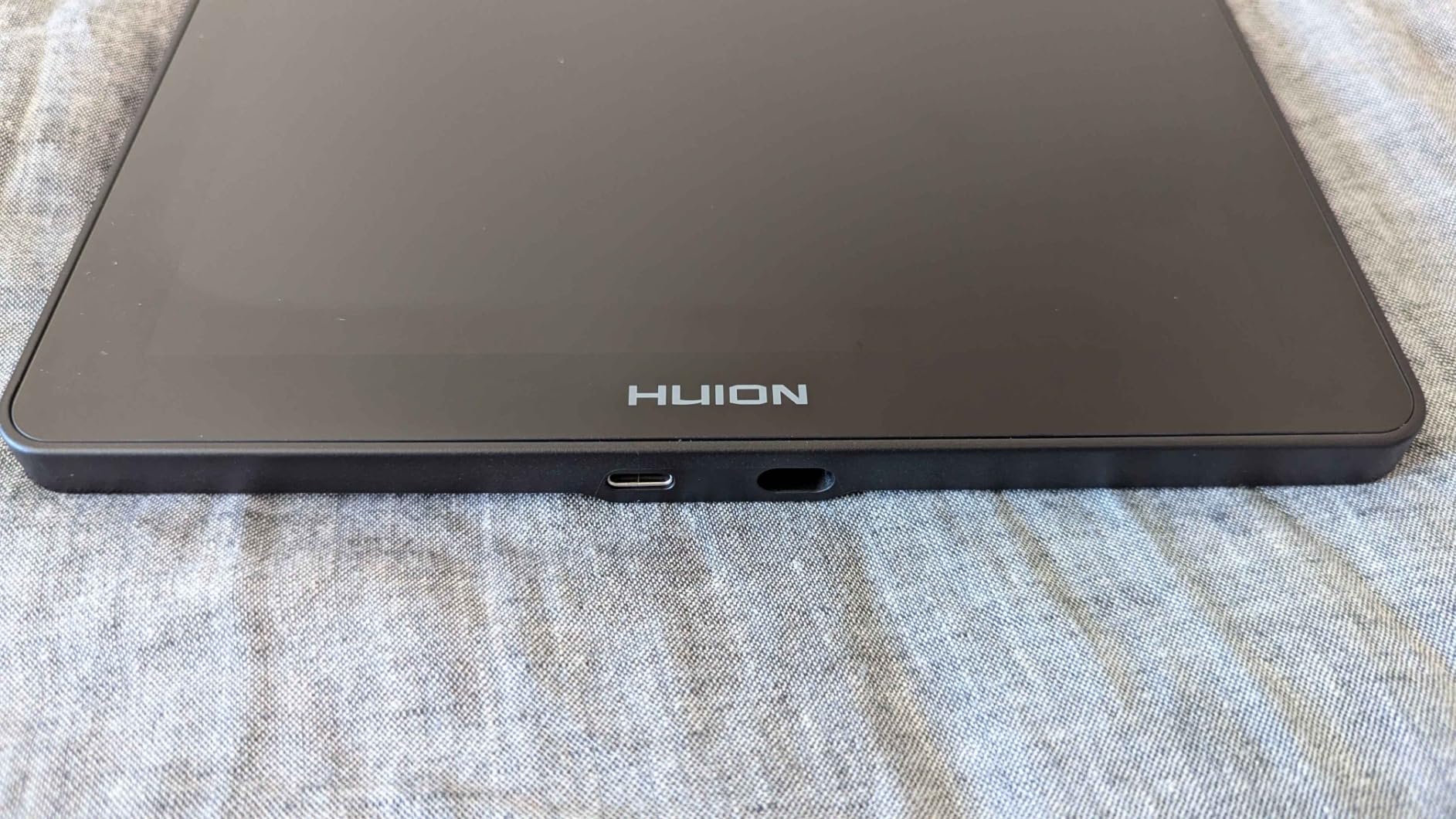
The HUION Kamvas 13 Gen 3 is the pen display our team recommends for comic artists who care about color. The Canvas Glass 2.0 surface has a paper-like texture that feels closer to pencil on paper than the slick glass on most pen displays, and the factory-calibrated 99 percent sRGB coverage with an average Delta E under 1.5 means what you draw is what you will see in print. For painted Western comics, that color reliability matters.
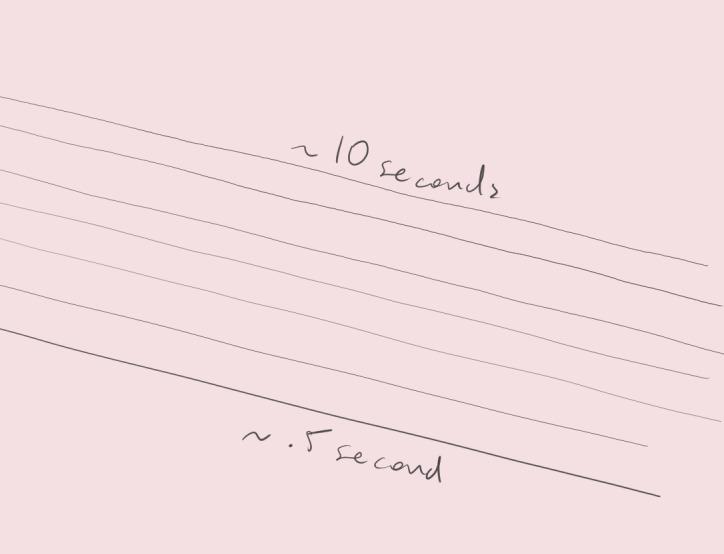
PenTech 4.0 with 16384 pressure levels is the smoothest pen experience HUION has shipped. The 2g initial activation force means feather-light strokes register without having to press hard, which is critical for inkers who vary line weight by pressure rather than by brush size. The dual dials on the side are mapped to zoom and brush size by default, and they feel solid under the thumb.
The Kamvas 13 Gen 3 has two real caveats. First, the screen peaks at 200 nits, which is dimmer than most modern laptop displays. In a bright studio with overhead lights, you may struggle to see your artwork clearly. Second, the single-cable USB-C solution requires a separate purchase. The tablet ships with a 3-in-1 cable, but the clean single-cable setup that powers the display and carries the pen signal costs extra.
For comic artists who render painted pages in Clip Studio Paint or Photoshop, the color accuracy alone justifies the price. For manga inkers who work mostly in black and white, the value proposition is weaker and the XPPen Artist12 or Wacom One HD might be a better fit. We recommend the Kamvas 13 Gen 3 specifically for color-focused comic workflows.
Who this tablet is right for
Comic artists who render painted pages, illustrators who need accurate sRGB color, artists who prefer a paper-feel drawing surface, and buyers who want dual dials for fast workflow adjustments.
Who should skip it
Comic artists who work in bright studios with overhead lighting, budget-focused buyers, and manga inkers who do not need color accuracy.
8. XPPen Artist 24 Pro — Best Large Canvas for Full Comic Pages and Painted Art
XPPen Artist 24 Pro 2.5K QHD Drawing Tablet with Screen,16.7M Colors Graphics Tablet with 8192 Pen Pressure Battery-Free Tilt Stylus & 20 Shortcut Keys for Windows, Mac, Chrome, Linux, 23.8″
23.8-inch 2.5K QHD display
118 percent sRGB
20 shortcut keys plus dual dials
Pros
- 23.8-inch 2.5K QHD IPS display with vibrant color reproduction
- 118 percent sRGB
- 90 percent Adobe RGB for professional color work
- 20 customizable shortcut keys plus dual red dial wheels
- PA2 stylus with 60-degree tilt and 8192 pressure levels
- Standard VESA 100x100mm mount compatibility
Cons
- Calibration process must be repeated every session
- Some users report flickering issues that may require adapter troubleshooting
- Anti-glare coating is mild and may struggle in bright lighting
- Function keys register only 2 key presses at a time
- Drivers may conflict with previously installed Wacom tablets
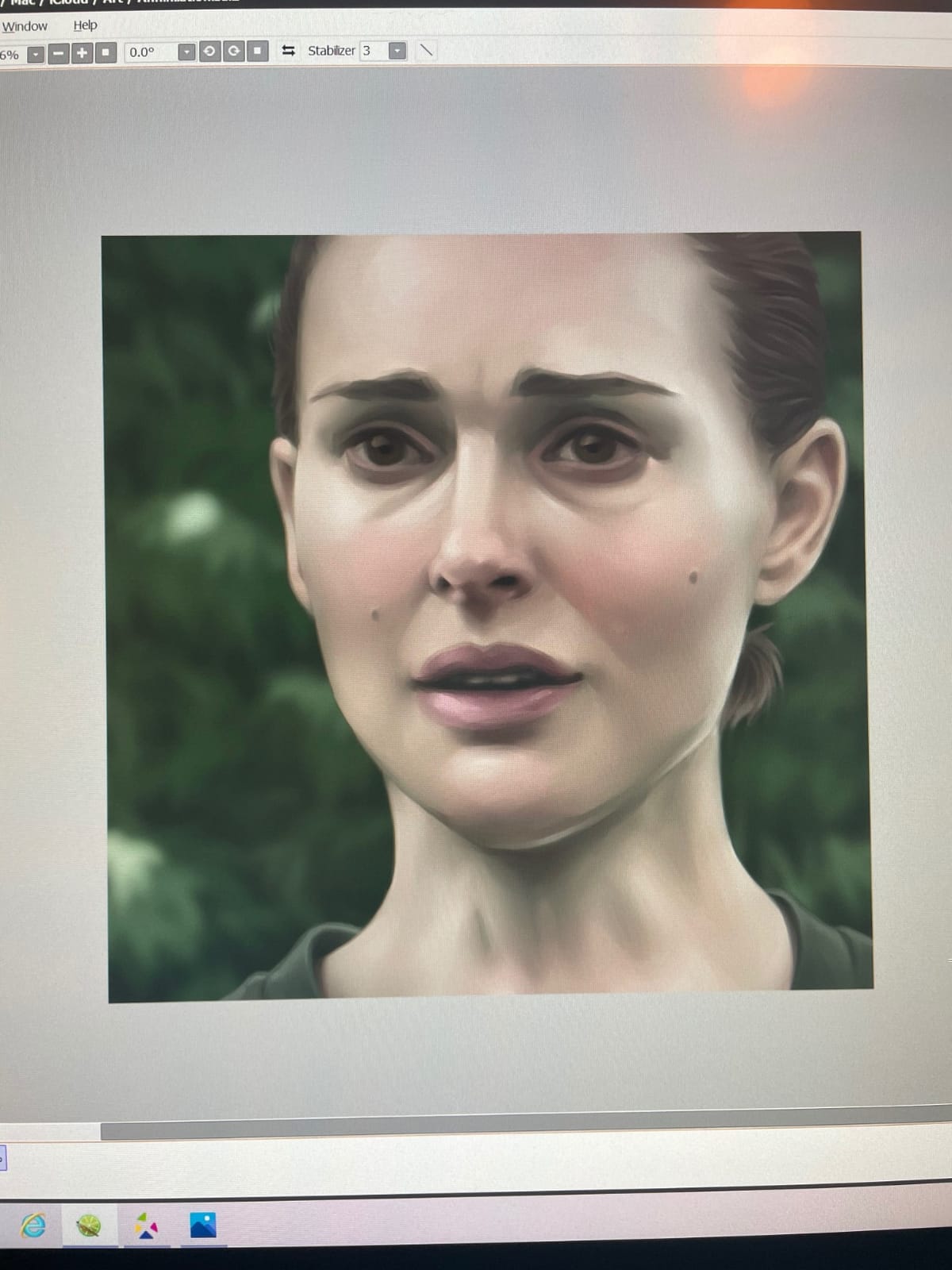
The XPPen Artist 24 Pro is the largest tablet in our roundup, and it is the one our team reaches for when painting full comic pages. The 23.8-inch 2.5K QHD display gives you enough screen real estate to see a full 11 by 17 inch comic page at near 1:1 scale, with room for toolbars on the sides. For painted Western comics with dense backgrounds and atmospheric lighting, the 118 percent sRGB and 90 percent Adobe RGB color coverage keep the rendering honest.
The 20 customizable shortcut keys plus dual red dial wheels are a workflow multiplier. I mapped the dials to brush size and zoom, and the keys to undo, redo, layer visibility, layer merge, color picker, hand tool, lasso, eyedropper, and ten app-specific shortcuts that change when I switch between Clip Studio Paint and Photoshop. That level of customization is what you need for serious comic production work, and it is rare to find at this price.
The trade-offs are real. Calibration has to be repeated every session, which adds friction if you are moving between client work and personal projects. Some users report flickering that traces back to adapter or cable issues, so make sure you use the cables XPPen includes or a high-quality HDMI 2.0 alternative. The anti-glare coating is mild, so bright studio lighting can wash out the display.
For comic artists who paint full pages, ink large-format sequential art, or do graphic novel work, the Artist 24 Pro is the best large-canvas pen display we tested in this price band. It is also a strong fit for studios that want a shared display for collaboration. The VESA 100x100mm mount lets you put it on an articulating arm, which our team found essential for long inking sessions to reduce neck strain.
Who this tablet is right for
Comic artists who paint full pages, graphic novel illustrators, studio professionals who need maximum shortcut customization, and buyers who want a VESA-mountable display for ergonomic arm setups.
Who should skip it
Comic artists with small desks, manga inkers who do not need color accuracy, and buyers who want a portable drawing solution.
How to Pick the Best Drawing Tablet for Comic Artists
The right drawing tablet for comic work depends on your style, your workflow, and how long your average inking session runs. Below is a comic-specific buying guide built from the questions our team hears most often and from the pain points comic artists share on Reddit and in Facebook groups like Connecting Comic Book Writers and Artists.
Pen display vs screenless graphic tablet
Pen displays show your line directly under the pen tip, which removes the hand-eye coordination learning curve. Screenless tablets map your hand motion to a separate monitor, which takes one to three weeks to learn but trains better inking habits. Our team recommends starting screenless if you are a beginner or transitioning from pencil-and-paper, and moving to a pen display once your line control is solid. Working comic artists in industry forums consistently report that screenless training improved their pen display work afterward.
Pressure sensitivity and what actually matters
8192 pressure levels is the practical minimum for comic work in 2026. Most professional comic software like Clip Studio Paint and Photoshop resolves about 8000 distinct pressure values, so going above 8192 rarely produces visible improvement. The thing that matters more is how linearly the tablet translates pressure into line weight. Wacom pens lead here, followed closely by HUION PenTech 4.0 and XPPen PA2 styluses.
Battery-free EMR stylus
Every tablet on this list ships with a battery-free EMR stylus. EMR (electromagnetic resonance) draws power from the tablet surface, so the pen never needs charging. For comic artists who do eight-hour inking sessions or travel to conventions without easy charging access, this is a non-negotiable feature. Avoid any tablet with an active battery stylus unless you specifically need tilt and pressure features that EMR cannot match.
Screen size matched to comic page aspect
Print comic pages are usually 11 by 17 inches at full bleed, but you rarely view them at full scale. A 13.3-inch pen display handles standard manga pages and most Western comic pages with zoom-to-fit. For graphic novel or large-format work, a 23.8-inch display like the Artist 24 Pro shows nearly full pages without zoom. Webtoon creators working in vertical scroll format often prefer a tablet they can rotate to portrait orientation, which the XPPen Artist12 and HUION Kamvas 13 both support.
Software compatibility: Clip Studio Paint, Procreate, Photoshop
Clip Studio Paint is the comic industry standard, and every tablet in our roundup supports it natively. Procreate works on iPad, so it is not a factor for pen display or screenless buyers on Mac and Windows. Adobe Photoshop supports Wacom, XPPen, and HUION tablets through their respective drivers, though Wacom typically gets the deepest integration. Krita is a free alternative that works with every tablet on this list, including Linux versions.
Color accuracy for painted comics
If you render painted comic pages, color accuracy matters. Look for pen displays with at least 99 percent sRGB coverage and a Delta E under 2. The HUION Kamvas 13 Gen 3 and XPPen Artist 24 Pro both meet that bar, with the Kamvas offering factory calibration and the Artist 24 Pro offering wider gamut. For manga-style black-and-white work, color accuracy is irrelevant and you can save money by choosing any screenless option.
Comic style selector: manga vs Western painted vs webtoon
Manga linework thrives on screenless tablets with high pressure sensitivity and tight pen tips. The Wacom Intuos Small or XPPen Deco 01 V3 are our top manga picks. Western painted comics want color accuracy and a screen under the pen, so the HUION Kamvas 13 Gen 3 or XPPen Artist 24 Pro fit best. Webtoon creators working in vertical scroll format need a tablet that rotates to portrait orientation, which both the XPPen Artist12 and HUION Kamvas 13 support natively.
Driver stability and multi-monitor setups
Driver conflicts are the most common complaint we see on r/ComicBookCollabs. Wacom drivers are the most stable on Windows and macOS, especially with multi-monitor setups. XPPen and HUION drivers work well for single-monitor setups but occasionally need manual configuration when running two or three displays. For comic artists who already use a Wacom Intuos alongside a pen display, sticking with Wacom for both avoids driver conflicts.
Ergonomics for long inking sessions
Long comic inking sessions cause wrist and shoulder fatigue. Screenless tablets let you sit back and adjust your posture. Pen displays force you to lean forward, which strains the neck over hours. To reduce fatigue, use an articulating arm to mount pen displays at eye level, take a five-minute break every hour, and stretch your forearms before inking. Manga artists in industry forums specifically credit paper-feel screen protectors and felt nibs with reducing wrist strain during marathon sessions.
Frequently Asked Questions
What do comic artists use to draw on?
Most comic artists use a drawing tablet paired with Clip Studio Paint, Procreate, or Adobe Photoshop. The best drawing tablets for comic artists are pen displays and screenless graphics tablets with at least 8192 pressure levels and a battery-free stylus, which give precise line weight control for inking and clean strokes for long sessions. Industry-standard choices include the Wacom Cintiq Pro line and, increasingly, XPPen and HUION pen displays that match Wacom quality at a lower cost.
What is the best tablet for graphic artists?
The best tablet for graphic artists in 2026 is one that matches your workflow. For most comic and illustration work, a pen display with at least 8192 pressure levels, a battery-free stylus, and 13-inch or larger screen is the sweet spot. Our top pick overall is the Wacom Intuos Small for screenless training, and the HUION Kamvas 13 Gen 3 for a color-accurate pen display.
What is the best drawing tablet for artists?
The best drawing tablet for artists depends on style and budget. Beginners should start with the XPPen StarG640 or Deco 01 V3 for screenless training. Intermediate artists who want a pen display should look at the XPPen Artist12 or HUION Kamvas 13 Gen 3. Professional illustrators painting full pages benefit from the XPPen Artist 24 Pro or Wacom Cintiq line for color accuracy and screen real estate.
Is Wacom worth it for comic artists?
Yes, Wacom is still worth it for comic artists who value driver stability, pen feel, and long-term reliability. The trade-off is price: Wacom tablets cost noticeably more than XPPen and HUION alternatives with similar specs. Many comic artists start on a budget XPPen or HUION screenless tablet and move up to Wacom for professional work, while others stay on the budget brands indefinitely because the drawing quality is comparable.
Do comic artists use iPad or drawing tablet?
Both work for comic artists. The iPad Pro with Apple Pencil Pro is popular for webtoon creators and travel artists who need a standalone device. Pen displays and screenless tablets are preferred by comic artists who need full desktop software like Clip Studio Paint EX, large canvas brushes, and color-managed workflows. Many working comic artists use both: a pen display at the studio and an iPad for travel sketching.
What size tablet is best for comic art?
For screenless tablets, a 10 by 6 inch active area is the practical minimum for full comic page work. For pen displays, 13.3 inches is the sweet spot for most manga and Western comic workflows. Graphic novel artists and painted comic illustrators benefit from 23.8-inch displays like the XPPen Artist 24 Pro, which show nearly full pages at 1:1 scale.
How much should I spend on a drawing tablet for comics?
Budget around 50 to 100 dollars for a beginner screenless tablet like the XPPen StarG640, 100 to 250 dollars for a mid-range pen display like the XPPen Artist12 or HUION Kamvas 13 Gen 3, and 500 to 700 dollars for a large-canvas professional display like the XPPen Artist 24 Pro. Spending more than that on a Wacom Cintiq Pro 27 buys you color accuracy and brand prestige but is not required for quality comic work.
Final Verdict
After testing eight tablets across manga, painted Western, and webtoon workflows, our top pick for the best drawing tablets for comic artists in 2026 is the Wacom Intuos Small for screenless training and the HUION Kamvas 13 Gen 3 for pen display work. The Wacom teaches the line control habits every comic artist needs, and the Kamvas delivers the color accuracy painted pages demand.
Manga inkers on a budget should start with the XPPen Deco 01 V3, which gives 16384 pressure levels and eight shortcut keys at a beginner-friendly price. Travel artists will appreciate the HUION Inspiroy H640P for its 9.6-ounce weight. Comic illustrators painting full pages should look at the XPPen Artist 24 Pro, which is the best large-canvas display we tested under one thousand dollars. Whatever you choose, focus on pen feel and pressure response first, screen size second, and color accuracy third if you render painted pages.
Whichever tablet you pick from this list, you will be drawing comics on hardware that has been tested by working artists and reviewed by thousands of users. Use the links below to check current pricing and grab the one that fits your studio, your budget, and your comic style. Happy inking.