
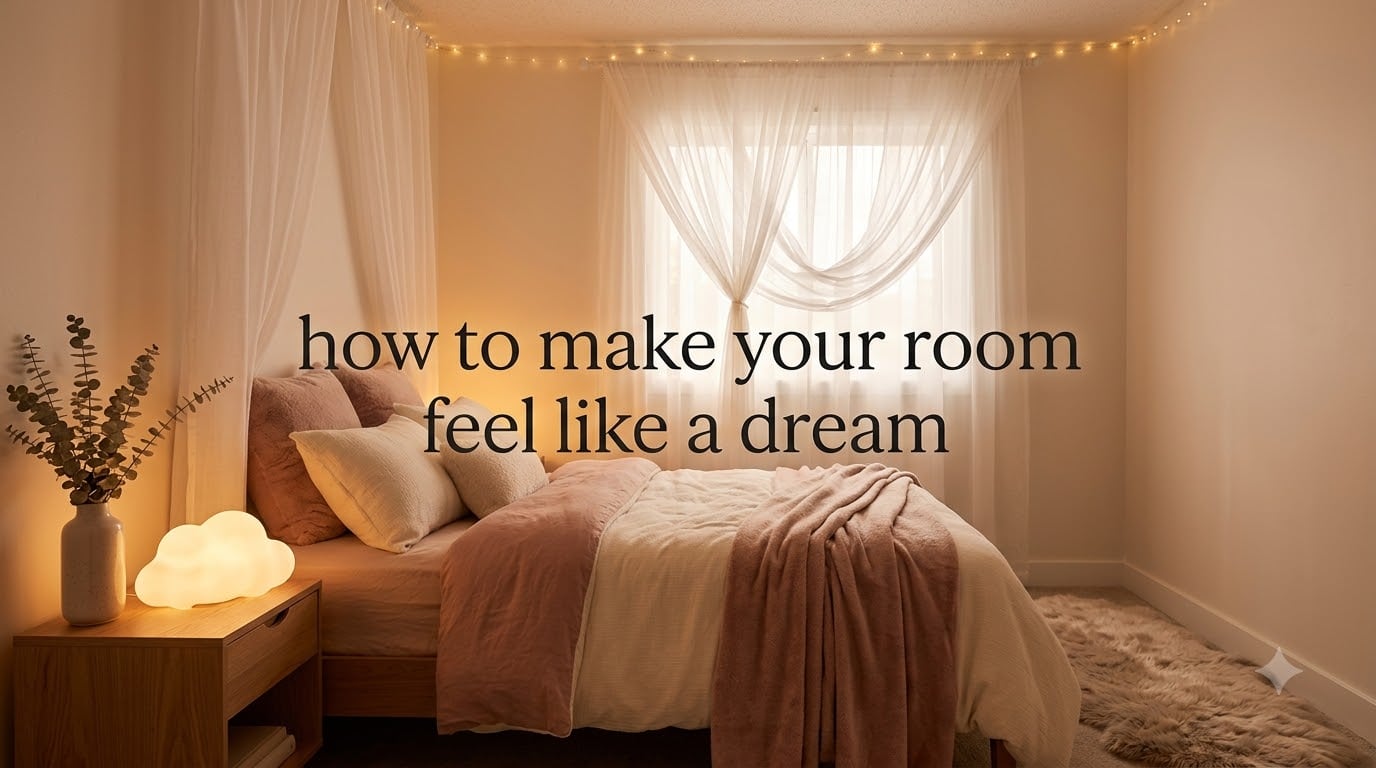
Making your room feel like a dream starts with layering sensory details that invite stillness: soft textures underfoot, warm amber light pooling in corners, and a color palette that calms the nervous system. The goal is not perfection — it is atmosphere. Think of your room as a canvas that whispers rather than shouts, a space where the surreal and the serene meet in the same breath.
I spent years collecting postcards of Magritte paintings before I realized what drew me in: the stillness behind the strange. A floating stone. A daytime sky inside a dark room. That same tension between the familiar and the impossible is exactly what makes a bedroom feel like a dream. You do not need a gallery budget. You need intention, texture, and a little bit of wonder.
Table of Contents
Quick Picks: The 5 Dream Essentials
If you want to make your room feel like a dream right now, start here. These five elements form the foundation of every dreamy space covered in this guide, whether your taste leans surrealist or cottagecore.
- Warm ambient lighting — swap harsh overhead bulbs for dimmable warm-toned lamps, fairy lights, or candles
- Layered bedding — a plush comforter, a textured throw, and two to three pillows in complementary fabrics
- A calming color palette — muted neutrals, soft sage, or dusty rose as your base with one richer accent
- A soft rug underfoot — faux fur, shag, or woven wool to anchor the sensory experience
- One whimsical statement piece — a cloud lamp, a dream-catcher, a surrealist print, or a neon sign that speaks to your aesthetic
Pick Your Dream Aesthetic
Every dream room has a visual language. Before you buy a single throw pillow, decide which dream you want to live in. Here are six named aesthetics that capture different moods of the dreamy bedroom.
Surrealist rooms borrow from painters like René Magritte and Leonora Carrington — asymmetrical mirrors, floating-shelf illusions, and art that bends reality. The palette is moody: deep midnight blue, Bordeaux, and ivory.
Cloudcore is all about weightlessness. Think white-on-white layering, LED cloud lights overhead, sheer curtains, and airy linen. The vibe is a room suspended above the earth.
Whimsigoth blends dark romance with celestial motifs. Deep purples, velvet textures, crescent moon decor, and jewel-toned candles make this aesthetic feel like a witchy sanctuary. It is moody without being heavy.
Fairycore leans into nature and softness. Mossy greens, dried flowers, mushroom motifs, and warm fairy lights strung across the headboard create a woodland-cottage feeling.
Cottagecore keeps things warm and handmade. Floral prints, quilted blankets, wooden frames, and fresh eucalyptus bundles on the nightstand channel a countryside retreat.
Dreamcore is the internet’s own aesthetic — liminal spaces, nostalgic color washes, soft-focus imagery, and a slightly eerie calm. It works beautifully in bedrooms with pastel walls and vintage lamps.
| Aesthetic | Mood | Key Elements |
|---|---|---|
| Surrealist | Strange calm | Asymmetrical mirrors, Magritte prints, moody blues |
| Cloudcore | Weightless | White linen, LED cloud lights, sheer curtains |
| Whimsigoth | Dark romance | Velvet, crescent moons, jewel-tone candles |
| Fairycore | Woodland soft | Dried flowers, fairy lights, mushroom motifs |
| Cottagecore | Warm handmade | Quilted blankets, fresh flowers, wooden frames |
| Dreamcore | Nostalgic calm | Pastel walls, vintage lamps, soft-focus art |
Layer the Lighting
Lighting is the single fastest way to transform how a room feels. Overhead fluorescent fixtures flatten everything. What you want instead is pools of warm, golden light that create depth and shadow — the way a candlelit room feels different from the same room under a ceiling fan bulb.
Start by swapping any daylight or cool-white bulbs for warm-toned bulbs rated2700K or lower. A bedside lamp with a linen shade casts a gentle glow that makes the whole room feel softer. Add a second light source across the room — a floor lamp, a wall sconce, or even a strand of fairy lights draped along a shelf.
Candles are the original dream-machine. Cluster three to five pillar candles of varying heights on a tray near the window. If open flame is not an option, battery-operated LED candles with a flicker setting mimic the effect convincingly.
For the truly committed, a star projector or nebula lamp turns the ceiling into a night sky. Smart bulbs that shift from warm white at night to cool daylight in the morning support your circadian rhythm while keeping the dreamy aesthetic intact during evening hours.
Dreamy Bedding and Textiles
The bed is the center of gravity in any bedroom, and the way you dress it sets the emotional temperature of the entire room. Hotel-inspired layering is the framework here: start with quality sheets, add a fluffy comforter or duvet, then pile on a textured throw blanket and two to three accent pillows.
Linen bedding breathes beautifully and wrinkles in a way that looks intentionally relaxed. Cotton sateen has a subtle sheen that reads more polished. Both work — the choice depends on whether your dream leans toward rustic or refined.
A chunky knit throw draped at the foot of the bed adds tactile weight. Velvet or bouclé pillows in a contrasting tone give the eye something to land on. If your aesthetic allows it, a sheer canopy hung from a ceiling hook above the headboard adds instant drama with almost no effort.
Do not skip the rug. A faux sheepskin or soft shag rug placed where your bare feet land first thing in the morning transforms the physical sensation of waking up. That cold-floor jolt is the enemy of the dreamy room.
Color Palette for a Dreamy Vibe
Color is the silent architect of mood. Calming bedroom colors — muted taupes, creamy whites, soft sage, French blue, and dusty rose — lower visual noise and let the mind settle. These are the tones that dominate dreamy rooms because they do not compete for attention.
A monochrome palette in varying shades of cream or pale blue creates a cocoon effect. Everything blends, nothing jars. If that feels too quiet, introduce one deeper accent: a jewel-toned velvet pillow, a dark wood nightstand, or a single wall painted in deep Bordeaux.
The 3-5-7 rule in interior design suggests distributing color in ratios: 70 percent dominant neutral, 25 percent secondary tone, and 5 percent accent. Applied to a dreamy bedroom, that might mean cream walls and bedding (70), soft sage curtains and rug (25), and a dusty rose throw pillow (5). The math keeps the room cohesive without feeling calculated.
The Sensory Layer: Scent, Sound, and Touch
Most dream-room guides stop at what you see. But a room that truly feels like a dream engages every sense. This is the section competitors skip entirely, and it is where your space transforms from pretty to transcendent.
Scent anchors memory more powerfully than any visual. A lavender or sandalwood candle on the nightstand does double duty — warm light and a calming fragrance. An essential oil diffuser with a blend of eucalyptus and chamomile turns the room into a sleep sanctuary. Choose one signature scent and stay with it; the brain associates repetition with safety.
Sound shapes the emotional atmosphere even when you do not consciously hear it. A small white noise machine, a Spotify ambient playlist, or even the sound of a tabletop fountain masks outside noise and fills the room with a consistent, soothing hum. Some people find rain sounds or lo-fi instrumentals make the space feel like a protective bubble.
Touch is the sense that makes a room feel lived-in rather than staged. A faux fur throw, a chunky knit blanket, smooth ceramic on the nightstand, the cool weight of a stone tray — every texture you reach for during the day reinforces the dreamy feeling. Cold feet on a warm rug at 6 a.m. is a small luxury that costs very little and changes the entire morning.
Whimsical Decor That Wakes Up the Room
This is where personality enters. Whimsical decor is the difference between a room that looks like a catalog page and one that looks like a dream you actually want to inhabit.
A neon sign above the headboard — a word, a constellation, a simple arc — adds a soft glow and a focal point. Cloud-shaped LED lamps hung from the ceiling or placed on a shelf give the room a surreal weightlessness that echoes Magritte’s floating stones. A dream-catcher, whether store-bought or handmade, hangs above the bed as both art and ritual object.
Tapestries are underrated. A large wall tapestry with a celestial or botanical print covers bare wall space without the commitment of wallpaper. For a more curated approach, build a gallery wall of prints that move you — surrealist paintings, soft-focus photography, abstract work in your color palette.
An asymmetrical or organically shaped mirror bounces light around the room and adds an unexpected sculptural element. If you have the wall space, a mural — painted or removable wallpaper — on one accent wall turns the entire room into a scene. Think soft clouds, an abstract sky, or a forest silhouette.
Paul Delvaux once painted women standing motionless in moonlit ruins, and every detail was tender rather than terrifying. That is the energy whimsical decor should carry: strange beauty, never clutter.
Greenery and Nature Indoors
Plants are the simplest way to add life — literally — to a dreamy room. A tall fiddle leaf fig or snake plant in a ceramic pot gives height and movement. Trailing pothos on a shelf adds an organic cascade that softens hard edges.
Fresh flowers on the nightstand are a small weekly ritual that pays off in scent and color. If fresh blooms are not practical, dried arrangements last months. Pampas grass in a tall vase, dried eucalyptus bundles hung upside down, or a preserved floral wreath on the wall all carry that soft, ethereal quality without requiring a green thumb.
Even a single sprig of lavender in a bud vase next to your diffuser connects the scent layer to the visual layer. Nature indoors works because it reminds the brain that the world outside the window is alive and gentle, even when the room itself feels sealed off from everything.
Personal Touches That Make It Yours
A dream room without personal artifacts is just a pretty set. The objects that carry memory — a photo from a trip, a worn paperback on the nightstand, a grandmother’s jewelry box, a handwritten quote pinned above the desk — give the room its emotional weight.
A reading corner with a small stack of books and a dedicated lamp signals that this room is for slow hours. A journal and a pen on the nightstand invite reflection before sleep. Framed photographs, not just of people but of places that move you, turn the walls into a personal gallery.
Scent memory is powerful here too. If your grandmother’s house smelled like cedar and vanilla, find a candle that carries those notes. The room becomes a portal — not just a dream, but your dream, layered with the specific textures of your own life.
DIY Dreamy Decor on a Budget
You do not need to spend a fortune to make your room feel like a dream. Some of the most effective transformations cost almost nothing and take an afternoon.
A DIY canopy is as simple as a ceiling hook, a curtain rod, and two yards of sheer fabric draped above the headboard. Fairy lights strung along the perimeter of the ceiling create a starlit canopy effect for the cost of a single string. Thrifted frames, painted in a matching color and arranged in a gallery wall, look intentional and curated.
Paint one accent wall in a deep, moody tone — midnight blue, forest green, or dusty mauve. One wall is manageable in cost and effort, and it anchors the entire room’s palette. Removable wallpaper is another option if you rent or like to change things seasonally.
DIY cloud lamps made from cotton batting and LED fairy lights inside paper lanterns are a weekend project that gets shared on every aesthetic subreddit for a reason. They glow softly, cost almost nothing, and make the ceiling feel like sky.
Frequently Asked Questions
How to make your room dreamy?
Start with warm ambient lighting, layered bedding in calming neutrals, and one whimsical statement piece like a cloud lamp or dream-catcher. Swap cool-white bulbs for warm-toned ones, add a soft rug underfoot, and choose a signature scent. The key is layering sensory details — light, texture, scent, and sound — so the room engages more than just your eyes.
How to make your bedroom feel more cozy and warm?
Layer textiles generously: a plush comforter, a textured throw blanket, and accent pillows in fabrics like velvet or bouclé. Use at least two warm light sources instead of one overhead fixture. Add a rug where your feet land in the morning, and keep the color palette muted and tonal. Fresh sheets and a candle on the nightstand complete the transformation.
What colors are relaxing for the bedroom?
Muted neutrals, soft sage, creamy whites, French blue, dusty rose, and warm taupe are consistently rated the most calming bedroom colors. These tones lower visual stimulation and help the mind settle. Deep accents like Bordeaux or midnight blue work well as secondary tones without overwhelming the space.
How to make a minimalist bedroom look cozy?
Minimalism and coziness coexist through texture. Choose fewer pieces but make each one tactile: a chunky knit throw, a linen duvet, a wool rug. Warm lighting is essential — two soft sources instead of one harsh one. A single plant and one piece of personal art keep the room from feeling sterile while honoring the minimalist approach.
What is the 3-5-7 rule in interior design?
The 3-5-7 rule distributes visual weight across a room: roughly 70 percent dominant color, 25 percent secondary tone, and 5 percent accent. Applied to a dreamy bedroom, that might mean cream walls and bedding as the base, soft sage in the curtains and rug, and a single jewel-toned pillow as the accent. It creates cohesion without rigidity.
How to make a big bedroom feel cozy?
Large rooms feel cold when they lack visual anchors. Divide the space into zones: a sleeping area, a reading nook, and a dressing corner. Use area rugs to define each zone. Layer lighting with multiple warm sources instead of one bright overhead fixture. Long drapery that pools slightly on the floor softens the scale, and oversized art or a tapestry fills bare walls without cluttering.
Your Room, Your Dream
Learning how to make your room feel like a dream is not about following a checklist — it is about building a space that responds to your senses and carries your story. Start with warm light and soft textures. Add a color palette that calms you. Layer in scent, sound, and one piece of decor that makes you pause.
The best dream rooms are not finished in a weekend. They evolve as you do, one candle, one print, one thrifted find at a time. Your room should feel like a soft exhale at the end of a long day — and that feeling is entirely within reach.