
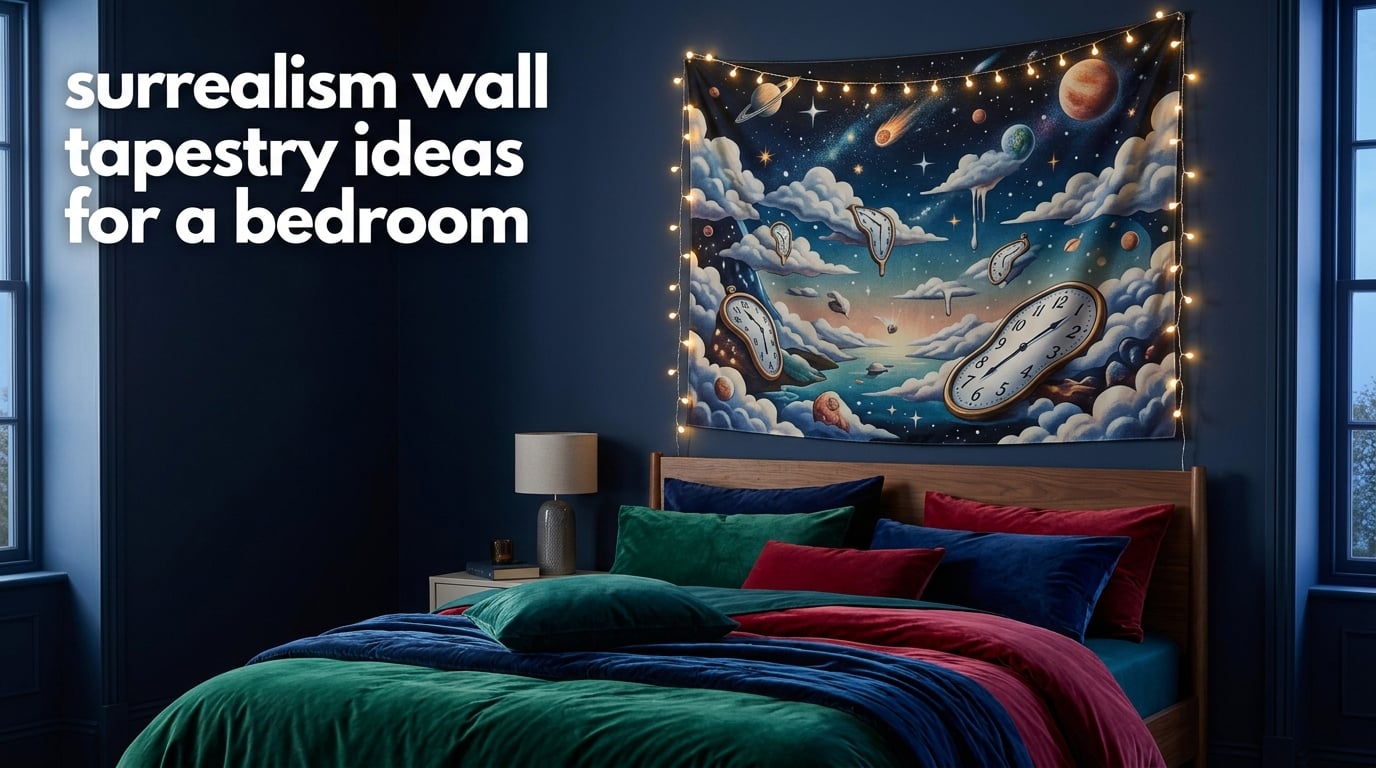
A surrealist wall tapestry turns your bedroom into a waking dream. Instead of blank white walls or generic prints, you get melting clocks, floating eyes, impossible landscapes, and moonlit scenes that make the room feel like a portal to another world.
In this guide, I’ll walk you through the best surrealism wall tapestry ideas for a bedroom, from iconic Dali-inspired pieces to cosmic and mushroom dreamscape designs. You’ll also learn how to size, hang, and style them so they look intentional, not like a dorm room afterthought.
Whether you’re a renter who can’t drill holes or someone who wants a single dramatic focal point above the bed, there’s a surrealist tapestry style that fits. I’ve tested hanging methods, studied the art movement, and pulled ideas from real bedroom setups on Reddit and interior design forums to make this guide practical.
Table of Contents
Quick Tapestry Sizing Guide
The most common mistake with wall tapestries is picking the wrong size. A piece that’s too small looks like an afterthought above the bed. One that’s too big overwhelms the room. Here’s a quick sizing guide to help you choose the right tapestry for your space.
| Wall or Spot | Recommended Size | Surrealist Twist |
|---|---|---|
| Above a queen bed | 50 x 60 inches or larger | Cosmic statement — Dali melting clocks or Magritte floating castle |
| Above a twin bed | 40 x 50 inches | Dreamy moon phase or single surreal eye |
| Full accent wall | 60 x 80 inches or larger | Garden of Earthly Delights or surrealist panorama |
| Small apartment wall | 35 x 45 inches | Compact Magritte pipe or minimalist surreal portrait |
| Narrow wall beside a window | 30 x 40 inches | Vertical lunar phases or surrealist column design |
| Reading nook corner | 30 x 30 inches | Mushroom dreamscape or miniature surrealist scene |
| Layered pair on one wall | Two pieces, 30 x 40 each | Matching surreal diptych — day and night versions |
The two-thirds rule is your best friend here. Your tapestry should cover roughly two-thirds of the headboard width, and the bottom edge should hang 6 to 8 inches above the mattress. This keeps the piece visually anchored to the bed rather than floating awkwardly on the wall.
What Surrealism Brings to Bedroom Walls
Surrealism is a twentieth-century art movement founded by Andre Breton in 1924. It explores dreams, the unconscious mind, and unexpected juxtapositions of ordinary objects. Salvador Dali, Rene Magritte, Max Ernst, and Joan Miro were among its most recognized practitioners.
When translated to a wall tapestry, surrealism gives you something most bedroom art cannot: imagery that shifts your mood the moment you walk in. A melting clocks piece creates an eerie calm. A Magritte floating castle feels quietly mysterious. A cosmic eye design makes the room feel vast and introspective.
Unlike generic boho or celestial tapestries, surrealist designs carry art-historical weight. They reference specific movements, named artists, and recognizable works. That means your tapestry becomes a conversation piece, not just a backdrop.
The bedroom is the ideal setting for surrealism because it’s where your conscious mind winds down and your subconscious takes over. Surrealist imagery mirrors that transition. It’s personal, slightly strange, and deeply atmospheric.
Surrealism Wall Tapestry Ideas for a Bedroom
Here are ten surrealist tapestry styles organized by mood. Each one transforms a bedroom differently, so pick the vibe that matches how you want the room to feel.
Melting Clocks and the Persistence of Memory
Dali’s iconic melting clocks from “The Persistence of Memory” (1931) make one of the most recognized surrealist tapestries. The draped, soft watches draped over barren landscapes create a dreamy, slightly unsettling atmosphere. This style works well above the bed because its horizontal composition fills the space naturally.
Look for versions that include the full landscape — the distant cliffs, the dead tree, and the crawling ants add depth that a close-up of just the clocks misses. Rich amber and burnt sienna tones blend well with warm bedroom palettes, while cooler blue-gray versions suit minimalist rooms.
Magritte’s Dreamlike Paradoxes
Rene Magritte’s work translates beautifully to tapestries because his images are clean and graphic. “The Son of Man” (a man in a bowler hat with a green apple floating in front of his face) or “The Castle of the Pyrenees” (a massive boulder floating above the sea) both make striking bedroom focal points.
Magritte’s palette tends toward sky blues, earthy greens, and muted grays — colors that work in almost any bedroom. His imagery is surreal without being chaotic, which makes it a strong choice for adults who want something that doesn’t look juvenile.
Cosmic Eye and Celestial Surrealism
A cosmic eye tapestry blends surrealism with celestial motifs. Think of a single enormous eye surrounded by galaxies, nebulae, and star fields. This style creates a meditative, almost hypnotic atmosphere in the bedroom.
Celestial surrealism works especially well in rooms with dark walls or deep navy bedding. The tapestry becomes a window into deep space. Pair it with fairy lights or a star projector for a full cosmic bedroom effect.
Mushroom Dreamscape and Nature Surrealism
Mushroom surrealism has surged in popularity, blending psychedelic naturalism with dreamlike oversized fungi, glowing spores, and forest landscapes that don’t obey normal physics. These tapestries feel organic and otherworldly at the same time.
This style suits earth-toned bedrooms with houseplants and natural textures. A mushroom dreamscape tapestry adds whimsy without feeling cartoonish. Look for designs with muted greens, warm ambers, and soft bioluminescent glows.
Lunar Phase and Moonlit Surrealism
A lunar phase tapestry brings the quiet, dreamlike side of surrealism into the bedroom. Designs range from realistic moon phases in a vertical row to surreal full moons with faces, floating crescents above impossible landscapes, or moonlit desert scenes.
This style is inherently calming, making it ideal for bedrooms where relaxation is the priority. Black-and-white lunar designs work in minimalist spaces. Colorful moonlit surrealism with deep indigo and silver tones suits boho or dark romantic bedrooms.
Pop Surrealism and Lowbrow Art
Pop surrealism (also called lowbrow art) blends surrealist imagery with pop culture, cartoon aesthetics, and vivid color. Artists like Mark Ryden, Camille Rose Garcia, and Audrey Kawasaki pioneered this style. Their tapestry interpretations feature wide-eyed figures, candy-colored landscapes, and dark whimsy.
Pop surrealism tapestries are bold and expressive. They work best in creative bedrooms, studios, or rooms where the person wants the walls to feel alive and slightly subversive. Pair with eclectic furniture and saturated bedding.
Blacklight and Psychedelic Surrealism
UV-reactive tapestries with surrealist motifs — melting faces, fractal eyes, impossible geometry — transform under blacklight. This style creates a completely different experience at night versus during the day. In daylight, the colors are vivid but normal. Under blacklight, the room glows.
Psychedelic surrealism works well in dorm rooms, creative spaces, and bedrooms where the owner wants the room to feel different after dark. Just note that these designs tend toward the maximalist side. Balance them with neutral bedding and simple furniture.
Bosch-Inspired Garden of Earthly Delights
Hieronymus Bosch’s “The Garden of Earthly Delights” is technically proto-surrealist, painted around 1500 — centuries before Breton wrote the Surrealist Manifesto. Its tapestry versions feature the triptych’s fantastical creatures, hybrid animals, and impossible architecture.
A Bosch-inspired tapestry makes a dramatic statement wall. The sheer density of detail rewards close inspection. This style suits rooms with dark wood furniture, rich fabrics, and an overall aesthetic that leans maximalist or dark romantic.
Dark Romantic Surrealism
Dark romantic surrealism explores the shadowy side of dreams. Think skeletal trees against blood-red skies, melting architecture in abandoned landscapes, or faceless figures in misty fields. This style creates an intense, moody atmosphere.
Dark romantic surrealist tapestries work beautifully in bedrooms with deep wall colors — charcoal, burgundy, midnight blue. They pair well with velvet bedding, ornate frames, and low lighting. This isn’t for everyone, but if you love the unsettling beauty of dreams, it’s perfect.
Minimalist Monochrome Surrealism
Not all surrealist tapestries are colorful. Monochrome designs — black and white ink drawings of impossible staircases, Escher-inspired geometry, or single-line surrealist portraits — bring the movement’s ideas into minimalist spaces.
A monochrome surrealist tapestry adds intellectual depth without disrupting a neutral color scheme. It works in Scandinavian-style bedrooms, modern apartments, and rooms where the furniture and bedding are already doing the visual work.
Surrealist Bedroom Color Palettes
The right color palette ties your surrealist tapestry to the rest of the room. Here are four palettes that work specifically with surrealist imagery.
Jewel Tones: Deep emerald, ruby red, sapphire blue, and amethyst purple. These saturated colors complement tapestries inspired by Dali’s warm landscapes or Bosch’s richly detailed gardens. Jewel tones make a bedroom feel opulent and grounded.
Midnight Blues and Cosmic Grays: Navy, indigo, charcoal, and silver. This palette suits celestial surrealism, lunar tapestries, and cosmic eye designs. The dark backdrop makes the tapestry’s imagery glow. Add metallic accents in silver or pewter for depth.
Dusty Rose and Muted Warmth: Blush pink, terracotta, warm taupe, and cream. This palette works with Magritte’s softer pieces, minimalist surrealism, and dreamlike floating-scene tapestries. It keeps the room feeling warm and inviting rather than cold or dramatic.
Monochrome Black and White: Pure contrast with no middle ground. This palette suits Escher-inspired tapestries, ink-drawing surrealism, and minimalist designs. Add one accent color — a single throw pillow or vase — in a jewel tone to keep the room from feeling flat.
How to Hang a Surrealist Tapestry Without Damaging Walls
Renter-friendly hanging is one of the biggest concerns for tapestry owners. Most landlords don’t allow drilling, and you don’t want to damage the tapestry itself. Here are the best methods I’ve tested.
Command Strips: Adhesive strips rated for the tapestry’s weight work well for lighter pieces under 3 pounds. Apply strips to the back of a wooden dowel or curtain rod, then hang the tapestry from that. Use at least four strips spaced evenly for secure hold.
Velcro Bands: Sew or attach one side of industrial-strength velcro to the back of the tapestry. Stick the other side to adhesive wall strips. This distributes weight evenly and makes the tapestry easy to remove for washing. Velcro works well for medium-weight tapestries up to 5 pounds.
Tension Rod or Curtain Rod: If you have a window nook, closet alcove, or built-in shelf above the bed, a tension rod holds the tapestry without any wall damage. Thread the rod through the tapestry’s rod pocket or use curtain clips. This is the method Reddit users in r/interiordecorating recommend most often.
Push Pins or Thumbtacks: For lightweight polyester tapestries, push pins in drywall leave only tiny holes that are easy to fill later. Space them every 8 to 10 inches along the top edge. This works for tapestries under 2 pounds.
Baseboard or Crown Molding Clips: If your bedroom has crown molding, clips that grip the molding let you hang a tapestry without touching the wall at all. This is the most invisible hanging method and works for any tapestry weight that the molding can support.
Pairing Ideas: Building a Surrealist Bedroom Around Your Tapestry
A surrealist tapestry works best when the rest of the room supports its mood. Here are pairing ideas that enhance the surrealist atmosphere without going overboard.
Fairy Lights: String warm-white fairy lights around the tapestry’s edges. The soft glow makes the imagery feel more dreamlike, especially at night. Use battery-operated lights with a timer so they turn off while you sleep.
Ivy and Vine Garlands: Drape faux ivy along the top or sides of the tapestry. This works especially well with garden-themed surrealism (Bosch, mushroom dreamscapes, nature surrealism). The greenery softens the tapestry’s edges and blends it into the wall.
Neon Signs: A small neon sign with a surrealist phrase — “This Is Not a Pipe” or “Dream” — placed beside the tapestry adds a modern edge. Neon works particularly well with pop surrealism and psychedelic designs.
Coordinated Bedding: Pull one or two colors from the tapestry into your bedding. If your tapestry has deep blues and golds, use navy sheets with a gold throw pillow. The color connection makes the tapestry feel like part of the room’s design rather than an afterthought.
Gallery Wall Extension: Frame two or three smaller prints that echo the tapestry’s theme — a Dali postcard, a Magritte reproduction, a surrealist photography print — and arrange them on an adjacent wall. This creates a gallery effect that extends the surrealist mood beyond a single piece.
Above-the-Bed Placement Best Practices
Hanging a tapestry above the bed is the most popular placement, but it requires some care to look right. The two-thirds rule is the standard: your tapestry should be approximately two-thirds the width of your headboard.
Hang the bottom edge of the tapestry 6 to 8 inches above the top of the mattress. This leaves enough visual breathing room between the bedding and the art while keeping them connected. Too high and the tapestry floats. Too low and it risks touching the pillows.
Center the tapestry horizontally over the bed, not over the wall. If the bed is off-center in the room, center the tapestry on the bed anyway. The eye reads the tapestry and bed as one visual unit.
For headboard-less beds, the tapestry effectively becomes the headboard. Choose a larger size (at least 50 x 60 inches for a queen) and hang it slightly lower — 4 to 6 inches above the mattress — so it anchors the sleeping area.
Frequently Asked Questions
How to decorate a bedroom with a tapestry?
Choose a tapestry that covers two-thirds of your headboard width and hang it 6 to 8 inches above the mattress. Match the tapestry’s colors to your bedding or accent pillows. Use renter-friendly hanging methods like command strips, velcro bands, or a tension rod to avoid wall damage.
What is the 2/3 rule for wall art?
The two-thirds rule states that a piece of wall art should be approximately two-thirds the width of the furniture below it. For a queen bed with a 60-inch headboard, your tapestry should be around 40 inches wide. This proportion creates visual balance and prevents the art from looking too small or overwhelming.
What colors are in the Surrealism color scheme?
Classic surrealist palettes include jewel tones (emerald, ruby, sapphire), midnight blues and cosmic grays, dusty rose and warm taupe, and monochrome black and white. Salvador Dali favored warm ambers and burnt sienna. Rene Magritte leaned toward sky blues and muted greens. Choose a palette that matches your tapestry’s mood — jewel tones for drama, blues for calm, monochrome for minimalism.
What are the 7 characteristics of surrealist art?
The seven characteristics of surrealist art are dreamlike imagery, unexpected juxtapositions of ordinary objects, exploration of the unconscious mind, automatism (art created without conscious control), transformation of familiar objects, symbolic and often personal imagery, and a rejection of rational logic in favor of emotional truth.
Can you use Command strips to hang a tapestry?
Yes, Command strips work well for lightweight tapestries under 3 pounds. Attach the strips to a wooden dowel or curtain rod first, then hang the tapestry from the rod. Use at least four strips rated for the tapestry’s weight, spaced evenly along the rod. For heavier tapestries, combine Command strips with velcro bands for extra support.
What size artwork should I have above my bed?
For a queen bed, choose artwork or a tapestry that is 50 to 60 inches wide. For a twin bed, 35 to 45 inches works well. The piece should cover roughly two-thirds of the headboard width and hang 6 to 8 inches above the mattress for proper proportions.
Conclusion
A surrealist wall tapestry does more than fill empty space above the bed. It creates a mood, references one of the most fascinating art movements in history, and gives your bedroom a focal point that guests will remember. Start by choosing the mood you want — dreamy, dramatic, cosmic, or playful — and let that guide your selection. Use the sizing table, pick a hanging method that works for your rental situation, and build the room’s color palette around the tapestry. That’s how you turn surrealism wall tapestry ideas for a bedroom into a room that actually feels like yours.