
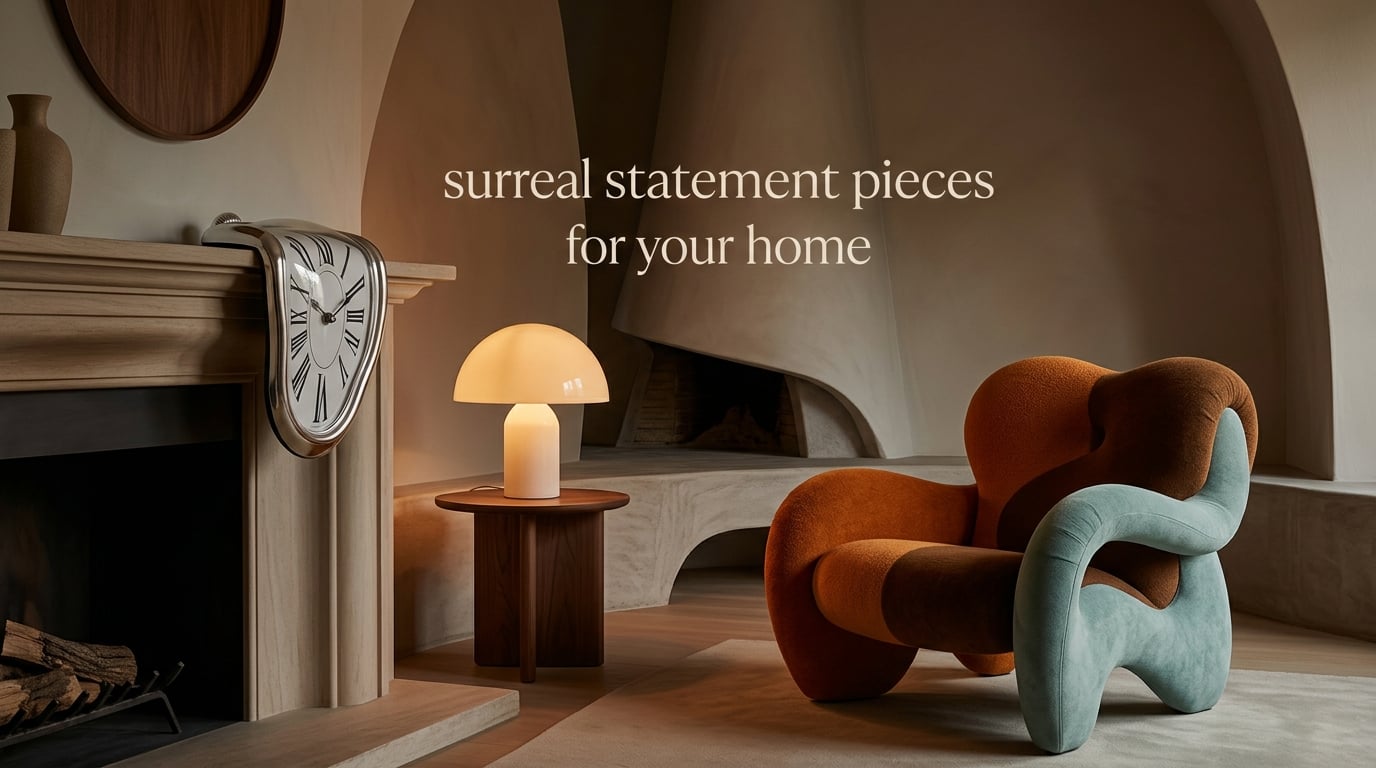
Picture Salvador Dali’s Mae West Lips sofa sitting in a sunlit living room—scarlet, sculptural, unmistakably strange, and somehow completely at home. That single piece tells every visitor exactly who lives there. Surreal statement pieces for your home do precisely this: they turn ordinary rooms into spaces that spark conversation, trigger curiosity, and feel genuinely personal.
You do not need a gallery budget or an art-history degree to pull this off. Whether you are drawn to melting clocks, mushroom-shaped lamps, or Magritte-inspired prints, the right surreal accent can anchor an entire room. This guide covers what surreal statement pieces are, ten specific examples you can bring home today, room-by-room placement ideas, styling rules that keep things cohesive, and a budget breakdown for every price point.
Table of Contents
What Are Surreal Statement Pieces?
A surreal statement piece is a home-decor item inspired by the Surrealist art movement—think dreamlike, whimsical, and deliberately unexpected. Unlike ordinary furniture, these pieces disrupt the visual logic of a room: a mirror shaped like an eye, a chair that looks like it is melting, or a lamp modeled after a giant mushroom. They function as focal points, conversation starters, and daily invitations to wonder.
The Surrealist movement began in the 1920s with artists like Salvador Dali and René Magritte who wanted to unlock the unconscious mind through art. That same spirit—bizarre beauty, impossible geometry, playful defiance of physics—now lives in contemporary home decor. Biomorphic shapes (organic, nature-inspired forms), trompe-l’oeil wall treatments (optical illusions painted directly onto surfaces), and fantastical sculptures all carry this DNA.
Surrealist decor is not about recreating a museum. It is about picking one or two pieces that make you smile every time you walk past them, then building the rest of the room around that feeling.
10 Surreal Statement Pieces for Your Home
These ten categories cover the range from affordable prints to investment sculptures. Each one can anchor a room on its own or combine with others for a layered surrealist aesthetic.
1. Melting Clock. The most recognizable Surrealist motif. A wall-mounted or mantelpiece melting clock references Dali’s “The Persistence of Memory” and works in living rooms, studies, and hallways. Place it above a fireplace or on a floating shelf where guests will notice it immediately.
2. Mushroom Lamp. Mushroom-shaped table lamps and floor lamps are surging in popularity. Their biomorphic silhouette softens hard-edged modern rooms. Set one on a bedside table or a reading nook side table for warm, diffused light with a fantastical twist.
3. Eye-Motif Mirror. Mirrors shaped like oversized eyes—complete with iris details or surrealist frames—double as functional decor and art. Hang one in an entryway or above a console table to create an instant focal point.
4. Sculptural Accent Chair. A curvy, gravity-defying accent chair in velvet or bouclé becomes the centerpiece of any living room. Look for organic, blob-like silhouettes that reject straight lines. Position it opposite a sofa to create a conversation nook.
5. Magritte-Inspired Wall Art. Prints featuring floating bowler hats, blue sky ceilings, or pipes that are not pipes bring intellectual wit to a wall. A gallery wall of three to five Magritte-style prints works beautifully above a sofa or along a staircase.
6. Biomorphic Coffee Table. A coffee table with an irregular, amoeba-like shape—often in resin, wood, or glass—grounds a living room while keeping the Surrealist theme alive. Pair it with a neutral rug so the table’s shape gets all the attention.
7. Trompe-l’oeil Wallpaper Mural. A full-wall mural depicting a dreamlike landscape, an impossible staircase, or a window opening onto a surreal sky transforms a single wall into a portal. Use it in a dining room or home office for maximum impact.
8. Fantastical Floral Arrangement. Oversized, exaggerated floral sculptures—think giant paper flowers or hand-blown glass blooms—act as gravity-defying centerpieces. Place them on a dining table or entryway console for an otherworldly welcome.
9. Surrealist Rug. Rugs featuring abstract, dreamlike patterns—melting shapes, floating eyes, or psychedelic swirls—anchor furniture groupings while reinforcing the theme. A bold rug in a minimalist room lets the Surrealist motif dominate without competing with other pieces.
10. Sculptural Candlesticks. Curvy, elongated candlesticks in ceramic or metal add Surrealist flair to mantels, dining tables, and bookshelves. Group three at varying heights for a sculptural vignette that feels collected, not staged.
How to Style Surrealist Decor Without Overwhelming the Room
The 3-5-7 rule is your best friend here. In any given sightline, aim for three to five statement elements (not seven surrealist pieces crammed together). Three is minimalist-surreal. Five is maximalist. Seven is a gallery wall. Anything beyond that starts feeling chaotic.
Balance every surreal piece with calm, neutral surroundings. A melting clock above a simple white mantel reads as intentional. The same clock surrounded by patterned wallpaper, colorful cushions, and competing sculptures reads as clutter. Give each surreal piece breathing room—empty wall space, solid-color upholstery, clean sightlines.
Anchor your surrealist piece as the room’s focal point. Everything else supports it. If your eye-motif mirror is the star, keep the console table beneath it minimal. If your sculptural chair is the conversation piece, let the rest of the seating be simple and understated.
Room-by-Room Surrealist Statement Piece Ideas
Living Room. This is where you make your biggest statement. A sculptural accent chair, a biomorphic coffee table, or a gallery wall of Magritte-inspired prints all work here. Pair with a neutral sofa and let the Surrealist pieces do the talking.
Bedroom. Keep it dreamlike and calming. A mushroom lamp on each nightstand, a single surrealist print above the headboard, or a melting clock on a floating shelf adds wonder without disrupting sleep. Soft lighting is essential—warm-toned bulbs in whimsical fixtures.
Entryway. First impressions matter. An eye-motif mirror, a surrealist rug, or a fantastical floral arrangement on a console table tells visitors exactly what kind of home they are entering. This is the place for your single most conversation-starting piece.
Dining Room. Surrealist dining rooms thrive on unexpected centerpieces. Sculptural candlesticks, a gravity-defying floral arrangement, or a trompe-l’oeil mural on one wall transforms mealtime into an experience. Keep place settings simple so the decor stands out.
Bathroom. Often overlooked, but a surrealist mirror, a melting-frame artwork, or a biomorphic soap dish can turn a utilitarian space into something memorable. Even a single eye-shaped hand towel hook adds personality.
Surrealist Lighting: Lamps, Pendants, and Biomorphic Shapes
Lighting is one of the most under-served categories in surrealist decor, which means it is also one of the easiest ways to stand out. A mushroom-shaped table lamp delivers soft, diffused light while functioning as a sculptural object even when switched off. Biomorphic pendant lights—organic, blob-like forms in hand-blown glass or molded resin—hang above dining tables and kitchen islands like floating sculptures.
Melting or dripping pendant lights take the Surrealist melting-clock motif and apply it to overhead fixtures. These work particularly well in entryways and over dining tables where the silhouette is visible from multiple angles. Look for designs in warm brass, matte white, or tinted glass to match your room’s palette.
For renters or anyone hesitant to hardwire fixtures, plug-in wall sconces with surrealist silhouettes offer the same drama without electrical work. Clip-on lampshade replacements in unusual shapes are another low-commitment option.
Color Palette and Material Guidance for the Surrealist Aesthetic
Surrealist decor thrives on contrast. Deep jewel tones—emerald, burgundy, midnight blue—paired with metallics like aged brass or copper create a moody, gallery-like backdrop. On the opposite end, a clean white or cream base lets colorful surrealist pieces pop without competition.
Materials matter as much as color. Hand-blown glass, mother-of-pearl inlays, raw ceramic, and velvet all carry the tactile richness that Surrealism demands. Avoid anything too polished or mass-produced-looking; slight imperfections and organic textures reinforce the handcrafted, dreamlike quality.
Budget Tiers: From DIY to Investment Art
Tier 1: Digital Prints and DIY (under fifty dollars). Etsy is packed with downloadable surrealist art prints starting at just a few dollars. Print them at home or at a local shop, frame them in thrift-store frames, and you have a gallery wall for under fifty dollars. DIY options include painting a single wall in a bold color, creating your own melting-clock shelf display using clay, or repurposing vintage finds with a surrealist twist.
Tier 2: Sculptural Statement Pieces (fifty to three hundred dollars). This is where most surrealist home decor lives. Mushroom lamps, curvy accent pillows, biomorphic candlesticks, small sculptural mirrors, and eye-motif accessories all fall in this range. Etsy makers, independent designers, and curated home-decor sites are your best sources. This tier delivers the biggest visual impact per dollar.
Tier 3: Investment Art and Furniture (three hundred dollars and up). Sculptural accent chairs, large-format original art, hand-blown glass lighting, and designer surrealist furniture live here. Sources include 1stdibs, gallery-direct purchases, and custom commissions. These pieces are heirlooms—items you keep for decades and build entire rooms around.
Many Reddit users in communities like r/TripCaves and r/HomeDecorating report building fully surreal rooms for under five hundred dollars by mixing Tier 1 prints with a single Tier 2 lamp or mirror. The key is curation over quantity: one great piece beats ten mediocre ones.
Mixing Surrealism with Your Existing Decor Style
Minimalist rooms are the easiest canvas for Surrealism. One melting clock, one sculptural chair, or one bold print against white walls creates instant tension and interest. The emptiness of the room amplifies the surreal piece’s impact.
Bohemian spaces pair naturally with Surrealism’s eclectic energy. Layer surrealist prints among vintage textiles, add a mushroom lamp to a plant-filled corner, or swap a conventional mirror for an eye-shaped one. The styles share a love of the unconventional.
Mid-century modern rooms already have organic curves and sculptural furniture, so adding Surrealist accents feels seamless. A biomorphic coffee table replaces a standard one. A Magritte print hangs where a generic abstract once lived. The bones of mid-century design give Surrealism a sophisticated stage.
The biggest mistake people make is adding too many surrealist pieces at once. Start with one. Live with it for a week. Then decide if the room wants more.
Frequently Asked Questions
What are examples of statement pieces?
Statement pieces include oversized mirrors, sculptural accent chairs, bold art prints, eye-catching lighting fixtures, and unique rugs. In the Surrealist category specifically, examples include melting clocks, mushroom lamps, eye-motif mirrors, Magritte-inspired wall art, and biomorphic coffee tables. Each piece functions as a focal point that anchors a room’s visual identity.
What are some unique features I can add to my home?
Unique features that add personality include trompe-l’oeil wallpaper murals, hand-blown glass pendant lights, sculptural candlestick arrangements, surrealist rugs with abstract patterns, and fantastical floral centerpieces. Even small touches like eye-shaped hooks or melting-frame mirrors transform ordinary rooms into memorable spaces.
What is the 3-5-7 rule in decorating?
The 3-5-7 rule guides how many statement elements to place in a single sightline. Three pieces create a minimalist-surreal look, five is maximalist, and seven works for curated gallery walls. Beyond seven, a room starts feeling cluttered. The rule helps balance visual interest with breathing room.
What is the best showpiece for my home?
The best showpiece depends on your room and budget. For living rooms, a sculptural accent chair or biomorphic coffee table makes the strongest statement. For entryways, an eye-motif mirror creates an unforgettable first impression. For bedrooms, a pair of mushroom lamps on nightstands adds dreamlike warmth. Start with one piece and build around it.
Conclusion
Surreal statement pieces for your home turn ordinary rooms into spaces that feel genuinely personal and endlessly interesting. You do not need to overhaul your entire decor—start with a single melting clock, a mushroom lamp, or a Magritte-inspired print, and let it anchor the room. Use the 3-5-7 rule to keep things balanced, match your budget to the right tier, and remember that the best Surrealist decor makes you smile every time you walk past it.