
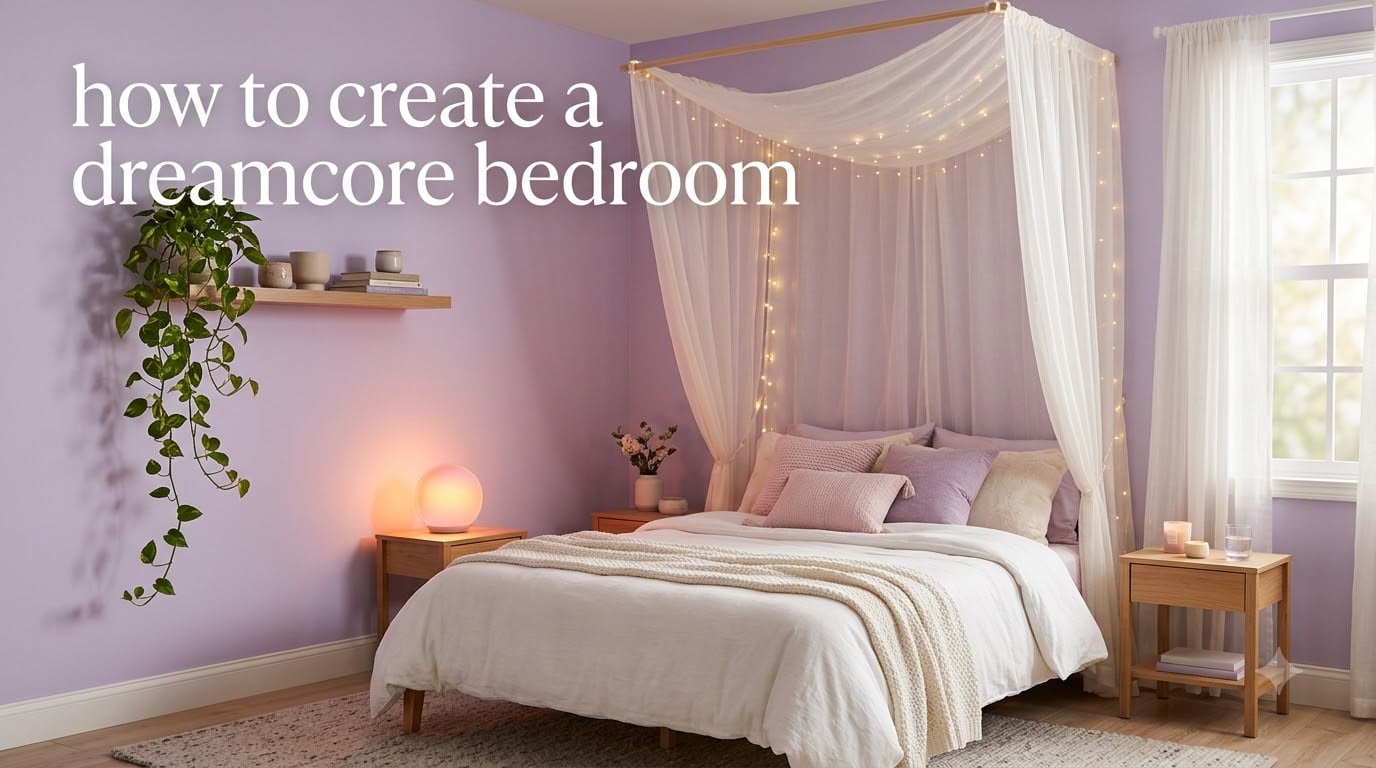
There’s something irresistible about a bedroom that feels like a waking dream — soft light filtering through sheer curtains, walls alive with surreal art, and textures so plush you never want to leave. If you’ve been scrolling through dreamy room inspo on Pinterest or TikTok and wondering how to pull it off in your own space, you’re in the right place. This guide walks you through exactly how to create a dreamcore bedroom, from choosing your color palette to layering the final personal touches that make the room unmistakably yours.
Table of Contents
What Is Dreamcore?
Dreamcore is an aesthetic style that blends surreal, nostalgic visuals with soft, otherworldly colors to create spaces that feel like a waking dream. It draws from imagery of clouds, celestial bodies, vintage photography, and ethereal landscapes — translating those visual moods into a bedroom you can actually live in.
Unlike minimalism, which strips a room down, dreamcore adds layers. Think pastel tones, ambient lighting, whimsical decorative elements, and textures that invite you to reach out and touch everything. The goal is a space that feels magical, cozy, and deeply personal — like stepping into your own private fairy tale every time you open the door.
Dreamcore has exploded in popularity through social platforms in 2026, driven by communities on TikTok, Pinterest, and Lemon8 who share their room transformations. What makes it stand out from other aesthetics is its emphasis on atmosphere over perfection — your room doesn’t need to look like a showroom, it just needs to feel dreamy.
How to Create a Dreamcore Bedroom
The transformation process matters more than you might think. Buying random pastel items and scattering them around won’t give you the cohesive, immersive feel that defines a true dreamcore bedroom. The steps below follow a deliberate order — starting with the foundation (color) and building up to the finishing touches that tie everything together.
Step 1: Choose Your Dream Palette
Every dreamcore bedroom starts with color. The palette you choose sets the emotional tone for the entire room, so it’s worth spending time here before buying anything else.
The classic dreamcore palette centers on soft pastels: lavender, blush pink, sky blue, mint green, and dusty rose. These colors create a calming, ethereal foundation that makes the room feel light and airy. For warmth, layer in sunset tones like muted peach, amber, and warm cream.
You don’t need to use every color — pick two or three as your primary tones and one or two as accents. A lavender-and-cream base with blush pink accents, for example, creates a cohesive look without feeling chaotic. Paint one wall a soft color if you’re able, or use peel-and-stick wallpaper for a commitment-free alternative.
Step 2: Layer Your Lighting
Lighting is arguably the single most important element in a dreamcore bedroom. Community members across forums and social platforms consistently point to lighting as the factor that transforms a normal room into a dreamy sanctuary. One overhead light won’t cut it — the magic comes from layering multiple soft sources.
Start with a sunset lamp. These project warm, gradient light across walls and ceilings, instantly creating that golden-hour glow even at midnight. They’re affordable, widely available, and consistently rated as the number-one most impactful dreamcore item by people who’ve done the transformation.
Next, add fairy lights or string lights. Drape them across your headboard, weave them through a sheer canopy, or hang them along a wall. The soft twinkle adds depth and movement to the room’s atmosphere. A lava lamp or salt lamp on your nightstand provides a warm, ambient glow that replaces harsh overhead lighting entirely.
Candles — real or flameless — round out the layered lighting approach. Cluster them on a tray, place them on floating shelves, or line them along a windowsill. The warm flicker adds a living, breathing quality to the room that static lights can’t replicate.
Step 3: Add Dreamy Wall Art
Bare walls are the enemy of a dreamcore bedroom. Once your lighting is in place, the walls become the canvas that ties the whole aesthetic together.
Look for surreal art prints — think melting clocks, floating figures, cloudy landscapes, celestial scenes, and vintage-inspired collages. Etsy has an enormous selection of dreamcore wall art, from affordable digital downloads you can print at home to original art prints. Amazon carries aesthetic collage kits with 50 or more pieces designed specifically for this style.
A gallery wall works beautifully for dreamcore. Mix different frame sizes, combine prints with postcards, and leave some intentional gaps for an eclectic, collected-over-time feel. If you prefer a simpler approach, a single large statement piece above the bed — a surreal landscape or ethereal portrait — can anchor the room just as effectively.
Wall decals and tapestries add another dimension. Sheer, flowing tapestries draped from the ceiling create an instant canopy effect, while celestial decals (moons, stars, constellations) add subtle detail that rewards close inspection.
Step 4: Layer Soft Textures
Dreamcore is a tactile aesthetic — the kind of room where you want to run your hands over every surface. Texture layering is what makes the space feel genuinely cozy instead of just visually pretty.
Start with your bed, since it’s the room’s focal point. Invest in plush, cloud-like bedding — a fluffy duvet or comforter in your chosen palette color, topped with velvet or knit throw pillows. Layer a faux fur throw across the foot of the bed for added richness.
A sheer canopy draped above the bed is a signature dreamcore move. It adds height, movement, and an ethereal quality that photographs beautifully. Pair it with fairy lights woven through the fabric for maximum effect.
Don’t forget the floor. A shaggy or faux fur rug beside the bed means your feet hit something soft every morning. Layering rugs — a larger flat-weave underneath a smaller plush one — adds visual depth and makes the room feel more intentionally designed.
Step 5: Add Reflective and Sparkly Details
Reflective surfaces catch and redistribute light throughout the room, creating those magical, shimmering effects that define dreamcore spaces. This step takes minimal effort but makes a noticeable difference.
Suncatchers hung in windows scatter rainbow fragments across walls when the sun hits them. Mirror trays on nightstands or dressers catch candlelight and fairy light reflections, multiplying the glow. A moon-shaped mirror or decorative wall mirror amplifies both natural and artificial light while serving as a statement piece.
Jewelry trees and crystal displays on a dresser or floating shelf add sparkle and personality. Even small touches — a glass jar filled with fairy lights, a crystal doorknob, iridescent coasters — contribute to the overall sense of light and shimmer.
Step 6: Bring in Nature and Celestial Elements
Dreamcore balances its surreal, indoor atmosphere with organic touches that keep the space feeling alive and grounded. Nature elements soften the aesthetic and prevent the room from feeling too artificial.
Faux vines trailing along shelves, across headboards, or around doorframes are one of the most affordable and impactful additions. Dried flowers in vintage vases, pressed flowers in frames, and faux eucalyptus bundles add natural texture without requiring maintenance.
On the celestial side, moon motifs — crescent moon wall hooks, lunar phase garlands, moon lamps — reinforce the nighttime, dreamy quality of the aesthetic. Star-shaped string lights or a constellation projector bring the night sky indoors. Crystals, whether displayed on a shelf or tucked into a mirror tray, catch light and add an enchanted, mystical energy.
Step 7: Create a Cozy Zone
A dreamcore bedroom should have at least one area that feels like a soft landing — a spot designed purely for comfort and relaxation beyond the bed itself.
A reading nook is a popular choice: a floor pillow or bean bag in a corner, paired with a small shelf of books and a dedicated lamp. If space is tight, a cluster of floor cushions with a soft throw creates an inviting sitting area without requiring furniture.
This zone is also a great place for sensory elements. A small record player or Bluetooth speaker for ambient music, a scented candle, and a soft blanket transform the corner into a multisensory retreat. The key is making the space feel intentional — like it was designed for lingering, not just passing through.
Step 8: Add Personal Touches
The final step is what separates a dreamcore bedroom from a dreamcore showroom. Personal items — the things that mean something to you — are what make the space feel authentically yours.
Display meaningful objects on floating shelves or a dedicated dresser surface: concert tickets, handwritten notes, small souvenirs, photos in whimsical frames, or a collection of items that tell your story. Some people create “everyday altars” — small curated arrangements of jewelry, crystals, perfume bottles, and trinkets that serve as both decor and daily-use stations.
A record player, even one you rarely use, adds nostalgic personality to the room. The physical presence of vinyl records, the visual weight of the player itself, and the option to fill the room with music at any moment all contribute to the dreamcore atmosphere.
The guiding principle: if it makes you smile when you look at it, it belongs in the room.
Dreamcore vs Related Aesthetics
If you’ve been exploring aesthetic room ideas, you’ve probably encountered terms like weirdcore, cottagecore, and fairycore alongside dreamcore. They share some DNA — all prioritize atmosphere and personal expression — but each has a distinct personality.
Dreamcore centers on surreal, nostalgic softness. Pastel colors, ethereal lighting, and a gentle, otherworldly mood define the style. It feels like a pleasant dream you don’t want to wake up from.
Weirdcore takes the surreal element and pushes it toward the uncanny. Distorted imagery, unsettling color combinations, liminal space references, and intentionally “off” visuals create a vibe that’s more unsettling than soothing. Think abandoned mall hallways and glitchy digital art.
Cottagecore romanticizes rural life. Floral patterns, natural wood, gingham, dried herb bundles, and warm earth tones create a countryside cottage atmosphere. It’s grounded and traditional where dreamcore is ethereal and surreal.
Fairycore overlaps significantly with dreamcore but leans harder into the woodland fairy angle. Mushroom motifs, butterfly decor, woodland greens, and nature-inspired textures define the look. It’s more whimsical-forest and less surreal-cloud.
You can absolutely blend elements from multiple aesthetics — many people do. But starting with a clear primary style prevents the room from feeling unfocused.
Dreamcore Bedroom on a Budget
You don’t need to spend a fortune to create a dreamcore bedroom. Some of the most impressive transformations come from resourceful decorators who prioritize a few high-impact items and get creative with the rest.
Start with lighting, since it delivers the biggest visual return. A sunset lamp and a set of fairy lights together cost very little but transform the room’s atmosphere overnight. These two items alone get you 60% of the way to a fully realized dreamcore space.
For wall art, explore free or low-cost options first. Digital download prints from Etsy often cost just a few dollars and can be printed at home or at a local print shop. Create a collage wall using magazine cutouts, postcards, and printed photos alongside any art you purchase.
Thrift stores are goldmines for dreamcore decor. Vintage frames, small mirrors, candle holders, glass trays, and unique trinkets cost next to nothing secondhand. The slightly worn, eclectic quality of thrifted items actually enhances the dreamcore aesthetic — it looks more authentic and collected than matching sets from a single store.
DIY projects add personality without the price tag. Pressed flower frames, hand-painted canvases, and hand-sewn throw pillow covers are all beginner-friendly projects that produce one-of-a-kind pieces. The handmade quality reinforces the personal, intimate feel that dreamcore is all about.
For online shopping, Amazon carries affordable aesthetic decor bundles, while Etsy specializes in unique, handmade dreamcore items. Shopping sales and using wishlists to track price drops helps stretch the budget further without sacrificing quality.
Dreamcore Bedroom Ideas for Small Rooms
Small rooms can absolutely carry a dreamcore aesthetic — sometimes even more effectively than larger spaces, since the cozy, enclosed feel naturally supports the dreamy atmosphere. The key is being strategic about where you invest your effort.
Use vertical space aggressively. Floating shelves, wall-mounted planters, hanging fairy lights, and tall tapestries draw the eye upward and make the room feel larger. A canopy above the bed adds height without taking up floor space.
Mirrors are your best friend in a small dreamcore bedroom. A large wall mirror or a collection of smaller decorative mirrors reflects light and creates the illusion of depth. Place them opposite your light sources to double the ambient glow.
Choose multifunctional pieces whenever possible. A storage ottoman in faux fur doubles as seating and hidden storage. A floating shelf serves as both decor display and nightstand. A floor pillow that tucks under the bed when not in use keeps the floor clear.
Keep the color palette tighter in a small room — two main colors plus one accent prevents the space from feeling cluttered. Light, airy colors like lavender and cream make walls recede, while a single darker accent (dusty rose or muted teal) adds depth without closing in the space.
Vertical fairy light installations — running from floor to ceiling in a corner or behind the bed — create a stunning focal point that takes up zero floor space. Combined with a sunset lamp, this lighting setup alone can make a small room feel like an immersive dreamscape.
Frequently Asked Questions
What is the dreamcore aesthetic?
Dreamcore is an aesthetic style that combines surreal, nostalgic visuals with soft pastel colors, ambient lighting, and ethereal textures. It creates spaces that feel like a pleasant, otherworldly dream. The style draws from celestial imagery, vintage photography, and whimsical decorative elements to build a cozy, magical atmosphere.
How do I make my room look dreamy without spending a lot?
Start with two high-impact, affordable items: a sunset lamp and fairy lights. These transform the room’s atmosphere immediately. Then add thrifted frames, free printable art, DIY pressed flowers, and faux vines from discount stores. Focus your budget on lighting first, then layer in decor over time.
What colors work best for a dreamcore bedroom?
The classic dreamcore palette includes lavender, blush pink, sky blue, mint green, dusty rose, and cream. Sunset tones like warm peach and amber add warmth. Choose two or three primary colors and one or two accents to keep the look cohesive rather than chaotic.
What is the difference between dreamcore and weirdcore?
Dreamcore focuses on soft, pleasant surrealism with pastel colors and ethereal warmth. Weirdcore pushes surrealism toward the uncanny and unsettling, using distorted imagery, glitchy visuals, and liminal space references. Dreamcore feels like a good dream; weirdcore feels like a strange one.
Can I create a dreamcore bedroom in a small room?
Absolutely. Small rooms can carry dreamcore effectively because the cozy, enclosed feel supports the dreamy atmosphere. Use vertical space with floating shelves and hanging lights, add mirrors to create depth, keep the color palette tight with two main colors, and choose multifunctional furniture.
What are the most important dreamcore bedroom essentials?
The essentials are layered lighting (sunset lamp, fairy lights, candles), soft plush bedding, dreamy wall art or prints, sheer curtains or a canopy, faux greenery or vines, and reflective details like mirrors and suncatchers. Lighting alone accounts for most of the atmosphere.
Conclusion
Creating a dreamcore bedroom is less about following rigid rules and more about building a space that feels magical to you. Start with your color palette and lighting — those two elements do most of the heavy lifting — then layer in textures, art, and personal touches at your own pace. The beauty of how to create a dreamcore bedroom is that it evolves over time, growing more personal and more enchanting with every addition. Trust your instincts, have fun with the process, and let your room become the waking dream you’ve always wanted.