
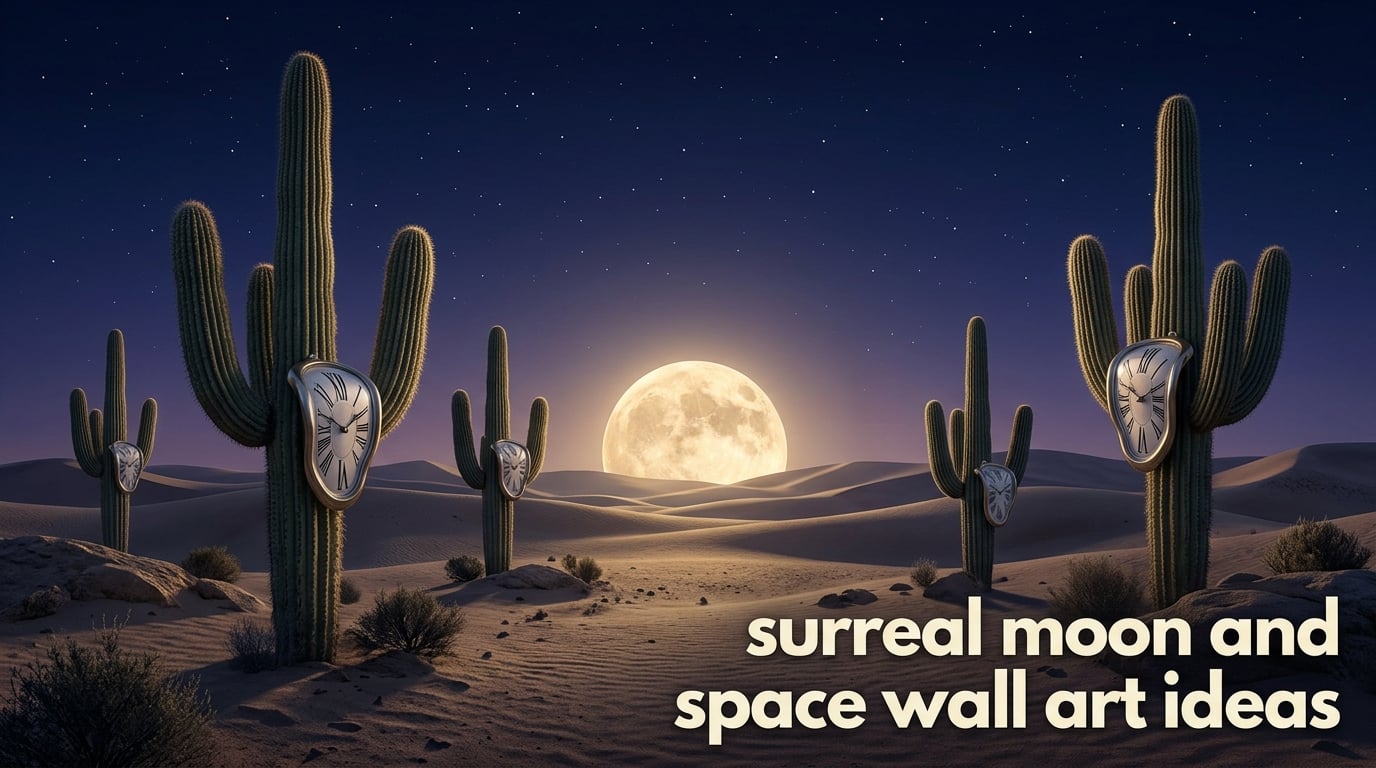
Surreal moon and space wall art transforms any room into a dreamlike cosmic escape. Whether you’re drawn to glowing lunar landscapes, impossible astronaut scenes, or celestial color palettes that blur the line between reality and imagination, the right piece can become a powerful focal point. In this guide, I’ll walk you through the most compelling surreal moon and space wall art ideas, from understanding the genre’s artistic roots to creating your own pieces with DIY techniques and AI prompts.
Table of Contents
What Is Surreal Moon and Space Wall Art?
Surreal moon and space wall art is artwork that depicts the moon, planets, astronauts, and cosmic imagery through a surrealist lens. These pieces combine dreamlike, often impossible scenes with celestial subjects to evoke wonder, mystery, and the subconscious. Unlike straightforward space photography, surreal cosmic art distorts reality — think melting rockets, floating moons above impossible landscapes, or astronauts standing in fields of wildflowers beneath an oversized lunar surface.
This genre draws from classic surrealist traditions pioneered by artists like Magritte and Dalí, who used unexpected juxtapositions to challenge perception. The result is wall art that feels both vast and intimate, making it especially effective in bedrooms, creative studios, and meditation spaces.
Core Sub-Genres of Surreal Moon and Space Wall Art
If you’re exploring surreal moon and space wall art ideas, knowing the major sub-genres helps you narrow your aesthetic direction. Here are the most distinctive styles:
1. Lunar Surrealism — The moon dominates the composition, often oversized or impossibly close. These pieces emphasize the texture of lunar surfaces while surrounding them with dreamlike elements like floating clouds or melting horizons.
2. Cosmic Surrealism — Broader celestial scenes featuring nebulae, galaxies, and planetary bodies rendered in vivid, unnatural colors. These works blur the line between astronomical imagery and abstract painting.
3. Retro-Futurist Astronaut Art — Astronauts in vintage-style suits placed in surreal environments — walking through forests, sitting on crescent moons, or standing in domestic interiors. This sub-genre has surged in popularity, particularly through artists like Seamless whose astronaut-wildflower series went viral.
4. Dreamlike Cosmos — Soft, ethereal compositions featuring pastel skies, dissolving stars, and moons that glow with inner light. These pieces lean toward the whimsical and work beautifully in bedrooms and nurseries.
5. Psychedelic Space Art — High-saturation, kaleidoscopic takes on cosmic imagery. Expect neon moons, fractal nebulae, and electric color combinations that feel energetic and bold.
6. Gothic Celestial Art — Dark, moody compositions with deep indigo backgrounds, skeletal moons, and occult-adjacent symbolism. This style resonates with dark academia and gothic decor aesthetics.
7. Minimalist Moon Phases — Clean, geometric arrangements showing lunar phases in sequence. While less overtly surreal, these pieces gain surrealist qualities when rendered in unexpected materials like hammered metal or translucent resin.
8. Mixed-Media Cosmic Collage — Combinations of photography, illustration, and digital manipulation that layer cosmic imagery with human figures, architecture, or botanical elements. These pieces feel contemporary and boundary-crossing.
9. Surreal Moon Faces — The moon rendered as a human face, sometimes serene, sometimes fragmented or double-exposed with landscape elements. This is a direct nod to Magritte’s tradition of surreal portraiture.
Famous Surrealist Artists and Artworks Featuring the Moon
Understanding the artistic lineage behind surreal moon and space wall art helps you appreciate — and curate — these pieces with greater depth. Several iconic artists have shaped this genre:
René Magritte — His painting “The Empire of Light” juxtaposes a daytime sky above a dark, moonlit street, creating an impossible time paradox. Magritte’s approach to the moon and night sky emphasizes the uncanny — the familiar made strange.
Salvador Dalí — Dalí frequently placed celestial bodies in his desert landscapes. “The Persistence of Memory” doesn’t feature the moon explicitly, but its melting forms established the visual vocabulary that countless moon artists draw from today.
Zdzisław Beksiński — The Polish painter created haunting cosmic landscapes filled with skeletal moons, vast dark skies, and architecture that seems to grow from alien soil. His work anchors the gothic-celestial aesthetic.
Beeple (Mike Winkelmann) — His digital art combines futuristic technology with surreal cosmic environments. His “Everydays” project includes numerous pieces featuring impossible moon scenes and dystopian space landscapes.
Seamless — The contemporary artist behind the viral astronaut-wildflower series sold through BIG Wall Décor. These pieces show astronauts in dreamlike terrestrial settings with massive moons overhead, perfectly capturing the retro-futurist surrealism trend.
Color Palettes That Make Cosmic Art Work
Color choice defines whether surreal moon and space wall art feels calming, energetic, or mysterious. Here are the most effective palettes:
Deep Indigo and Silver — Classic and sophisticated. Dark blue backgrounds with silver or white moon elements create a serene, contemplative mood. This palette works especially well in bedrooms and meditation spaces.
Neon Pink and Electric Blue — Bold and contemporary. This combination evokes cyberpunk and retrowave aesthetics, making it ideal for creative studios and gaming rooms.
Black and Gold — Luxurious and dramatic. A black sky with golden moons, stars, or constellation lines feels elegant and pairs well with dark academia decor.
Iridescent and Prismatic — Pearlescent, holographic effects that shift color depending on viewing angle. These work particularly well on glass and acrylic prints.
Monochromatic Grey — Subtle and minimalist. All-grey moon landscapes with subtle tonal variations create a calming, gallery-like atmosphere that suits modern and Scandinavian interiors.
Warm Earth Tones with Celestial Accents — Terracotta, burnt sienna, and ochre backgrounds with cream-colored moons create an unexpected warmth that bridges cosmic and bohemian aesthetics.
Room-by-Room Placement Guide
Where you hang surreal moon and space wall art significantly affects how the piece reads in the room. Here’s a room-by-room breakdown:
Bedroom — The most popular location. Hang a large moon piece above the headboard as a focal point. Dreamlike, soft-palette works promote relaxation. As forum discussions on r/interiordecorating confirm, finding moon art that doesn’t feel overly “witchy” is a common challenge — lean toward painterly surrealism rather than mystical imagery for a refined look.
Living Room — A statement cosmic piece works as a conversation starter above a sofa or fireplace. Consider a multi-panel arrangement for added visual impact. Pair with warm ambient lighting to enhance the celestial atmosphere.
Home Office — Astronaut-themed surreal art adds inspiration and perspective. Pieces showing tiny figures against vast cosmic backdrops can make creative work feel more expansive and meaningful.
Meditation or Yoga Space — Ethereal, glow-focused moon art creates a contemplative atmosphere. Soft indigo palettes and luminous lunar surfaces are particularly effective here.
Kids’ Rooms — Whimsical, friendly cosmic art with approachable color palettes. Crescent moons with faces, friendly astronauts, and colorful planets work better than dark, moody compositions.
Materials and Formats for Moon Wall Art
The material you choose affects durability, visual impact, and maintenance. Here’s a comparison of the most popular options:
Canvas Prints — The most traditional option. Canvas provides a textured, painterly quality that suits surreal imagery. Available in gallery-wrapped and framed formats. Generally lightweight and easy to hang.
Glass Prints — HD imagery on tempered glass creates stunning depth and luminosity. As reviewers on MyPhotoStation note, glass prints look particularly striking at night with ambient lighting. However, they’re reflective during daylight hours and require careful packaging during shipping.
Metal Prints — Brushed aluminum substrates give cosmic art a contemporary, industrial edge. Colors appear exceptionally vivid on metal, and the material is extremely durable. Ideal for modern and minimalist interiors.
Acrylic Prints — Similar depth to glass but lighter and less fragile. The glossy finish makes colors pop with vivid intensity, creating a high-impact look for bold cosmic compositions.
LED-Lit Wall Art — Pieces that incorporate built-in LED lighting to create an actual glow effect. These range from backlit canvases to neon-frame installations and bring surreal moon art to life in dark rooms.
DIY Surreal Moon Art Ideas
Creating your own surreal moon and space wall art gives you complete creative control and produces genuinely unique pieces. These DIY techniques range from beginner-friendly to advanced:
1. 3D Plaster Moon Relief with LED Backlight — This technique has gained significant traction on Reddit’s r/Sculpture community. Apply plaster to a wooden board in concentric circles, carving lunar surface textures with sculpting tools. Once dry, mount LED strip lights behind the piece to create an ethereal glow effect. The result is a wall-mounted moon that actually illuminates.
2. Wire Moon Face Sculpture — Using 3mm aluminum wire, bend and shape a moon face profile. As shared on r/somethingimade, this technique produces elegant, minimalist sculptures that cast intricate shadows on the wall. Mount with small nails or adhesive hooks.
3. Painted Moon Mural — Transform an entire wall with a painted moon scene. Start with a dark base coat, then layer circular gradients using sponges and dry brushes. Add stars with a flicking technique using thinned white paint. This approach works especially well in bedrooms and meditation spaces.
4. Layered Paper Moon Installation — Cut crescent and full moon shapes from heavyweight paper or cardstock in graduating sizes. Layer them with spacing foam between each piece to create dimensional wall art. Illuminate with battery-operated fairy lights for added depth.
5. Resin Moon Art — Pour epoxy resin in layers, adding pigment and metallic powder between each pour to create cosmic depth effects. Embed glow-in-the-dark pigment for pieces that illuminate at night. Pour into circular silicone molds for clean moon shapes.
AI Prompts for Generating Your Own Surreal Moon and Space Wall Art
AI image generators can produce stunning surreal moon and space wall art when given detailed prompts. These prompts are designed to create wall-art-ready compositions:
Prompt 1: “A giant luminous crescent moon floating above a surreal desert landscape at twilight, with melting clocks draped over cacti, deep indigo and gold color palette, oil painting style, dreamlike atmosphere”
Prompt 2: “An astronaut sitting on the edge of a massive moon, dangling feet over a field of glowing wildflowers below, vintage spacesuit, soft pastel cosmic sky, retro-futurist illustration style”
Prompt 3: “Double-exposed portrait of a human face merged with the surface of the full moon, craters forming the features of the eyes and mouth, deep space nebula background, ethereal silver and violet tones”
Prompt 4: “A library with floating books drifting toward an enormous moon visible through a window, surrealist composition in the style of Magritte, muted earth tones with a glowing white moon as focal point”
Prompt 5: “Spiral staircase made of clouds ascending toward a massive blood moon, gothic celestial atmosphere, dramatic lighting, ornate iron railings with constellation patterns, dark academia aesthetic”
Prompt 6: “A door standing alone in a field opening to reveal a cosmic nebula with three moons of different sizes, surreal landscape painting, deep purple and electric blue color palette”
Prompt 7: “Close-up of a human eye reflecting a lunar eclipse, the iris containing tiny astronauts and star clusters, hyper-detailed digital art, moody cosmic atmosphere”
Prompt 8: “A cozy living room with a massive moon crashing through the ceiling, furniture floating weightlessly, photorealistic surrealism with warm amber lighting contrasting against cool lunar surface”
Prompt 9: “Forest of towering sunflowers with moon-shaped seed heads glowing against a deep space background, seamless pattern design for wall art, vibrant orange and deep navy color scheme”
Prompt 10: “A violin floating in space with the strings replaced by beams of moonlight connecting to a crescent moon above, dark background with subtle starfield, elegant surrealism, metallic gold accents”
When using these prompts, experiment with adding style modifiers like “in the style of Dalí” or “Beksinski-inspired” to shift the aesthetic direction. Aspect ratio settings matter for wall art — use portrait or landscape ratios that match your intended display space.
Gallery Wall Composition Tips
Creating a gallery wall with multiple surreal moon and space pieces requires thoughtful composition. Here’s how to make different pieces work together:
Anchor with one large piece — Choose your favorite artwork as the central focal point and build the arrangement around it. The anchor piece should be the largest and most visually striking.
Unify through color palette — Even if pieces differ in style, maintaining a consistent color palette (indigo-silver, black-gold, or neon spectrum) creates visual cohesion across the collection.
Mix scales and formats — Combine a large canvas print with smaller framed works, a wire sculpture, and perhaps a miniature LED moon light. Varying dimensions add visual interest.
Include breathing room — Don’t crowd every piece together. Leaving wall space between frames lets each artwork be appreciated individually while still reading as a unified collection.
Balance surreal with grounded — Pair highly surreal cosmic pieces with more grounded elements like botanical prints or architectural sketches. This prevents the wall from feeling overwhelming while maintaining the dreamlike theme.
Frequently Asked Questions
What does a moon symbolize in art?
In art, the moon symbolizes intuition, femininity, cycles, mystery, and the subconscious mind. Different lunar phases carry distinct meanings — a full moon represents completion and illumination, while a crescent moon suggests potential and transition. In surrealist art specifically, the moon often serves as a portal between reality and the dream world.
Can you give me some examples of space art?
Space art includes cosmic surrealism, lunar surrealism, retro-futurist astronaut scenes, dreamlike cosmos paintings, psychedelic space art, gothic celestial compositions, minimalist moon phase arrangements, and mixed-media cosmic collage. Each sub-genre approaches celestial subjects with a different aesthetic sensibility, from ethereal softness to bold neon intensity.
What is whimsical wall art?
Whimsical wall art features playful, imaginative subjects rendered with a light, dreamy quality. In the context of moon and space art, whimsical pieces might show friendly astronauts, smiling crescent moons, or impossible cosmic landscapes with charming rather than threatening atmospheres. These works favor soft colors and gentle compositions.
How to create moon art?
You can create moon art through several methods: painting directly on canvas or walls using gradient techniques, sculpting 3D plaster reliefs with LED backlighting, bending wire into moon face shapes, pouring layered resin with cosmic pigments, or generating AI images using detailed prompts. Each technique offers different levels of complexity and visual impact.
How to make a glowing moon?
To make a glowing moon wall art piece, sculpt a plaster relief on a wooden board with lunar surface textures, then mount LED strip lights or puck lights behind the piece. Alternatively, mix glow-in-the-dark pigment into resin pours or use phosphorescent paint on canvas. The LED backlight method produces the most dramatic illumination effect.
Where can I buy unique moon decor?
Unique moon decor is available from independent artists on Etsy, specialty retailers like BIG Wall Décor and MyPhotoStation, art galleries, art fairs, and directly from surrealist artists through their personal websites. For truly one-of-a-kind pieces, commissioning a local artist or creating your own with DIY techniques offers the most distinctive results.
What are some famous artworks about the moon?
Famous moon artworks include Magritte’s u0022The Empire of Lightu0022 with its paradoxical moonlit street, Dalí’s various celestial desert landscapes, Beksiński’s haunting cosmic paintings, Beeple’s digital dystopian moon scenes, and Seamless’s viral astronaut-wildflower series. These works span traditional oil painting, digital art, and contemporary illustration.
Conclusion
Surreal moon and space wall art ideas offer endless possibilities for transforming your living space into something extraordinary. Whether you choose a ready-made piece from a talented artist, create your own through DIY techniques, or generate custom artwork using AI prompts, the key is selecting work that resonates with your personal aesthetic. Start with the sub-genres and color palettes that speak to you, consider your room’s existing decor and lighting, and don’t be afraid to mix styles. The cosmos has always inspired humanity’s greatest art — your walls deserve a piece of that wonder.