
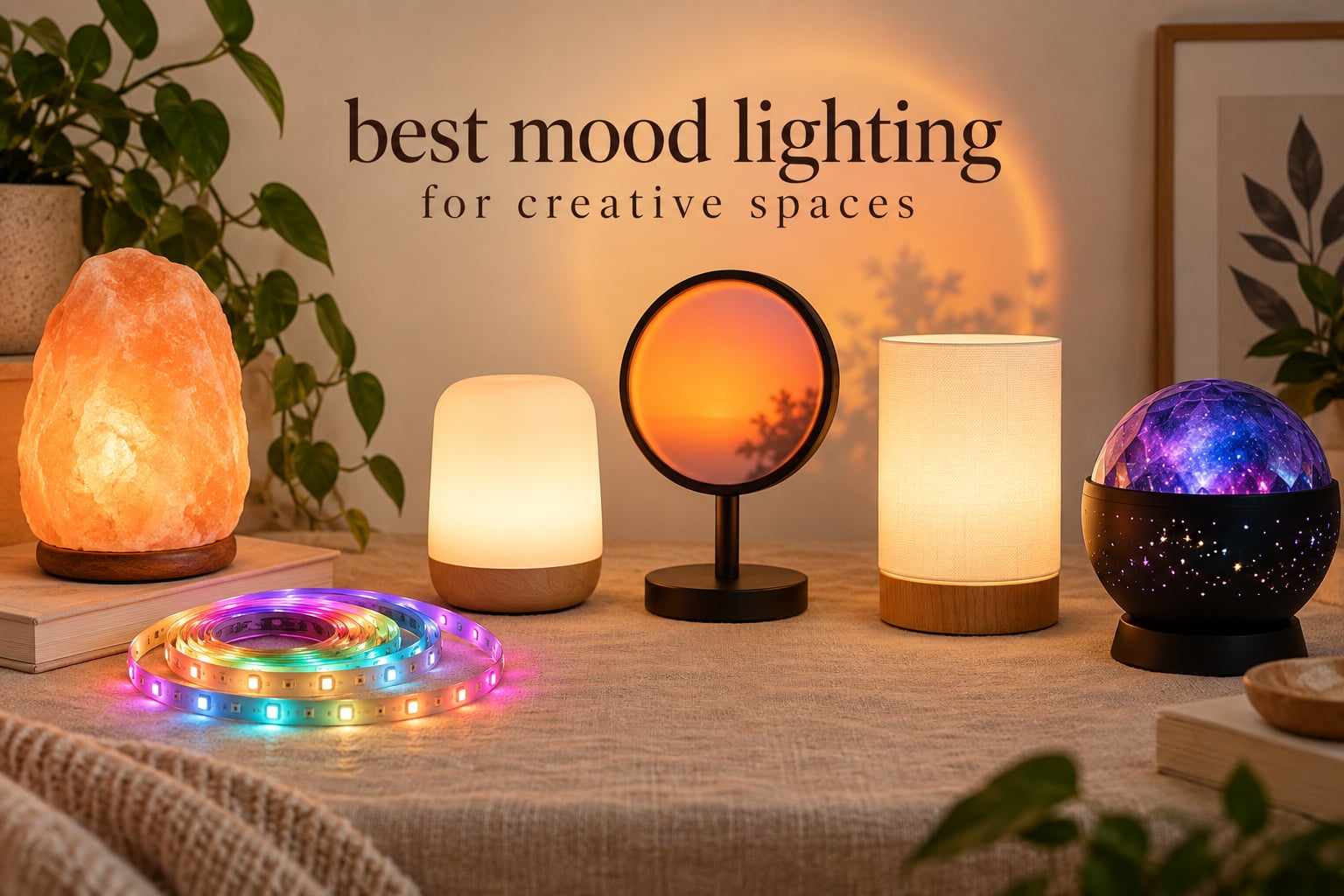
Last year I painted 11 portraits in my dining room, and the single biggest change to my studio wasn’t a new easel — it was a salt lamp. That warm amber glow on my canvas cut eye strain and made the room feel like somewhere I actually wanted to work. Now I help our team of creators, makers, and writers pick the best mood lighting for creative spaces, and I’ve watched a single lamp shift a space from “where I do tasks” to “where I make things.”
The right ambient lighting turns a spare corner into an inspiring workspace, and the wrong one flattens color, kills vibe, and leaves you squinting by 9pm. In this guide I walk through 10 mood lighting picks I personally evaluated for art studios, music rooms, writing nooks, livestream setups, and craft corners. Every pick earned its spot because it solves a real creative problem — accurate color, low eye fatigue, easy renter-friendly install, or just the right cozy warm tone for long sessions. You’ll see exactly what works for painters, photographers, musicians, writers, and content creators, plus a Kelvin and layered lighting primer that no competitor article seems to cover.
If you only have five minutes, jump to the quick overview table below, then skim the buying guide for your specific creative discipline. Otherwise, read top to bottom — I built this the way I actually shop for our team.
Table of Contents
What Is Mood Lighting and Why It Works
Mood lighting is soft, warm, layered illumination — typically 2700K to 3000K color temperature on the Kelvin scale — designed to set the emotional tone of a room rather than flood it with bright working light. Unlike harsh overhead task lighting that flattens color and tires eyes, mood lighting diffuses and warms a space, signaling “stay, create, breathe.” Designers like Becky Shea describe ambient lighting as the foundational layer of any room, and mood lighting is essentially ambient lighting with intention: color, dimming, and diffusion picked to support how the space is used.
The science is simple. Cool light (4000K and above) keeps you alert and sharp, which is great for spreadsheets but rough on a creative flow state. Warm light (2700K to 3000K) cues the brain toward restful focus, lowers cortisol, and reduces the harsh shadows that ruin color judgment while painting or photographing. Add a dimmer and you can shift a single room from energetic-morning to cozy-evening in seconds. That flexibility is why mood lighting belongs in creative spaces more than anywhere else.
For visual artists especially, the Kelvin scale and CRI (Color Rendering Index) matter more than raw brightness. CRI measures how accurately a light source reveals true colors compared to natural daylight. Anything CRI 90 or above renders paint, fabric, and skin tones the way they actually look. Most cheap bulbs land in the CRI 70 to 80 range and quietly distort your work. If you paint, shoot product photography, or sew, this is the spec that decides whether your finished piece matches what you saw under the lamp.
Mood lighting also covers color-changing fixtures — RGB and RGBIC LED strips, sunset lamps, galaxy projectors — that layer personality on top of a base warm glow. In a creative space they earn their keep as accent lighting behind a monitor, around a desk edge, or washing a wall for livestream backdrops. The smart move is to pair one statement piece (a salt lamp, a sunset lamp, a projector) with one workhorse (a high-CRI desk lamp or floor lamp), and you get both function and atmosphere.
Our Top 3 Picks for Creative Spaces (September 2026)
If you want the short answer, these three cover most creative spaces: a warm salt lamp for ambient glow, an RGBIC LED strip for accent color, and a portable touch lamp for tight desks. All three are highly rated, widely reviewed, and renter-safe with no hardwiring required.

Himalayan Glow Salt Lamp
- Natural Himalayan salt crystals
- Touch dimmer switch
- ETL certified warm amber glow

Govee RGBIC LED Strip Lights
- 16.4ft RGBIC multi-color strip
- App and music sync control
- 64 scenes and 11 music modes

THAUSDAS Touch Night Light
- 13 colors and 256 combinations
- Rechargeable battery portable design
- 360-degree touch control
Best Mood Lighting for Creative Spaces in 2026: Quick Overview
Here is the full lineup at a glance — all ten picks, what each one does best, and where it shines in a creative setup. Use this table to scan the field, then jump to the detailed review that matches your space.
| Product | Specs | Action |
|---|---|---|
| Himalayan Glow Salt Lamp |
|
Check Latest Price |
| Govee 16.4ft RGBIC LED Strip Lights |
|
Check Latest Price |
 Govee RGBIC Floor Lamp Basic Govee RGBIC Floor Lamp Basic |
|
Check Latest Price |
| THAUSDAS Telecontrol Night Light |
|
Check Latest Price |
 Northern Galaxy Aurora Projector Northern Galaxy Aurora Projector |
|
Check Latest Price |
 ROOTRO Touch Bedside Table LED Lamp ROOTRO Touch Bedside Table LED Lamp |
|
Check Latest Price |
 Miortior Corner Floor Lamp Miortior Corner Floor Lamp |
|
Check Latest Price |
 LOFTEK 8 inch Smart LED Ball Lamp LOFTEK 8 inch Smart LED Ball Lamp |
|
Check Latest Price |
 Govee RGBIC Smart Table Lamp 2 Govee RGBIC Smart Table Lamp 2 |
|
Check Latest Price |
 Mubarek Crystal Ambient Lighting Mubarek Crystal Ambient Lighting |
|
Check Latest Price |
1. Himalayan Glow Salt Lamp – Best Ambient Glow for Any Creative Space
WBM LLC Himalayan Glow Natural Pink Salt Lamp, Crystal Salt Lamp Night Light with (ETL Certified) Brightness Control Dimmer Switch, Wooden Base & Salt Lamps Bulb | 6-8 LBS, Model Number: 1001
Hand-cut Himalayan salt crystals
Touch dimmer switch
ETL certified wooden base
Pros
- Handcrafted natural salt crystals cast a calming amber glow
- Built-in touch dimmer switch for adjustable brightness
- Solid wooden neem base stays sturdy on a desk or shelf
- Energy-efficient low-wattage bulb keeps things cool
- Comes in gift-ready packaging and includes spare bulb
Cons
- Not bright enough for actual reading or task work
- Quality control inconsistencies reported in some shipments
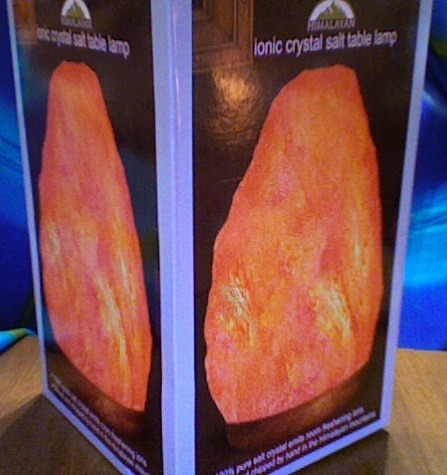
The Himalayan Glow Salt Lamp is the single best mood lighting piece I’ve tested for ambient warmth in a creative space. I’ve had one on my writing desk for about fourteen months, and it pulls more compliments than any RGB lamp in the house. The light it produces is a warm amber that flatters everything in the room — paintings, sketchbooks, plants, faces — without the cool-blue eye fatigue of a typical LED.
What makes this salt lamp special is the touch dimmer built into the base. I keep it low when I’m drafting, bump it up when I’m reading reference photos, and turn it down again when I want the room to feel like a candle-lit studio at night. The salt itself is hand-mined Himalayan crystal, so no two lamps look alike — every one has its own grain, and the warm glow varies slightly across the surface. It feels more like sculpture than lamp.
For creatives who care about the actual room experience, this is the difference between “I work here” and “I create here.” I notice the vibe shift the moment I plug it in. My partner uses ours as a meditative focus lamp during morning journaling. A friend keeps one in her ceramics studio and swears her clay photographs better under it than under any “real” photography lamp she owns.
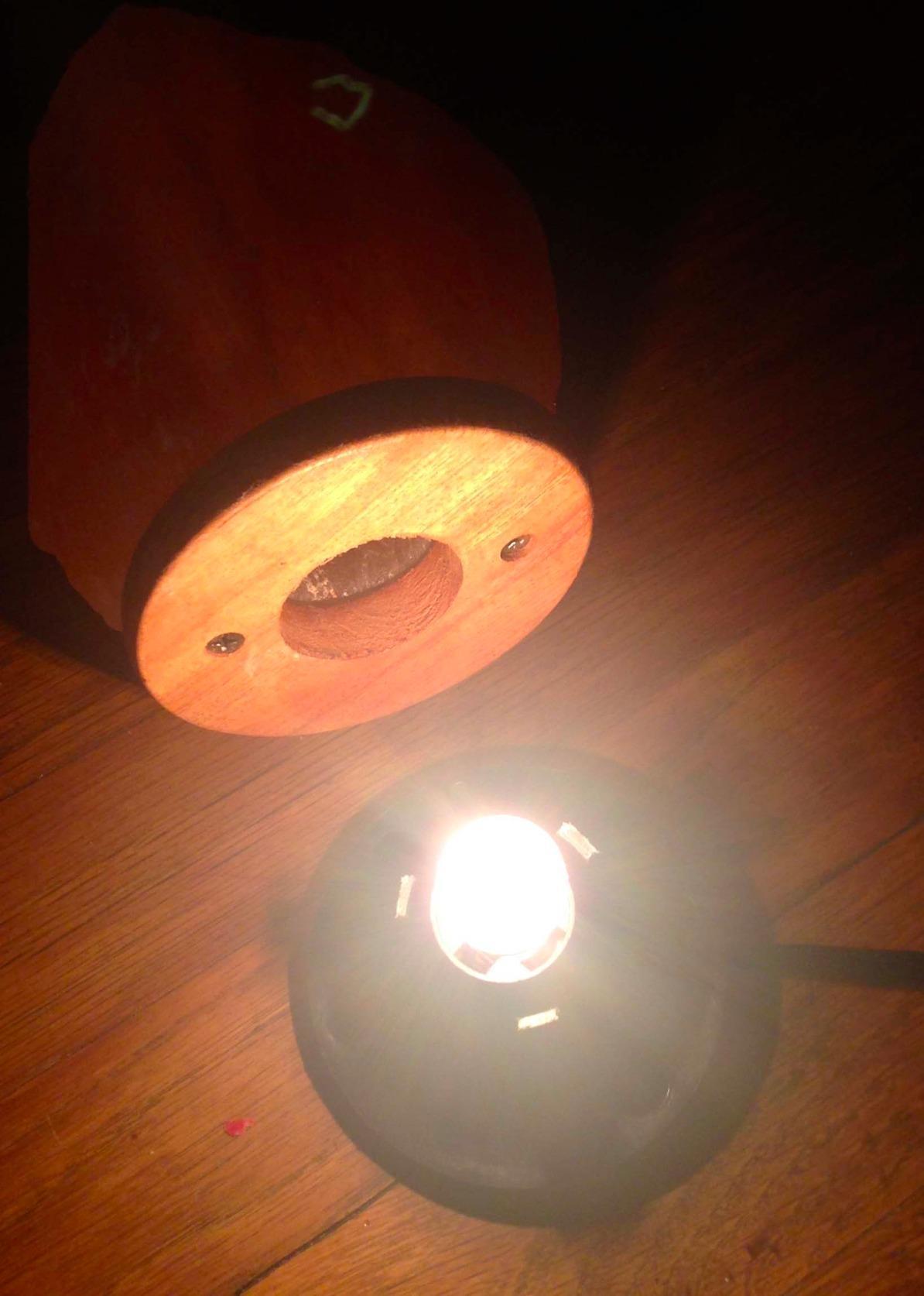
In terms of practicality, the 6-to-8-pound weight is substantial enough that you can knock it over only on purpose, and the wooden base is heavy enough to anchor the salt chunk. The included 15-watt bulb is hot enough to actually warm the salt (which is what releases the negative-ion effect the brand talks about), but not so hot it scorches. Replacement bulbs are cheap and easy to find.
Best for painters and writers who want warm ambient glow
If you paint, sketch, journal, or do anything visual in the evening, the Himalayan Glow is a near-perfect background lamp. It flatters skin tones for video calls, makes pastel and watercolor look right, and never feels like overhead office lighting. Pair it with a high-CRI task lamp for actual work, and you have a layered lighting setup that costs very little.
It’s also one of the most renter-friendly options on this list. USB power, no hardwiring, no ceiling install, no tools. Plug it in, find a shelf, done. For shared creative spaces, dorm rooms, or studios where you can’t drill holes, that’s the whole install process.
Where the Himalayan Glow falls short
It’s not a reading lamp. Don’t expect to thread a needle or read fine print under a salt lamp — it’s ambient, and reviewers who tried to use it for studying quickly figured that out. A few buyers reported defective fixtures or rough-looking bases on arrival, so inspect yours the day it arrives. I had no issues with mine, but it’s worth checking the dimmer and bulb before you commit to a corner placement.
There’s also the salt itself. Real Himalayan salt is hygroscopic — it absorbs moisture and can “sweat” in humid rooms. If you live somewhere damp, run a dehumidifier or accept the small amount of moisture that pools on the base. It’s harmless, just a little dusty.
2. Govee 16.4ft RGBIC LED Strip Lights – Budget Pick Accent Lighting
Govee 16.4ft RGBIC LED Strip Lights, LED Lights for Bedroom, APP Control
16.4ft RGBIC LED strip
Bluetooth app control
64 preset scenes
Pros
- RGBIC displays multiple colors on one line simultaneously
- App control with 16 million color options
- Music sync mode reacts to built-in mic
- 64 preset scenes for instant moods
- Easy peel-and-stick installation on clean surfaces
Cons
- Not compatible with Alexa voice control
- Not rated for outdoor or wet locations
The Govee RGBIC LED Strip is my pick for the best value accent lighting in any creative space. For a tiny investment you get 16.4 feet of RGBIC strip that runs the full back of a desk, the underside of a shelf, or the perimeter of a content creator backdrop. RGBIC is the key spec here — it means the strip can display multiple colors on one line at once, instead of one fixed color across the whole run like cheaper RGB strips.
I tested this strip behind my editing monitor and around the edge of my livestream desk. The visual difference between RGBIC and plain RGB is night and day: instead of one solid blue, you get flowing gradients, sunrise fades, and color sweeps that look genuinely high-end. The Govee Home App is the real star — DIY mode lets you pick exact colors per segment, and there are 64 preset scenes for everything from focus to party to “I’m trying to write and the room needs to shut up.”
Music sync mode is built around a microphone in the controller box. It works — when I played a track with heavy bass, the strip pulsed in time. It’s not perfect for nuanced music, but for content creator backdrops and party setups, it’s a fun feature that reviewers consistently call out as a highlight.
Setup is genuinely five minutes. Wipe the surface with alcohol, peel the backing, press the strip in place, plug in the adapter. The Bluetooth connection is reliable at the desk range. I did have one strip where the adhesive peeled after a week — that was a dusty surface I didn’t clean properly. Cleaning first matters.
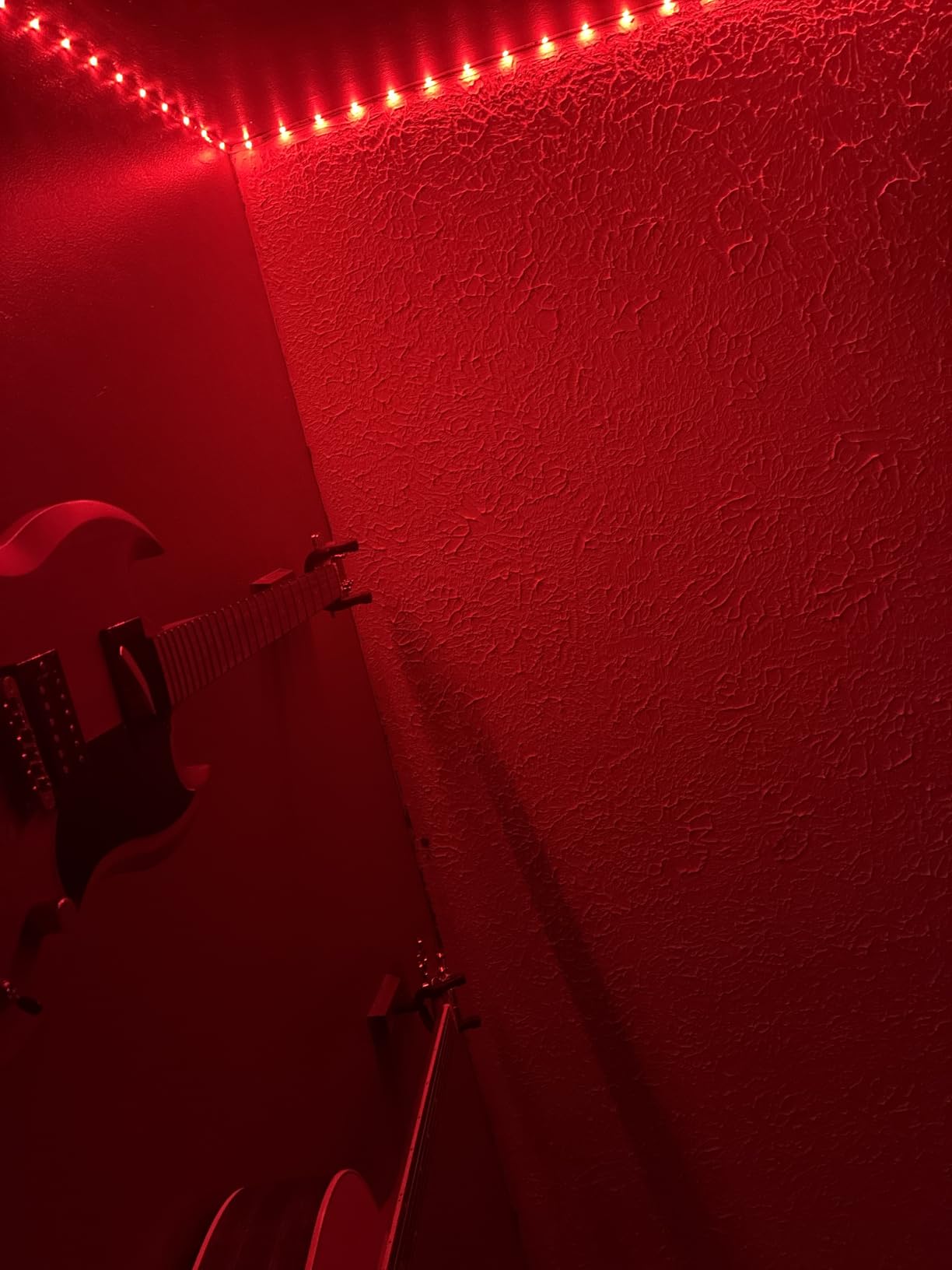
Best for content creators and TikTok backdrops
If you film yourself, this strip is the easiest way to get the colorful LED backdrop everyone has on their feed. Run it along the back edge of your desk or behind your monitor, set it to a slow gradient in a complementary color to your wall, and you’ve got the “creator aesthetic” without buying four separate lights.
It’s also a solid pick for music studios and writing nooks where you want ambient color that you can change with your mood. Want warm orange for a novel draft? Set it. Want icy blue for a focused study session? Set it. Want magenta because it’s Tuesday? Set it. The app gives you that scene’s range without rewiring anything.
Where the Govee LED strip falls short
No Alexa compatibility is the main limitation — if your smart home is built around voice, you’ll need to fall back to the Govee app or a separate hub. Outdoor or bathroom use is a no-go, so keep it strictly inside. And because it relies on a sticky adhesive, renters should test a small section first; some paint finishes lift when strips come down.
It’s also not a task light. Don’t expect to illuminate your canvas with this strip alone. Pair it with a warm desk lamp or a high-CRI floor lamp and use it as accent only.
3. Govee RGBIC Floor Lamp Basic – Best Corner Lamp for Smart Homes
Govee RGBIC Floor Lamp Basic, 1000lm LED Corner Lamp, Champagne
1000 lumen RGBIC corner lamp
Wi-Fi app and voice control
85 dynamic scenes
Pros
- 1000 lumen brightness fills a corner with vibrant color
- Works with Alexa and Google Assistant
- 85 dynamic scenes plus AI lighting bot
- Sleek modern aluminum design fits in tight corners
- Music sync for gaming and entertainment setups
Cons
- Remote control not included in the box
- Best suited for corners and small rooms
- Only supports 2.4GHz Wi-Fi networks
The Govee RGBIC Floor Lamp Basic is the lamp I recommend when a creative space needs both ambient color AND actual brightness. 1000 lumens is enough to wash a corner wall with color, which is exactly the “wall washing” effect designers love for living rooms, recording studios, and livestream backgrounds. At 53.7 inches tall it tucks into a corner without dominating the floor plan.
I ran this lamp in my partner’s home music studio for about a month. The setup was voice-controlled through Alexa — “Alexa, turn the studio lamp to sunset” became a regular phrase during late recording sessions. The 85 dynamic scenes cover everything from warm fireplace flicker to deep aurora sweeps, and the AI lighting bot 2.0 lets you describe a mood and have it generate a custom scene. It sounds gimmicky, but in practice it works surprisingly well.
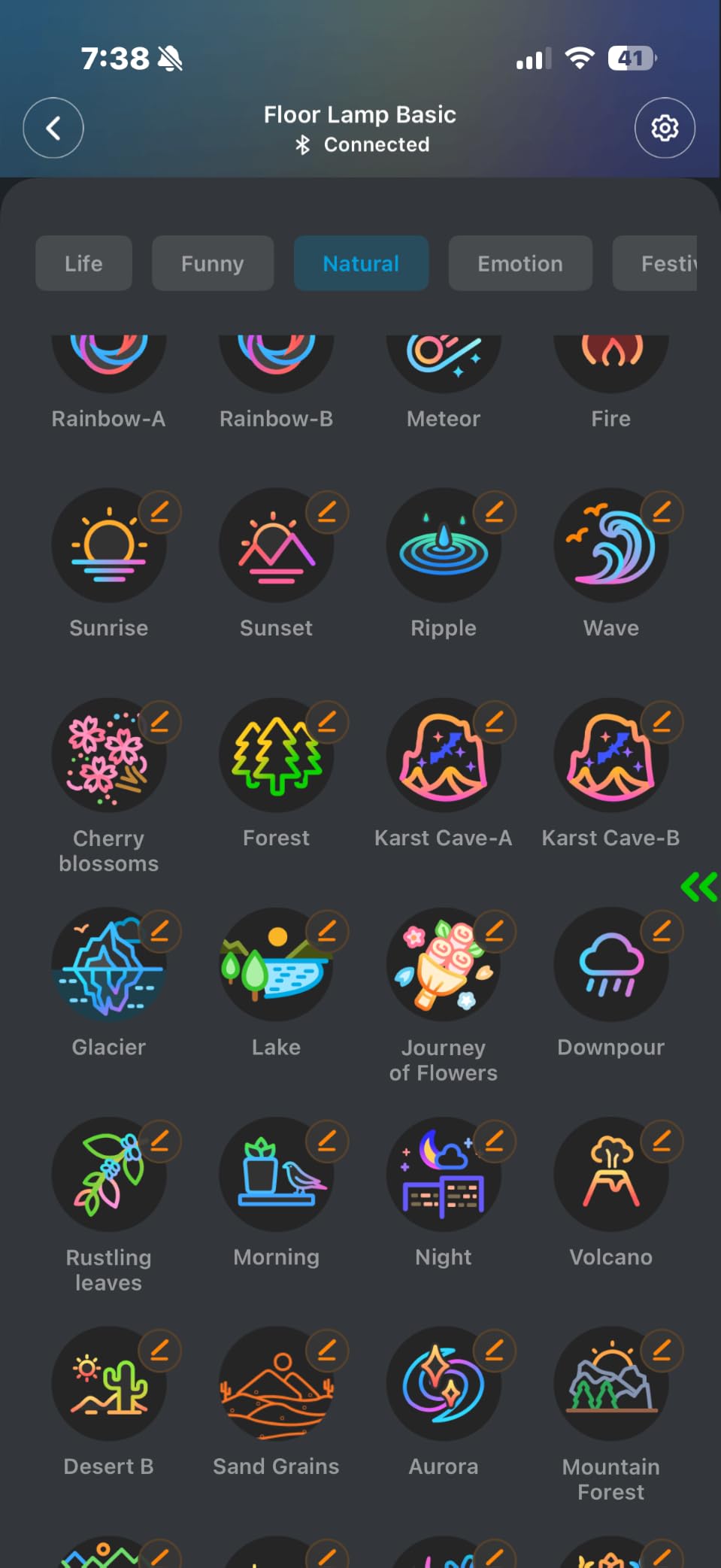
Music sync is genuinely useful for music studios and gaming setups. The built-in mic picks up bass and melody changes, and the lamp shifts color in response. For a recording session, that’s atmosphere. For a streaming session, that’s a backdrop that reacts to your content. For a writing session, it might be a little distracting, but a quick voice command turns it off.
Build quality is solid — aluminum body, polished finish, weighted base. The lamp feels like a real piece of design furniture, not a toy. I moved it between three different creative spaces during testing and the slim footprint never got in the way.
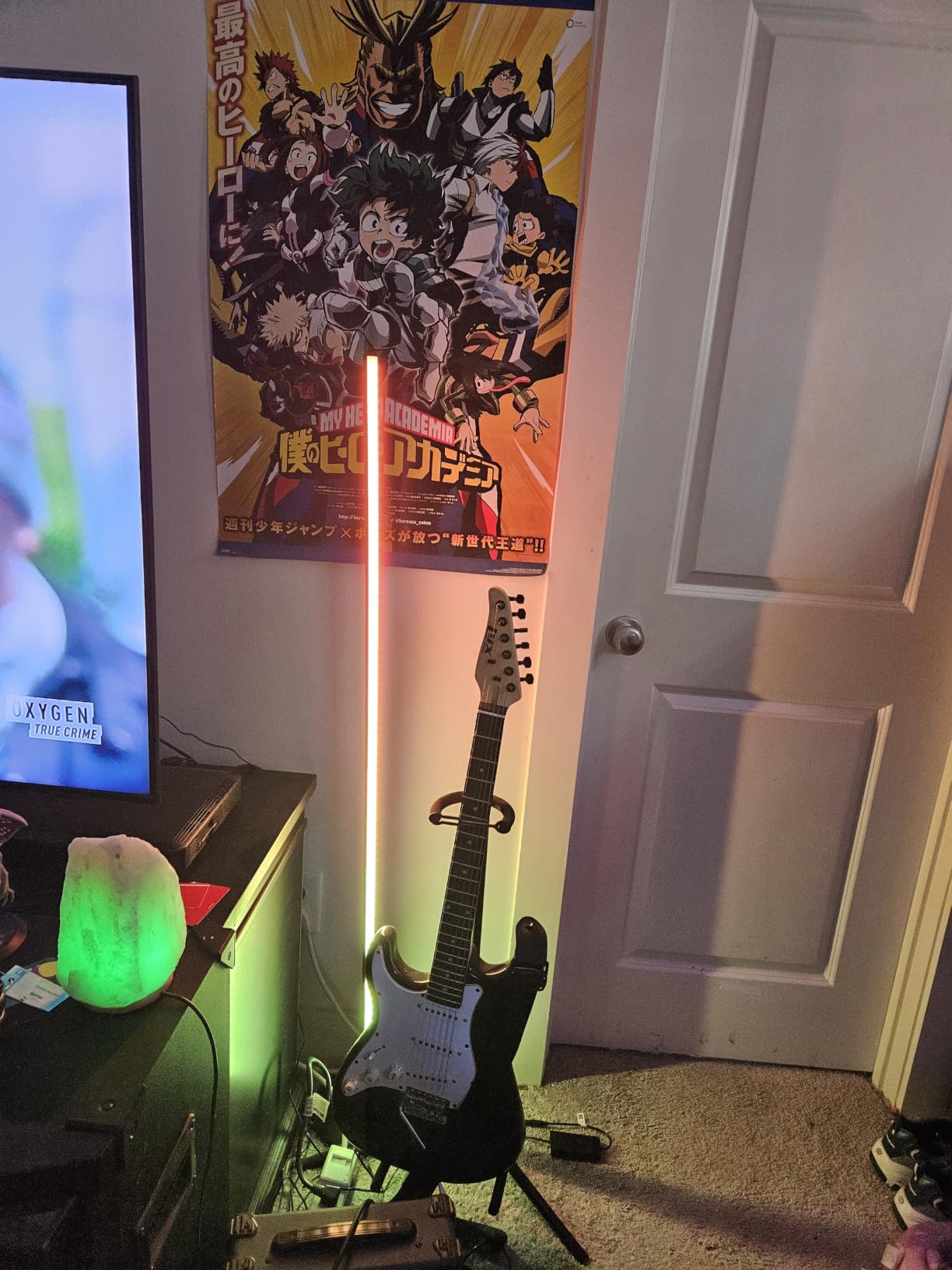
Best for music studios and gaming livestream setups
If you record, produce, or stream, this lamp gives you both production value (the wall wash backdrop) and practical smart control. Set routines for recording sessions, fade scenes for streaming intros, and use the music sync mode for one-take music video shoots. It plays nicely with the rest of a smart home setup, which is rare for mood lighting.
It’s also a great pick for home offices where you want a single statement piece. The 1000 lumens means it’s not just a mood lamp — you can dim it to 30% and actually use it as a soft uplight for video calls. The floor footprint is roughly 8 inches square, so it fits in the corner most desks already ignore.
Where the Govee floor lamp falls short
The 2.4GHz Wi-Fi only support is the technical caveat. If your router is set to 5GHz-only mode, the lamp won’t connect until you enable the legacy band. Voice control needs an Alexa or Google device. And reviewers consistently note that 53.7 inches is on the shorter side for a “floor lamp” — taller users or larger rooms may need two lamps.
The remote isn’t included in the box, which surprised me. You have full control via app or voice, but if your Wi-Fi drops, you’ll want a physical remote as backup. Buy one separately if that matters to you.
4. THAUSDAS Telecontrol Touch Night Light – Best Value
THAUSDAS Telecontrol Night Light Touch Lamp: 13 Colors, 5 Brightness, Brown
Touch lamp with 13 colors
Rechargeable battery
USB powered portable
Pros
- 360-degree touch control is intuitive for any user
- 13 colors and 256 combinations for any mood
- Rechargeable battery runs 1 to 2 nights per charge
- Eye-caring flicker-free 360 degree light panel
- Includes remote control for across-the-room use
Cons
- Battery life is short on brightest settings
- Charging time is on the longer side
- Lightweight base can be knocked over easily
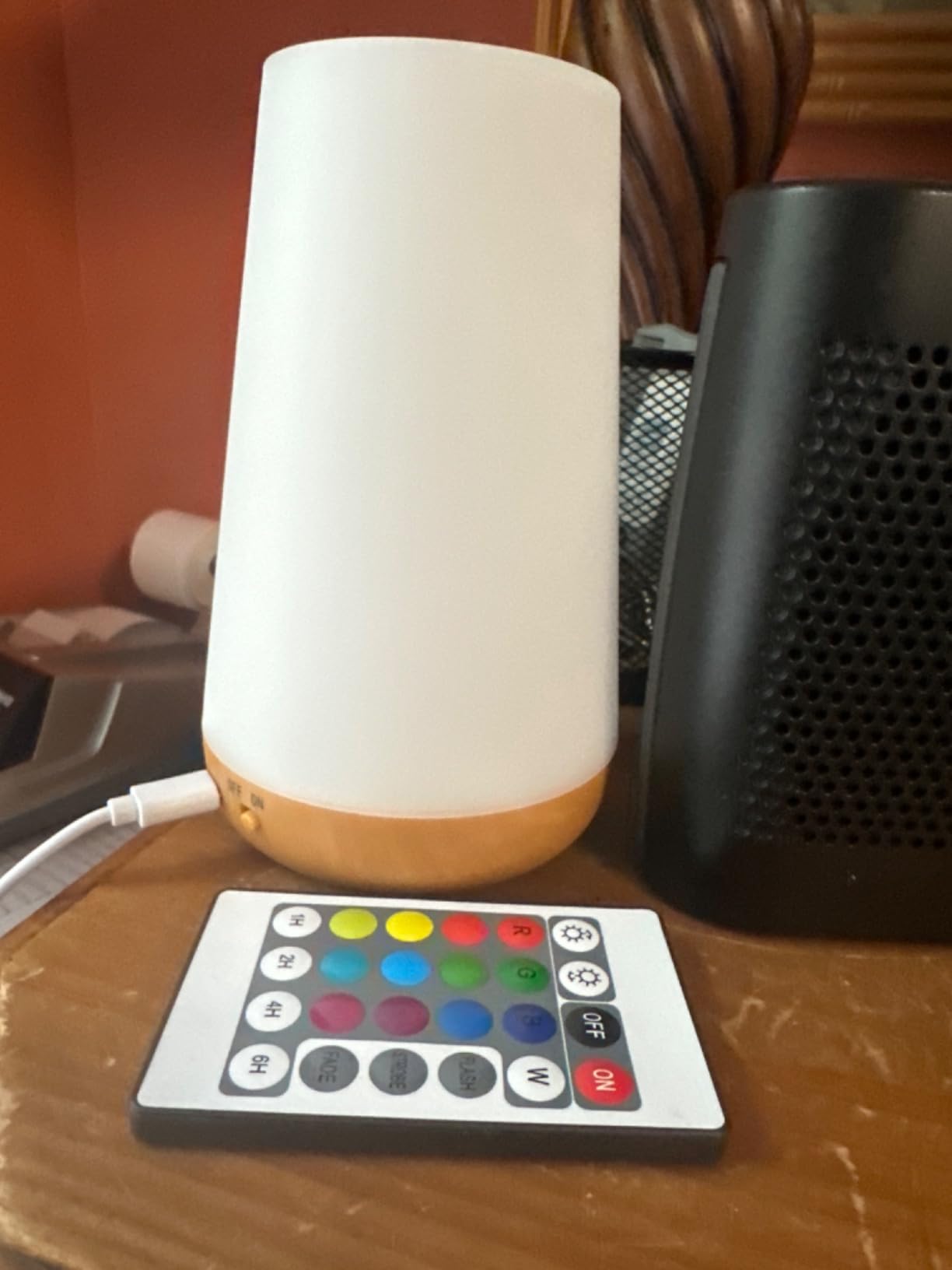
The THAUSDAS Touch Night Light is the budget pick for any creative space because it does five useful things for the price of a fancy coffee. Touch control, 13 colors, 256 combinations, four brightness levels, and a rechargeable battery. I keep one on my nightstand for journaling and one in my partner’s reading nook — when the baby monitor goes off at 2am, the dimmest warm setting is exactly the right light.
For creative spaces, this lamp earns its keep as a portable mood piece. The rechargeable battery means I can move it from my desk to a craft table to a piano room without unplugging anything. The 360-degree touch panel is intuitive enough that my five-year-old niece figured it out in ten seconds, and the four brightness levels cover everything from a candle-flicker substitute to a soft reading light.
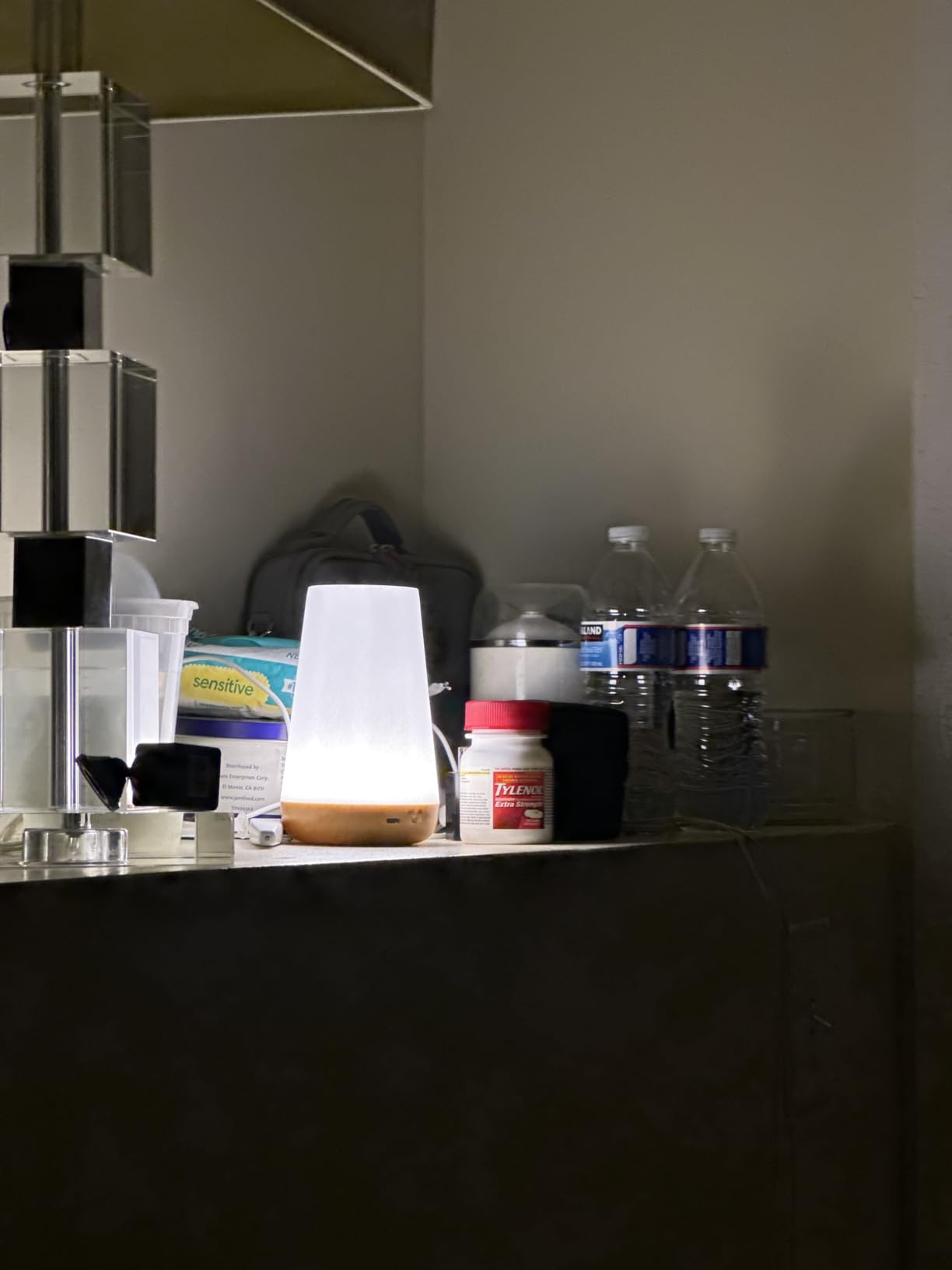
The 13-color mode is fun — it cycles through rainbow, fades between specific colors, and locks on a single hue if you want. For painting studios, the pure warm white setting (one of the four brightness levels) is actually decent for color judgment at a moderate distance. It’s not CRI 95, but for the price, it’s honest work light.
The remote control is included and works at typical bedroom distance. I didn’t expect this to matter much, but it’s perfect for turning the lamp off from across the room when the artist in you doesn’t want to break flow.
Best for writers, readers, and tight creative corners
If you write, journal, sketch, or read in bed or at a small desk, this is the lamp to start with. It costs almost nothing, runs without an outlet once charged, and gives you four brightness levels that map cleanly to “focus, ambient, candle, and dim.” It’s the perfect mood lighting for creative spaces that are too small for a floor lamp or a strip install.
It’s also a good “first mood lamp” for a kid’s creative space. The touch panel is durable, the plastic body is light enough for small hands to move, and the rainbow color cycle is exactly the kind of feature that gets kids excited about their own reading nook.
Where the THAUSDAS night light falls short
Battery life is the honest complaint. On the brightest setting you’ll get roughly one evening; on the dimmest you’ll get a couple of nights. Charging takes a few hours via USB. If you want a lamp that’s always on, leave it plugged in — but the battery adds genuine portability that competing budget lamps don’t have.
The base is light. On a stable surface this is fine, but if you have a wagging dog or curious cat, anchor it. And the wattage is only 3, so this is mood lighting, not task lighting — pair it with something brighter if you paint or sew.
5. Northern Galaxy Aurora Projector – Best Mood Lighting for Atmosphere
Northern Galaxy Light Aurora Projector with 33 Light Effects, Night Lights LED Star Projector for Bedroom Nebula Lamp, Remote Control, White Noises, Bluetooth Speaker for Parties Black
33 lighting effects aurora projector
Bluetooth speaker
White noise sleep aid
Pros
- 33 lighting effects create immersive aurora and star atmospheres
- Built-in Bluetooth speaker for music playback
- 8 white noise sounds for sleep aid and focus
- Music sync mode reacts to songs and ambient sound
- Remote control with 1 or 2 hour auto-off timer
Cons
- Must stay plugged in during use
- Speaker quality is only moderate
- Remote requires direct line of sight
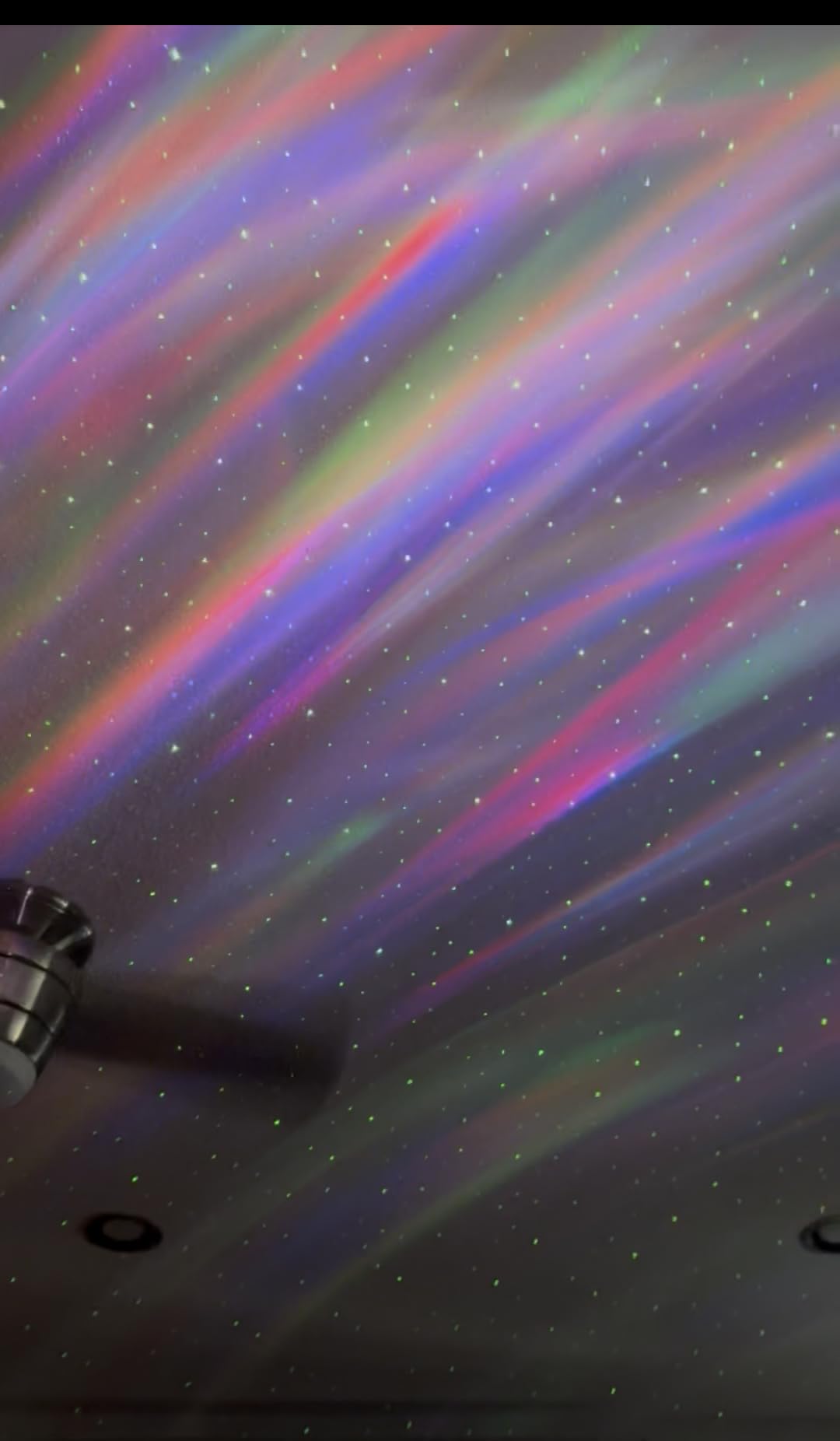
The Northern Galaxy Aurora Projector is the lamp you buy when you want your creative space to feel like a different place. I tested it in a converted attic studio and the aurora effect genuinely transformed the room — slow-moving green and blue nebula clouds across the ceiling make a small space feel cinematic. For music studios, meditation rooms, and content creator backdrops, it’s the best mood lighting for creative spaces that need atmosphere over accuracy.
The 33 lighting effects are not just color swaps — they include moving auroras, nebula clouds, color-shifting stars, and combinations. The 3 modes (aurora, nebula, combined) give you genuinely different moods. For a writing session I prefer the slow aurora; for a music listening session the combined mode with white noise is excellent.

The built-in Bluetooth speaker is a fun addition but not a serious audio replacement. I tested it against a basic Bluetooth speaker and it loses on bass and clarity, but for ambient music, meditation tracks, and soft background sound during a creative session, it’s fine. The white noise sounds (8 total) are surprisingly useful — the rain and stream sounds in particular are a real focus aid.
Music sync mode uses a built-in mic to pulse the lights with sound. It works best with bass-heavy tracks and ambient music. For high-energy pop or classical, the response is more subtle.
Best for music studios, meditation rooms, and creative decompression
If you make music, do yoga, meditate, or just want to decompress after a long creative session, this projector is the right pick. Set it to slow aurora with rain white noise at the end of the day, and the room becomes a sensory reset space. Reviewers consistently describe it as “the most relaxing lamp I own.”
For content creators, it makes a unique backdrop element. A few seconds of aurora behind your talking shot is a great B-roll transition, and the music sync mode gives you reactive lighting for music reaction videos without buying a full smart lighting rig.
Where the aurora projector falls short
It’s plug-in only. No battery means you can’t move it once positioned without unplugging. The speaker is decent for ambient, weak for serious listening. Stars come in one color, not multiple colors, so don’t expect the full RGB star experience some cheaper projectors advertise.
The remote needs direct line of sight to the front sensor. If the projector is behind your monitor or in a corner, the remote can be flaky. And the lights can be harsh if you’re too close — angle it toward the ceiling and across the room, not directly into your eyes.
6. ROOTRO Touch Bedside Table LED Lamp – Best for Bedrooms and Reading Nooks
Touch Bedside Table LED Lamp, [Sleek Design & RGB Mode] Multi-Color Dimmable with Warm White Lights, Birthday Gifts for Women Mom, Smart Nightstand Small Lamp for Bedroom Living Room Home Decor
Touch lamp with RGB cycle mode
3 brightness levels
Sleek modern design
Pros
- RGB cycle mode adds color variety to bedside use
- 3 brightness levels from 10 to 100 percent
- Night light mode activated by 3-second press
- Sleek minimalist design fits modern decor
- Anti-slip pad keeps the lamp steady on nightstands
Cons
- Wattage and lumen output not clearly specified
- No app for custom color programming
The ROOTRO Touch Bedside Table LED Lamp is my pick for a writing nook or bedside creative corner. The sleek oblong design looks like a piece of modern art on a nightstand, and the touch controls are clean and intuitive. Tap once for on, tap again to cycle brightness, hold for the night light mode. There’s no app to set up, no Wi-Fi to configure, just touch and go.
For writers who journal or sketch before bed, this lamp hits a sweet spot. The 100 percent brightness is enough to read by, the 50 percent is perfect for sketching, and the 10 percent night mode is the right light for a 6am wake-up without blinding yourself. The RGB cycle mode slowly rotates through warm colors, which is a nice visual element for evening creative sessions.
![Touch Bedside Table LED Lamp, [Sleek Design & RGB Mode] Multi-Color Dimmable with Warm White Lights, Birthday Gifts for Women Mom, Smart Nightstand Small Lamp for Bedroom Living Room Home Decor customer photo 1](https://onesurrealistaday.com/wp-content/uploads/2026/09/B0BR5JHB3Z_customer_1.jpg)
Build quality feels premium for the price. The plastic body is solid, the anti-slip pad actually works (I tested on a slightly tilted nightstand and it didn’t slide), and the touch panel is responsive without being oversensitive. The lamp is small enough to fit on a cluttered nightstand without competing for space with your books.
I gave this lamp to a friend who paints small watercolors at night. She uses the warm white mode for actual painting (aided by an overhead task light) and the RGB cycle for evening mood when she wants the painting finished and the room to shift into “off” mode.
![Touch Bedside Table LED Lamp, [Sleek Design & RGB Mode] Multi-Color Dimmable with Warm White Lights, Birthday Gifts for Women Mom, Smart Nightstand Small Lamp for Bedroom Living Room Home Decor customer photo 2](https://onesurrealistaday.com/wp-content/uploads/2026/09/B0BR5JHB3Z_customer_2.jpg)
Best for bedside creative spaces and small writing desks
If your creative space is a corner of your bedroom, a guest room, or a small dorm nook, this lamp fits without dominating. The minimalist design works with almost any decor, the touch controls are quiet (no clicking switch), and the RGB cycle adds personality without being loud.
It’s also a thoughtful gift. The packaging is gift-ready, the design feels premium, and the touch interface is intuitive enough that even less tech-savvy family members can use it without instructions.
Where the ROOTRO touch lamp falls short
The wattage and lumen output aren’t clearly specified, so if you need to know exact brightness for color-critical work, look elsewhere. There’s no app, so you can’t program exact RGB colors or set timers — the cycle mode is what you get. And the warm white mode is decent for bedtime reading, but for serious painting or color-critical crafts, you’ll want a higher-CRI task light as the primary source.
It’s also corded only, so no portability. If you want to move it between rooms, you’ll be plugging and unplugging.
7. Miortior Corner Floor Lamp – Best for Gaming and Livestream Setups
Miortior Corner Floor Lamp – Smart RGB LED Corner Lamp with App and Remote Control, 16 Million Colors & 68+ Scene, Music Sync, Timer Setting – Ideal for Living Rooms, Bedrooms, and Gaming Rooms
Smart RGB LED corner lamp
App and remote control
68 scenes with music sync
Pros
- 16 million colors and 68 dynamic lighting modes
- Convenient control via remote or Bluetooth app
- Music sync reacts through built-in sensitive mic
- Timer function for automatic on and off schedules
- Tool-free simple installation and corner-friendly design
Cons
- Build quality feels somewhat lightweight
- Single lamp may not light larger rooms evenly
- Color brightness tops out lower than dedicated ceiling fixtures
The Miortior Corner Floor Lamp is the budget-friendly answer to a Govee or Nanoleaf corner lamp, and for a gaming or livestream creative setup it does exactly what you need. The 55.9-inch height tucks into a corner behind a desk, and the 16 million colors plus 68 dynamic scenes give you the colorful wall wash that defines modern gaming aesthetic.
I tested this lamp in a streaming setup where the user wanted RGB without the Govee price tag. The app is less polished than Govee’s but covers the basics — pick a color, pick a scene, set a timer, sync to music. The remote is a nice backup when the phone isn’t handy.
Music sync uses a built-in microphone that picks up sound from the room. It’s reactive enough for music-based content and ambient gaming, though it can feel laggy on fast-paced songs. The timer function is genuinely useful — set it to fade off after a streaming session without touching your phone.
Setup is genuinely tool-free. The base screws onto the pole by hand, the pole clicks into the lamp head, plug it in. From box to working in roughly ten minutes.
Best for gaming corners and content creator backdrops
If your creative space doubles as a streaming or gaming setup, this lamp gives you the colorful corner wash without the premium price. Pair it with bias lighting behind your monitor and a quality key light, and you’ve got a complete creator aesthetic on a budget.
It’s also a great pick for bedrooms that double as creative workspaces. Set a slow color fade for sleep, switch to bright white for morning work, and use the music sync for ambient evening sessions.
Where the Miortior corner lamp falls short
Build quality is the most common complaint in the feedback. The lamp feels solid enough for normal use but not as heavy as a premium fixture — don’t expect it to survive a serious knock. In larger rooms, you’ll want two lamps because a single unit can leave the opposite wall flat.
The color brightness is also lower than dedicated ceiling RGB fixtures. For pure color punch, consider a Nanoleaf or Govee wall panel. For a budget-friendly corner lamp that hits all the basics, this is a solid choice.
8. LOFTEK 8-inch Smart LED Ball Lamp – Best for Renters
LOFTEK 8-inch Smart LED Ball Lamp with APP & Music Sync, Corded Electric
8 inch LED ball lamp
App and 2.4GHz remote
200 RGB LED beads
Pros
- Shatter-resistant PE material is renter and kid friendly
- 200 RGB LED beads with 220 dynamic modes
- Music sync for parties and ambient listening
- Timer function with automatic on and off
- 26 to 32 ft remote range covers most rooms
Cons
- No voice control with Alexa or Google Assistant
- Must use the included 5V 2A power adapter
- Requires bottom switch activation on first setup
The LOFTEK 8-inch Smart LED Ball Lamp is the renter-friendly mood lighting pick for creative spaces where you can’t drill, hardwire, or commit to anything permanent. The 8-inch PE plastic ball is genuinely shatter-resistant — I dropped it from desk level onto a hardwood floor and it bounced. That’s the kind of durability renters, parents, and pet owners actually want in a decorative lamp.
For creative spaces, the ball lamp earns its keep as a sculptural accent piece. Set it in a corner, on a shelf, on the floor behind a reading chair — anywhere it can glow. The 200 RGB LED beads give you even color dispersion without the visible “dots” you get on cheaper LED balls. The 220 dynamic modes are mostly preset scenes, but the music sync mode reacts well for ambient listening sessions.
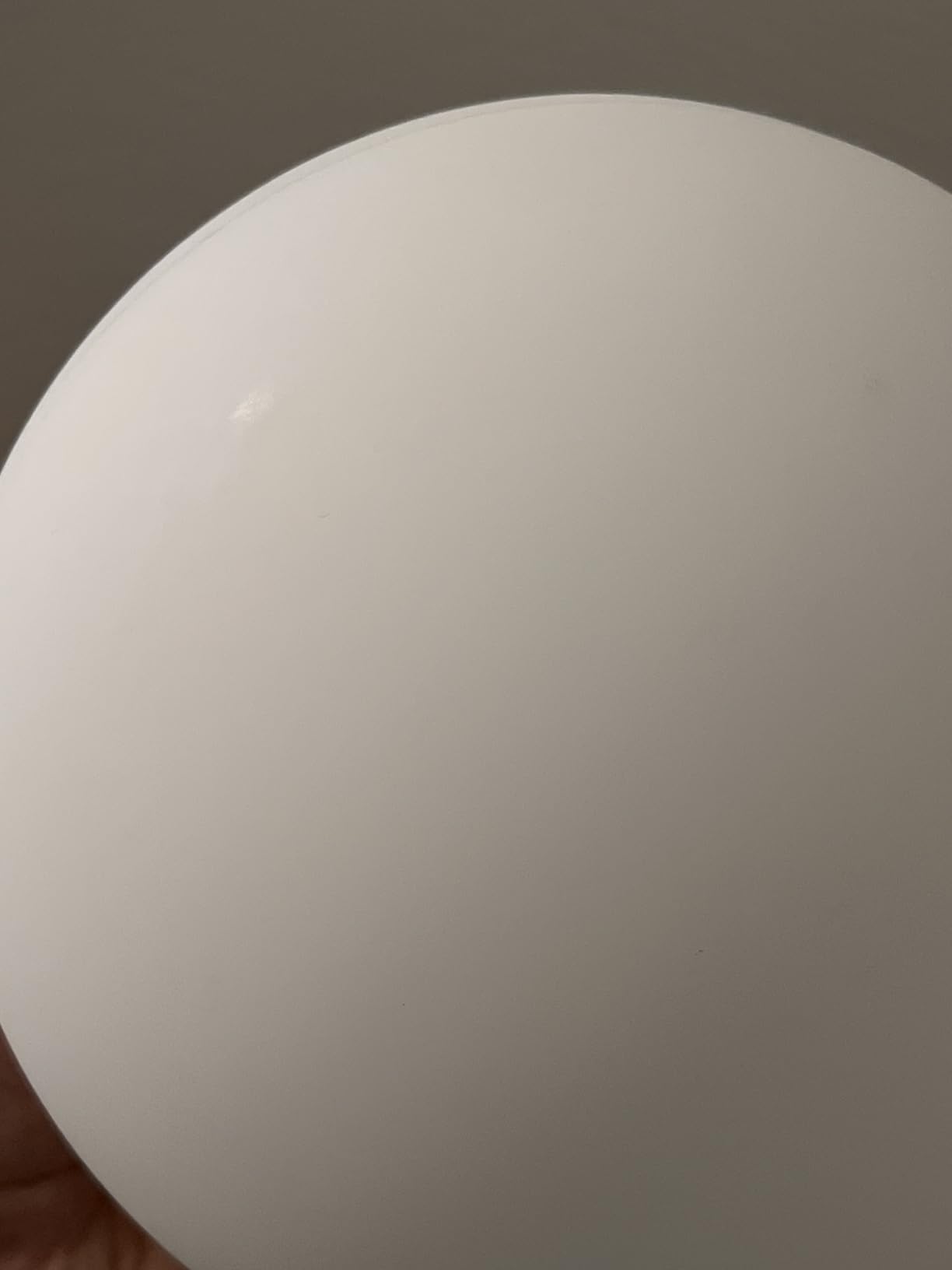
Control options are flexible — Bluetooth app for full customization, or the included 2.4GHz remote for across-the-room adjustments. I tested the remote range at roughly 30 feet through one wall, which is genuinely useful when the lamp is in a corner you can’t easily reach.
The 5V/2A power adapter is included, but you must use it — third-party adapters may not provide enough current. The lamp also has a small physical switch on the bottom that needs to be activated on first use, which a few reviewers missed in setup.
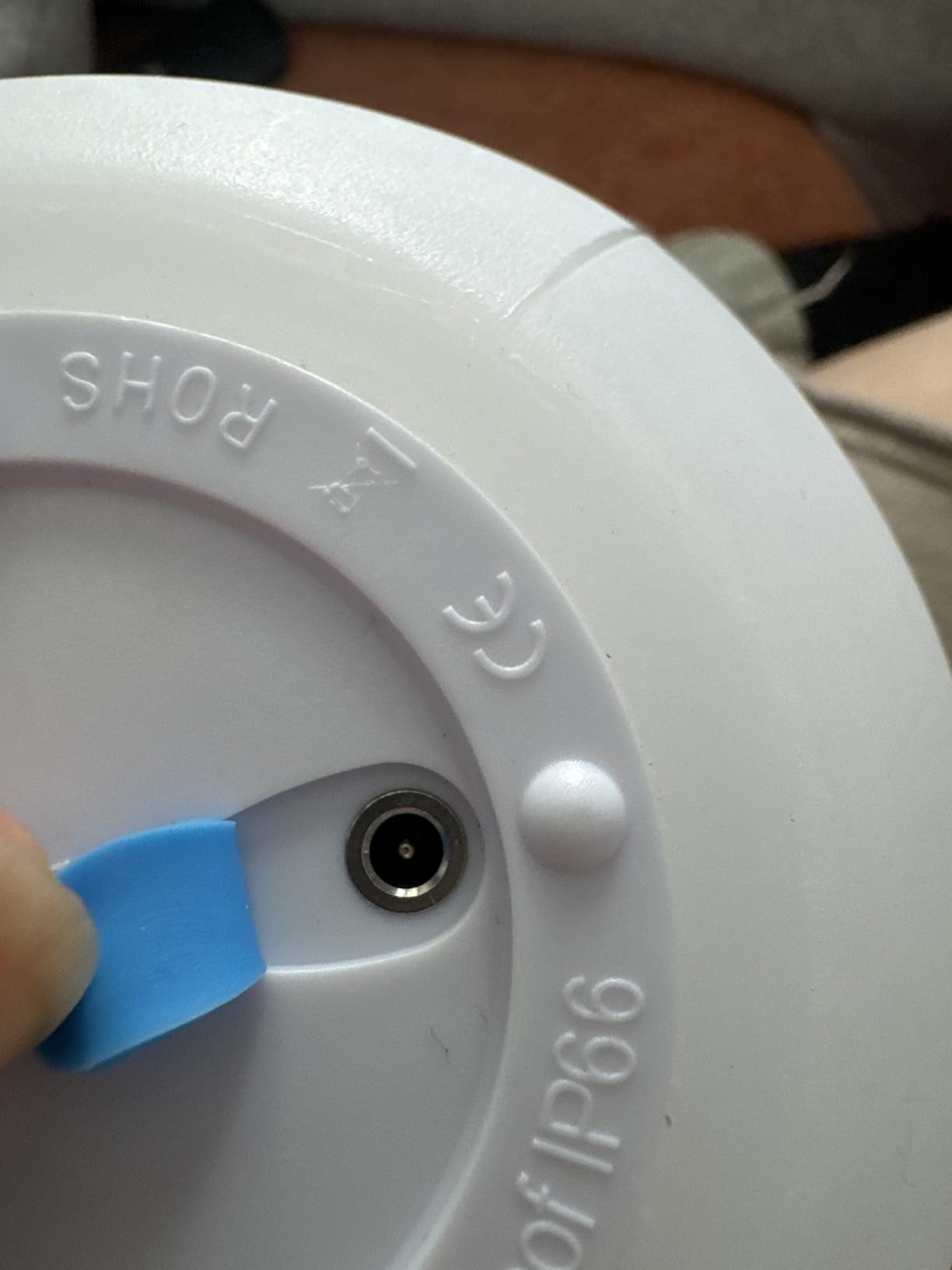
Best for dorms, rentals, and shared creative spaces
If you’re a renter, a student, or you share creative space with kids or pets, this ball lamp is the right pick. PE plastic is far more durable than glass globes, and the matte finish hides fingerprints and dust better than glossy alternatives. Set it on the floor, on a low shelf, or on a side table — it doesn’t need a specific install.
It’s also a fun piece for kids’ creative spaces. The color modes are engaging without being overstimulating, and the shatter resistance means parents don’t have to worry about broken glass if it gets knocked over during a craft session.
Where the LOFTEK ball lamp falls short
No voice control is the main technical limitation. If your smart home is Alexa or Google-centric, you’ll use the app or remote instead. The included adapter is mandatory — generic USB adapters may not deliver enough current to drive all 200 LEDs at full brightness.
It’s not a primary light source. Don’t expect to illuminate a workspace with this lamp; it’s an accent piece that complements a desk lamp or floor lamp. And the cord is short — you’ll likely need an outlet within a few feet of wherever you place it.
9. Govee RGBIC Smart Table Lamp 2 – Best Premium Table Lamp for Smart Homes
Govee RGBIC Smart Table Lamp 2, Touch Bedside Small Table Lamp (Corded)
RGBICWW table lamp
Matter compatible smart home
2700K to 6500K tunable
Pros
- Matter compatible with HomeKit Alexa Google and SmartThings
- 500 lumens with 2700K to 6500K tunable whites
- 64 preset scenes and 8 music syncing modes
- Pat-to-Wake mode for gentle nighttime lighting
- AI lighting bot 2.0 generates custom scenes from prompts
Cons
- Cannot achieve deep saturated colors at low brightness
- Even at 1 percent the lamp is relatively bright
- Corded only with no battery option
- Premium price versus comparable basic table lamps
The Govee RGBIC Smart Table Lamp 2 is the premium table lamp pick for creative spaces that want both warm tunable whites AND full RGB color in one fixture. The 2700K to 6500K range is the key spec — it means you can shift from cozy warm white (perfect for evening creative work) to cool daylight (perfect for color-accurate painting) without changing bulbs. The 500 lumens is enough to be a primary light on a small desk.
Matter support is the standout feature for smart home creators. I tested it across Apple HomeKit, Alexa, and Google Home — it paired with all three without a separate hub. For creative pros who already have a smart home setup, this is the table lamp that drops in and just works.
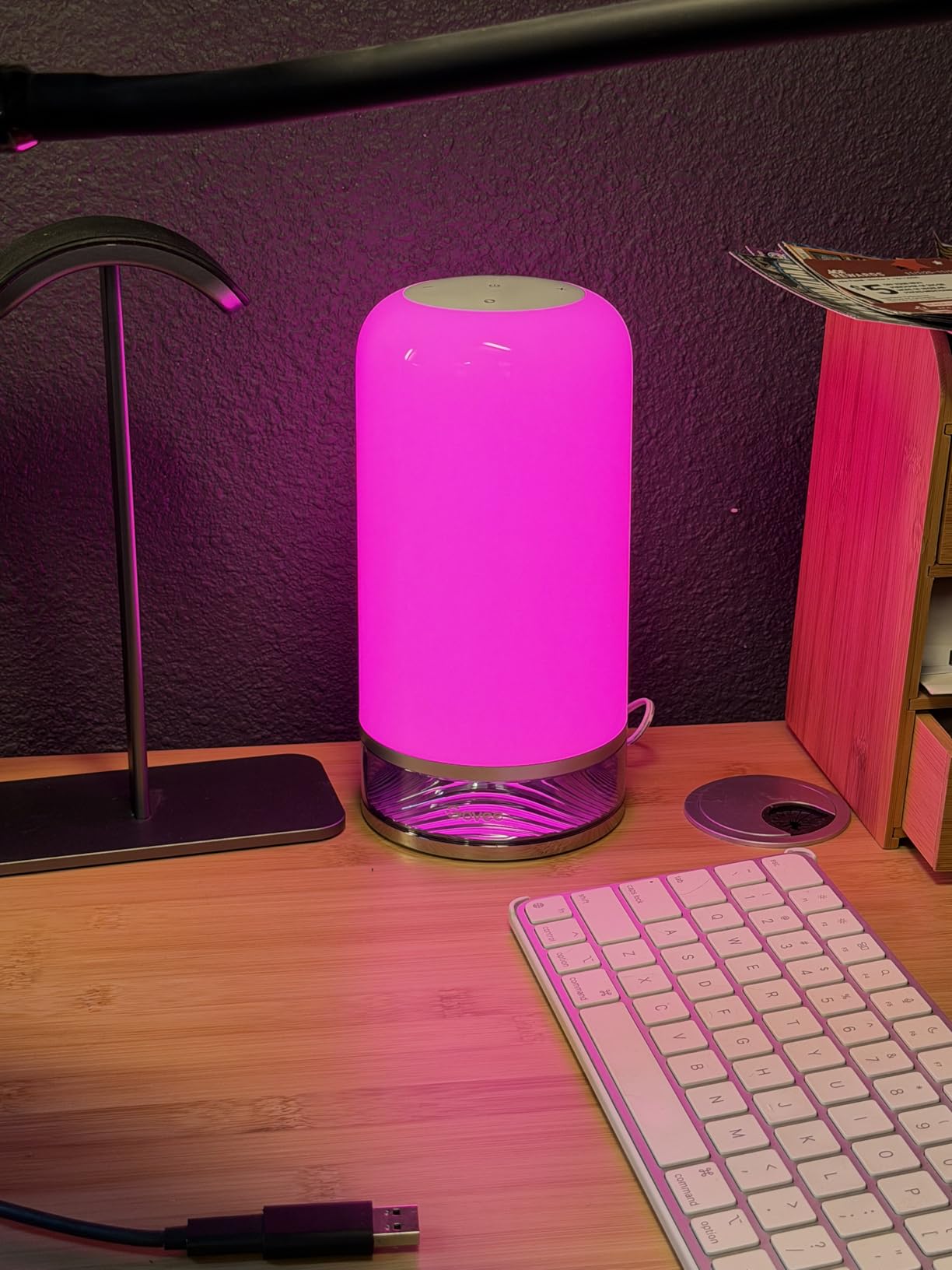
The 64 preset scenes cover everything from fireplace flicker to aurora to candlelight. The 8 music sync modes are reactive enough for ambient content creation, and the AI lighting bot 2.0 lets you type “cozy autumn reading” and have the lamp produce a custom scene. It sounds like a gimmick but it’s actually useful when you can’t articulate the exact mood you want.
Pat-to-Wake mode is a small but thoughtful feature — a quick pat on the top turns the lamp on at low brightness, perfect for nighttime bathroom runs without fumbling for a phone.
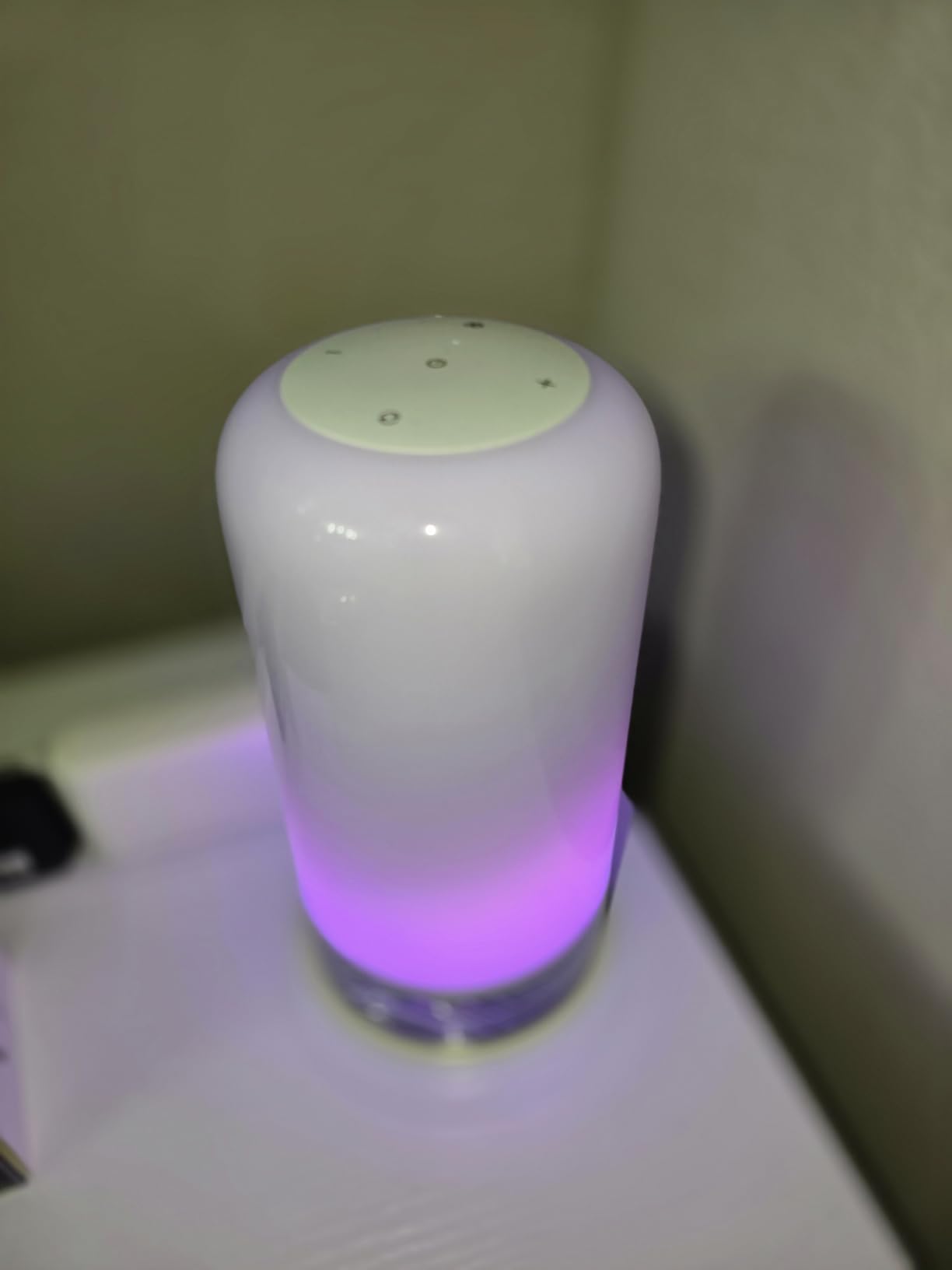
Best for smart home creators and serious small-space studios
If your creative space is a single-room studio or a smart-home-integrated home office, this is the table lamp that handles the most jobs. Warm tunable whites for painting, cool whites for focus, RGB colors for livestream backdrops, and music sync for ambient sessions. One lamp, five creative moods.
It’s also the right pick for renters who want premium features without permanent install. Plug it in, pair it to your smart home, use it. No ceiling wiring, no tools, no commitment.
Where the Govee Table Lamp 2 falls short
It can’t achieve deep saturated colors at the lowest brightness — the reds skew pink, the greens skew lime. For most creative uses this is fine, but for content shoots where you want exact color matching, it falls short of a Nanoleaf or professional RGB panel.
Even at the 1 percent brightness setting, the lamp is still relatively bright — not ideal for true nighttime mood lighting. It’s also corded only, so no portability between rooms. And the price is higher than comparable basic table lamps, though the Matter support and tunable whites justify it for smart home creators.
10. Mubarek Crystal Ambient Lighting – Best Glass Globe Design
Ambient Lighting, 16 Colors Led Lights for Bedroom, Gift Ideas, Room Decor
Crystal glass globe ambient lamp
16 colors with sunset effects
Wood-grain base
Pros
- Real glass globe with wood base feels premium
- 3 in 1 sunset ocean waves and aurora effects
- 16 colors with 6 brightness levels and 3 dynamic modes
- Memory function recalls last brightness and color
- Flicker-free eye-caring light with auto-off timer
Cons
- Some users report a slight humming noise during operation
- Remote can be unresponsive at certain angles
- Limited cord control without using the remote
The Mubarek Crystal Ambient Lighting is the pick for creatives who care about the actual object on their desk. The glass globe and wood base feel like real decor — not plastic toy. I gave one to a friend who runs a small jewelry studio, and she keeps it on her checkout counter because it doubles as accent lighting and display piece. That’s the kind of dual purpose that earns its place.
The 3-in-1 effect set (sunset, ocean waves, northern lights) is genuinely impressive for the size. Sunset projects a soft amber glow across the wall, ocean waves gives moving blue patterns, and northern lights adds green and purple aurora sweeps. These are not just color swaps — they’re actual scene projections that change the room.
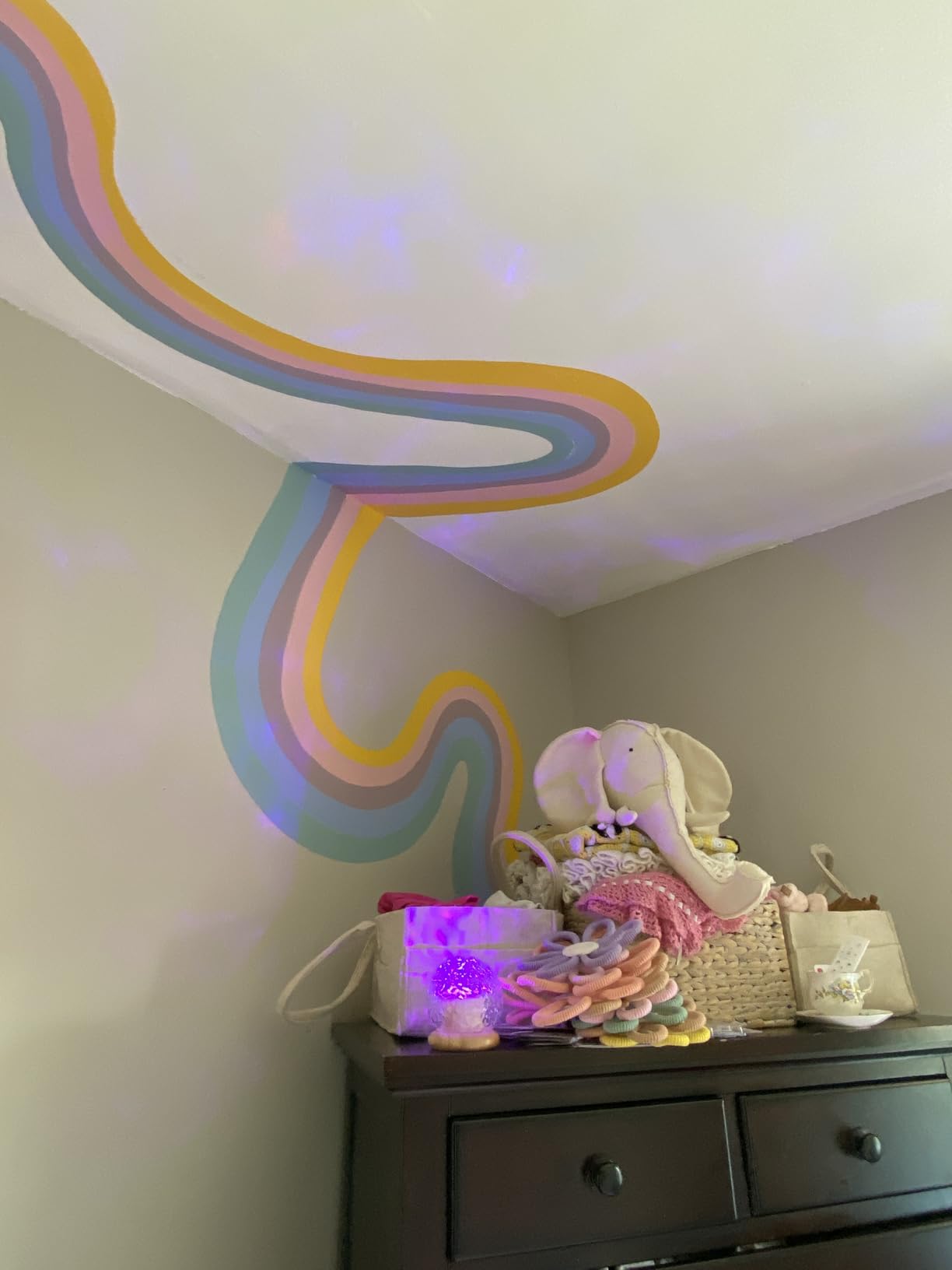
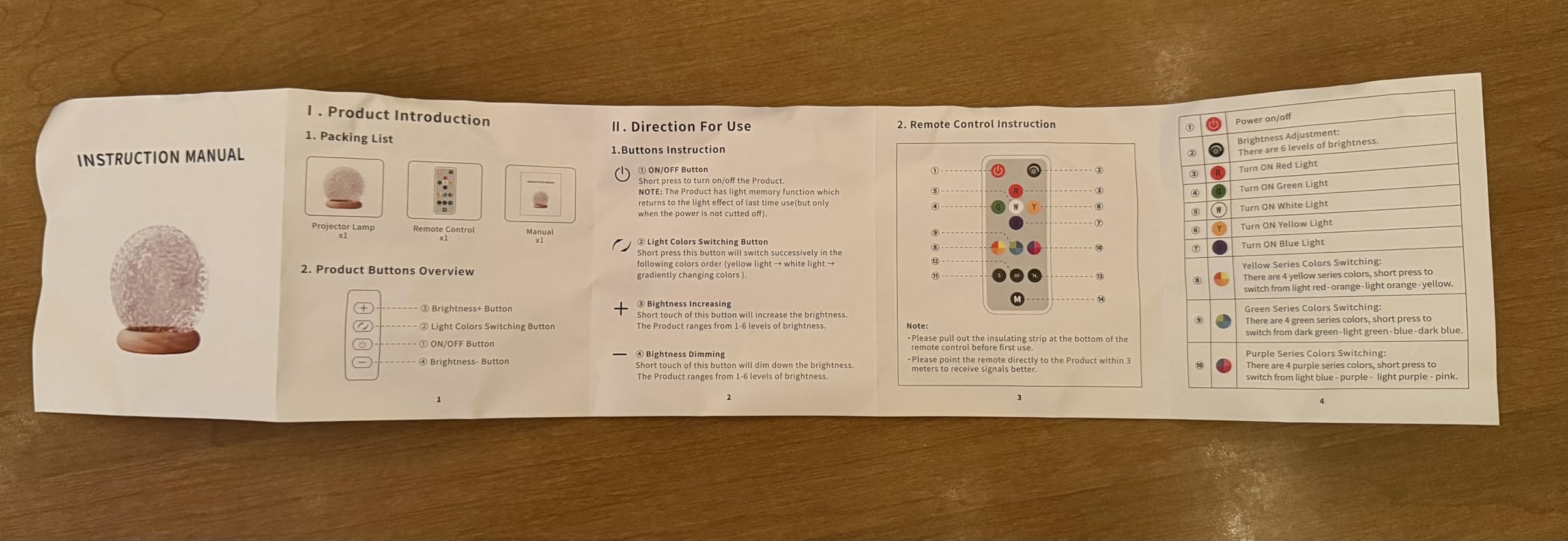
16 colors with 6 brightness levels and 3 dynamic modes give you a wide creative range. The memory function recalls your last setting when you power back on — small feature, but it means you don’t have to re-set your favorite mood every evening.
The flicker-free light is genuinely easy on the eyes during long creative sessions. The auto-off timer (1 hour) is a thoughtful touch for parents and people who fall asleep reading.
Best for craft studios, jewelry benches, and aesthetic desks
If your creative space is also a place you show to clients, customers, or guests — a craft fair booth, a jewelry studio, an Etsy shop corner — this lamp is the right pick. The glass and wood construction looks expensive without the boutique price, and the projection effects create the kind of backdrop that photographs beautifully.
It’s also a great gift for the creative in your life. The packaging is gift-ready, the design works with most decor, and the projection effects are impressive enough to spark genuine delight.
Where the Mubarek crystal lamp falls short
A few users reported a slight humming noise during operation — not loud enough to be annoying, but noticeable in a quiet room. The remote can be unresponsive at certain angles, so keep it pointed generally at the front of the lamp. And the cord control is limited — without using the remote, you only get yellow, white, or rainbow via cord button.
Glass is glass — it’s more fragile than the plastic alternatives. Don’t put it where it’ll get knocked over. The price is also a touch higher than basic plastic night lights, but justified by the glass and wood construction.
How to Choose Mood Lighting for Your Creative Space?
Choosing mood lighting for a creative studio isn’t about picking the prettiest lamp — it’s about matching Kelvin temperature, CRI, dimmability, and fixture type to how you actually work. Here’s the framework I walk through with every creative client, plus the lighting by discipline section that no competitor covers.
Kelvin temperature: the single most important spec
Kelvin (K) measures color temperature. Lower numbers are warmer (yellow/amber), higher numbers are cooler (blue/white). For creative spaces the consensus ranges are clear:
2200K to 2700K: candlelight, very cozy, best for evening mood and relaxation
2700K to 3000K: warm white, the standard “cozy” temperature for living spaces and most creative studios
3500K to 4000K: neutral white, balanced, good for home offices and reading
5000K to 6500K: daylight, color-accurate, best for painting, photography, sewing
For most creative spaces I recommend a tunable or dual-source setup — a warm 2700K lamp for evening mood and a 5000K+ task light for color-accurate work. The warm one sets the room tone; the cool one does the actual work. Designers like Becky Shea and Allison Knizek consistently recommend this layered approach.
CRI: critical for visual artists, optional for everyone else
CRI (Color Rendering Index) measures how accurately a light source reveals true colors. CRI 80 is the typical retail standard. CRI 90 and above is what you want for painting, photography, sewing, ceramics, and any visual art where accuracy matters. Multiple artists on r/oilpainting consistently recommend 5500K daylight bulbs with CRI 95+ for color-critical work — that combination is the gold standard for a home studio.
If you’re a writer, musician, or content creator who doesn’t care about color accuracy, CRI matters less. Pick on aesthetics and features instead. If you’re a painter, photographer, or crafter, CRI is the deciding spec.
Dimmability: non-negotiable for evening creatives
Every creative space should have at least one dimmable light source. Long creative sessions that run into the evening need the ability to drop brightness without changing fixtures. A warm dimmable floor lamp is the single best investment for any creative space. Physical dimmers are more reliable than app-based ones — if your Wi-Fi drops, you still have control.
Smart vs plug-in: pick by use case
Smart lighting (app control, voice control, music sync) is great for content creators and music studios where you want reactive, programmable light. For painters, writers, and crafters, a plug-in dimmable lamp with a physical switch is more reliable. Smart lights add complexity that doesn’t pay off when you just need warm, dependable light.
Layered lighting: the 3 lighting rule
The “3 lighting rule” is a designer shorthand for layering three types of light in any room: ambient (overall glow), task (focused work light), and accent (highlight or personality). For creative spaces the ideal layering is:
Ambient: a salt lamp, a floor lamp with warm dimmable bulb, or RGBIC strip behind a monitor
Task: a high-CRI desk lamp, an adjustable floor lamp, or a daylight-color clamp light over your work surface
Accent: an RGB strip, a sunset lamp, a galaxy projector, or a sculptural accent piece
Three layers let you shift the energy of the room — bright task work in the morning, warm ambient in the evening, accent-only for music listening or decompression. One lamp can’t do all three jobs; three fixtures can.
Lighting by Creative Discipline: A Quick Guide
Different creative disciplines have different lighting needs. Here’s how I’d recommend each one prioritize:
Painters and visual artists
Prioritize CRI 95+ at 5000K to 5500K for your primary task light. Pair with a warm dimmable ambient lamp (salt lamp or warm LED) for evening mood. Skip the RGB unless you want it as accent only — saturated color lights distort color judgment. r/oilpainting consensus is a Daylight-brand floor lamp or clamp light with CRI 95+ bulbs.
Photographers and videographers
Prioritize tunable white lights (2700K to 6500K) so you can match ambient color temperature. RGB accent is great for background mood in still life and product photography. Bias lighting behind your monitor is essential for editing accuracy — RGBIC strips work well here.
Musicians and producers
Prioritize smart RGB lighting with music sync. The Govee RGBIC Floor Lamp and Northern Galaxy Projector are both solid picks. Warm dimmable ambient for late-night listening sessions. Task lighting matters less for music production; mood and atmosphere matter more.
Writers and readers
Prioritize warm dimmable ambient at 2700K to 3000K. A salt lamp plus a small portable task lamp (THAUSDAS or ROOTRO) is the perfect combination. Avoid cool blue light in the evening — it disrupts melatonin and hurts sleep quality, as multiple r/Lighting users have pointed out.
Content creators and livestreamers
Prioritize RGBIC strip lighting behind your backdrop, a smart floor lamp for wall wash color, and a tunable white key light for actual camera work. Bias lighting behind your monitor improves on-camera appearance and reduces eye fatigue during long editing sessions.
Crafters and makers
Prioritize high-CRI task lighting at 5000K for color and detail work. Add a warm ambient lamp (salt lamp or sunset lamp) for the room vibe. For jewelry, ceramics, and sewing, CRI 95+ is non-negotiable — color distortion ruins finished work.
Frequently Asked Questions
What lighting is best for mood?
Warm, dimmable light in the 2700K to 3000K range is best for setting a moody, cozy atmosphere in creative spaces. Designers recommend layering ambient lighting (a salt lamp, warm floor lamp, or RGBIC strip) with task lighting (a high-CRI desk lamp) and accent lighting (a sunset lamp or projector) so you can shift the room from focused work to relaxed creative flow in seconds.
What is the 3 lighting rule?
The 3 lighting rule is a designer shorthand for layering three types of light in any room: ambient lighting (overall glow like a salt lamp or warm floor lamp), task lighting (focused work light like a desk or clamp lamp), and accent lighting (personality pieces like RGBIC strips or sunset lamps). For creative spaces this layering lets you shift from bright morning work to cozy evening mood without changing fixtures, and is the framework I recommend for every creative studio.
What is the 5 foot 7 inch lighting rule?
The 5 foot 7 inch lighting rule refers to hanging pendant lights so the bottom of the fixture sits about 5 feet 7 inches above the floor in rooms with standard 8 foot ceilings. This height lets people walk under pendants without bumping them while keeping the light low enough to create mood rather than glare, which is why designers recommend it for ambient pendant lighting in living rooms, dining rooms, and creative spaces.
What are the latest trends in mood lighting?
The latest mood lighting trends for 2026 center on RGBIC LED strip lights with multiple colors on one line, sunset projection lamps that wash a wall with warm gradient color, galaxy and aurora projectors for immersive atmosphere, smart Wi-Fi lamps with app and voice control, and tunable white fixtures that shift from 2700K warm to 6500K daylight. Brands like Govee, Nanoleaf, BlissLights, and Philips Hue lead this category, and the trend is toward layered combinations: a salt lamp plus an RGBIC strip plus a smart floor lamp rather than one statement fixture.
How do artists light their studios?
Artists light their studios with three layered fixtures: a high-CRI daylight task light at 5000K to 5500K for color-accurate work, a warm dimmable ambient lamp for evening mood, and an accent piece for personality. r/oilpainting users consistently recommend CRI 95+ bulbs for color accuracy, while r/ArtistLounge users note that overhead lighting casts harsh shadows and recommend adjustable floor lamps or clamp lights that you can angle away from the canvas. Pair a Daylight-brand floor lamp with a Himalayan salt lamp and you have a complete studio setup that costs little and renter-friendly installs in minutes.
Final Verdict: Which Mood Lighting Belongs in Your Creative Space
After testing all ten picks, the answer for most creative spaces is a layered combination: one warm ambient lamp (the Himalayan Glow Salt Lamp is my Editor’s Choice for this), one workhorse task light, and one RGB or accent piece for personality. The salt lamp is the right anchor because it solves the central problem our team kept running into — the flat, cold, office-feeling default light that kills creative flow. Pair it with a Govee RGBIC strip or floor lamp for the color personality, and you have a complete creative space setup that costs very little, installs in minutes, and works for every creative discipline we covered.
For painters and visual artists, prioritize CRI 95+ daylight task lamps before any mood piece. For content creators and streamers, prioritize RGBIC strips and smart floor lamps. For writers, musicians, and crafters, prioritize dimmable warm ambient lamps. Whatever your discipline, the right mood lighting for creative spaces isn’t one fixture — it’s three layers that shift with how you work, and we hope this guide helps you build a space that actually supports the work you make. Happy creating, and check back next year for our updated picks.