
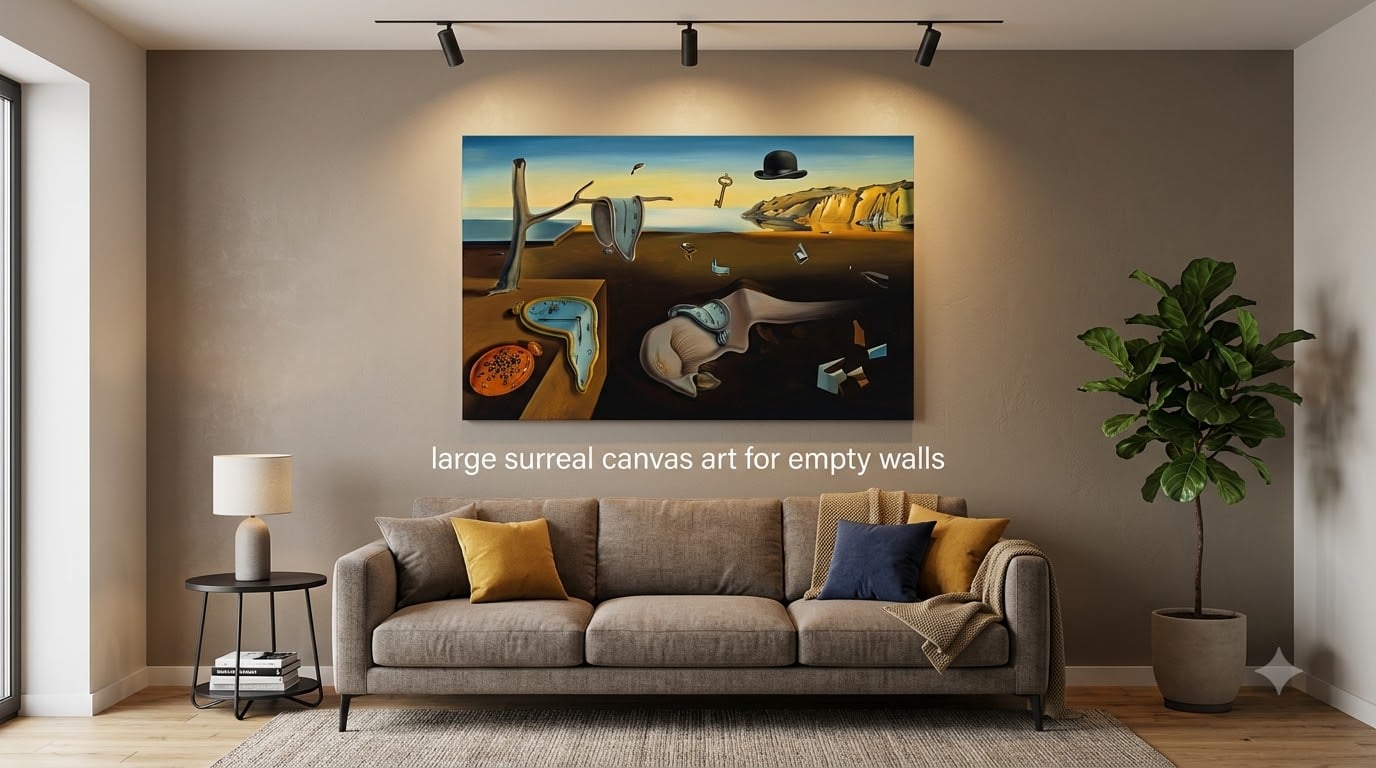
You stare at that massive blank wall every single day, and it stares right back. I get it — a huge empty wall feels like a problem that’s impossible to solve, especially when you want art that actually means something rather than another generic print from a big-box store.
That’s exactly why large surreal canvas art has become one of the most compelling options for empty walls. Surrealism gives you dreamlike imagery, unexpected compositions, and genuine conversation starters that turn dead space into the defining feature of a room. In this guide, I’ll walk you through everything — sizing, placement, color matching, room-specific styling, and mood-based selection — so you can confidently choose surreal canvas art that transforms your walls.
Table of Contents
What Is Surreal Canvas Art and Why It Transforms Empty Walls
Surrealism as an art movement began in the 1920s, rooted in the idea that art should tap into the unconscious mind. Think melting clocks floating over barren landscapes, impossible staircases, eyes dissolving into clouds, and everyday objects placed in dreamlike, illogical settings. The movement drew from psychoanalysis and the belief that reality extends far beyond what we can see.
When you bring surreal canvas art into your home, you’re not just hanging a picture — you’re introducing a piece that provokes thought and sparks conversation. A surrealist painting on a large empty wall becomes an immediate focal point. It draws the eye, anchors the room, and gives guests something genuinely interesting to react to rather than another safe botanical print.
What makes surreal art particularly effective for large walls is its visual complexity. Surrealist compositions tend to be rich with detail — layered imagery, unexpected juxtapositions, dreamlike color palettes — which means a bigger canvas reveals more as you move closer. The piece rewards attention in a way that simple abstract art often doesn’t.
Common surreal art themes you’ll encounter include:
- Melting and distorted forms — clocks, faces, landscapes that seem to dissolve, representing the fluidity of time and perception
- Floating objects — everyday items suspended in impossible spaces, evoking dream states
- Unexpected juxtapositions — combining elements that don’t logically belong together, which creates visual tension and intrigue
- Dreamscapes — vast, atmospheric landscapes that feel familiar yet otherworldly
- Hyper-saturated color — bold, intense hues that go beyond natural reality
The psychological effect matters too. Research in environmental psychology suggests that art with imaginative, thought-provoking content can actually influence mood and creativity. In a living room, it energizes. In a bedroom, it can create a contemplative atmosphere. In a home office, surreal art can stimulate creative thinking throughout the day.
How to Choose the Right Size Large Surreal Canvas Art for Your Empty Walls
Size is the single most important decision when filling an empty wall. Get it wrong, and even stunning surreal art looks lost or cramped. Here’s how to get it right.
The 2/3 Rule: Your Sizing Shortcut
The 2/3 rule is the most reliable sizing guideline in interior design. Your artwork should cover approximately two-thirds (60-75%) of the width of the furniture or wall section it hangs above. This proportion creates visual balance without overwhelming the space.
For example, if your sofa is 84 inches wide, your canvas art should be roughly 56-63 inches wide. If you’re filling a bare wall with no furniture anchor, measure the wall’s visible width and aim for the art to occupy 60-75% of that span. On a 120-inch wall, that means a canvas around 72-90 inches wide.
This rule works because our eyes naturally seek balance. Art that’s too small looks like it’s floating in emptiness. Art that’s too large feels oppressive. The 2/3 proportion hits the sweet spot every time.
Anchor Art to Furniture Below
Whenever possible, think of your wall art in relation to the furniture beneath it. A large surreal canvas hung above a sofa, console table, dresser, or dining table creates a unified composition. The furniture grounds the art, and the art elevates the furniture.
The bottom edge of your canvas should hang 6-12 inches above the top of the furniture. This gap keeps the pieces visually connected without crowding them together. If your surreal art piece is especially tall, you can go slightly lower — 4-6 inches — as long as the composition feels intentional.
For bare walls with no furniture below — like a staircase wall or a long hallway — center the art at 57-60 inches from the floor to the center of the piece. This is the gallery-standard eye level that works for most rooms.
Single Oversized Piece vs Gallery Wall: Which Works Better?
This is one of the most common questions I hear, and the honest answer depends on your wall, your art collection, and the effect you want.
A single oversized surreal canvas works best when you want maximum impact with minimal planning. One bold piece creates an unambiguous focal point. It’s easier to hang, easier to style around, and gives surreal art the breathing room it needs to make its full impression. For walls wider than 8 feet, a single large piece in the 48-72 inch range typically looks stronger than multiple smaller pieces scattered across the same space.
A gallery wall of surreal art works when you have multiple pieces you love, or when your wall is exceptionally long and you want to create a journey for the eye. The key with surreal gallery walls is planning the layout on the floor first. Keep frames consistent — same color, same finish — to unify disparate surreal images. Aim for 2-3 inches between frames for a cohesive look.
Here’s a quick comparison:
Single oversized piece: Maximum visual punch, low planning effort, works for most wall sizes, best when you want one clear statement, typically costs less than buying multiple framed pieces.
Gallery wall: Adds depth and variety, higher planning effort, works especially well on very long or tall walls, best when you have a collection or want to tell a story, can be built up over time.
For most empty walls in a home, I recommend starting with a single oversized surreal canvas. It’s the simpler, more impactful choice. You can always expand to a gallery wall later if you find more pieces that speak to you.
Color Palette Matching: Pairing Surreal Art With Your Room
The biggest mistake people make with surreal art is choosing it in a vacuum. You fall in love with a piece online, hang it up, and realize it clashes horribly with your existing decor. The fix is simple: match the art’s dominant color to at least one element already in the room.
Walk into the room and note the three most prominent colors — usually the walls, the sofa or bedding, and one accent piece like a rug or throw pillows. Look for surreal canvas art that includes at least one of those colors. You don’t need a perfect match; a similar tone or shade works fine.
For example, if your living room has a charcoal sofa and warm terracotta pillows, look for surreal art with deep blues, burnt oranges, or earthy tones. The art doesn’t need to be all those colors — even one color connection creates visual cohesion.
A few practical approaches:
- Monochromatic rooms benefit from surreal art with bold, contrasting color — it adds energy without disrupting the palette
- Colorful rooms work best with surreal art in a more limited palette so the wall doesn’t compete with the furniture
- Neutral rooms are the most flexible — almost any surreal art palette works, so you can let the art be the room’s color statement
Reddit users in r/HomeDecorating frequently recommend framing prints to help art integrate with a room. A frame in a material or color that matches other room elements — like wood tones that echo your coffee table — can bridge the gap between a surreal piece and a traditional room.
Room-by-Room Styling Guide for Surreal Canvas Art
Where you hang surreal art changes the entire experience. Here’s how different rooms affect the mood and impact of your piece.
Living Room
The living room is where surreal canvas art earns its keep as a conversation piece. Hang a large piece above the sofa or the main seating area where guests will naturally face it. This is the room where bold, detailed, thought-provoking surrealist compositions work best — think intricate dreamscapes with layered imagery that people can discover new details in over time.
For living rooms with open floor plans, a single oversized surreal canvas can define the seating area and create a visual boundary in the space. If your living room has high ceilings, go tall — a vertical surreal piece takes advantage of the extra height and feels dramatic rather than overwhelmed.
Bedroom
Bedrooms call for a different surreal sensibility. The best bedroom surreal art is calming rather than chaotic — think soft dreamscapes, muted colors, ethereal floating forms, or gentle surrealist landscapes. Avoid anything too intense or visually busy above the bed, as it can interfere with the room’s restful quality.
Hang surreal art above the headboard following the 6-12 inch gap rule. For king beds, a single horizontal piece in the 48-60 inch range works well. For queen beds, 36-48 inches wide is the sweet spot. If you prefer two pieces, hang them side by side with 3-4 inches between them.
Home Office
Surreal art in a home office can genuinely boost creative thinking. The unexpected imagery activates different parts of your brain than staring at a blank wall or a generic motivational poster. Place a medium-to-large surreal piece where you can see it from your desk — either directly ahead or to the side of your monitor.
Optical illusions, impossible geometry, and architectural surrealism work particularly well in workspaces. They stimulate problem-solving thinking without being distracting. Bold colors energize, while cooler tones help with focus.
Entryway and Hallway
Entryways set the tone for your entire home. A striking large surreal canvas in your entryway tells visitors exactly who lives here — someone with taste, imagination, and confidence. Since entryways are transitional spaces, you can be bold here. The art only needs to hold attention for a moment, so intense colors and dramatic compositions work beautifully.
For hallways, consider the viewing distance. Narrow hallways benefit from surreal art you can appreciate from 3-5 feet away, while wide hallways can handle pieces meant to be viewed from 8-10 feet. Staircase walls are excellent for surreal art because the changing angle as you walk creates a dynamic viewing experience.
Hanging Height, Placement, and Hardware for Large Canvas Art
Getting surreal canvas art on the wall correctly matters as much as choosing the right piece. Here’s what you need to know.
The eye-level rule: Center your art at 57-60 inches from the floor. This is the standard gallery height and works for most people. When hanging art above furniture, the 6-12 inch gap from the furniture top takes priority over exact eye-level placement.
Hardware for large canvases: A stretched canvas that weighs under 20 pounds can hang on two picture-hanging hooks rated for 30+ pounds each, spaced about one-third of the frame width apart. For canvases over 30 pounds, use a French cleat system — two interlocking strips of wood, one on the wall and one on the frame, that distribute weight evenly along the entire top edge.
Toggle anchors for drywall without studs: if you can’t hit a stud, use toggle bolts rated for the weight of your canvas. A single heavy-duty toggle anchor can hold 50 pounds in drywall. For pieces over 40 pounds, use two anchors.
Renter-friendly options: If you’re renting and can’t make large holes, lean an oversized canvas against the wall on a wide shelf or console table. This casual approach actually looks intentional with surreal art, as if the piece is part of an evolving gallery. Command strips rated for heavy frames can work for smaller canvases under 16 pounds.
Before drilling, use painter’s tape to mark the canvas dimensions on the wall and live with it for a day. This simple step prevents the most common mistake: hanging art that’s either too high or too small for the wall.
Choosing Surreal Art by Mood: Calming, Energizing, or Contemplative
This is something most guides skip entirely, but it’s one of the most practical ways to choose surreal canvas art. Different surreal pieces create radically different moods, and matching the mood to the room’s function makes a huge difference.
Calming surreal art features soft colors, smooth transitions, gentle floating forms, and organic shapes. Think of Salvador Dalí’s softer pieces or Remedios Varo’s mystical scenes. These work beautifully in bedrooms, meditation spaces, and reading nooks. Look for muted blues, soft greens, warm neutrals, and compositions with open, airy space.
Energizing surreal art uses bold contrasts, vibrant saturated colors, dynamic compositions, and visual tension. Pieces with sharp geometric elements, intense reds or yellows, and crowded compositions create energy. These are perfect for living rooms, creative studios, and home offices where you want stimulation.
Contemplative surreal art balances between calm and energy. It features complex imagery that rewards extended viewing — layers of symbolism, subtle details that emerge over time, and compositions that raise questions rather than giving easy answers. These pieces work in dining rooms, studies, and formal living rooms where conversation matters.
When shopping, spend at least 30 seconds looking at a piece before deciding. Your gut reaction tells you the mood. If you feel relaxed, it’s calming. If you feel energized, it’s stimulating. If you feel curious, it’s contemplative. Trust that reaction — it rarely leads you wrong.
Frequently Asked Questions
How to decorate a huge empty wall?
Start by measuring the wall’s visible width and selecting art that covers 60-75% of that space. A single large surreal canvas is the simplest high-impact solution. Match the art’s dominant color to one element in your existing room, and hang it centered at 57-60 inches from floor to center. If a single piece feels too simple, build a gallery wall with consistent frames spaced 2-3 inches apart.
What is the 2/3 rule for wall art?
The 2/3 rule states that wall art should cover approximately two-thirds of the width of the furniture or wall space below it. For a sofa that is 84 inches wide, your art should be roughly 56-63 inches wide. This proportion creates visual balance and prevents art from looking too small or too overwhelming for the space.
What size wall art is too big?
Art is too big when it extends past the edges of the furniture below it, crowds adjacent walls or architectural features, or leaves less than 4 inches of wall space on either side. If a piece covers more than 75% of the wall’s visible width, it will likely feel oppressive rather than impactful. When in doubt, go slightly smaller and add complementary pieces around it.
What are the latest trends in large wall art?
Current trends in large wall art include oversized statement canvases, textured and 3D art pieces, bold color palettes, and artistic styles that make a statement — including surrealism, abstract expressionism, and contemporary mixed media. Gallery walls remain popular but are becoming more curated and intentional, with matching frames and tighter spacing. Nature-inspired surrealism and dreamlike landscapes are growing in popularity.
Is a gallery wall or one large piece better for a big blank wall?
For most large blank walls, one oversized piece creates more impact with less effort. A single surreal canvas gives the art breathing room and creates an unambiguous focal point. Gallery walls work better on very long or tall walls, or when you have multiple pieces you want to display together. Plan gallery layouts on the floor first, and use consistent frames to unify the collection.
How do I match surreal art to my existing room decor?
Identify the three most prominent colors in your room — walls, sofa or bedding, and one accent piece. Look for surreal canvas art that includes at least one of those colors. You do not need a perfect match; similar tones or shades create cohesion. Neutral rooms give you the most flexibility, while colorful rooms benefit from art with a more limited palette so the wall does not compete with the furniture.
Final Thoughts
Filling an empty wall with large surreal canvas art is one of the most rewarding decorating decisions you can make. Unlike safe, forgettable prints, surreal art transforms dead space into something that sparks conversation, provokes thought, and genuinely reflects your personality. Start with the 2/3 rule for sizing, match at least one color to your existing decor, hang at the right height, and choose a mood that fits the room’s function. Whether you go with a single oversized piece that dominates the wall or a carefully planned gallery arrangement, surreal canvas art turns your empty wall from a problem into the best feature in the room.