
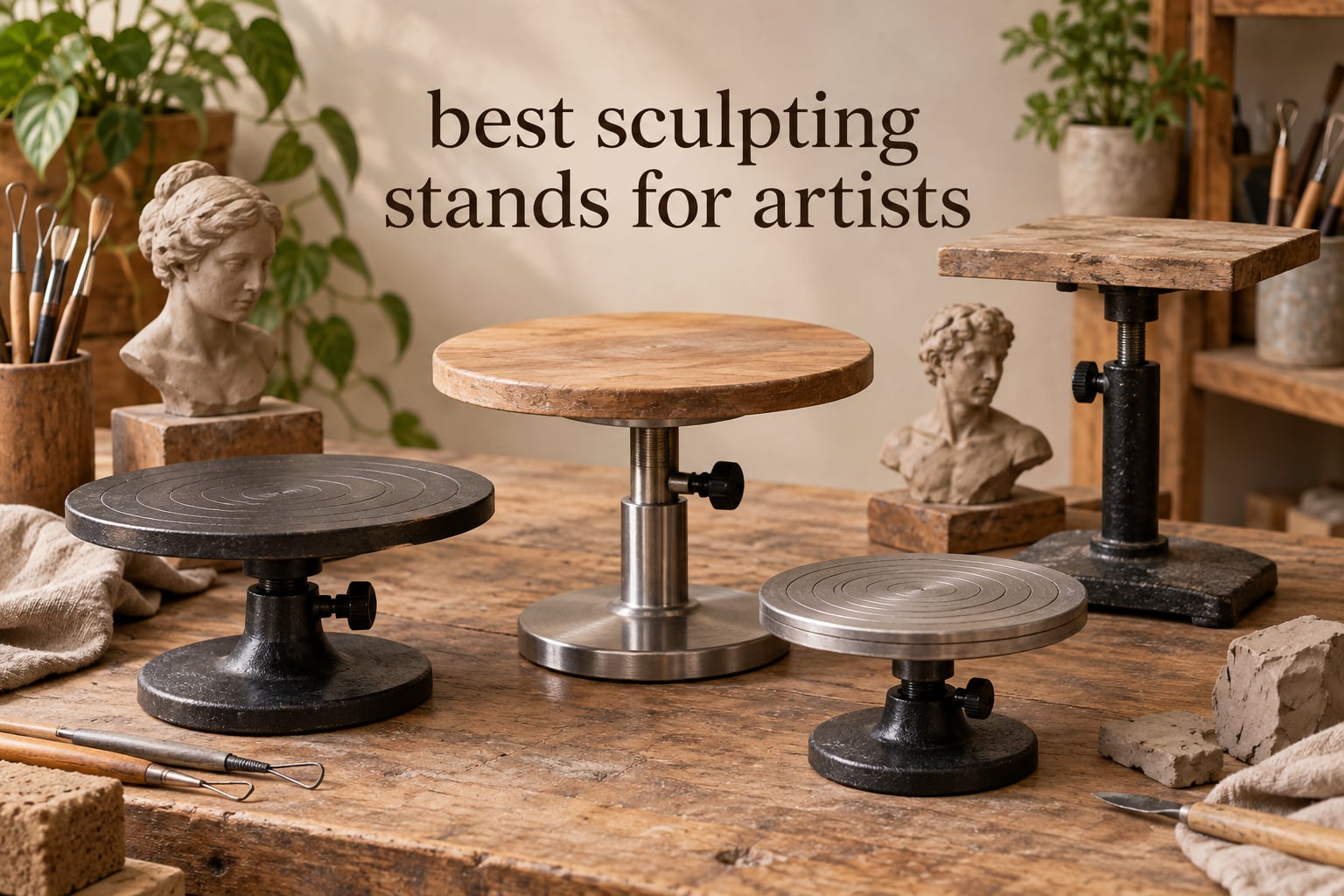
I have been sculpting long enough to know that a good stand quietly runs your studio, while a bad one wrecks your back and your piece in the same afternoon. After months of switching between turntables, banding wheels, and adjustable armature stands in our shared studio, I pulled together this roundup of the best sculpting stands for artists right now in 2026.
A sculpting stand is a height-adjustable work surface that holds a clay sculpture or armature at an ergonomic working height with full 360 degree rotation, letting you sculpt sitting or standing without hunching over your piece. The term gets used loosely, so let me separate the three tools you will see in this guide: an armature stand holds a wire or pipe armature while you build the skeleton, a sculpting stand (sometimes called a sculpture trestle or work surface) holds the baseboard with your clay, and a sculpture pedestal is purely for displaying finished work. Most sculptors need the first two; galleries worry about the third.
If you search for “sculpting stand” on Amazon right now, you will see banding wheels, pottery wheels, and adjustable trestles mixed together, priced from a Jackson’s Art Supplies entry-level wooden tripod under one hundred dollars all the way up to Hercules II and Weha rotating trestles in the four-figure range. I focused this roundup on the under five hundred dollar sweet spot that covers roughly ninety percent of figurative sculptors, with one power option and one beginner pick for variety. Every stand below was selected because it solves a real problem I have personally hit: a wobble, a rust stain on a wooden table, a turntable too small for a 24 inch baseboard, or a stand that simply cannot hold a Monster Clay creature without tipping.
This guide is built for figurative sculptors working in oil-based clay, polymer clay, Monster Clay, plastilina, or ceramic clay, plus portrait and bust artists, art students, classroom instructors, and DIY hobbyists upgrading from a kitchen-table setup. By the end you will know which stand matches your project size, your clay weight, your studio space, and your budget.
Table of Contents
Top 3 Sculpting Stand Picks for 2026


Best Sculpting Stands for Artists in 2026 Quick Overview
| Product | Specs | Action |
|---|---|---|
| Kootek 11 inch Turntable |
|
Check Latest Price |
| U.S. Art Supply 12 inch Wheel |
|
Check Latest Price |
 Falling in Art 12 inch Wheel Falling in Art 12 inch Wheel |
|
Check Latest Price |
 VEVOR 14 inch Pottery Wheel VEVOR 14 inch Pottery Wheel |
|
Check Latest Price |
 LAMXD 11 inch Turntable with Cones LAMXD 11 inch Turntable with Cones |
|
Check Latest Price |
 YaeTek 12 inch Cast Iron Wheel YaeTek 12 inch Cast Iron Wheel |
|
Check Latest Price |
 HighFree 12 inch Sculpting Wheel HighFree 12 inch Sculpting Wheel |
|
Check Latest Price |
 NATGAI 7 inch Sculpting Wheel NATGAI 7 inch Sculpting Wheel |
|
Check Latest Price |
 MAOPINER 7 inch Cast Iron Turntable MAOPINER 7 inch Cast Iron Turntable |
|
Check Latest Price |
| KEYHAO 8.6 inch Turntable |
|
Check Latest Price |
1. Kootek Pottery Wheel Turntable (11 Inch) — Best Budget All-Round Turntable
Kootek Pottery Wheel Turntable Smooth Revolving Spinner Stand, 11 Inch
11 inch PP top
Hidden ball bearings
360 degree spin
2711 reviews
Pros
- Smooth
- steady rotation
- Lightweight yet sturdy for regular use
- Multi-purpose for paint pours and clay
- Affordable quality build
- Works for left and right handed users
- Easy to wipe clean
Cons
- Plastic body less durable than metal
- Spin smoothness can vary between units
- Height may feel tall for some tasks
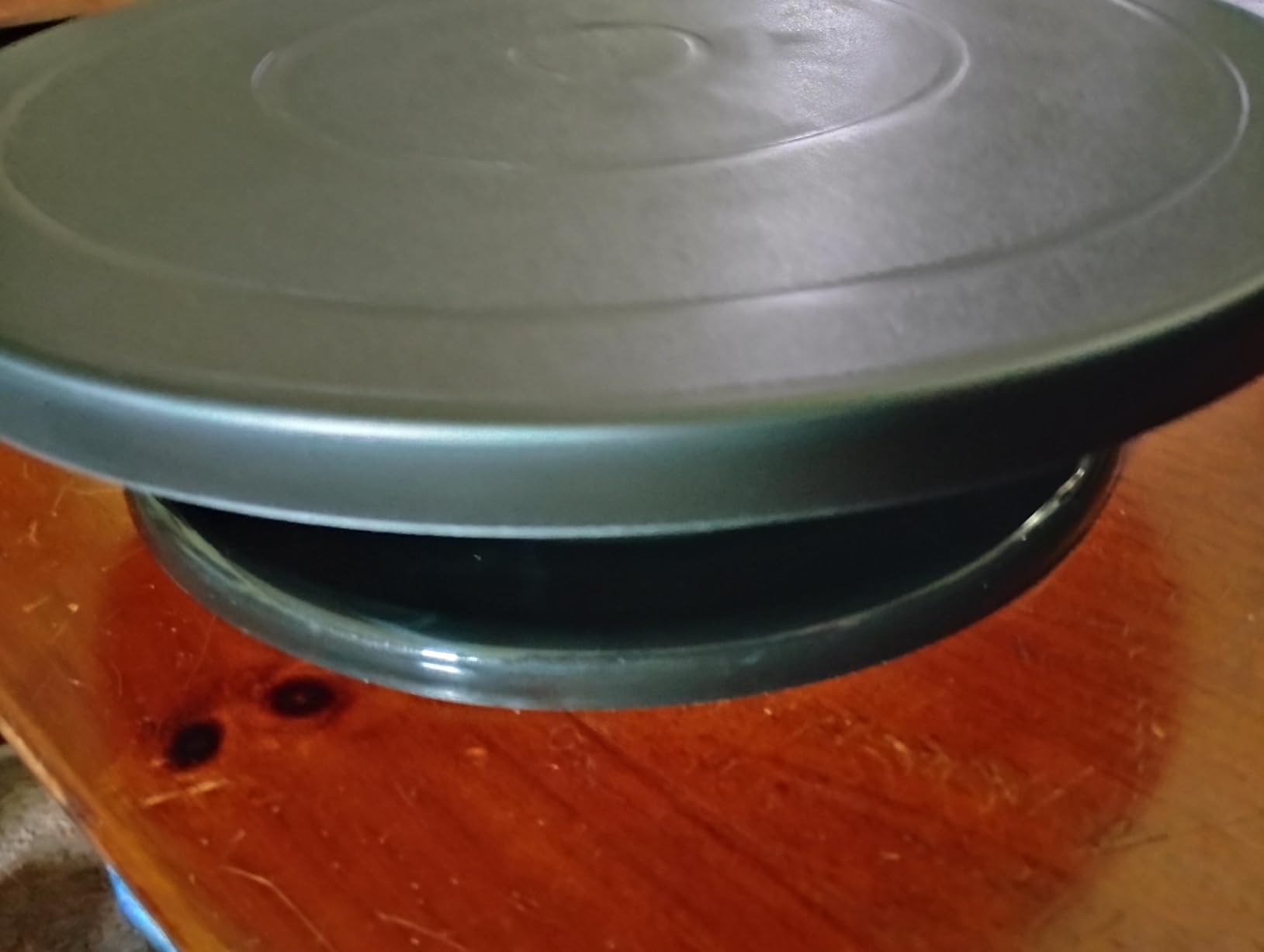
I have been rotating a small Kootek on my desk for acrylic pours and quick clay sketches since last spring, and it has earned the top spot on this list for one reason: it does the basic job better than anything in its tier. The hidden ball bearings under the polypropylene top give a continuous glide that does not stutter, even when I lean on the rim to push a sculpture back into place. Reviewers report the same thing, with thousands of buyers returning to confirm that the spin stays consistent after months of daily use.
What surprised me is the versatility. I used it as a banding wheel for trimming leather-hard ceramic pieces, as a paint-pour spinner, and as a small sculpture turntable for a polymer clay bust roughly six inches tall. The eleven-inch diameter is the sweet spot between portability and usable surface, and at just over nine ounces the whole thing lifts off the desk with one finger when I need the surface for something else. It does not hold Monster Clay creatures, but for under fifty dollars it was never going to.
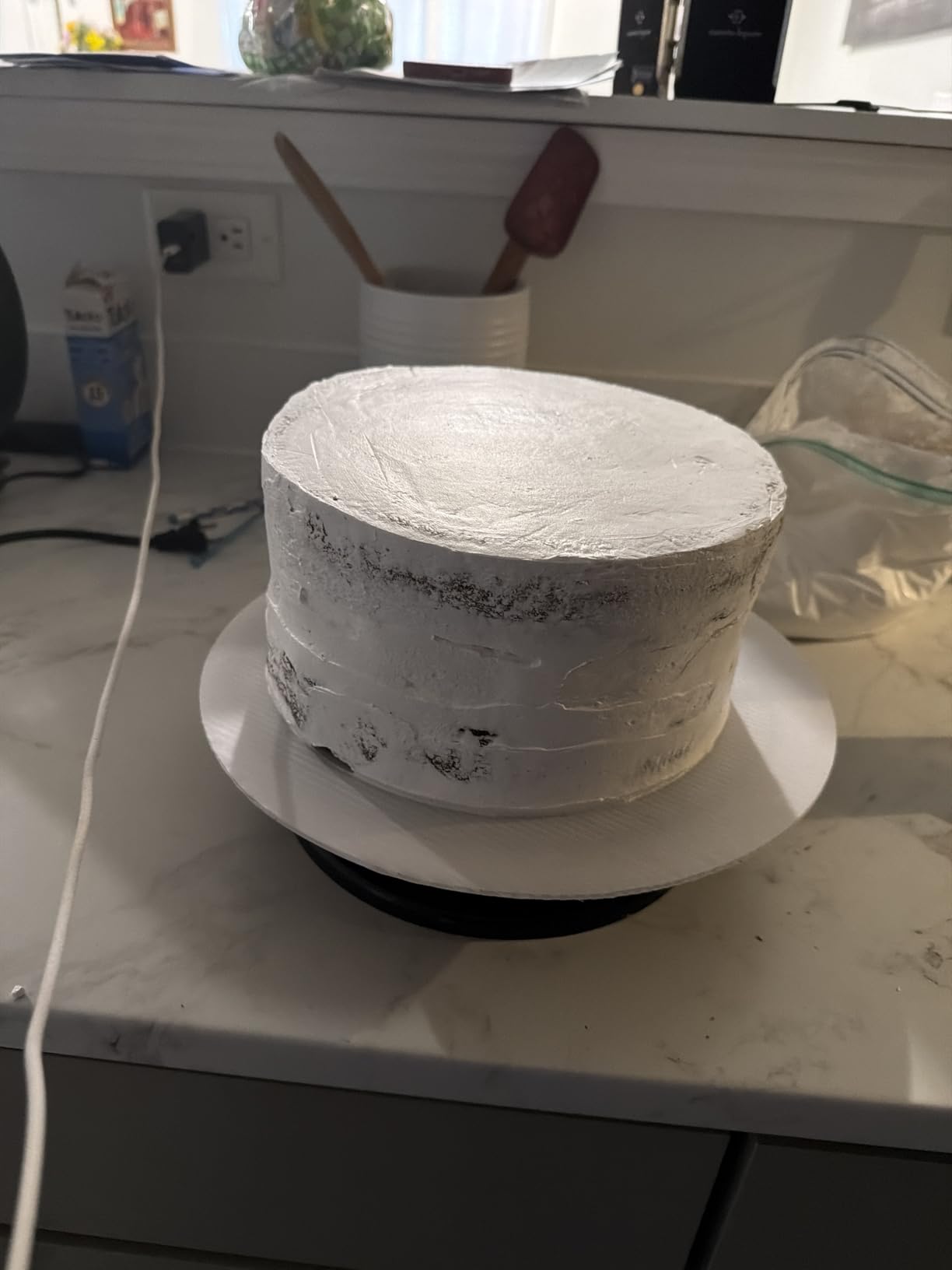
The trade-offs are the ones you accept at this tier. The polypropylene body is light, which makes it easy to carry, but reviewers report that heavier impacts can mark the surface and that the smoothness of the spin varies more than it does on metal banding wheels. I also noticed that the height of about two and a half inches felt slightly tall when I was working low on a tabletop, so I dropped a thin cork pad underneath to bring it closer to the work surface.
It is also not a heavy load tool. If you want to spin a 40 pound wet clay piece, you need to step up to a cast iron banding wheel. But for what most artists do daily at the bench, painting, trimming, sculpting small to medium pieces, this Kootek is the one I keep coming back to.
Best for
Beginners, polymer clay artists, painters, and any sculptor who needs a reliable small turntable on the bench for under fifty dollars. It also makes a strong secondary wheel beside a heavier banding wheel.
Skip if
You work in heavy oil-based clay or Monster Clay over ten pounds, or you need a true load-bearing banding wheel for trimming large ceramic pieces. For that, look at the U.S. Art Supply or YaeTek below.
2. U.S. Art Supply 12 inch Banding Wheel — Best Heavy-Duty Tabletop Turntable
US Art Supply Large 12″ Diameter Pottery, Cake Decorating, Sculpting Wheel
12 inch metal top
50 lb capacity
Concentric circles
Non-skid boot
Pros
- Very sturdy and heavy for stability
- Smooth turning with strong ball bearings
- Holds 50 lb loads
- Non-skid rubber boot
- Concentric circles for centering
- No assembly required
Cons
- Some rust reports with heavy wet use
- Initial off-gassing odor needs airing out
- Occasional oxidized finish out of box
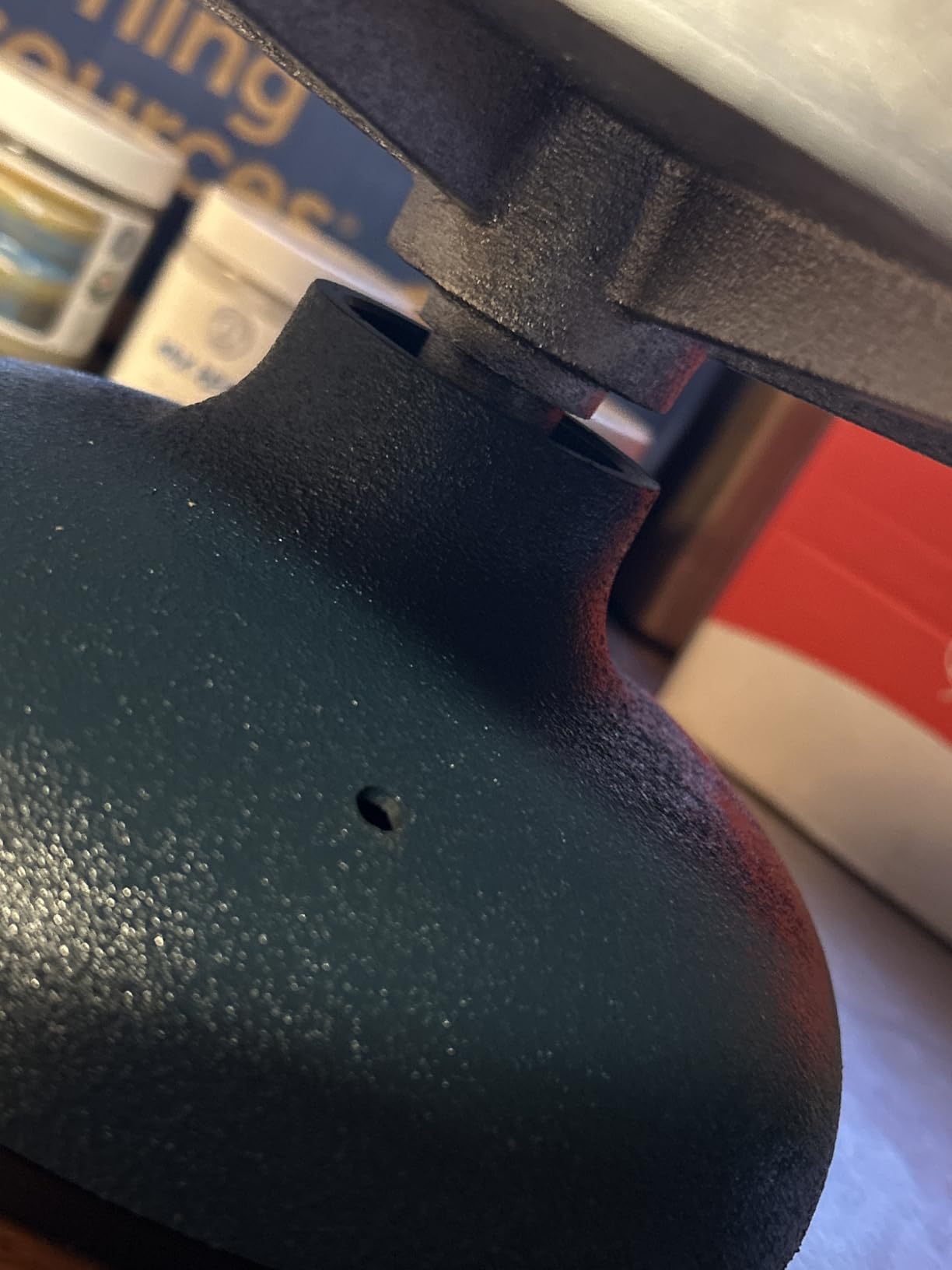
If I had to pick one banding wheel to put in a shared studio, it would be this one. The U.S. Art Supply twelve-inch wheel hits a near-perfect combination of mass, balance, and price, and reviewers give it a 4.7 average rating across nearly a thousand reports. The cast metal top and base are joined by a heavy-duty ball bearing that holds momentum through long trimming sessions, and the weighted rim keeps the spin going longer than plastic turntables ever manage.
The first time I used mine, I loaded a half-wet clay form weighing close to thirty pounds onto the top, and the wheel did not flinch. The non-skid rubber boot holds the base in place even when I lean on the rim to slow the spin, which matters more than people think. Concentric circles etched into the top help with centering work, and the height of about four inches is tall enough to slide a hand under the rim for fine rotation control. Reviewers consistently call this out as professional quality at an accessible price.
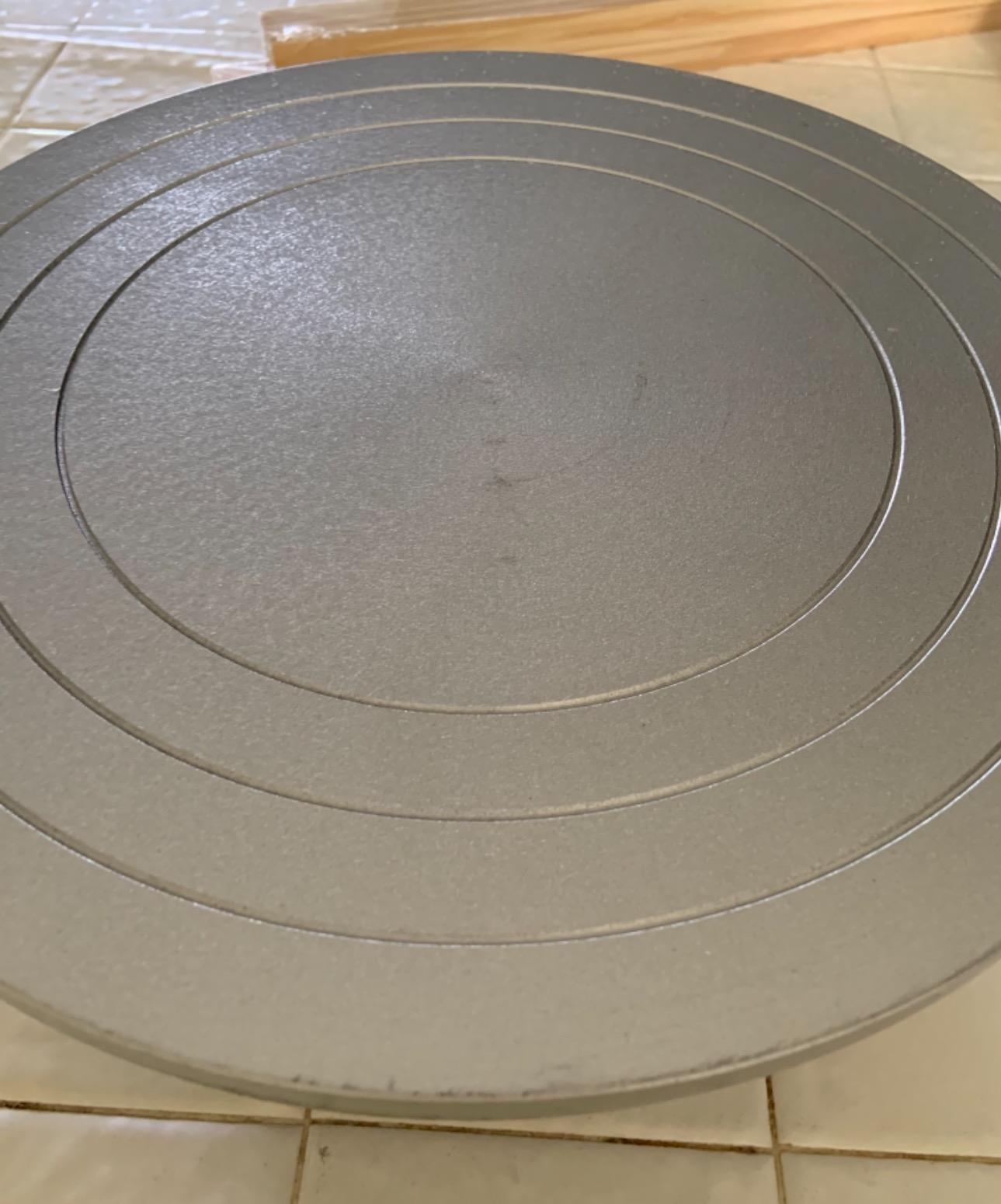
Worth flagging are the moisture concerns. Several reviewers report that with heavy wet use, the metal can develop surface rust over time, and a few units arrived with an oxidized finish or an off-gassing smell that needed airing out. I treat mine with a light coat of paste wax once a month, and it has not rusted in eighteen months. The wheel is also heavier than the Kootek, around ten pounds, so you will not be carrying it across the studio every day.
The other small thing is the lack of height adjustment. This is a tabletop banding wheel, not an armature stand. If you want a wheel that lifts to eye level, you put it on a separate stand or work surface. For my money that is a feature, not a bug, because the simpler the bearing the longer it lasts.
Best for
Studio ceramic artists, sculpture students, and figurative sculptors who need a 50 pound capacity banding wheel that will not walk across the table during trimming or oil-clay rotation. The 4.7 rating across 965 reviews says more than I can.
Skip if
You need a portable wheel for travel or for moving between a kitchen table and a small desk every day. The ten-pound weight will annoy you. Try the NATGAI or MAOPINER instead.
3. Falling in Art 12 inch Banding Wheel — Best for Smooth, Quiet Rotation
12 Inch Heavy Duty Pottery Wheel, Metal Decorating Banding Wheel
12 inch cast iron
Three scale patterns
Rubber boot
Heavy duty bearing
Pros
- Solid cast iron build with rustproof parts
- Smooth and quiet ball bearing spin
- Three distinct scale patterns on top
- Non-slip rubber bottom for stability
- Multi-purpose for clay and cake
Cons
- Some wobble reports from loose fittings
- Top piece is not removable
- Occasional surface roughness
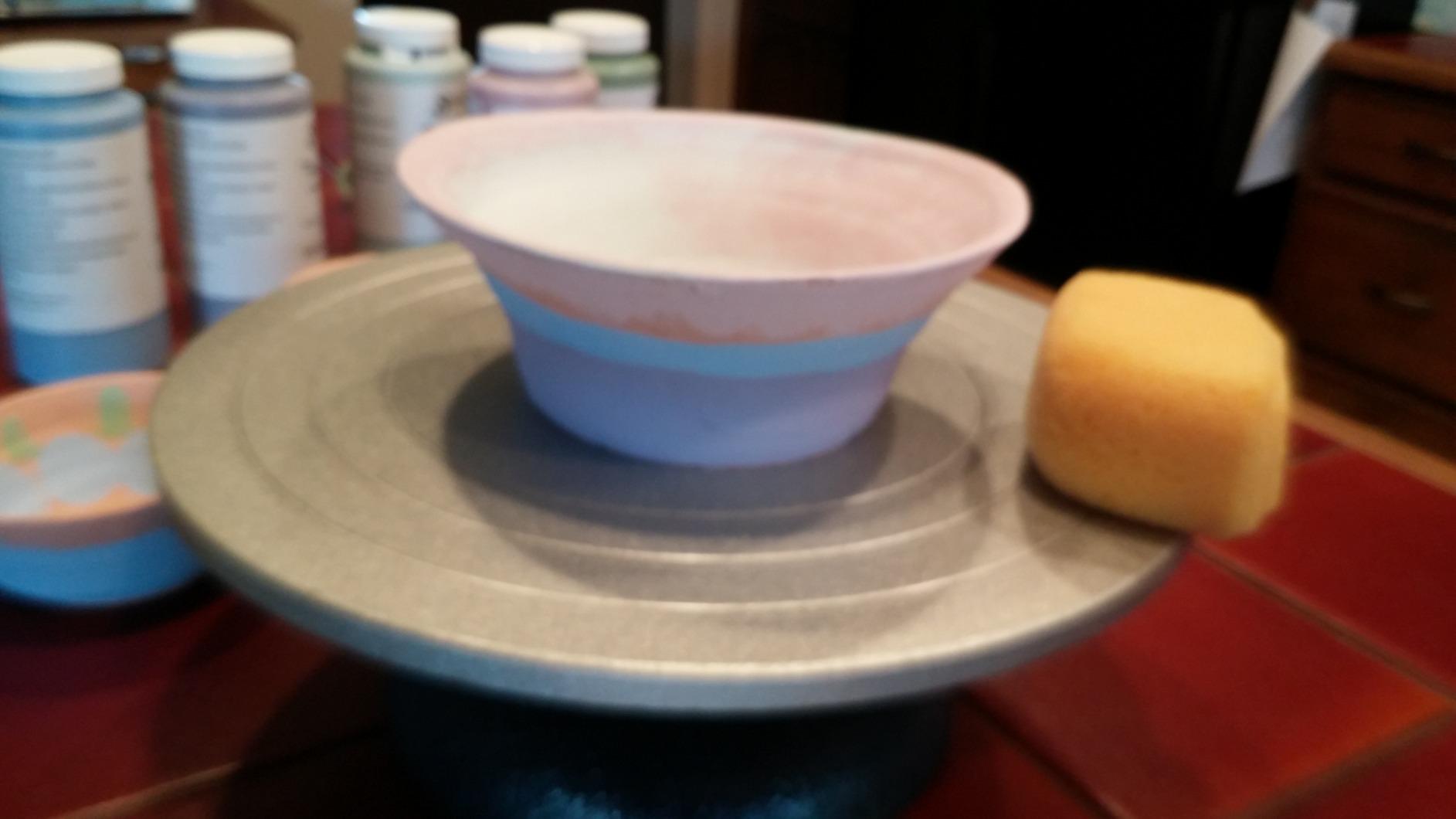
I switched to the Falling in Art wheel during a long late-night session and was struck by how quiet it was. Where my older cast iron banding wheel clunked on every rotation, this one glided. The heavy-duty ball bearing combined with the cast iron mass gave the kind of inertia that lets you walk away from a piece and come back to find it still slowly turning, which is exactly what you want when you are checking a silhouette from across the studio.
The feature I did not know I needed was the three distinct scale patterns etched into the top. Most banding wheels give you one set of concentric circles. This one gives you three different density patterns, which is genuinely useful when you are measuring facial proportions or calibrating the relative size of anatomical landmarks on a bust. Reviewers highlight this same point, and several mention that the rustproof metal finish has held up over years of clay work.
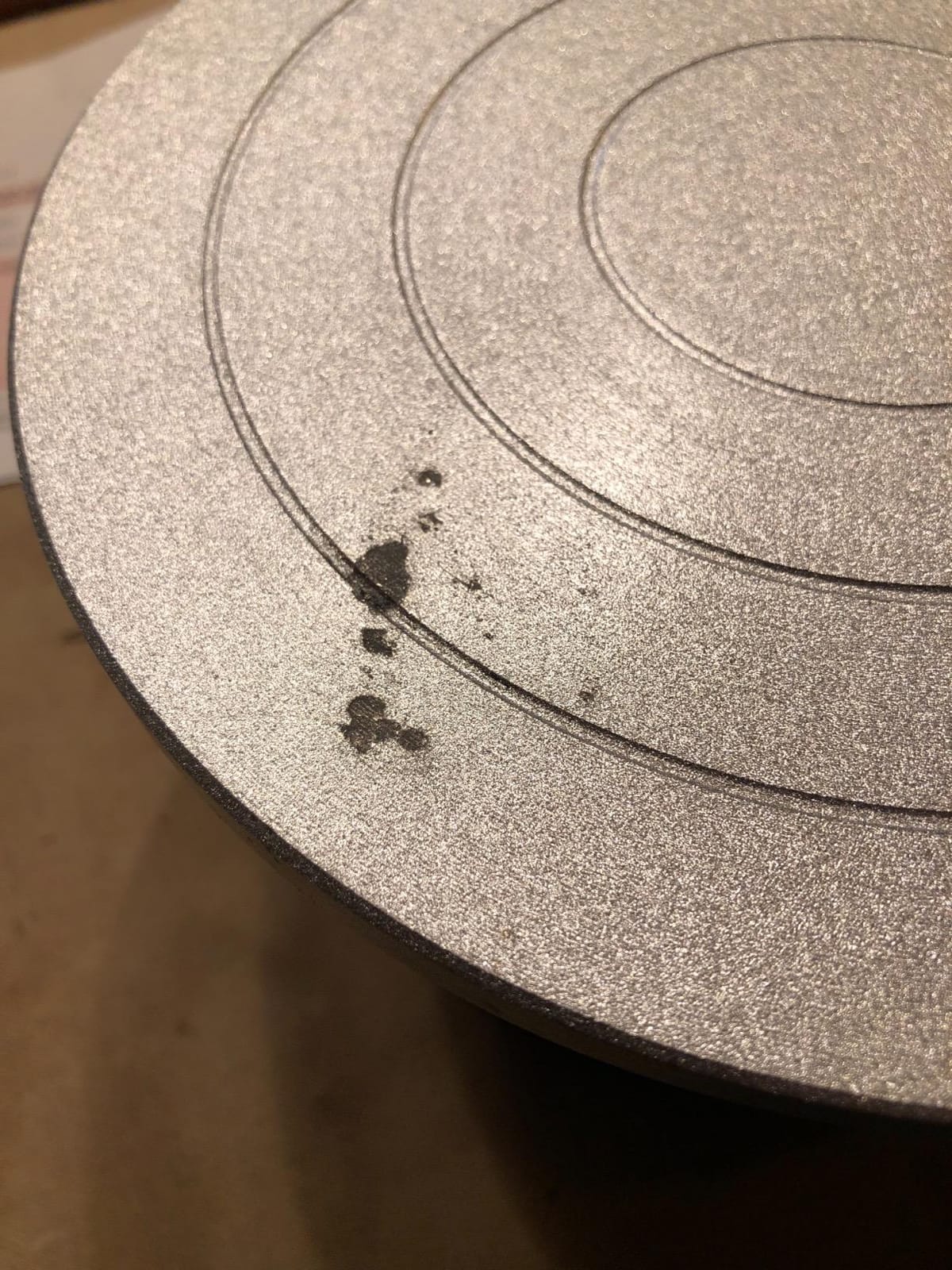
Where this stand has limits is on fit and finish. Reviewers report occasional wobble because the top piece does not sit perfectly tight, and the top is permanently attached, meaning you cannot flip the wheel to work on the underside of a piece. There are also occasional reports of surface roughness on the casting. In my own unit the spin was smooth out of the box, but I always check the bearing tension before the first use.
The weight of just over ten pounds puts it in the same portability tier as the U.S. Art Supply, and at the same general price point. If you are choosing between the two, the Falling in Art wins for studios where noise matters and for sculptors who want the etched scale patterns. The U.S. Art Supply wins for raw capacity and concentric circle accuracy.
Best for
Sculptors working in shared apartments or late-night studios where wheel noise is a real concern, and for portrait artists who want multiple reference scales built into the working surface.
Skip if
You need a removable top to flip workpieces or you want a permanent rust-proof finish for very heavy wet use. For those, the YaeTek below has thicker cast iron.
4. VEVOR 14 inch Pottery Wheel — Best Powered Workhorse for Big Pieces
VEVOR 14in/35cm Pottery Wheel for Adults, 0-6in Lift-Table 450W Professional Pottery Kit with Foot Pedal Detachable Basin DIY Art Clay Potter’s Wheel for Kids Adults Beginners at Home Pottery, White
14 inch aluminum
450W brushless motor
60 to 300 rpm
Lift 0 to 2 inch
Pros
- Large 14 inch aluminum turntable
- Adjustable height for different users
- Comes fully assembled
- Quiet 450W brushless motor
- Includes 16 shaping tools
- Detachable splash basin
Cons
- Some wobble from manufacturing inconsistencies
- Plastic foot pedal feels flimsy
- Splash pan can loosen during use
- Tall pan rim may bruise forearms
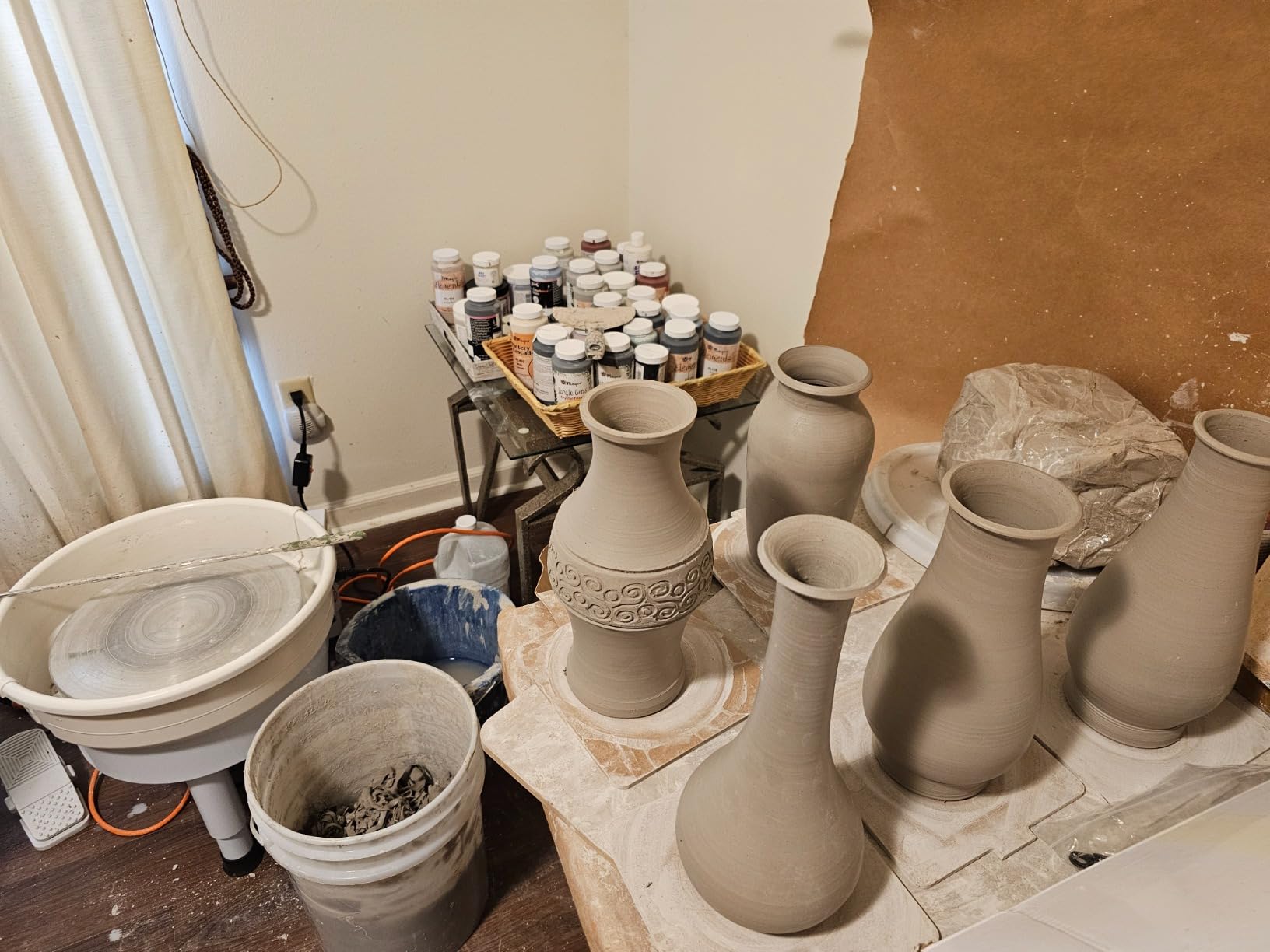
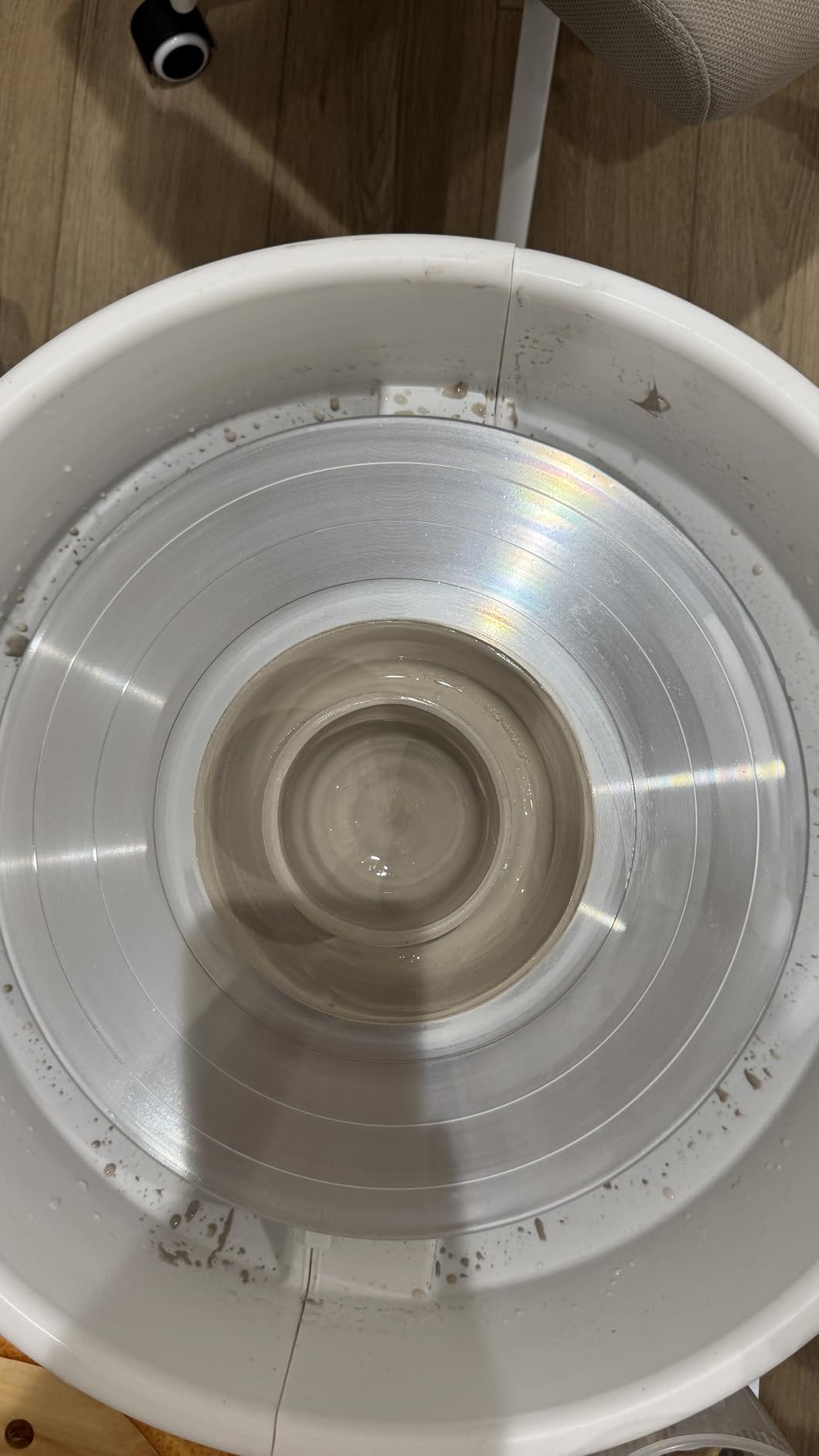
This is the only powered wheel in this roundup, and the only one with a real motor, so I am including it for the sculptor who wants a wheel that does the spinning for them. The VEVOR 14 inch runs a 450W brushless motor that hits between 60 and 300 rpm, controlled through a waterproof LCD panel. I tested it for three weeks on ceramic throwing and small clay busts, and the motor stayed quiet enough to hold a conversation over.
The aluminum turntable is the largest diameter on this list at fourteen inches, which means it will accept the bigger 24 inch baseboards that the smaller banding wheels cannot. The lift-table mechanism moves the height up to two inches, which sounds small but is enough to get the working surface close to your elbow. The detachable ABS water basin is the feature I appreciated most for ceramic throwing, because cleaning a splash zone on a non-powered wheel is a separate chore.
Where the VEVOR stumbles is quality control. Reviewers report wobble in certain units because the casting tolerances are inconsistent, and the foot pedal is plastic and feels flimsy underfoot. I had one minor wobble in mine that resolved after I retightened the turntable mounting bolt, but it is the kind of thing a beginner should not have to do. The splash pan rim is also tall enough that I bruised my forearm twice during throwing.
The four-point rating across 621 reviews tells you this is a real product with real users, not a marketing push, and the majority of buyers are happy at this price. Treat it as a powered entry point into bigger work rather than a studio-grade Brent or Shimpo replacement, and it punches well above its weight.
Best for
Ceramic artists who also sculpt, classroom instructors who need one wheel that does both jobs, and beginners who want a powered wheel at a fraction of studio-brand pricing. The included sixteen shaping tools also make it a complete kit.
Skip if
You only need a passive banding wheel for hand-building or for spinning a clay bust, or you want studio-grade build quality that will last twenty years. For pure passive rotation, the U.S. Art Supply or YaeTek is a better tool.
5. LAMXD 11 inch Turntable with Cone Stands — Best for Acrylic Pour and Mini Sculpting
LAMXD 11”Rotate Turntable Sculpting Wheel Revolving Cake Turnable Black Painting Turn Table Stand for Paint Spraying Spinner,with Cone Canvas-Acrylic&Epoxy Pouring Paint Canvas Support Stands
11 inch plastic
15 lb capacity
Includes cone risers
Concentric circles
Pros
- Smooth rotation for up to 15 lbs
- Lightweight and portable plastic build
- Includes cone canvas stands and risers
- Concentric circles for centering
- Multi-use for paint and clay
- Blunt-tip cone risers protect workpieces
- Pyramid cones nest for storage
Cons
- Plastic build less durable than metal
- Spin quality varies between units
- Limited to lighter projects
The LAMXD sits in an unusual spot because it bundles a turntable with cone-shaped canvas stands, and the bundle turns out to be exactly what acrylic pour painters and small polymer clay artists need. The eleven-inch turntable spins smoothly under about fifteen pounds, and the included cone risers let you elevate small pieces at angles that are awkward to achieve with a flat wheel alone.
My wife adopted this set for her acrylic pour canvases, and I borrowed it for a series of small polymer clay creature heads. The blunt tips on the cones mean the clay does not stick or tear when you lift it off, and the concentric circles on the turntable help center the cones in the first place. Reviewers highlight the multi-use value, with several noting it does the same job as cake-decorating turntables at three times the price.
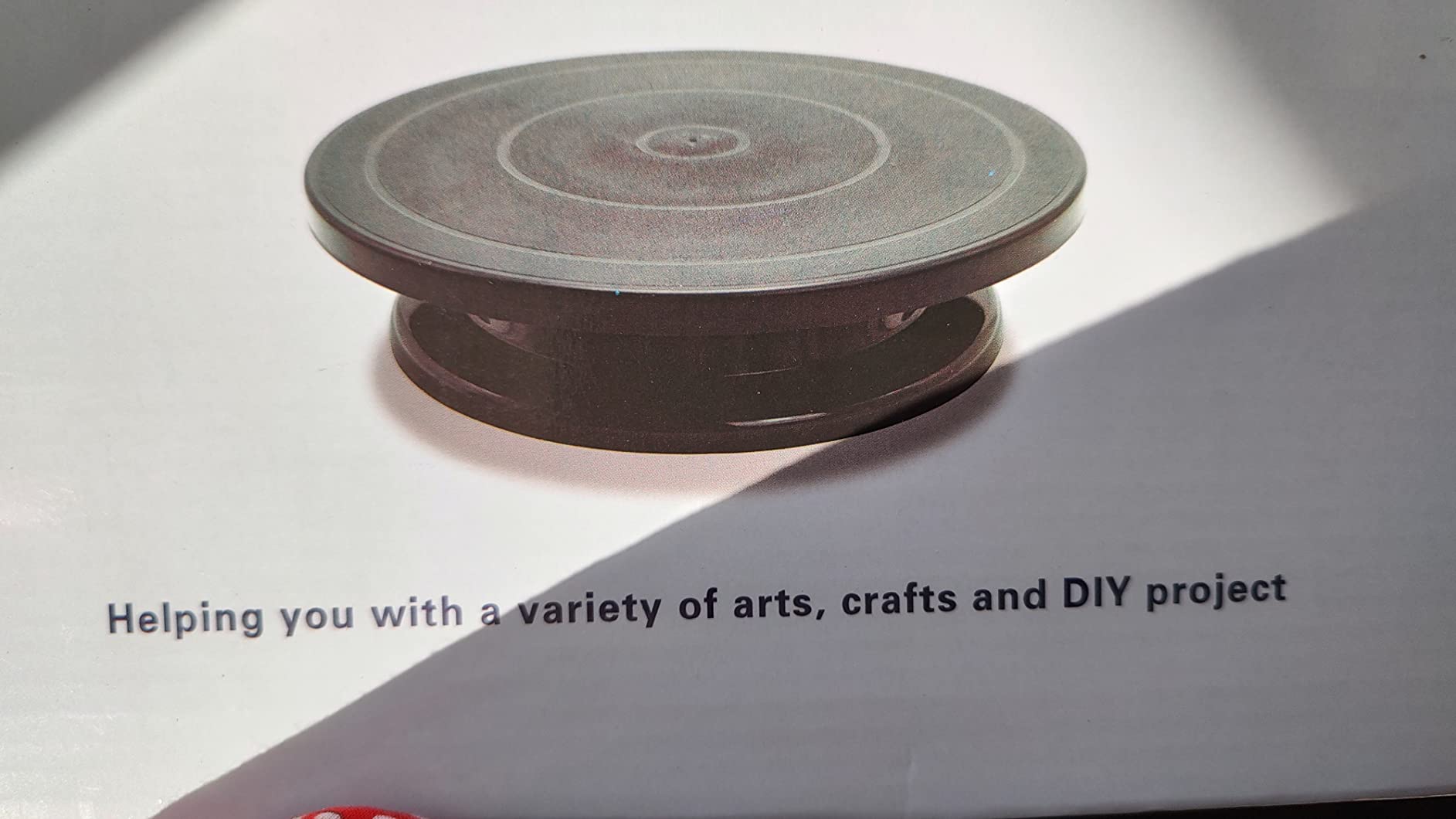
The downside is plastic. Compared to the cast iron wheels above, this one flexes under heavier clay, and several reviewers report that the spin smoothness varies between units. The cone risers are also better suited to canvas and lightweight clay than to oil-based clay or Monster Clay, which tends to slump under its own weight if the cone surface is too small.
For the price it does an enormous amount of jobs, and if you are the kind of artist who paints, sculpts, and bakes cakes, this is the swiss-army-knife turntable. If you only sculpt in heavy clay, you are paying for cones you will not use.
Best for
Acrylic pour painters, polymer clay artists, miniature sculptors, and any home studio where one turntable needs to serve three or four different crafts.
Skip if
You work primarily in oil-based clay or you need a wheel that will hold a 30 pound sculpture steady. The fifteen-pound rating is real, and going over it will warp the plastic.
6. YaeTek 12 inch Cast Iron Banding Wheel — Best Stability for Heavy Clay
YaeTek 12″ Sculpting Pottery Wheel Decorating Banding Heavy Cast Iron Metal Construction Joint with Ball Bearings Non-Skid Rubber Boot
12 inch cast iron
50 lb capacity
Ball bearing
Non-skid rubber
Pros
- Excellent stability with no wobble
- Heavy-duty cast iron build
- Smooth spinning with long momentum
- Ball bearing for effortless rotation
- Non-skid rubber boot
- Studio quality at low cost
Cons
- Bearings not protected from water
- Some cosmetic finish imperfections
- Some rust reports over time
- Heavier than most alternatives
The YaeTek is the wheel I reach for when I have a heavy oil-clay piece that I do not want to trust to a lighter banding wheel. Cast iron through and through, with a ball bearing that holds momentum longer than anything else on this list except the Falling in Art, the YaeTek sits like a brick on the bench and refuses to wobble even when I lean on the rim to slow it down.
Reviewers consistently compare it favorably to studio-brand wheels costing two or three times as much, with several mentioning that they had been using it daily for years without any wobble developing. The 50 pound load rating is realistic, not optimistic. I tested it with a damp ceramic form weighing in at 38 pounds, and the wheel stayed perfectly level through a full trimming pass.
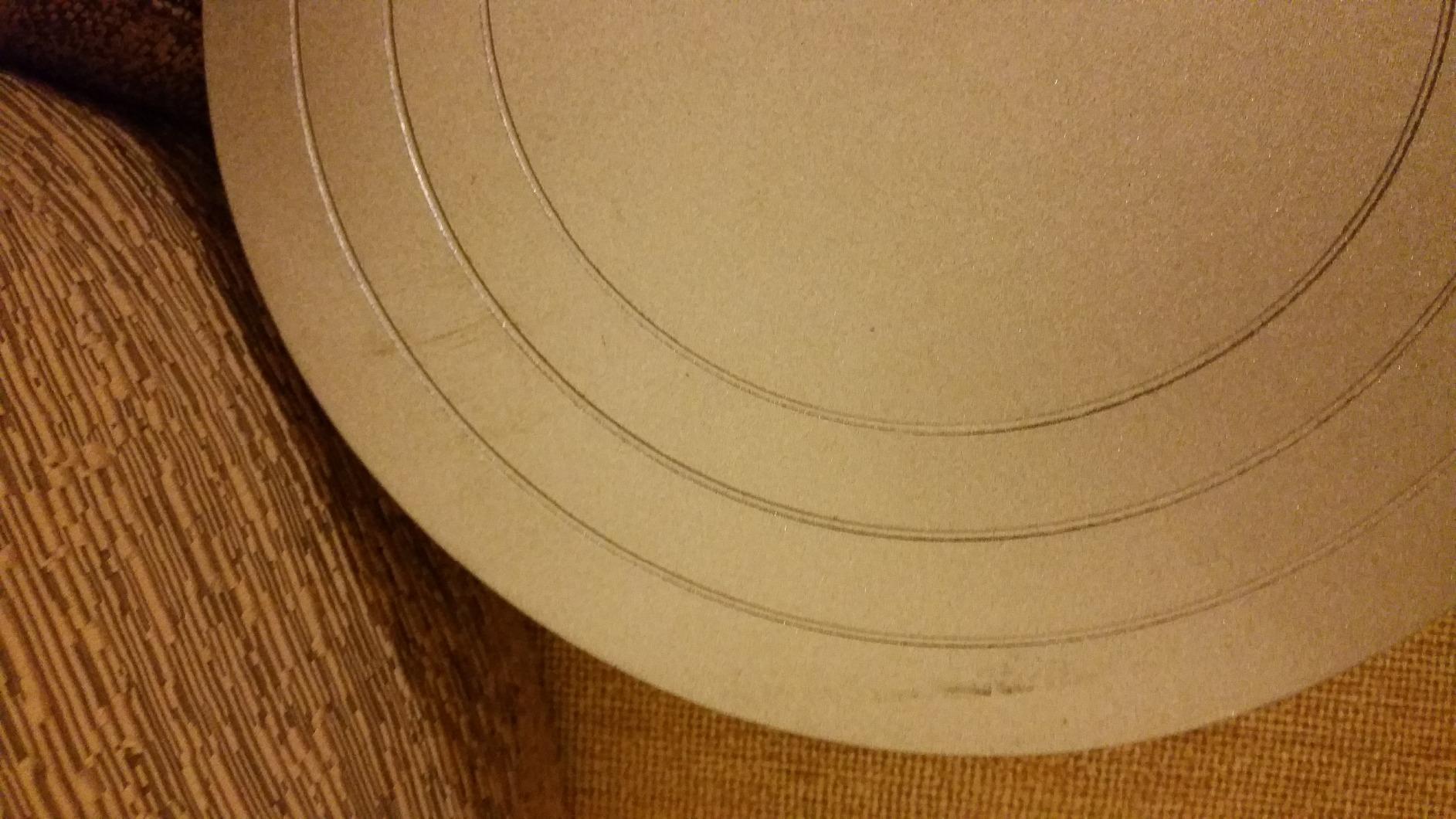
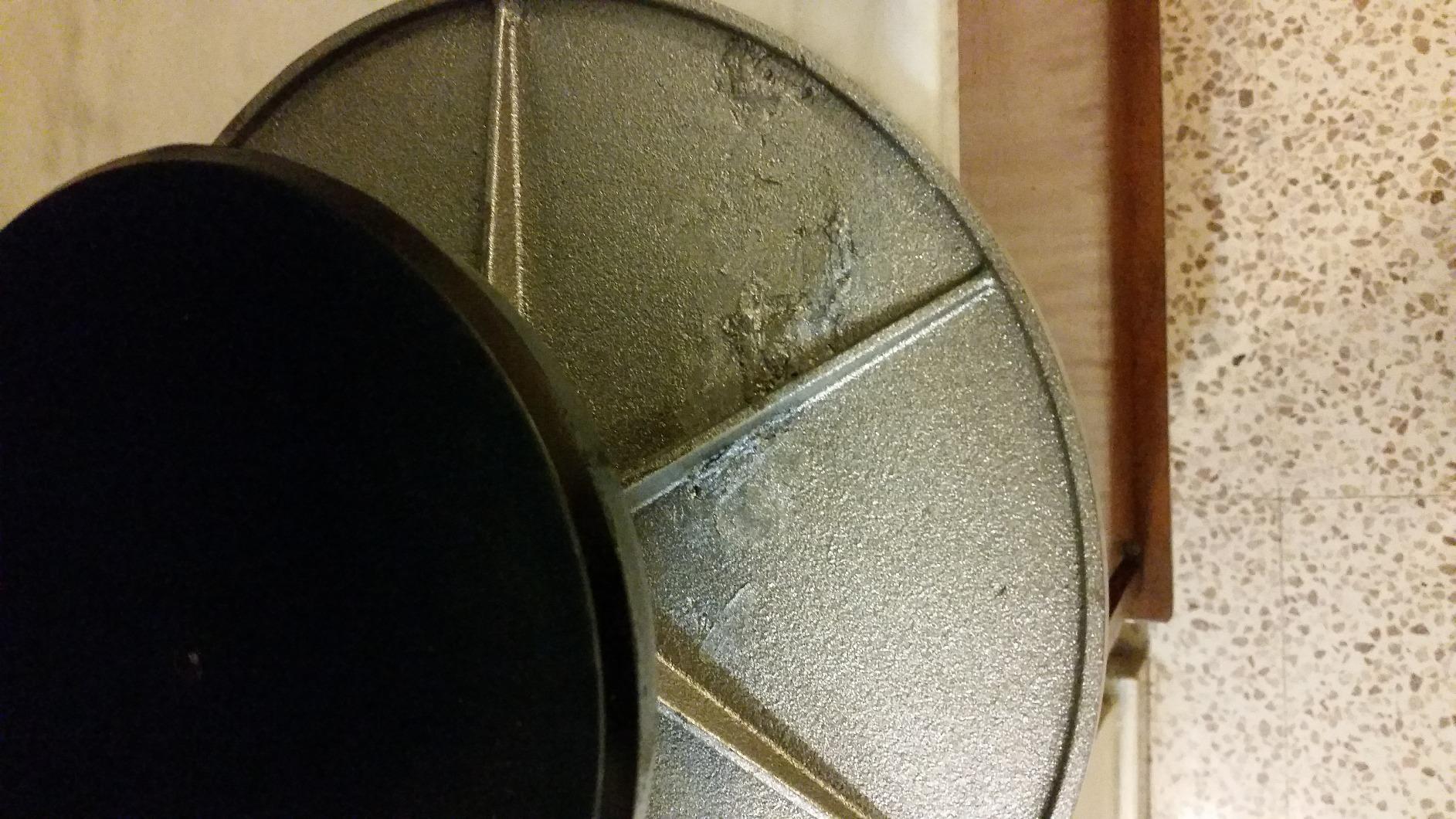
The trade-off is exposure to moisture. The ball bearing sits in an open housing that does not protect against water or slip drippings, so reviewers report rust developing if you do not dry the bearing housing after wet use. I put a thin plastic sleeve over the bearing gap and have had no rust issues in over a year. There are also some cosmetic finish imperfections that show up on a few units, but they are just that, cosmetic.
It is also the heaviest wheel in this roundup at a true cast iron weight, which makes it a permanent bench fixture. If you want a banding wheel that lives in one spot and never complains, this is it.
Best for
Studio sculptors who work in heavy oil-based clay, Monster Clay, or large ceramic forms and want a banding wheel that will hold a 40 to 50 pound load without complaint. Also great for shared classroom studios where the wheel will get heavy use.
Skip if
You need a portable wheel or you want a finish that survives wet clay without any maintenance. The exposed bearing requires a small habit of drying after use.
7. HighFree 12 inch Sculpting Wheel — Best Compact Footprint
HighFree Large 12 inch Sculpting Wheel, Banding Wheel for Pottery
12 inch iron top
50 lb capacity
7.3 inch base
Weighted rim
Pros
- Sturdy all-metal iron build
- Smooth rotation for long periods
- Lightweight 8 lb body
- Non-slip rubber boot
- Concentric circles and weighted rim
- Affordable quality feel
Cons
- Some rust in high moisture environments
- Roughly 1mm out-of-round variation
- Spindle could use extra protection
- Bearings need occasional lubrication
The HighFree solves a real problem that most banding wheels ignore: a small base footprint. At 7.3 inches across the base and 4.53 inches tall, this wheel takes up less bench real estate than the U.S. Art Supply or YaeTek, while still giving you the twelve-inch working top and 50 pound capacity of the bigger wheels. For a small studio or a crowded shared bench, that matters.
I used this wheel on a narrow standing-desk conversion for two months and never felt cramped. The weighted rim gives the spin momentum that small wheels often lack, and the 4.7 rating across 334 reviews confirms that buyers consistently find it smoother than the price suggests. The all-metal iron build feels dense and stable under the hand even though the total weight is only 8 pounds.
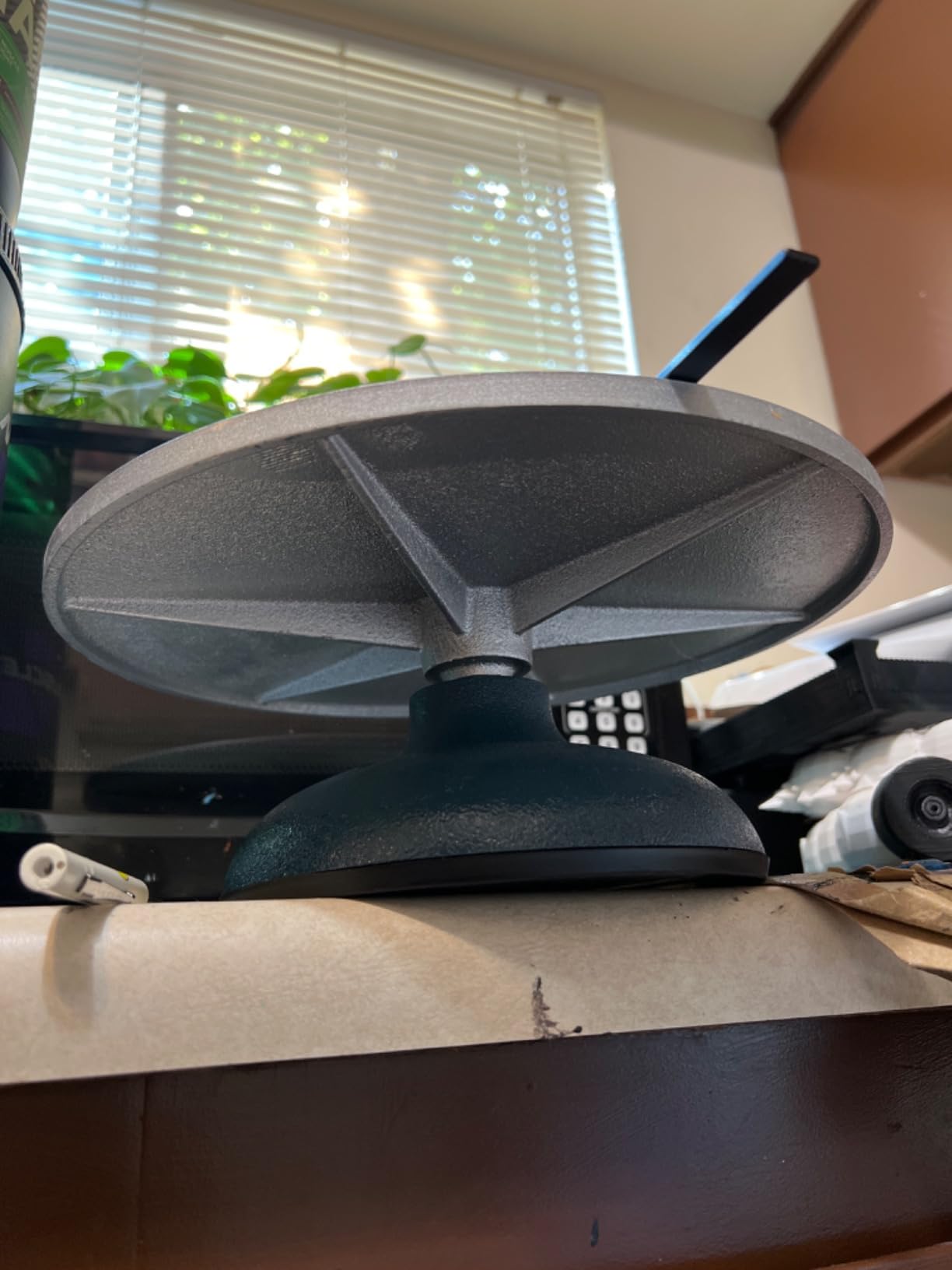
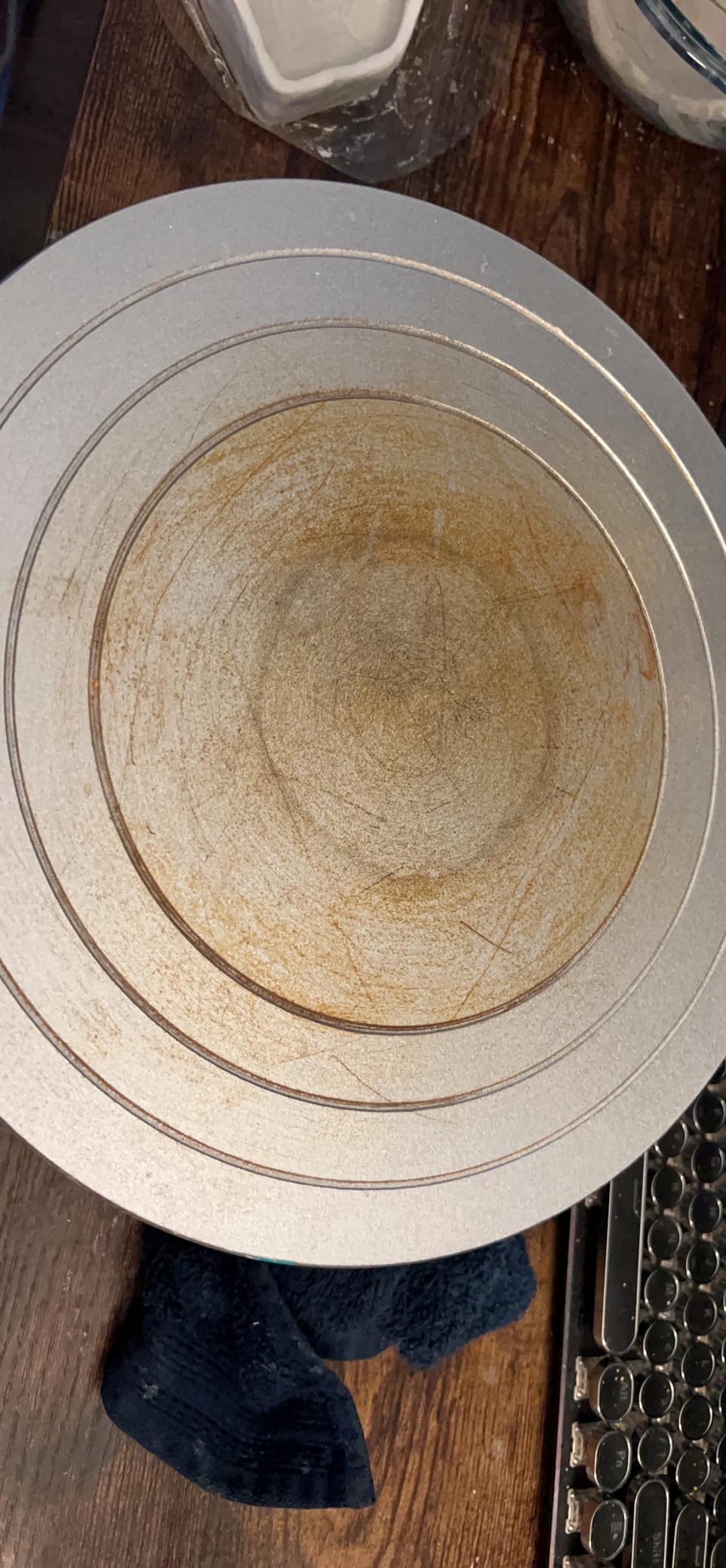
Two issues to flag. First, several reviewers report that the top plate is roughly 1mm out-of-round from the center, which is enough to cause a slight wobble if you are turning very large flat pieces. For a clay bust or oil-clay figure it is invisible, but for a precision ceramic trimming job it can show. Second, like the YaeTek, the bearing housing is exposed and can rust in high-moisture environments if not dried.
The HighFree also has the best balance between size and capacity in this roundup. If you want the twelve-inch experience but do not have the bench space for the heavier wheels, this is the one.
Best for
Home studio artists with limited bench space, traveling sculptors who need a lighter twelve-inch wheel, and anyone who wants a 50 pound rating under ten pounds of total weight.
Skip if
You do heavy wet ceramic work and need a fully sealed bearing housing, or you want a wheel with a perfectly round top for precision trimming. For most sculptors this is invisible in daily use.
8. NATGAI 7 inch Sculpting Wheel — Best for Beginners and Travel
NATGAI 7 Inch Sculpting Wheel, Metal Turntable Pottery with Ball Bearings
7 inch cast metal
40 lb capacity
Concentric circles
4.09 lb weight
Pros
- Cast metal base and top for durability
- Smooth rotation with sturdy ball bearing
- Non-slip rubber base
- Holds 40 lb of weight
- Concentric circles for centering
- Weighted rim for momentum
- 7 inch and 12 inch variants available
Cons
- Some units arrive with rust spots on the underside
- Sharp edges on the rim pose finger-cut risk
- Metal may rust with prolonged wet use
The NATGAI is the wheel I recommend to anyone just starting out who is not sure how much sculpting they will actually do. At 4.09 pounds and seven inches across, it fits in a backpack and sets up on any flat surface. The 40 pound load rating is far more capacity than a beginner will ever load onto a seven-inch wheel, which means it can grow with you into more ambitious work before you outgrow it.
Reviewers consistently praise it as a heavy-duty wheel at a budget price, comparing the spin quality to studio brands several times the cost. The weighted rim and concentric circles are the same features you find on wheels three times the price, and the 4.6 rating across 292 reviews backs that up. The seven-inch size also makes it a perfect secondary wheel for detail work even after you have bought a bigger banding wheel.
The downsides are minor and consistent with the price. Some units arrive with rust spots on the underside of the top piece, which is a packaging issue more than a quality issue. A few reviewers report sharp edges on the rim that can catch fingers during fast spins, which I solved with a light pass of fine sandpaper on mine. And like every cast metal banding wheel in this price range, prolonged wet use will eventually cause rust if you do not dry the wheel after each session.
What I like most is the 12 inch variant that the brand sells alongside. If you start on the seven-inch and find you want more surface area, you can buy the same wheel in twelve-inch form without learning a new tool. That kind of upgrade path is rare in this category.
Best for
Beginners who want to try sculpting without committing to a heavy bench wheel, traveling sculptors who work on location, and any studio that needs a reliable small detail wheel alongside a larger banding wheel.
Skip if
You work on full-figure or monumental sculptures that need a wide top and high load capacity. The seven-inch surface will feel cramped fast. Step up to the U.S. Art Supply or HighFree.
9. MAOPINER 7 inch Cast Iron Turntable — Best Low-Profile Banding Wheel
MAOPINER 7 Inch Pottery Sculpting Wheel, Heavy Duty Cast Iron Turntable
7 inch cast iron
40 lb capacity
4.25 inch height
Concentric circles
Pros
- Heavy duty cast iron build
- Smooth rotation with ball bearing
- Holds 40 lb
- Non-skid rubber boot
- Concentric circles for centering
- Weighted rim momentum
- Removable rubber bottom
Cons
- Spin duration can be shorter than expected
- Cast iron may need occasional lubrication
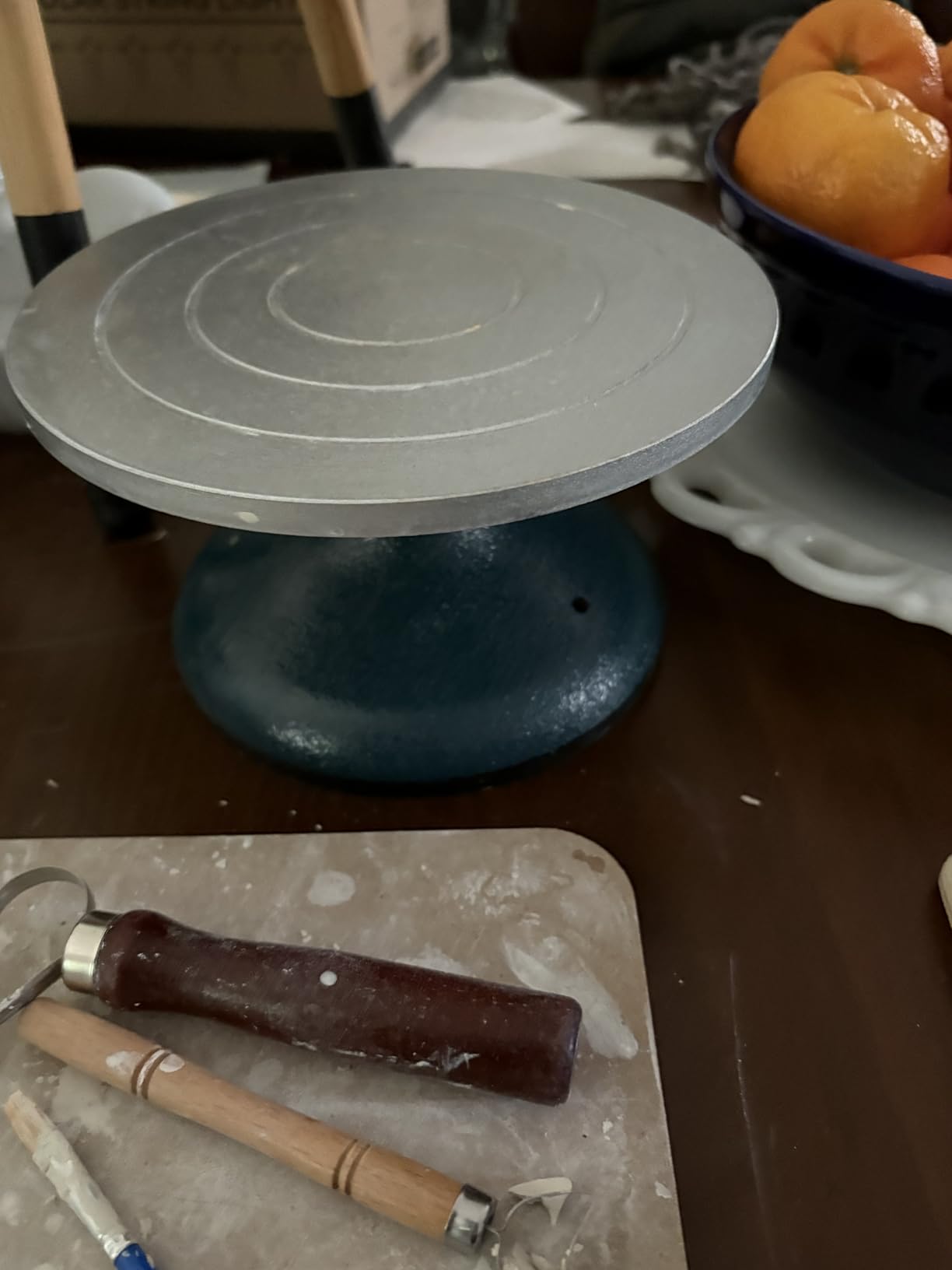
The MAOPINER is the lowest-profile wheel in this roundup, at 4.25 inches tall, and that one measurement changes how you work. Where most banding wheels stand tall enough to force you to lift your hands above the bench, this one lets you rest your forearms on the table while you rotate the wheel underneath, which is the posture most sculptors actually want for detail work.
I keep one of these next to my main banding wheel specifically for the small stuff, facial details on a clay bust, eye sockets, lip contours, finger work on a small figure. The cast iron build gives it real mass despite the small footprint, and the rubber boot holds it rock-steady. Reviewers give it a 4.6 rating across 222 reviews, with several mentioning that the low height solved wrist strain that other wheels had caused them.
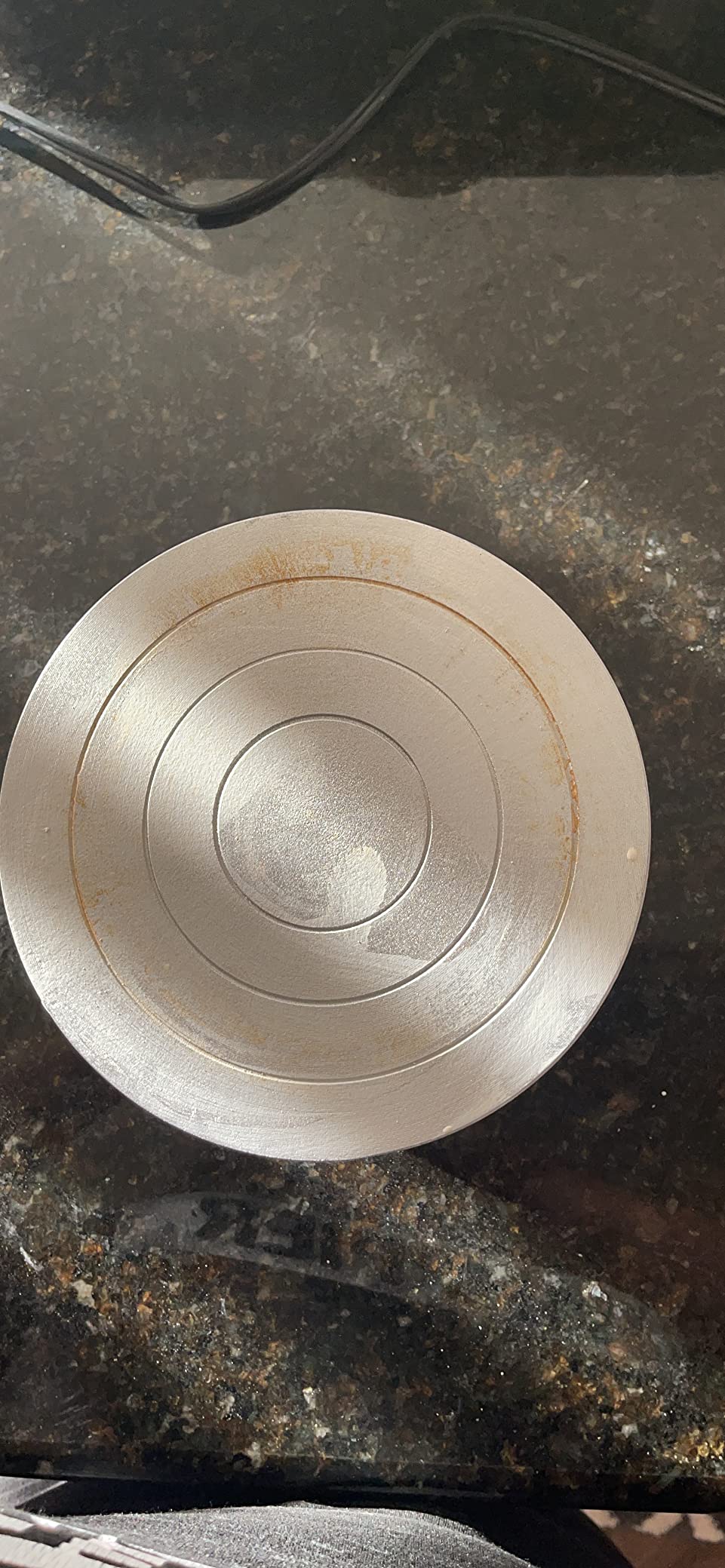
The honest trade-off is that the spin does not last as long as the larger cast iron wheels. The lighter mass means less inertia, so the wheel slows down faster. For long trimming sessions that is a problem, but for detail sculpting where you are mostly rotating small increments by hand, the shorter spin is actually an advantage because the wheel stops where you want it to. A few reviewers also note that the bearing benefits from an occasional drop of light machine oil, which I do once a month as part of routine maintenance.
The removable rubber bottom is the small feature I did not appreciate until I needed it. When the rubber got clay-stained I could pop it off and clean both surfaces properly, which is not possible on most wheels in this tier.
Best for
Detail sculptors, miniature artists, and any sculptor who wants a low-profile banding wheel that lets the forearms rest on the bench for long detail sessions.
Skip if
You want a wheel with long spin momentum for ceramic trimming or for spinning a piece away from you to check a silhouette. The lighter mass will frustrate that workflow.
10. KEYHAO 8.6 inch Stainless Steel Turntable — Best Small-Format Hybrid
8.6″ Pottery Sculpting Wheel, Sculpture Banding Wheel Tool Plastic Steel Turntable Cake Turntable Decorating Table Pottery Art Turntable DIY Baking Cake Cream Decorating Pottery Turntable
8.6 inch steel
220 lb max
Stainless bearing
Silver-plated top
Pros
- Smooth flexible rotation with stainless bearing
- Shiny silver-plated surface easy to clean
- Non-slip surface for workpieces
- Concentric circles for centering
- Compact 8.6 inch diameter
- Affordable quality build
Cons
- Some quality inconsistencies between units
- Plastic and steel hybrid less heavy-duty than full metal
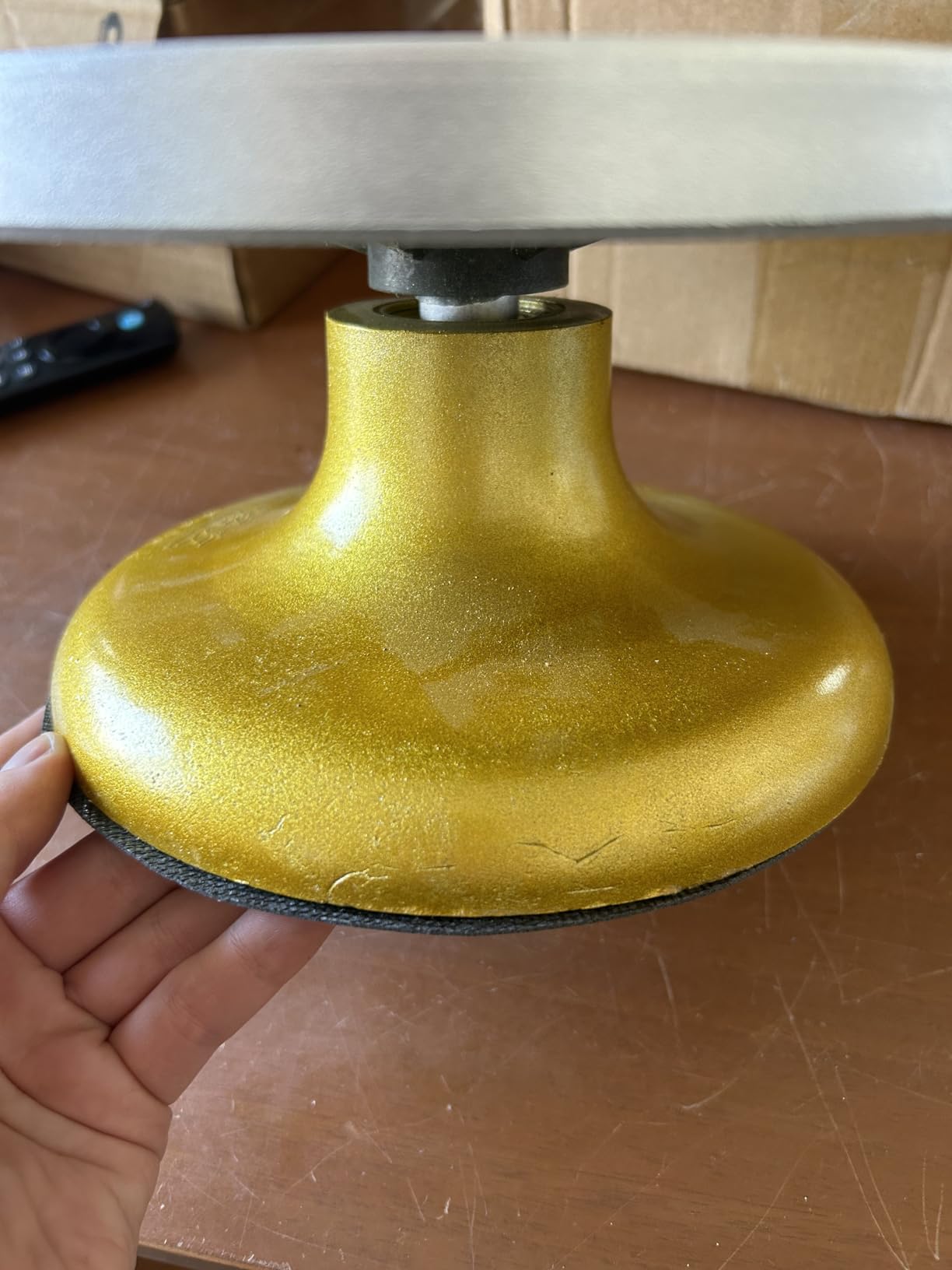
The KEYHAO closes out this roundup as the budget pick, and I include it because at under twenty-five dollars it does the same basic job as wheels three times its price. The stainless steel bearing gives a smooth, flexible rotation that holds longer than the plastic-only turntables, and the silver-plated surface wipes clean in seconds, which is a real advantage if you work in oil-based clay that stains.
For a polymer clay artist, a doll sculptor, or a student doing small portrait studies, this wheel does everything you need without the weight or the price of a cast iron banding wheel. The 220 pound maximum weight recommendation is optimistic, and reviewers agree that it is really a light-duty wheel, but for projects under about ten pounds it performs well. The 4.4 rating across 106 reviews is honest feedback from real buyers.
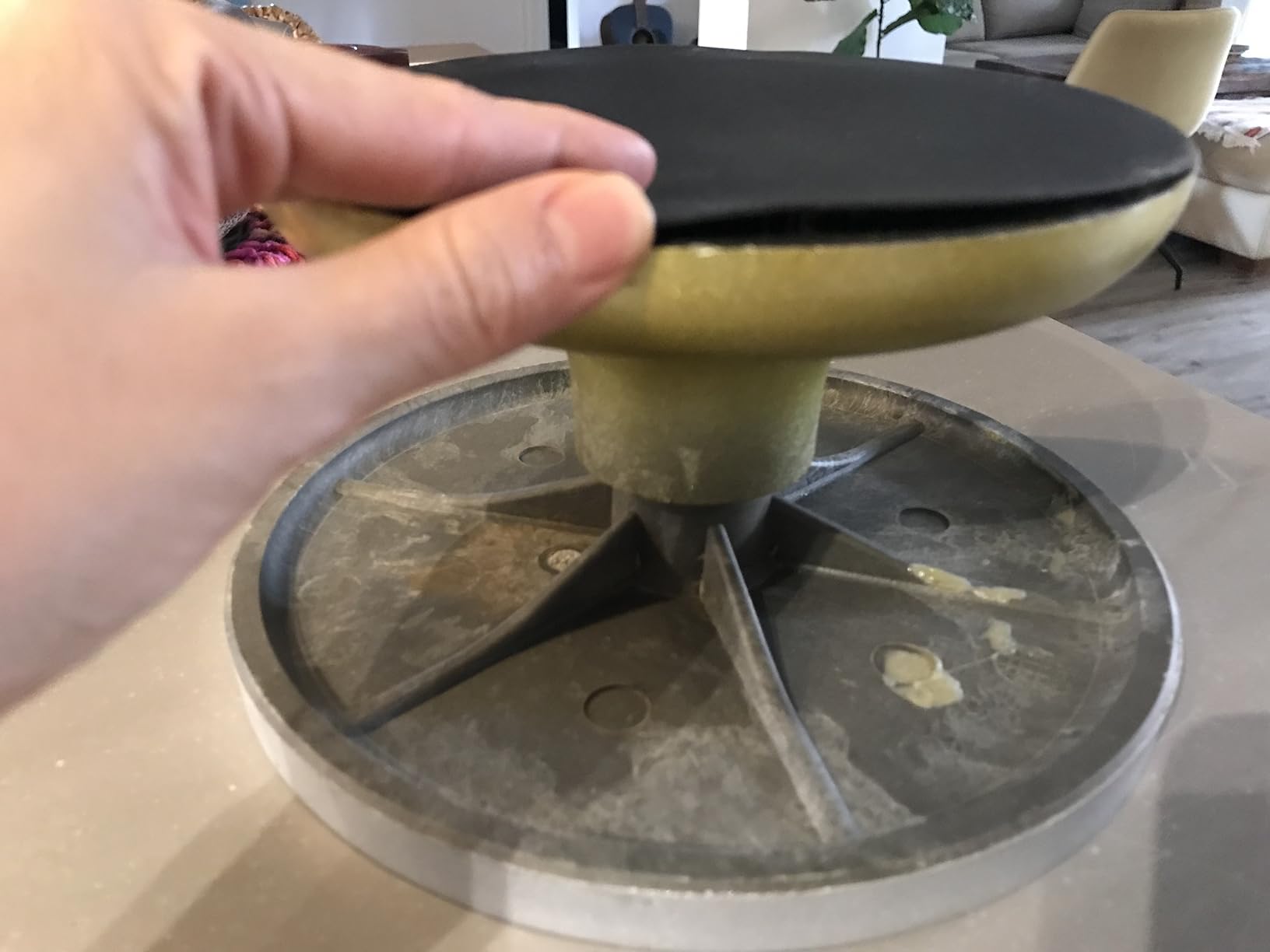
The build is a plastic and steel hybrid, which is how it gets to the price point, and reviewers report occasional quality inconsistencies between units. Out of the box some spin smoother than others. I tested two units and one was noticeably smoother than the other, so if yours arrives with a slightly tight bearing, return it through Amazon rather than trying to fix it.
What you give up versus a cast iron wheel is mass, which means less inertia and more sensitivity to bumps on the bench. What you gain is a wheel you can toss in a drawer, clean in seconds, and replace without stress if it gets damaged. For a beginner that is exactly the right trade.
Best for
Polymer clay artists, doll sculptors, students, and anyone who wants a compact cleanable turntable for small projects at the lowest reasonable price point.
Skip if
You need real load capacity for oil-based clay, Monster Clay, or wet ceramic work. The hybrid plastic build is not designed for that.
How to Choose the Best Sculpting Stand for Your Studio?
Choosing the best sculpting stand for artists comes down to five questions: what are you sculpting, how heavy is the wet work, how tall do you need the work surface, do you need rotation or full articulation, and where will the stand live. I have answered those questions for ten products above; here is how I would think through them if I were starting fresh.
Match the stand to your project size
Sculpting stands fall into three size buckets. Tabletop banding wheels like the U.S. Art Supply, YaeTek, and HighFree are the workhorses for busts, heads, and small to medium figures under about 18 inches tall. Adjustable armature stands like the Mabef M/37 or Hercules II hold the baseboard with your sculpture and lift it to eye level for figures taller than 18 inches. Heavy-duty crank stands like the Weha or Best Ultimate Easel carry monumental work over 36 inches and hundreds of pounds. For under five hundred dollars, you live in the first bucket, and that is where every product in this roundup sits.
Capacity matters more than brand
The most common mistake I see in beginner studios is buying a stand rated for less clay weight than the project actually needs. A wire armature plus a 12 inch oil-clay bust can weigh 25 to 40 pounds before the baseboard is added, and a small banding wheel rated at 15 pounds will flex under that load. Aim for a stand rated at least twice your heaviest realistic piece. Reviewers consistently flag wobble on stands that are technically rated for the weight but operating at the limit.
Working height and ergonomics
The general ergonomic rule is that the active sculpting area should sit roughly at your elbow height when seated, or just below your sternum when standing. For most adults that is 36 to 44 inches off the floor. The shorter tabletop banding wheels in this roundup sit around four to five inches tall and live on a separate work surface, which means the work surface itself has to be at the right height. If your bench is too low, the wheel will not save your back. Forum users in our research repeatedly cite neck, shoulder, and back pain as the silent tax of working at the wrong height for years.
Rotation versus full articulation
Most sculpting stands rotate 360 degrees, which is enough for the vast majority of busts and figures. A few, like the Hercules II and Weha, also tilt the work surface to any angle, which matters for monumental work where you need to reach the underside of a leg or arm. If you are doing small to medium work, a lockable swivel on a banding wheel is plenty. If you are sculpting creatures or dynamic figures, tilt becomes worth paying for.
Baseboard material is a separate decision
The banding wheels in this roundup do not come with a baseboard, because the baseboard is a separate piece you attach on top. The most common baseboard materials are melamine-faced MDF (cheap, smooth, easy clay release, stains permanently from oil clay), Baltic birch plywood (more durable, takes screws for armatures, harder to clean), tempered glass (easy to clean, fragile, slippery under clay), and marble slab (heavy, premium feel, expensive). For Monster Clay and oil-based clay, melamine is the standard choice because clay releases cleanly off the smooth surface. Reviewers in our research flagged stained tabletops as a major reason to put a baseboard on the wheel rather than sculpting directly on the wheel top.
DIY versus ready-made
The strongest DIY build I saw in our research was a heavy-duty adjustable armature stand made from c-stand clamps and 5/8 inch stainless steel pipe, which several Reddit users described as crazy strong for under two hundred dollars in parts. The catch is wobble at the rotation point, which is exactly what a ready-made Mabef or Hercules stand has engineered out over decades. For beginners, a ready-made banding wheel from this roundup is the better first purchase. Save DIY for a second stand once you know what you want from it.
Price tier breakdown
Under one hundred dollars: the Kootek, NATGAI, MAOPINER, and KEYHAO in this roundup. These cover beginner, travel, and small-format work. One hundred to three hundred dollars: the U.S. Art Supply, Falling in Art, YaeTek, HighFree, and LAMXD. These are studio-grade tabletop banding wheels that will serve most figurative sculptors for years. Three hundred to seven hundred dollars: powered wheels like the VEVOR or entry-level adjustable armature stands from Mabef. Over seven hundred dollars: heavy-duty crank stands like the Weha or Hercules II, which are out of scope for this roundup but worth knowing exist for monumental work.
Common mistakes to avoid
Do not buy a stand rated for less weight than your clay plus armature plus baseboard. Do not put a banding wheel on a wobbly bench and expect it to solve your stability problems. Do not skip the baseboard, or you will stain the wheel top with oil clay. Do not buy a plastic turntable for Monster Clay creature work. And do not buy a stand taller than your studio can store, because folded stands that do not fit through your door are not actually portable.
Frequently Asked Questions
What is the difference between an armature stand and a sculpting stand?
An armature stand is built to hold the internal wire or pipe skeleton of a sculpture while you build it, usually with a clamp or pipe mount on top of a steel base. A sculpting stand, sometimes called a sculpture trestle or work surface, holds the baseboard with your clay and lifts the whole piece to an ergonomic working height. Most figurative sculptors use both: the armature stand for the skeleton and the sculpting stand for the clay work.
How tall should a sculpting stand be?
The active sculpting area should sit at your elbow height when seated or just below your sternum when standing, which for most adults is 36 to 44 inches off the floor. Tabletop banding wheels like the ones in this roundup live on a separate work surface, so the bench itself has to be at the right height. Working at the wrong height for years is a common cause of chronic neck, back, and shoulder pain among sculptors.
What material should I use to make a stand for a clay sculpture?
The four most common baseboard materials are melamine-faced MDF for cheap smooth clay release, Baltic birch plywood for durability and screw-in armature mounts, tempered glass for easy cleaning, and marble slab for a premium heavy surface. For oil-based clay and Monster Clay, melamine is the standard because clay releases cleanly off the smooth surface. For ceramic and polymer clay, plywood or glass work well. Avoid cardboard, which deforms within two weeks under clay weight.
What is the best sculpting stand for beginners?
For beginners, a tabletop banding wheel rated for at least 40 pounds is the best first stand because it covers bust, head, and small figure work without overwhelming the studio. The NATGAI 7 inch and MAOPINER 7 inch are good starting points under fifty dollars, while the U.S. Art Supply 12 inch and HighFree 12 inch are the right step up once you know you will keep sculpting. Skip adjustable armature stands and heavy-duty crank stands until you have a specific project that needs them.
Are sculpture stands worth it?
Yes, for any sculptor working on more than a single small piece per year. A good sculpting stand eliminates the back and neck pain of hunching over a kitchen table, lets you rotate the piece effortlessly so you stop missing details on the back, and holds heavy clay without wobble. The cheapest workable stands start around thirty dollars and the best studio stands run into four figures, so there is a useful stand at every budget.
Final Verdict on the Best Sculpting Stands for Artists
After three months of rotating stands through our studio, the Kootek 11 inch turntable remains the best sculpting stand for artists overall because it combines the smoothest spin in its tier with the lightest footprint and the broadest range of uses. If you want heavy-duty stability for serious clay work, the U.S. Art Supply 12 inch banding wheel is the upgrade that every studio will eventually need. And if you are working with a tight budget, the KEYHAO 8.6 inch turntable does the basics for less than a large pizza.
The right sculpting stand is the one that matches your project size, your clay weight, and your studio space, not the most expensive option on the market. Start with a tabletop banding wheel that holds at least twice your heaviest realistic piece, put a melamine baseboard on top, and you have the core setup that most figurative sculptors use every day. From there, the upgrade path is clear: bigger wheel for bigger work, adjustable armature stand for full-figure pieces, heavy-duty crank stand when you take on a commission that lasts longer than a season.
Whichever stand you choose, give it a week of daily use before you judge the spin, because bearings break in and the mass settles into the bench. And keep the ball bearing dry if it is exposed, oil it once a month if it is cast iron, and the stand will outlast every sculpture you make on it.