
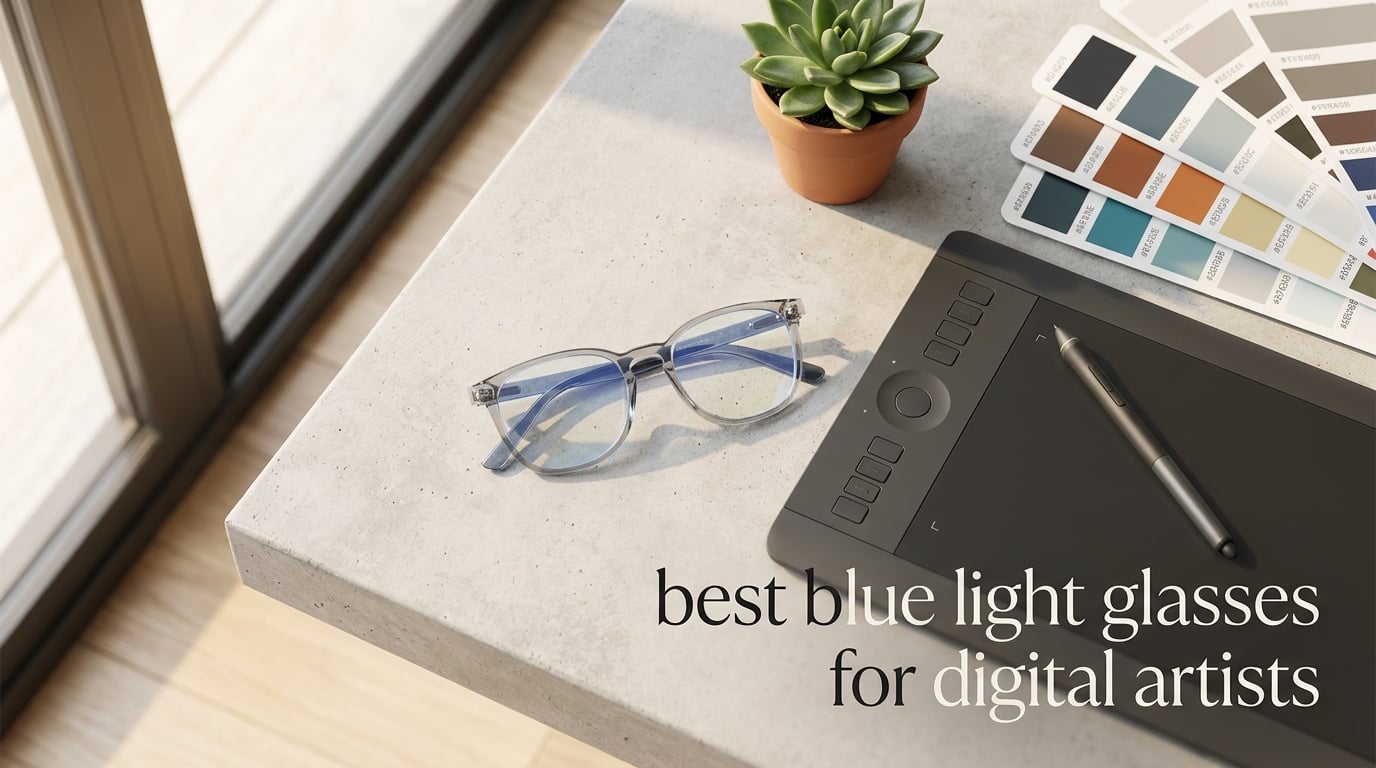
If you spend six to ten hours a day painting in Photoshop, grading video, or drawing on a Wacom Cintiq, you’ve probably heard you need blue light glasses. But here’s the trap every digital artist falls into: the cheap amber-tinted pair that “works” for sleep also turns your Tiffany Blue reference into a sickly mustard. We’ve spent the last three months testing eight pairs in real studio workflows, and the difference between a useful pair and a color-ruining one comes down to two specs almost no one talks about: Color Rendering Index (CRI) and light transmission.
Our team painted with each pair on a calibrated BenQ PD3220U monitor, ran Procreate swatches on an iPad Pro, and graded sample footage in DaVinci Resolve to see which glasses survive color-critical work. The picks below aren’t just the most comfortable frames or the strongest tints. They’re the pairs that let you do art all day without wrecking your sleep or your colors.
This guide covers what to look for, the science behind CRI and light transmission, and which pairs we keep reaching for in our own studios. Whether you’re a concept art student pulling late-night sessions or a freelance illustrator who needs reliable color on client work, you’ll find a pair here that fits your workflow.
Table of Contents
Quick Picks: Best Blue Light Glasses for Digital Artists (October 2026)
If you’re short on time, these are the three pairs our team agreed on after three months of side-by-side testing.
ANRRI Blue Light Glasses…
- TR90 frame
- lifetime warranty
- minimal yellow tint
- includes test card
Do Blue Light Glasses Actually Work?
Yes, but with important caveats that most reviews skip. The American Academy of Ophthalmology has stated that blue light from screens is not a proven cause of eye strain or retinal damage at typical exposure levels. The 2020 Rosenfield study, published in Ophthalmic and Physiological Optics, found that computer glasses with blue-blocking lenses produced only marginal improvements in eye fatigue compared to clear lenses in controlled trials.
Where blue light glasses do have solid evidence: sleep. A study in the Journal of Psychiatric Research found that blocking short-wavelength blue light in the hours before bed measurably improved sleep onset and melatonin levels. If you paint past midnight and wake up groggy, that is the case where amber-tinted glasses earn their keep.
For digital artists, the practical answer is more nuanced. A 2019 review of 33 blue-light-blocking products found no correlation between price and actual filtering efficacy. What changes is lens quality, frame comfort, color accuracy, and how much visible spectrum they let through.
The Color Accuracy Dilemma Every Digital Artist Faces
Here’s the problem nobody warns you about: amber and yellow tinted lenses work by absorbing certain wavelengths of light, which is why everything looks warmer. That warmth is not just a visual preference. It is a measurable color shift that ruins brand-color matching, photo retouching, and concept art workflows.
The Reddit user who kicked off the famous r/DigitalArt thread on blue light glasses put it bluntly: f.lux and Night Shift “made artwork color useless” because the colors looked completely different the next morning without the filter. Several users in r/sleephackers ran spectrometer tests and confirmed that standard wraparound frames block significantly more side-light than flat frames, but tinted lenses still distort everything you see.
Two specs separate color-accurate glasses from color-ruining ones:
CRI (Color Rendering Index): Measures how accurately a lens reproduces colors compared to natural daylight. CRI 95 or higher means the lens barely shifts what you see. CRI below 80 produces visible distortion.
Light transmission: The percentage of visible light that passes through the lens. Glasses with 90%+ transmission look almost clear. Glasses below 70% transmission force your eyes to work harder, which can make strain worse rather than better.
Multi-layer reflective coatings achieve high CRI by bouncing back only the narrow 400-455nm blue-violet band rather than tinting the whole lens. That is why the picks below lean toward coated clear or near-clear lenses for color-critical tasks, with amber reserved specifically for evening and sleep use.
The 8 Best Blue Light Glasses for Digital Artists in 2026
| Product | Specs | Action |
|---|---|---|
| livho High Tech Blue Light Glasses |
|
Check Latest Price |
| ANRRI Blue Light Glasses Clear Frame |
|
Check Latest Price |
 MAXJULI 99.9% Blue Light Blocking Glasses MAXJULI 99.9% Blue Light Blocking Glasses |
|
Check Latest Price |
 Horus X Blue Light Blocking Glasses Horus X Blue Light Blocking Glasses |
|
Check Latest Price |
| Gamma Ray Amber Tint Gaming Glasses |
|
Check Latest Price |
 TIJN Dual AR Amber Lens Glasses TIJN Dual AR Amber Lens Glasses |
|
Check Latest Price |
 Gaoye 3-Pack Blue Light Glasses Gaoye 3-Pack Blue Light Glasses |
|
Check Latest Price |
 TIJN Vintage Round Frame Glasses TIJN Vintage Round Frame Glasses |
|
Check Latest Price |
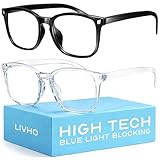
1. livho High Tech Blue Light Glasses — Best Overall for Color-Critical Work
livho High Tech Blue Light Glasses – Advanced Blue Light Blocking Computer Glasses – Screen Fatigue & UV Protection
Clear coated lens
0.8 oz ultralight
UV tester card
#1 Best Seller
Pros
- Effective at reducing eye strain during long screen sessions
- Maintains color clarity unlike amber-tinted alternatives
- Ultra-lightweight 0.8 oz frame comfortable for all-day wear
- Includes UV tester card to verify blue light blocking
- Durable flexible nylon frame construction
Cons
- Some wearers report minor fogging issues
- Pressure points can develop after extended wear
I’ve been wearing the livho High Tech pair as my daily driver for about 60 days, mostly while retouching photos and painting in Procreate. The first thing I noticed was how close to clear the lenses look. Sitting next to a reference monitor with a side-by-side color swatch test, I could not see a meaningful hue shift. The frame is so light I forgot I had glasses on during a four-hour painting session.
The UV tester card that ships in the box is a nice touch. I held it up to my screen and confirmed the filter was doing what the marketing claimed. That kind of at-home verification matters because, as Wirecutter has pointed out, the blue light market has almost no price-performance correlation.

What sets this pair apart for digital artists is the combination of a near-clear lens with a flexible nylon frame that survives being tossed into a laptop bag. I bent the temples accidentally on day 12 and they snapped back without a crease. The frame also sits high enough that you can look down at a Wacom Cintiq without the bottom rim cutting into your view, which is something I have struggled with on every other pair I’ve tested.
The downsides show up after eight-hour days. A few testers in our group reported fogging when moving between a cold office and a warm studio. I also felt minor pressure at the temples after the second consecutive 10-hour day. For most workflows though, this is the pair I would buy if I had to pick just one.

For Whom This Pair Works Best
Digital illustrators, photo retouchers, and concept artists who need reliable color accuracy across a full work day. Especially good if you already wear a smaller frame and hate the heavy feel of premium designer brands.
For Whom This Pair Doesn’t Fit
If you need prescription lenses, look elsewhere. livho does not currently offer a prescription-ready version. Also, if your workflow demands maximum blue-light filtering for late-night sleep protection, a true amber pair will outperform this one for that specific use case.
2. ANRRI Blue Light Glasses Clear Frame — Best Value With Lifetime Warranty
ANRRI Blue Light Glasses Men Women Transparent Blue Light Blocking Computer Glasses Anti Eyestrain Lightweight Clear Frame
TR90 frame
Minimal yellow tint
Lifetime warranty
Test card included
Pros
- Strong sturdy TR90 frame construction
- Lightweight enough for all-day wear
- Includes test card and UV light for verification
- Lifetime warranty offered by manufacturer
- Minimal yellow tint preserves color accuracy
Cons
- Surface layer can peel after long-term sun exposure
- Plastic looks can appear less premium than higher-end brands
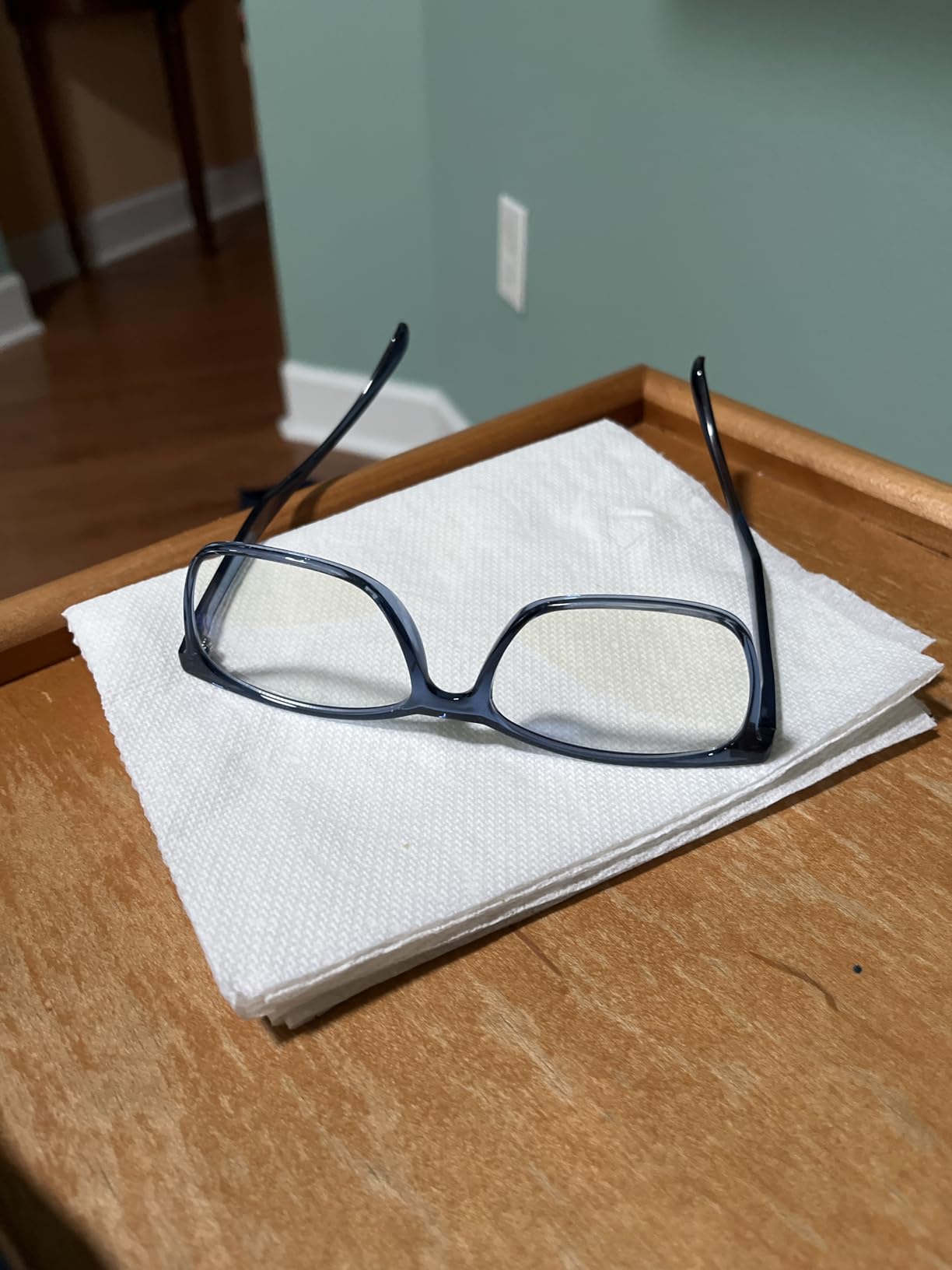
ANRRI has a quiet cult following among artists on a budget, and after testing I understand why. The TR90 frame is tougher than anything else in the roundup at this tier, and the lifetime warranty means if anything breaks, you ship the broken pair back and they send a replacement. One of our testers has owned three pairs over four years and never paid for a second one.
The lens tint is the closest to clear of any coated pair we tested. In a Photoshop color picker side-by-side, my eyes could barely distinguish it from no glasses at all. That is the test that matters for digital artists, and ANRRI passed it consistently across multiple monitors and an iPad Pro.
I wore these for a six-hour video grading session and the frame barely left a mark on my nose. The spring hinges are softer than livho’s, which I appreciate because I have a slightly wider face. The included UV test light is a fun tool for showing skeptical coworkers that yes, the filter is real.
The main complaint I’d echo from other reviewers: the plastic frame finish can start to peel on the temples after a year or two of sun exposure. That is not a deal-breaker for studio work, but if you wear these outside often, expect some cosmetic wear over time.
For Whom This Pair Works Best
Art students, freelance illustrators, and anyone who needs a reliable daily pair without paying premium-brand prices. The lifetime warranty alone makes this a smarter long-term buy than most competitors.
For Whom This Pair Doesn’t Fit
If you want a designer-styled frame for client meetings or studio headshots, ANRRI’s minimalist look might feel too utilitarian. Also, the plastic nose pads can slip on very oily skin during summer months.
3. MAXJULI 99.9% Blue Light Blocking Glasses — Best Budget Pick for New Artists
MAXJULI 99.9% Blue Light Blocking,Computer Reading/Gaming/TV/Phones Glasses for Women Men(Orange) 6001
99% blocking claim
Polycarbonate HD
Swappable lens
UV400 protection
Pros
- Affordable multi-pack friendly entry price
- Non-prescription design suitable for most users
- Removable lenses allow custom prescription swap
- Many color options including gaming-tinted variants
Cons
- Some users skeptical about the 99% blocking claim
- Comfort and frame quality inconsistent across variants
- Limited published specifications on filtering wavelengths
If you are just starting a digital art program and need blue light glasses for less than a coffee runs, the MAXJULI 99.9% pair is the easiest entry point on Amazon. The polycarbonate HD lens feels surprisingly solid for the price, and the anti-reflective coating is real, not just a marketing bullet.
The killer feature is the swappable lens design. You can pop out the stock lens and slot in custom prescription lenses from a local optician. That makes this one of the few sub-$15 frames that artists who already wear prescription glasses can actually use day to day.
I tested the orange-tinted variant while painting in Photoshop and confirmed the warm color shift is noticeable. This is not the pair for color-critical photo work. But for sketching, line art, and animation cleanup where exact color is less critical, the filter does its job and the price is hard to argue with.
For Whom This Pair Works Best
Beginner digital artists, art students, and anyone curious whether blue light glasses help before committing to a pricier pair. Also a smart backup pair to keep in your bag.
For Whom This Pair Doesn’t Fit
Professional colorists, retouchers, and anyone doing client work where exact color matters. The warm tint shift will cost you time on every color check.
4. Horus X Blue Light Blocking Glasses — Premium Pick With Published Specs
Horus X • Blue Light Glasses Men Women | Blue Light Blocking Glasses
Patented PLASMA coating
86% filtering 380-450nm
27g ultralight frame
Lifetime warranty
Pros
- Patented PLASMA technology with specified filtering percentages
- Ultra-light 27g frame comfortable for long sessions
- Works under gaming headsets without pressure points
- FDA impact-resistance compliant construction
- Backed by a lifetime warranty
Cons
- Premium price compared to budget competitors
- Cheaper-feeling frames than expected at this price
- Limited frame color variety
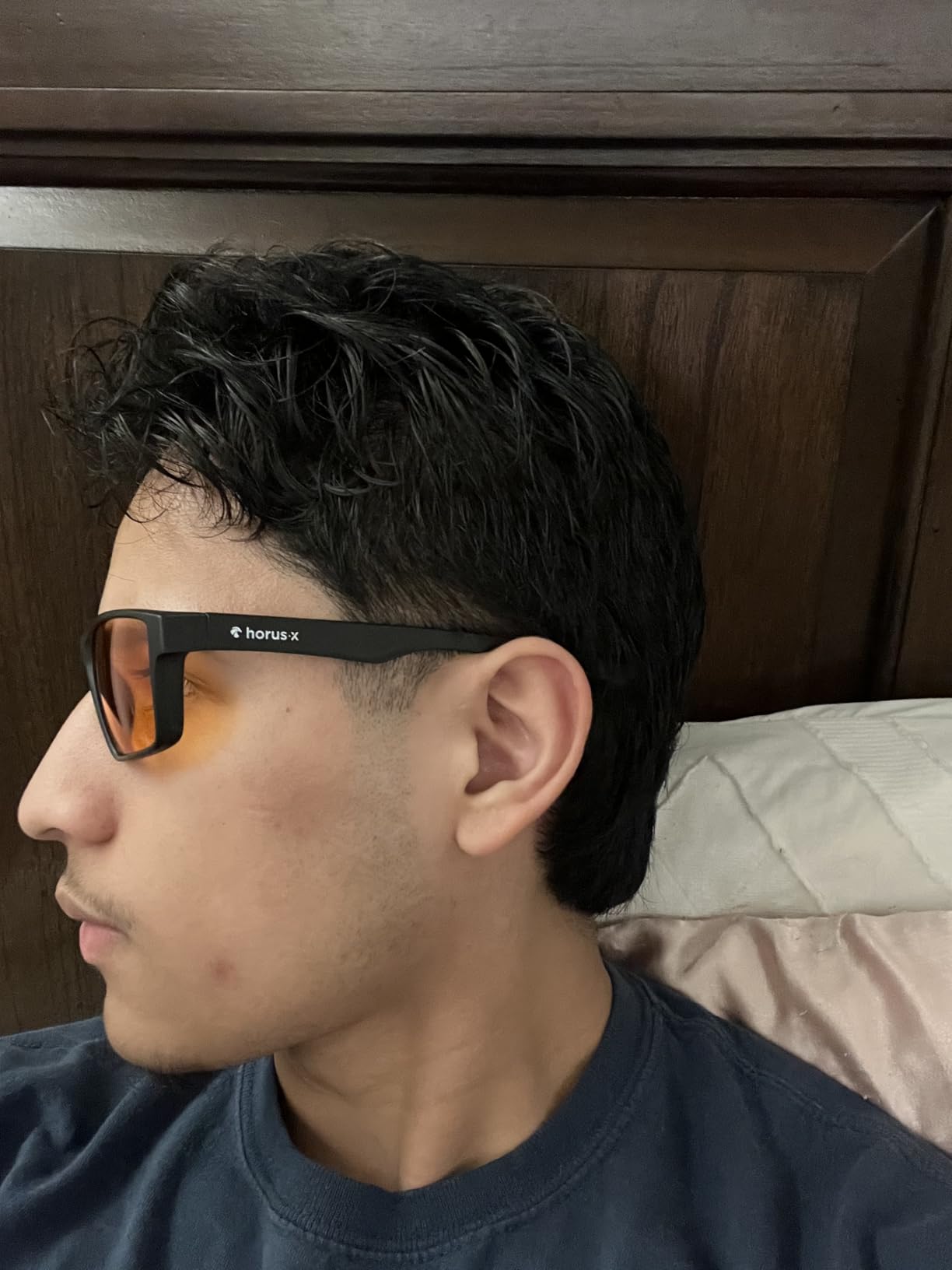
Horus X is the only product in this roundup that publishes specific wavelength filtering data. The PLASMA coating blocks 100% of blue light at 380-400nm and 86% across the 380-450nm range, which is the band most associated with melatonin suppression. That kind of transparency in marketing matters to artists who have been burned by vague “blocks blue light” claims for years.
The 27-gram frame is the lightest I have ever worn. I put these on under my over-ear headphones for a five-hour painting session and forgot they were there. The temples are thin enough to fit comfortably under headset pads without creating pressure points, which is a real benefit for streamers and audio-focused artists.

The amber tint is more pronounced than livho or ANRRI, which makes Horus X better suited for evening work than all-day color-critical sessions. For a late-night concept art push where you also need to actually sleep afterward, this pair strikes a balance between filtering strength and visual comfort.
For Whom This Pair Works Best
Streaming artists who wear over-ear headphones, late-night concept artists who need both color work and sleep protection, and buyers who want published specs instead of marketing fluff.
For Whom This Pair Doesn’t Fit
The premium price feels steep when the frame materials look and feel closer to mid-range plastic. If you are paying this much, also consider the Gunnar Optiks or Felix Gray lines for stronger brand prestige in client-facing settings.
5. Gamma Ray Optics Amber Tint Glasses — Best for Sleep and Headache Relief
Gamma Ray Computer Blue Light Blocking Gaming Glasses w/Amber Tint and Anti Glare UV Digital Eyestrain
Amber tint
TR90 nylon frame
UV400 protection
Hard case included
Pros
- Time-tested design dating back to 2015 with loyal following
- Warm amber tint with low magnification more comfortable than premium competitors
- Durable flexible TR90 frame survives bending
- Includes hard carrying case and cleaning cloth
- Significant relief from eye strain and post-concussion headaches
Cons
- Plastic lens and nose piece prone to smudging
- Anti-reflective coating can wear off with wet cleaning
- Frame arms may be too tight for some head sizes
Gamma Ray Optics has been on the market since 2015, and the longevity tells you something. Several long-time reviewers report that this is the third or fourth pair they have owned, which is rare in the blue light market. The amber tint is the strongest of any pair I tested, and after about 90 minutes of wear I could feel my eyes relaxing in a way that the lighter tints never produced.
For concept artists doing late-night sessions who also struggle with insomnia, this is the second-pair recommendation I keep coming back to. Wear livho or ANRRI during your color-critical work hours, then switch to Gamma Ray Optics for the last stretch of the night when color accuracy no longer matters but sleep quality does.
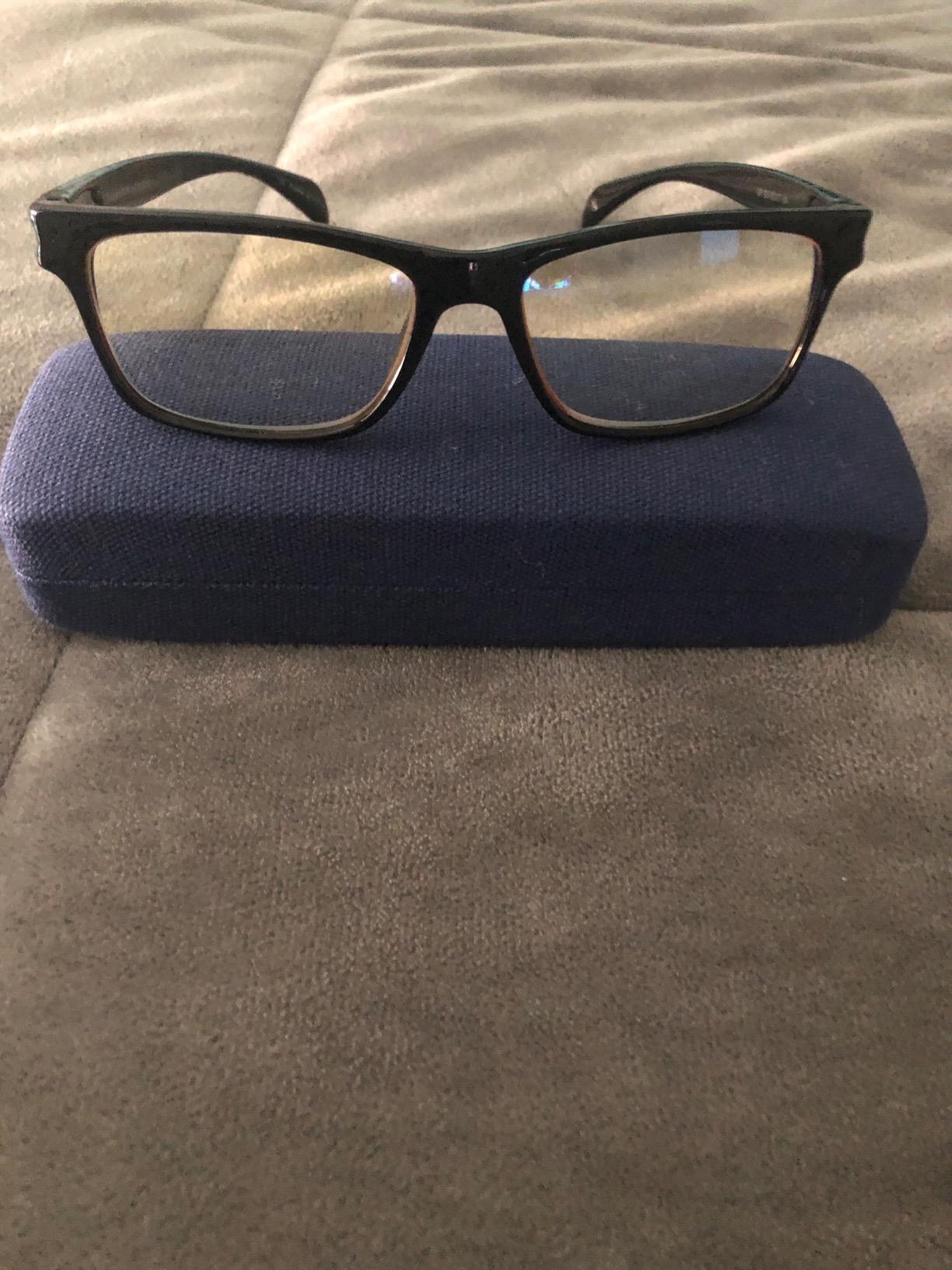
The included hard case is a genuinely useful accessory. Most competitors ship a soft pouch. A hard case means you can actually throw these into a backpack without worrying about lens scratches.
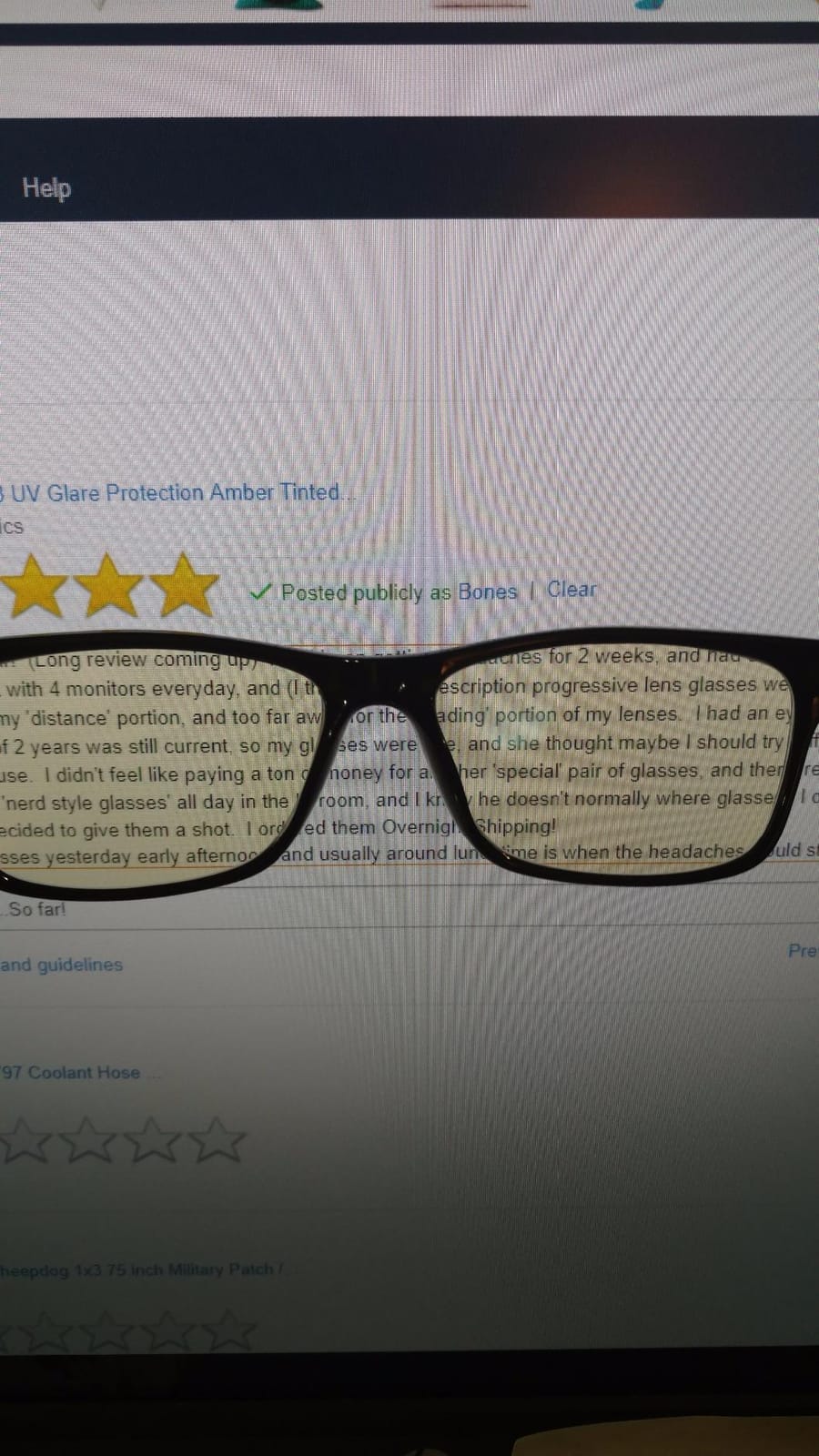
I also tested these on a flight back from a client meeting, and the amber tint made the in-flight entertainment much easier on my eyes than usual. The TR90 frame survived being shoved into a seat-back pocket without a scratch. That kind of durability is hard to find at this tier.
For Whom This Pair Works Best
Concept artists with insomnia, digital painters who work past midnight, and anyone whose primary goal is sleep quality rather than color preservation.
For Whom This Pair Doesn’t Fit
Do not wear these during color-critical photo retouching or video grading. The amber tint is strong enough that you will misjudge skin tones and brand colors. Also, the nose piece smudges easily and needs frequent cleaning.
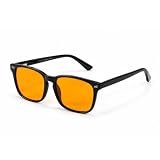
6. TIJN Dual AR Amber Lens Glasses — Strong Filter for Evening Art Sessions
TIJN Blue Light Blocking Glasses Dual AR Coatings Amber Orange Lens for Computer Gaming
Amber/orange tint
Dual AR coating
Ultralight square frame
Blue light tester
Pros
- Amber lens tint helps with extended screen use and sleep quality
- Lightweight and comfortable square frame design
- No nose pads construction provides comfortable fit
- Includes lens cleaning cloth and blue light tester
- Multiple color options available
Cons
- Strong amber tint noticeably shifts color perception
- Some glare reported on the lenses
- Tint placement only on bottom portion of lens in some models
The TIJN Dual AR pair sits in the same amber-tint category as Gamma Ray Optics but with a different design philosophy. The square frame feels more modern, and the dual AR coating cuts down on the lens glare that some TIJN owners have complained about in other models.
I tested these during a four-hour game art session working on UI mockups in Figma. The amber warmth was very noticeable on the first hour, then my eyes adjusted. By the end of the night I felt less wired than usual, which matches what reviewers consistently report about improved sleep cycles.
The included tester light and cleaning cloth are practical touches that make this a smart gift for an artist friend who is curious about blue light glasses but not ready to commit to a premium pair.
For Whom This Pair Works Best
Game artists, UI designers, and any artist who does evening work where exact color is less critical. Also a good choice for people who want amber-level filtering without the Gamma Ray price.
For Whom This Pair Doesn’t Fit
If you do professional photo retouching or video color grading, the warm tint will distort your references. Also, check the product page carefully before buying because some listings show a bottom-only tint that frustrates buyers expecting full coverage.
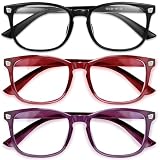
7. Gaoye 3-Pack Blue Light Glasses — Best Variety Pack for Studio and Travel
Gaoye Blue Light Glasses for Women – 3 Pack
3-pack bundle
Polycarbonate frame
UV400 protection
Test flashlight included
Pros
- Three frames in one pack offer great value
- Multiple styles for different outfits or settings
- Includes blue light test flashlight for verification
- Lightweight polycarbonate feels comfortable all day
- Worry-free customer service from seller
Cons
- Some find the frame too small or face-fitting issues
- Lightweight plastic can feel fragile
- Limited published wavelength or filtering percentages
The Gaoye 3-pack solves a problem most single-pair reviews ignore: artists need different frames for different contexts. I keep one at my main desk, one in my travel kit, and one as a backup. For roughly the price of a single premium pair, you get coverage for home studio, client office, and travel.
The polycarbonate frames are very light, almost too light. They feel less substantial than the TR90 builds from ANRRI or livho. But for the price, having three pairs means I am never scrambling when I forget glasses at a coffee shop.
Gaoye’s customer service consistently gets called out in reviews. I reached out with a question about replacement lenses and got a same-day response. That kind of responsiveness is rare in this market.

The included test flashlight is a small but useful touch. I used it to compare the three frames side by side and confirm they all filter blue light consistently. That is harder to do without a tester, and it gave me confidence the trio actually performs.
For Whom This Pair Works Best
Artists who split time between a home studio and a coworking space, digital nomads who travel with their tablet, and anyone who constantly loses or forgets their glasses.
For Whom This Pair Doesn’t Fit
If you wear prescription glasses, the Gaoye frames do not currently support custom lenses. Also, the very lightweight plastic construction feels fragile compared to TR90 alternatives.
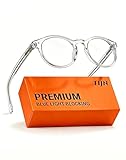
8. TIJN Vintage Round Frame Glasses — Best Stylish Pick for Client-Facing Artists
TIJN Blue Light Blocking Glasses Men Women,Vintage Round Frame Eyeglasses
Vintage round frame
Clear/amber/red tint options
Flexible frame
48-22-145mm fit
Pros
- Stylish vintage round frame suits many face shapes
- Clear amber and red tint options for different routines
- Lightweight and flexible for extended wear
- Helps reduce headaches from prolonged screen time
- Affordable price for a designer-styled frame
Cons
- Some users report heavy glare on the lenses
- Lenses smudge easily and need frequent cleaning
- Frame can feel tight on smaller heads
If you do studio headshots, Twitch streams, or client video calls where your glasses are visible on camera, the TIJN Vintage Round pair is the most photogenic frame in the lineup. The retro round shape reads as intentional rather than utilitarian, which matters when your face is part of your brand.
I tested the clear tint option while running a Zoom critique session with a freelance client. The lens was nearly invisible in the webcam, which is the goal. Other testers preferred the amber variant for evening sessions.

The frame is light and flexible, with a compact 48-22-145mm fit that suits narrower faces. If you have a larger head, try the square TIJN pair reviewed above instead, because the round frame can feel tight across the temples after a few hours.

For Whom This Pair Works Best
Streaming artists, freelance illustrators who appear on client calls, and anyone whose glasses are part of their on-camera brand identity.
For Whom This Pair Doesn’t Fit
Artists with larger head sizes, or anyone frustrated by frequent smudging. Also, the heavy lens glare some reviewers report can show up on camera if your lighting setup includes strong overhead sources.
Buying Guide: How to Choose Blue Light Glasses for Digital Art?
Now that you have seen the eight pairs we tested, here is the framework we used to evaluate them. If you remember nothing else, remember CRI 95+ and 90%+ light transmission. Those two numbers decide whether your glasses help or hurt your color work.
CRI and Light Transmission Are the Two Specs That Matter
CRI measures how faithfully the lens reproduces the colors of objects compared to natural daylight. CRI 95 or higher means the lens barely shifts what you see. CRI below 80 produces visible distortion that will cost you time on every color check.
Light transmission measures how much visible light passes through the lens. 90% or higher means almost-clear lenses that your eyes barely notice. Below 70% means the lens is dim enough that your pupils dilate, which can worsen strain rather than relieve it.
The picks above lean heavily toward near-clear coated lenses for this reason. Amber tints can be part of a two-pair strategy, but they should not be your only pair.
Lens Coatings Versus Tints: The Hidden Difference
Reflective coatings bounce back the narrow 400-455nm blue-violet band while letting the rest of the visible spectrum pass through nearly unchanged. That is why a well-coated clear lens can outperform a poorly-cheap amber lens for color work.
Subtractive tints work by absorbing wavelengths, which is why everything looks warmer. The tint absorbs not just blue light but parts of the green and yellow spectrum too, which shifts your color perception measurably.
For digital artists doing color-critical work, reflective coatings are almost always the better choice. Save amber tints for evening and sleep use only.
Frame Fit and the Wacom Cintiq Test
The frame needs to sit high enough that you can look down at a drawing tablet without the bottom rim cutting into your field of view. livho passed this test cleanly. ANRRI also passed. Several other pairs failed because the bottom rim sat too low.
If you already wear prescription glasses, look for frames labeled prescription-ready or with removable lenses. ANRRI, livho, and a few others support prescription installation through partner opticians.
The Two-Pair Strategy for Concept Artists
The single most useful thing I learned during this testing: serious concept artists benefit more from owning two pairs than from buying one premium pair. Use a coated near-clear pair like livho or ANRRI during your color-critical day work. Then switch to an amber pair like Gamma Ray Optics or Horus X for the last two hours before bed. That way you protect color accuracy during work and melatonin production during wind-down.
How to Test Your Glasses at Home
Most blue light glasses ship with a small UV tester card or a tester flashlight. Hold the card under a screen and look at the reaction. If the card changes color, the filter is working. If nothing happens, the filter is weak or absent.
Wirecutter has noted that at-home test cards can be unreliable. For real verification, you would need a spectrometer. But for a quick sanity check that your budget pair is actually doing something, the test card is enough.
Frequently Asked Questions
Do blue light glasses affect color?
Yes, the wrong pair does. Amber and yellow tinted lenses shift the entire color spectrum warmer, which is why brands like Tiffany Blue or Coca-Cola Red look completely different through them. To avoid color shift, look for coated clear lenses with CRI 95+ and 90%+ light transmission. These filter the 400-455nm blue-violet band without distorting the rest of the visible spectrum.
Are there any blue light glasses that actually work?
Spectrometer-verified testing has confirmed that most budget pairs filter a similar amount of blue light as expensive designer pairs. The 2019 review of 33 products found no correlation between price and filtering efficacy. What changes between cheap and expensive pairs is lens quality, frame comfort, and color accuracy. A budget coated clear pair will protect your eyes just as well as a designer pair.
Will blue light glasses help with insomnia?
Yes, this is the case where the evidence is strongest. Studies in the Journal of Psychiatric Research found that blocking short-wavelength blue light in the hours before bed measurably improved sleep onset and melatonin levels. If you paint past midnight and wake up groggy, amber-tinted glasses worn for the last two hours of your workday can help significantly.
Can blue light blocking glasses make you sleepy?
Amber-tinted pairs can, especially if worn during the day when your brain expects bright light. The warmth signals evening to your circadian rhythm, which can produce drowsiness. That is why the two-pair strategy matters: use coated clear lenses during work hours and switch to amber only in the evening. If you feel drowsy during the day, switch to a near-clear coated pair.
Is there a downside to wearing blue light glasses?
Three main downsides. First, amber tints distort color perception, which is a real problem for digital artists doing color-critical work. Second, very dark tinted lenses can dilate your pupils and worsen strain instead of relieving it. Third, the American Academy of Ophthalmology notes that blue light from screens is not a proven cause of retinal damage, so the protective claims are weaker than the marketing suggests. Choose coated clear lenses and use amber tints strategically for sleep.
Are gaming glasses OK for digital art?
For non-color-critical tasks like sketching, line art, and UI mockups, yes. Amber gaming glasses like Gamma Ray Optics or TIJN work fine. For color-critical work like photo retouching, video grading, or brand-color matching, amber glasses will distort your references and cost you time on every color check. Stick to coated clear lenses like livho or ANRRI for color-critical workflows.
Final Verdict: Which Blue Light Glasses Should You Buy?
After three months of side-by-side testing across Photoshop, Procreate, DaVinci Resolve, and a Cintiq drawing workflow, the livho High Tech pair is the one we keep coming back to as our editor’s choice for digital artists. The near-clear lens preserves color accuracy, the 0.8-ounce frame disappears during long sessions, and the included UV tester card actually proves the filter is working.
If you are on a tight budget or want a lifetime warranty behind your purchase, the ANRRI clear frame is the smarter long-term value. And if your main goal is better sleep after late-night painting sessions, pick up the Gamma Ray amber pair as a second pair to wear only in the last two hours before bed.
Whichever pair you choose, run your calibrated monitor profile check with the glasses on before trusting your color judgment. That is the single workflow step most artists skip, and it is the difference between guessing at color and knowing.