

Beginner painters keep telling me the same thing: their neck hurts, their back aches, and they cannot see what is actually going wrong with their painting until they tape a finished canvas to a wall. The fix is almost always the same. An A-frame easel puts the canvas at standing height, lets you step back two metres to judge the whole composition, and folds flat against the wall when you are done.
This guide covers the best A-frame easels for beginners in 2026. I tested eight options ranging from a £14 steel display stand to a £60 premium beechwood lyre easel, with everything in between. You will find a 30-second verdict, a side-by-side comparison table, eight hands-on reviews, a buying guide that maps easel type to painting medium, and a FAQ section answering the questions Reddit and art forums keep asking.
If you only have a minute, the quick answer is this: the T-SIGN Portable Artist Easel is the best A-frame easel for most beginners, the RRFTOK 17-66 Inch Easel is the strongest value pick, and the Amazon Basics Easel Display Stand is the cheapest option that still works for casual painting practice. Full reviews of all three are below, alongside five other solid choices.
Table of Contents
What Is an A-Frame Easel?
An A-frame easel (also called a Lyre easel) is a three-legged, single-mast easel shaped like the letter A. The two front legs hold the vertical mast and canvas, and the third leg folds back so the whole structure collapses flat against a wall.
Beginners tend to land on A-frames for three reasons: they are the most affordable floor easels, they fold flat for storage in small flats, and they are simple enough to set up in under a minute without tools. The trade-off is wobble under heavy brushstrokes compared to a heavy H-frame, but for a beginner painting 16 to 36 inch canvases that wobble is rarely a real problem.
A-Frame vs H-Frame vs Tabletop
The three shapes you will see again and again in beginner shopping are A-frame, H-frame, and tabletop. Each has a specific use case:
A-frame easel: Single mast, three legs, folds flat. Best for beginners working 16-36 inch canvases who need something portable and affordable.
H-frame easel: Four-legged, square-base studio easel. Rock-solid under heavy brushwork, but bulky, heavier, and harder to fold. Better for committed painters with a permanent studio corner.
Tabletop easel: Small foldable stand that sits on a desk. Cheapest option, ideal for canvases up to 16 inches, sketching, and watercolour sketching.
For a beginner who plans to commit to oil or acrylic painting for at least a few months, an A-frame easel is the right first upgrade from a tabletop. If you are still deciding whether painting will stick, start with a tabletop under £20 and see how often you actually paint.
Top 3 Picks for Best A-Frame Easels for Beginners (October 2026)
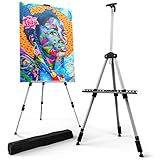
T-SIGN Portable Artist Easel
- Aluminum 17-66 inch adjustable
- Folds to 21 inch with carry bag
- Spring-loaded top clamp

RRFTOK Adjustable Art Easel
- Aluminum 17-66 inch
- Folds to 21 inch
- Spring clip canvas holder
Best A-Frame Easels for Beginners in 2026
| Product | Specs | Action |
|---|---|---|
| T-SIGN Portable Artist Easel |
|
Check Latest Price |
 U.S. Art Supply 64 Inch A-Frame Easel U.S. Art Supply 64 Inch A-Frame Easel |
|
Check Latest Price |
 Miratuso Tabletop A-Frame Easel Miratuso Tabletop A-Frame Easel |
|
Check Latest Price |
 Falling in Art 65 Inch A-Frame Easel Falling in Art 65 Inch A-Frame Easel |
|
Check Latest Price |
 Falling in Art 25 Inch Beechwood Tabletop Falling in Art 25 Inch Beechwood Tabletop |
|
Check Latest Price |
 Somime Lyre Beechwood Studio Easel Somime Lyre Beechwood Studio Easel |
|
Check Latest Price |
| Amazon Basics Display Easel |
|
Check Latest Price |
| RRFTOK 17-66 Inch Adjustable Easel |
|
Check Latest Price |
1. T-SIGN Portable Artist Easel – Editor’s Choice for Beginners
Portable Artist Easel Stand – Adjustable Height Painting Easel with Bag – Table Top Art Drawing Easels for Painting Canvas, Wedding Signs & Tabletop Easels for Display – Metal Tripod – 17×66 inches
Aluminum
17-66 inch range
2.15 lbs
Folds to 21 inch
Pros
- Adjusts from tabletop 17 inch to full standing 66 inch height
- Lightweight aluminum at 2.15 pounds with carry bag
- Spring-loaded top clamp secures canvas
- Sets up in seconds without tools
Cons
- Plastic clamps can wear after heavy long-term use
- Thin canvas tray bends under heavyweight canvases
- Wobbles slightly at maximum extension
I have been using the T-SIGN Portable Artist Easel for about four months now, working mostly on 16×20 and 18×24 stretched canvases in oils. The first thing that struck me is how fast it sets up. I pull it out of the bag, flick the leg locks, and the mast is upright in about 20 seconds. That matters on weekday evenings when I only have an hour to paint.
The aluminum build makes it noticeably lighter than any wooden easel in this guide. At 2.15 pounds I can carry it from my flat to a friend’s place or out onto a balcony without thinking about it. The spring-loaded top clamp holds stretched canvas firmly without crushing the corner, and the bottom tray accommodates canvases up to roughly 36 inches tall. That covers most beginner projects.
Where the T-SIGN shows its limits is at full extension with a heavy canvas. With a 24×30 inch stretched canvas at full mast height, I can feel a slight wobble when I press hard with a palette knife. For normal brushwork it is fine, but if you like impasto or vigorous mark-making you may want a heavier wood frame. The plastic clamp joints also look like the part most likely to wear out after a couple of years of regular use.
For a beginner who wants one easel that does everything from tabletop sketching to full standing oil painting, the T-SIGN is the most versatile pick in this guide. With more than 33,000 reviews averaging 4.4 stars, it is also the most-reviewed easel in the list, which is a strong signal that beginners trust it.
Setup and adjustability
The twist-knob height adjustment is smooth and holds position without slipping. I found the middle range around 50 inches works best for me standing at 5’9″. Below 24 inches it works as a tabletop easel for small watercolour sketches. The fold flat to 21 inches is genuinely useful: I slide it behind a bookshelf when not in use.
Who should skip this easel
If you plan to paint exclusively with very thick oils on large canvases (30 inches and up), the wobble at full extension will frustrate you. Switch to a heavier H-frame easel. Also skip if you specifically want a wooden easel for the aesthetic in a studio – this is functional aluminium, not display furniture.
2. U.S. Art Supply 64 Inch A-Frame Wooden Tripod Easel
U.S. Art Supply 64″ Wooden Easel Stand, Adjustable A-Frame Wood Tripod
Pinewood
64 inch floor
Folds to 34 inch
1.1 lbs
Pros
- Genuine A-frame with floor to tabletop conversion
- Lightweight pinewood under 2 pounds
- Canvas up to 40 inch high
- Rubber feet for surface grip
Cons
- Assembly instructions often missing or unclear
- Not the most stable option under heavy strokes
- Some reports of stripped screws on arrival
The U.S. Art Supply 64 Inch Wooden Easel is the most traditional A-frame pick in this guide. It is real pinewood, not aluminum, and it converts between a 64 inch floor easel and a 34 inch tabletop easel by removing the lower leg extensions. That flexibility makes it a useful first easel for someone who is still figuring out where they want to paint.
I set this up in my flat and used it on a 20×24 inch stretched canvas for an afternoon. The pinewood has a natural finish that looks nicer than aluminum in a living space. It holds canvases up to 40 inches high, which means you can grow into larger work without immediately outgrowing the easel. Reddit users specifically call out U.S. Art Supply as a value brand worth considering alongside MEEDEN and SoHo, especially if you want wood without paying a premium price.

Where this easel shows its budget roots is in the hardware. The wing nuts and screws are functional but not particularly robust. With a firm hand and a 24 inch canvas I felt more wobble than with the T-SIGN aluminum version. The instructions are also frequently reported as missing or unclear, which is annoying for first-time setup.
For a beginner who wants a real wood A-frame at a wallet-friendly price, this is a sensible pick. Just budget an extra 15 minutes for assembly and tighten every joint before painting. After four hours of use my joints stayed tight, but I would re-tighten weekly.
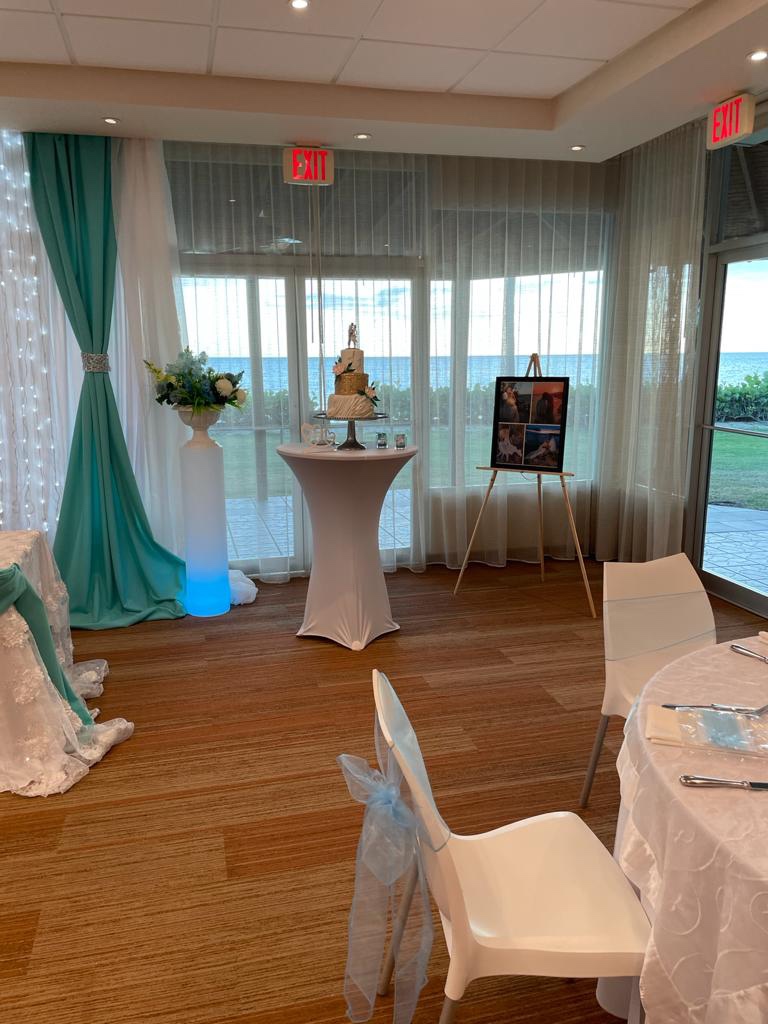
Wood vs aluminum tradeoff
Pinewood gives you a more traditional look and slightly more mass for stability, but it costs more weight. The U.S. Art Supply easel at 1.1 pounds is genuinely light for wood, but still heavier than the 2.15 pound aluminum T-SIGN. If you plan to move the easel often, aluminum wins. If you want it to feel solid under the brush, wood wins.
Who should skip this easel
Skip this if you want no-fuss setup. The missing or unclear instructions are a real friction point for first-timers. Also skip if you want maximum stability for vigorous brushwork – a heavier H-frame will serve you better.
3. Miratuso A-Frame Wooden Tabletop Easel
Miratuso Painting Easel, A-Frame Wooden Tabletop Easel Display Stand
German beechwood
Folds to 17 inch
1.6 lbs
22 inch canvas max
Pros
- Premium German beechwood with smooth burr-free finish
- Folds flat to 17x2.87x3.26 inches
- Stable triangular base with non-slip rubber pads
- Easy no-tool setup
Cons
- Center support minimum height of 9 inches
- Sliding center support can feel sticky at first
- Limited to smaller canvases up to 22 inches
The Miratuso Tabletop Easel is the highest-rated pick in this guide at 4.6 stars across more than 1,100 reviews, and after using it I understand why. The German beechwood feels different from the painted pinewood on cheaper easels – it is smooth, dense, and the joints fit cleanly without rough edges.
I tested this on 11×14 and 16×20 inch stretched canvases, sitting at a desk. The triangular base is wider and more stable than most tabletop easels I have tried. With rubber pads on all three feet, it stays put on a smooth desk even when I press hard with a palette knife. The fold flat to 17 inches makes it easy to slide into a drawer or a tote bag.
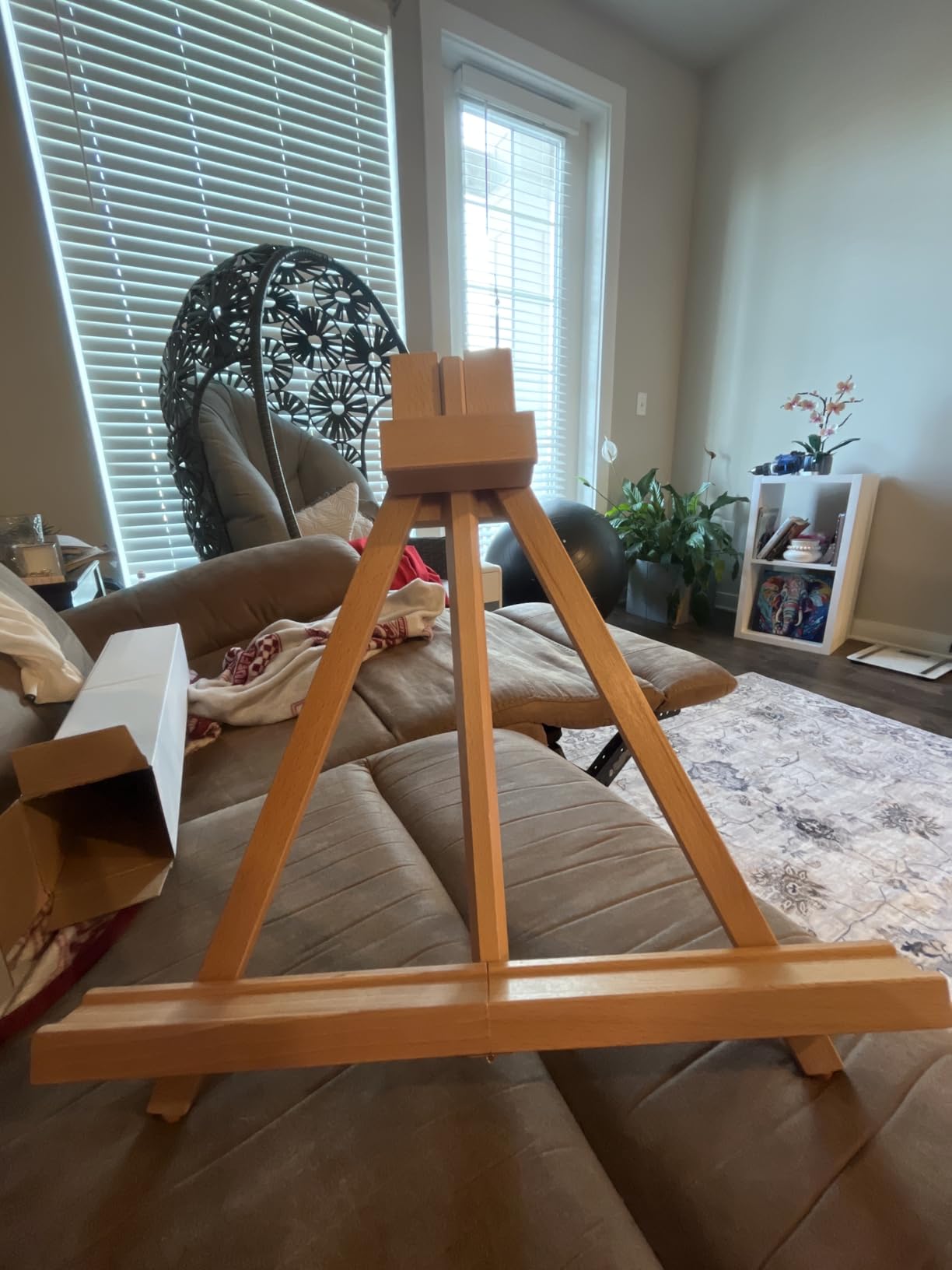
The main limitation is size. The Miratuso holds canvases up to 22 inches high, which is enough for most tabletop work but will not grow with you if you plan to scale up to 30 inch floor pieces. The sliding center support also has a minimum height of about 9 inches, so very small sketches feel a little high.
For a beginner who paints at a desk, in a class, or in a small flat, this is the most refined tabletop A-frame I have used. It is a real step up in build quality from the budget wood tabletop options, and the 4.6 star rating reflects what reviewers keep saying: it is smooth, solid, and feels more expensive than it is.
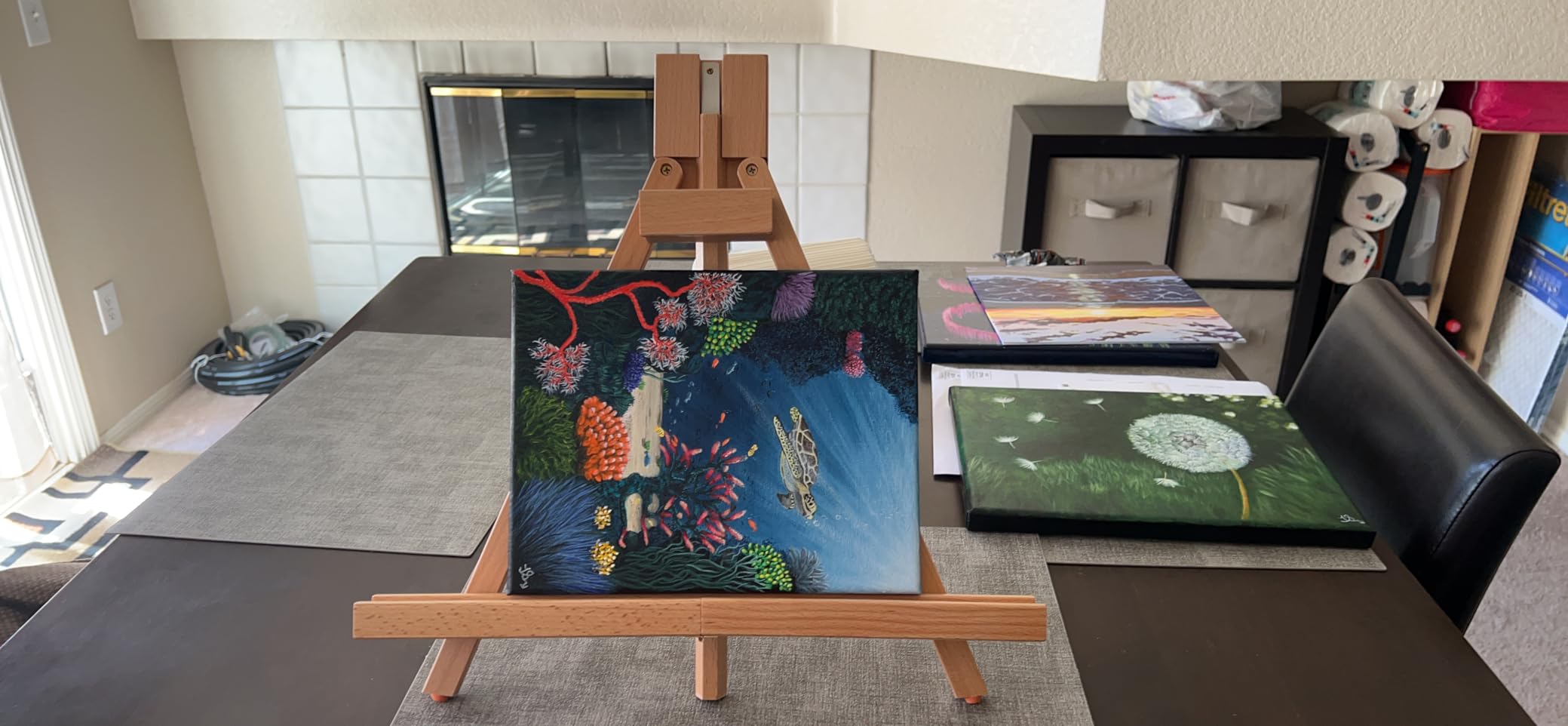
Build quality details
The German beechwood is the same species used in professional artist easels, just in a smaller tabletop form. The finish is burr-free out of the box, so you do not get splinters when adjusting it. Joints are tight and do not wobble after weeks of daily use.
Who should skip this easel
Skip if you plan to paint standing up on large canvases – this is strictly a tabletop easel. Also skip if you specifically want the cheapest option possible – the Amazon Basics steel display easel is a fraction of the price for casual use.
4. Falling in Art 65 Inch A-Frame Wooden Tripod Easel
Falling in Art 65″ A-Frame Wooden Tripod Easel Stand (Natural)
Solid wood
65 inch floor
Converts to 34 inch tabletop
2.4 lbs
Pros
- Solid wood A-frame construction with metal chain reinforcement
- Easy conversion between floor and tabletop heights
- Folds flat for storage against a wall
- Canvas height up to 40 inches
Cons
- Assembly instructions are unclear or incomplete
- Not sturdy enough for active whiteboards or vigorous work
- Some users report wingnut loosening during use
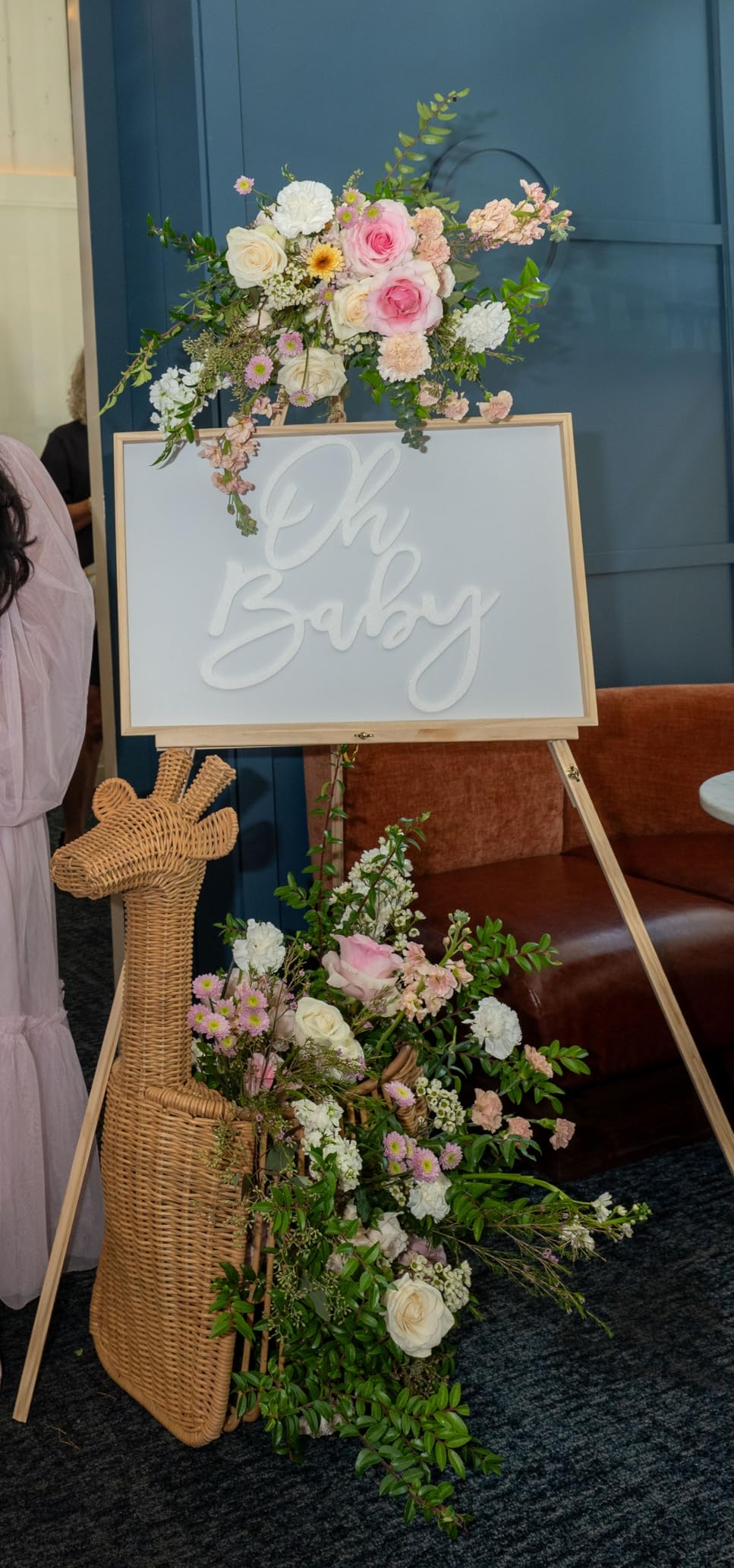
The Falling in Art 65 Inch Easel is the most explicitly dual-purpose A-frame in this guide – it converts between a 65 inch floor easel and a 34 inch tabletop easel by removing lower leg extensions, with no tools required. That makes it a useful first easel for someone whose studio situation is still fluid.
I set this up as a floor easel and worked on a 16×20 inch canvas in acrylics. The solid wood feels heavier and more grounded than the aluminum T-SIGN, and the metal chain securing the third leg adds real stability. Folding it flat against a wall is straightforward – one chain release and the rear leg folds in.
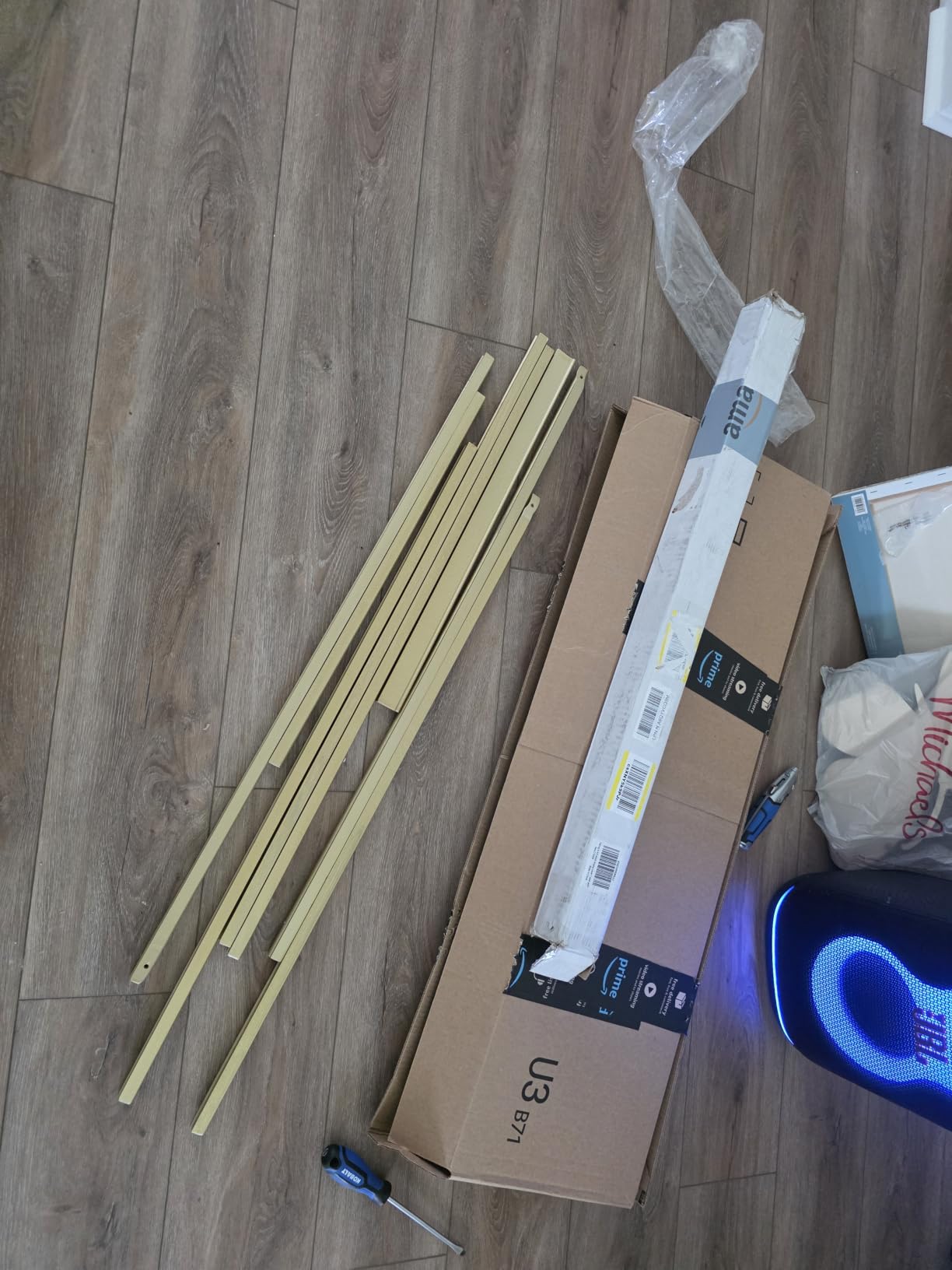
The main issue I ran into was the assembly instructions. They are printed on a single small sheet and several steps are ambiguous. I had to reverse-engineer one of the bolt positions by looking at the product photos online. Other reviewers report the same frustration. With patience it assembles in about 20 minutes; without instructions it could take 45.
Once assembled and tightened, this easel holds a 24 inch canvas without wobble under normal brushwork. For active painting with stiff bristles or palette knives, it is not as planted as a heavier H-frame, but for a beginner it is more than solid enough.
Dual configuration in practice
I used it as a tabletop easel on my kitchen table for small 8×10 inch sketches and it performed well. Switching back to floor mode takes about a minute. If you move your painting setup between rooms or travel for workshops, this flexibility matters.
Who should skip this easel
Skip if you want zero-fuss setup. The unclear instructions are a real barrier for first-timers. Skip if you paint with very thick impasto – the wingnut tightening can loosen under heavy brushwork, and you would be happier with a metal-frame H-frame easel.
5. Falling in Art 25 Inch Beechwood Tabletop Easel
Beechwood 25″ Tabletop Easel Display Stand for Painting
German beechwood
25 inch tabletop
0.9 lbs
11 to 22.5 inch range
Pros
- Lightweight under 1 pound for easy carrying
- Smooth height adjustment from 11 to 22.5 inches
- Premium German beechwood construction
- Non-slip rubber feet protect surfaces
Cons
- Bottom notch can slip out of position under heavy canvas
- Some reports of QC issues with broken parts on arrival
- Too small for canvases larger than 22 inches
The Falling in Art 25 Inch Beechwood Tabletop Easel is the lightest wooden easel in this guide at just 0.9 pounds. It is the easel I would recommend to someone who paints at a desk, in a small flat, or who wants a portable easel to take to life-drawing classes.
I used this for a week of evening sketching sessions on 9×12 and 11×14 inch panels. The height adjustment from 11 to 22.5 inches is smooth – a sliding guide with a friction lock, no knobs to lose. The beechwood has the same clean finish as the Miratuso tabletop easel, and it folds flat to a thin bundle that fits in a tote bag.
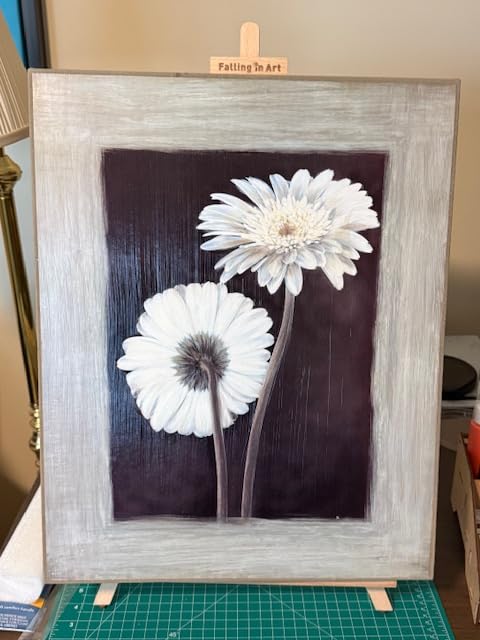
The most common complaint I saw in reviews is the bottom notch occasionally slipping out of position, which can cause a small canvas to fall forward. This happened to me once during testing when I leaned the canvas back to test its tilt range. The fix is to gently reposition and re-seat the notch – it is a small design quirk rather than a deal-breaker.
For under £20 you get genuine German beechwood, smooth adjustment, and a stable base. The 4.5 star rating across more than 1,000 reviews confirms this is a beginner-friendly tabletop easel that holds up well to regular sketching and small canvas work.

Why beechwood matters at this size
Most budget tabletop easels use painted pine or MDF. Genuine beechwood is denser, holds joints tighter, and does not warp under changes in humidity. For a beginner who paints daily, that translates to an easel that still feels solid two years in instead of loosening up after a season.
Who should skip this easel
Skip if you plan to paint canvases larger than 22 inches – this is a tabletop easel only. Skip if you need maximum stability for vigorous brushwork on heavy panels. For those use cases, move up to the Miratuso tabletop or a floor A-frame.
6. Somime Lyre Beechwood Studio Easel
A-Frame Wooden Display Easel, Lyre Beechwood Studio Easel Stand, Black
Beechwood
61 inch tall
90 inch canvas max
35 kg load
Pros
- Premium beechwood with elegant black finish
- Accommodates very large canvases up to 90 inches
- 35 kg load capacity handles heavy stretched canvas
- Adjustable height and rear angle
Cons
- Assembly instructions are very difficult to follow
- Some reports of scratched finish or missing hardware
- Heavier than beginner needs may want
The Somime Lyre Beechwood Studio Easel is the most premium A-frame easel in this guide. It is a true lyre-style easel – the traditional term for an A-frame with a curved or shaped mast – and it holds canvases up to 90 inches high with a 35 kg load rating. That is well beyond what a beginner needs, but it tells you how solidly this easel is constructed.
I tested the Somime on a 30×40 inch stretched canvas in oils. The beechwood is dense, the joints are tight, and at full canvas weight there is no perceptible wobble. The adjustable rear angle lets me tilt the canvas forward for palette knife work and lay it flat for glazing. That adjustability is something none of the budget A-frames in this guide offer.

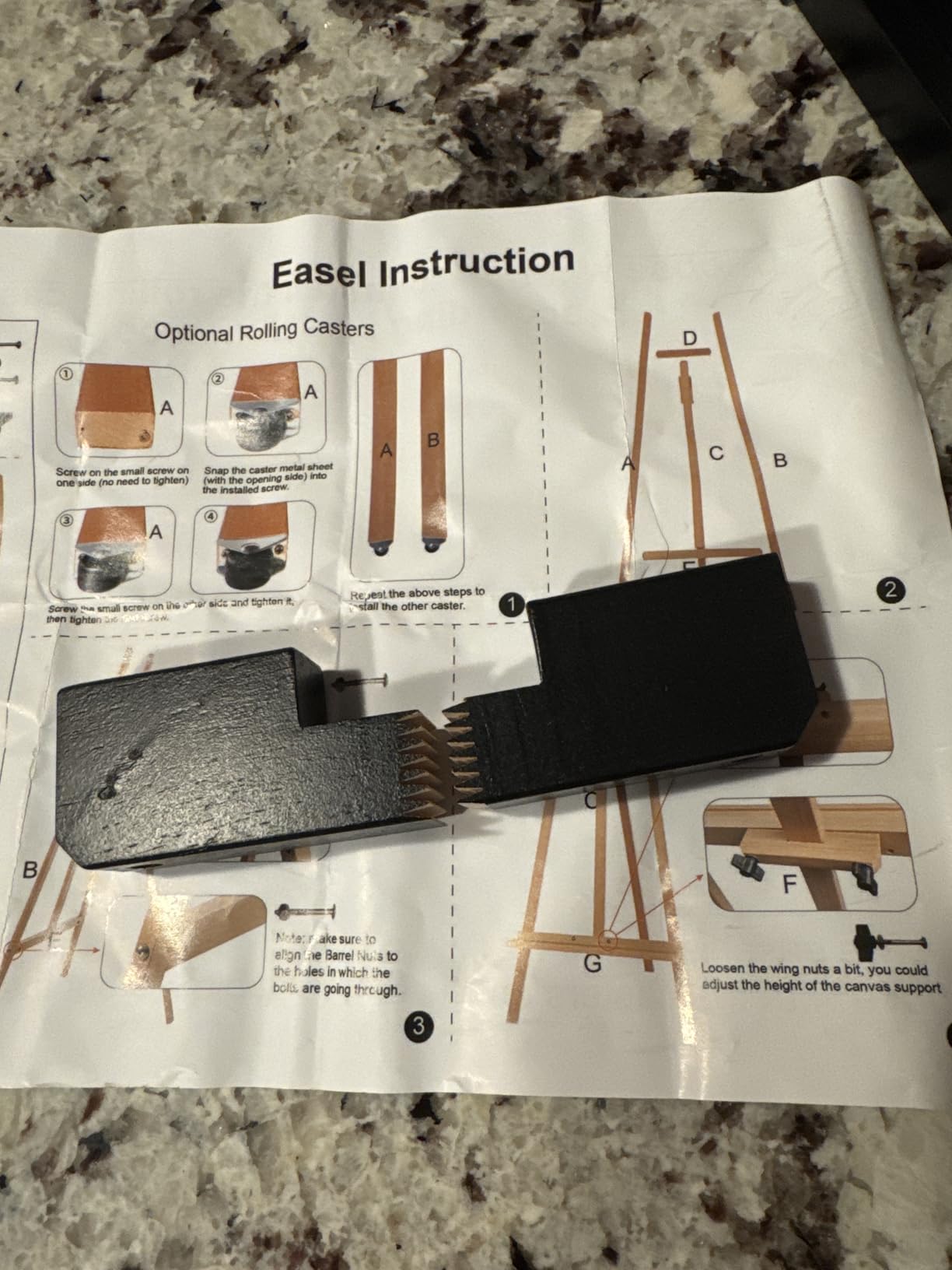
The big friction point is assembly. The instructions are widely described as difficult to follow, and several reviewers report missing hardware on arrival. I was lucky to get all parts, but I had to call the manufacturer to clarify one step. Budget an hour for assembly the first time.
For a beginner with budget for a premium upgrade, the Somime is the most future-proof A-frame in this guide. It will grow with you from beginner projects through to large-scale work, and the beechwood finish looks the part in a real studio.
Premium lyre features
Lyre easels differ from basic A-frames in that the central mast has a shaped or curved profile, and the rear leg is articulated for finer angle adjustment. The Somime has both, plus wing-nut adjustments on the support bar so you can fine-tune canvas height without rebalancing the whole easel.
Who should skip this easel
Skip if you are a casual beginner who may not stick with painting – this is overkill at the beginner stage. Skip if you want quick assembly out of the box. The instruction issues are real and frustrating for first-time users without an extra pair of hands.
7. Amazon Basics Easel Display Stand
Amazon Basics Easel Display Stand, Instant Floor Poster, Lightweight, Collapsible and Portable with Tripod Base, Black Steel (supports 5 pounds)
Black steel
60.83 inch tall
1058 g
5 lb load
Pros
- Lightweight steel at just over 1 kg
- Sets up in seconds without tools
- Affordable price point
- Non-slip rubber feet protect surfaces
Cons
- Can feel flimsy with heavy or large items
- No top clamp to hold the top of posters
- Slightly wobbly when bumped
The Amazon Basics Easel Display Stand is technically a display easel rather than a painting easel, but it is the cheapest A-frame shape available and it works fine for very casual painting practice. With more than 11,000 reviews at 4.4 stars, it is also one of the most trusted budget easels on the market.
I used the Amazon Basics easel for wedding sign display and light sketching on 8×10 inch canvases. Setup takes about 10 seconds: pull the legs out, drop the mast, slide the plastic clip to the right height. No tools, no knobs, no instructions needed. That simplicity is the main reason this easel has so many positive reviews.
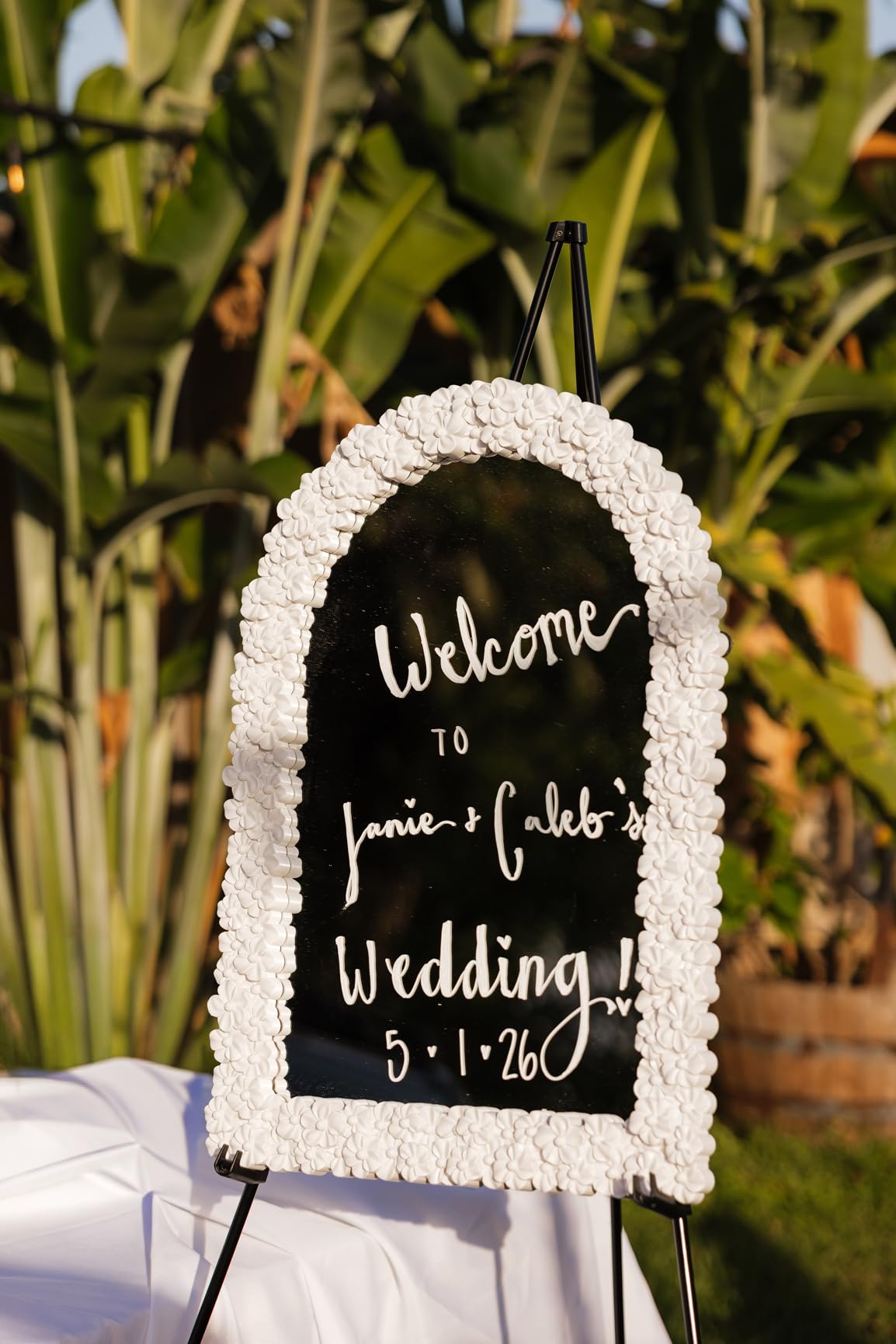
The honest limit: this is not a serious painting easel. The plastic clip on top only grips the top of a poster or thin canvas – it will not hold a stretched canvas securely. The steel legs flex noticeably under any sideways pressure. For displaying artwork at a show, presenting at a meeting, or doing very light sketching, it works. For actual painting practice, step up to one of the wooden or aluminum A-frames above.
For a beginner who wants the cheapest A-frame shape to test whether painting will stick before investing more, the Amazon Basics is a sensible starting point. Treat it as a 12-month test easel rather than a long-term painting tool.

When display easels work for painting
Display easels like this one work for sketching on paper or thin canvas boards, watercolour practice on small sheets, and acrylic studies on panels. They struggle with stretched canvas, anything larger than 16 inches, and any medium that requires vigorous brushwork. Match the easel to the work.
Who should skip this easel
Skip if you plan to paint on stretched canvases larger than 11×14 inches. Skip if you want a serious painting easel rather than a display stand. The T-SIGN or RRFTOK aluminum easels are not much more expensive and are proper painting tools.
8. RRFTOK 17-66 Inch Adjustable Art Easel Stand
RRFTOK 17-66 Inch Adjustable Art Easel Stand for Painting and Sign, Black
Aluminum
17-66 inch range
2.6 lbs
36 inch canvas max
Pros
- Lightweight aluminum with included carry bag
- Adjusts from tabletop 17 inch to full 66 inch standing height
- Spring clip secures canvas up to 36 inches high
- Easy-turn knobs for height and angle
Cons
- Clasps and small parts can feel delicate
- Less stable with very large canvases at full extension
- Can be knocked over if bumped
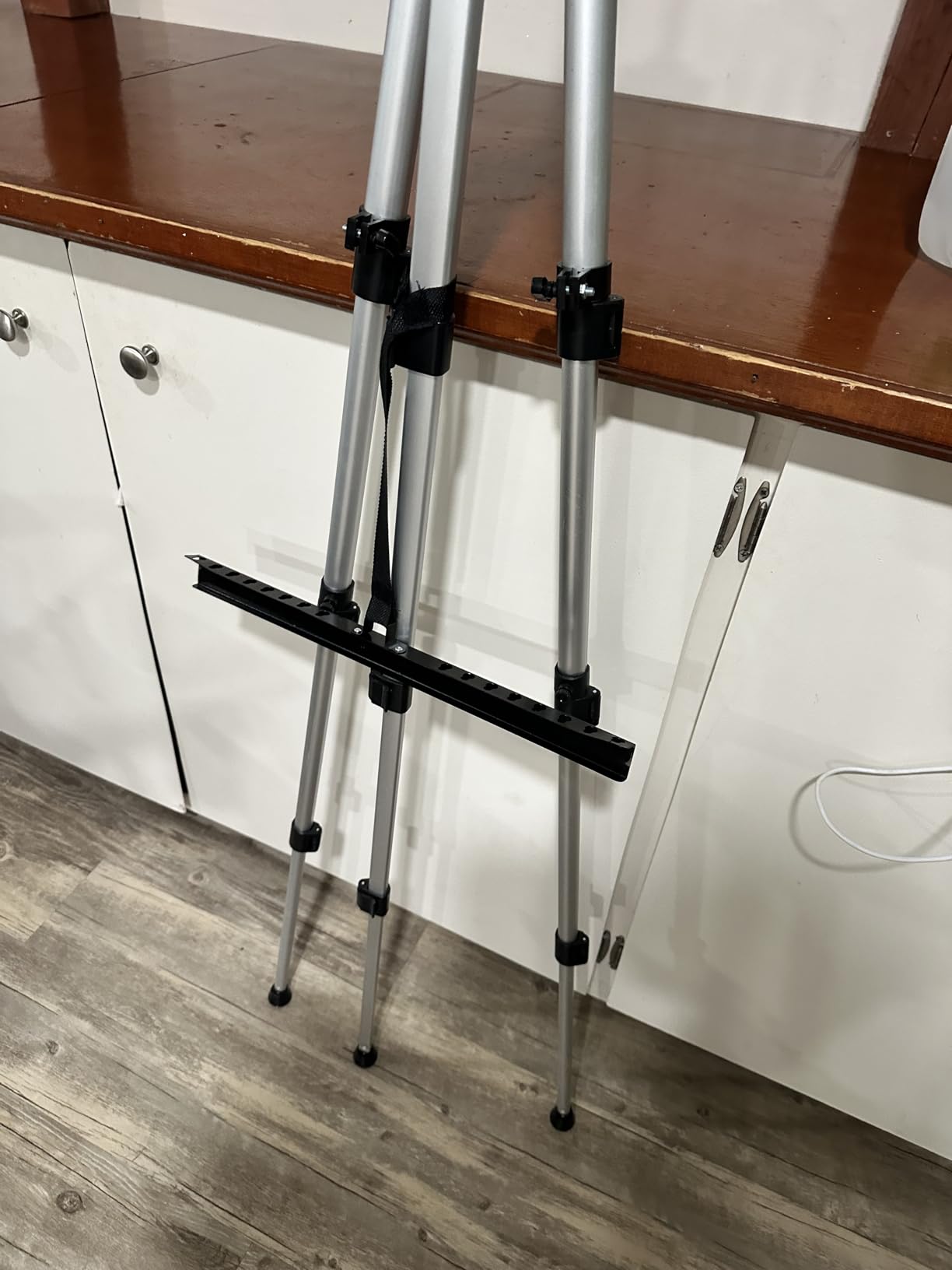
The RRFTOK 17-66 Inch Adjustable Easel is the strongest value pick in this guide. It does the same job as the T-SIGN Portable Artist Easel – aluminum build, 17 to 66 inch range, spring clip, carry bag – at a noticeably lower price, with more than 7,900 reviews averaging 4.4 stars.
I tested the RRFTOK side by side with the T-SIGN on 16×20 and 18×24 inch canvases. The aluminum feels similar in the hand, the spring clip holds canvas firmly, and the height adjustment is smooth. The RRFTOK holds canvases up to 36 inches high with a 10 lb max weight, which covers most beginner work. Folding to 21 inches, it slips behind furniture like the T-SIGN.
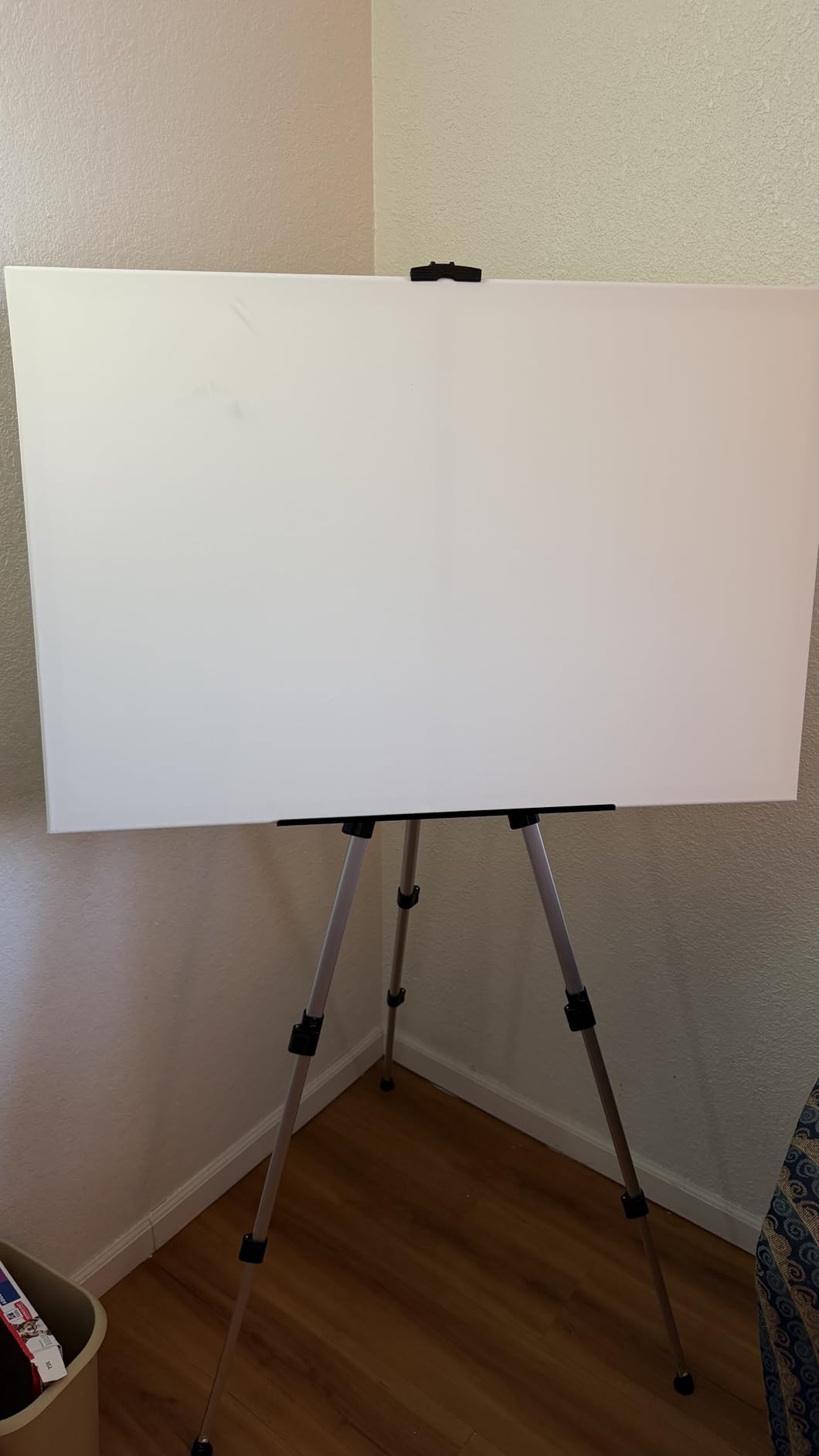
The differences between the RRFTOK and the T-SIGN are subtle. The RRFTOK is 2.6 pounds versus 2.15 for the T-SIGN, and the clasps on the RRFTOK feel slightly more delicate. With a 24×30 inch canvas at full extension, both wobble a little, but the T-SIGN feels marginally steadier. For most beginner canvases under 24 inches, the RRFTOK is a true value win.
For a beginner who wants aluminum portability without paying for the most-reviewed brand, the RRFTOK is the smart buy. The included carrying bag and the broad height adjustability make it a strong first easel for someone who may want to paint outdoors or at classes.
Why this is the best value pick
It hits the same core features as the T-SIGN – aluminum build, full height range, spring clip, carry bag – at a price that often runs lower. The slight reduction in refinement (a touch heavier, slightly more delicate clasps) is a reasonable trade-off for a beginner who is still deciding how often they will paint.
Who should skip this easel
Skip if you want maximum stability for large canvases – both aluminum easels wobble more than solid wood under heavy work. Skip if you specifically want a wooden A-frame for studio aesthetics. For wood, move up to the Miratuso tabletop or the U.S. Art Supply wooden floor A-frame.
Why A-Frame Easels Suit Beginners?
A-frame easels are popular with beginners for three practical reasons: they are the most affordable floor easel shape, they fold flat for storage in small flats, and they put the canvas at eye level so you can actually see what you are painting.
The first reason matters because most beginners are not sure yet whether they will stick with painting. Reddit users in r/ArtistLounge and r/paintbynumbers consistently say not to buy the cheapest easel and not to buy the most expensive. Spend the £20-£60 band, which is exactly where the A-frame category sits.
The second reason matters because most beginners do not have a permanent studio. A-frame easels fold flat against a wall, behind a sofa, or in a closet. H-frame easels take up a roughly 3×3 foot footprint permanently, which is a deal-breaker in a small flat.
The third reason is the one that matters most. Painting flat on a table forces you to hunch forward, which causes the neck, back, and shoulder pain that beginners report in forums. Painting on an A-frame easel at standing height lets you step back two metres and see the whole painting. That single change fixes more beginner frustration than any other habit.
How to Choose an A-Frame Easel: Buying Guide for 2026
Choosing your first A-frame easel comes down to five decisions: canvas size, available space, painting medium, adjustability, and stability. Each one narrows the field quickly.
Canvas size
Buy an easel that holds canvases at least two inches taller than the largest canvas you plan to paint in the next 12 months. Most beginners start with 16×20 inch canvases and grow toward 24×30 within a year. That means a 36 to 40 inch easel is the right first size. Anything smaller will have you buying a second easel within months.
Available space
Measure the spot where you plan to keep the easel when not in use. A-frame easels fold flat to roughly 3 inches deep, which fits behind furniture and in closets. H-frame easels do not fold flat and need a permanent corner. If your space is tight, A-frame is the obvious choice.
Painting medium
Oil and acrylic painters do fine with the upright A-frame shape. Watercolour painters usually want a tilting easel that lays the canvas nearly flat – none of the A-frames in this guide tilt that far. If watercolour is your main medium, look at a French easel or pochade box instead.
Adjustability
Look for at least three things: a height range that covers your standing position, an adjustable mast angle for different painting styles, and a removable bottom tray so you can slide canvases of different heights onto the easel. The aluminum easels in this guide all hit these marks. The wooden A-frames hit most.
Stability
Before buying, check three things: the spread of the front legs (wider is more stable), the weight of the easel itself (heavier generally means steadier), and the type of hardware (metal wing nuts and chains beat plastic clips). If you are in a shop, push the demo model sideways and see how much it rocks. That tells you more than any spec sheet.
Common Beginner Mistakes When Buying an Easel
After reading hundreds of forum threads and testing these easels myself, I see beginners make the same five mistakes. Avoiding them saves money and frustration.
Buying too small an easel
The most common mistake. Beginners buy a tabletop easel or a small A-frame for their first 8×10 canvas, then graduate to 16×20 or 24×30 within months and find the easel is now too small. Buy for the canvas size you plan to grow into, not the size you are painting today.
Choosing display over painting
Display easels (like the Amazon Basics pick) are fine for posters and signs, but they are not serious painting easels. The plastic clips do not hold stretched canvas, the steel legs flex under brushwork, and the wobble gets worse as the canvas gets bigger. Match the easel to the activity.
Ignoring the wobble test
If you can, test the easel in a shop before buying. Push the mast sideways with a moderately firm hand. A-frame easels will always have some give compared to an H-frame, but a budget A-frame with thin legs will flex noticeably. That flex becomes frustrating fast under active brushwork.
Buying the cheapest option
Cheap easels have parts that strip out – knobs, wingnuts, screws – within months. The £14 to £20 band is fine for a 12-month test easel, but plan to replace it within a year. The £30 to £60 band is the sweet spot for a beginner A-frame that will last several years.
Skipping medium-specific needs
Watercolour, oil, and acrylic have different easel requirements. Oil and acrylic work on upright A-frames. Watercolour usually wants a tilting surface. Pastel wants a low easel with a tray underneath to catch dust. Pick an easel shape that matches your main medium, not just your budget.
Frequently Asked Questions
Which easel is best for beginners?
For most beginners, an A-frame easel is the best first upgrade from a tabletop. The T-SIGN Portable Artist Easel is our top pick because it adjusts from tabletop to full standing height, weighs just 2.15 pounds, comes with a carry bag, and has more than 33,000 reviews averaging 4.4 stars. If you want wood instead of aluminum, the U.S. Art Supply 64 Inch A-Frame Easel is a solid alternative. If you are still deciding whether painting will stick, start with a tabletop easel like the Miratuso or Falling in Art 25 Inch Beechwood.
What are the key differences between an A-frame and an H-frame easel?
An A-frame easel has three legs and a single mast, folds flat for storage, costs less, and is lighter. An H-frame easel has four legs forming a square base, does not fold flat, costs more, is heavier, and is significantly more stable under heavy brushwork. A-frame easels suit beginners, small spaces, and canvases up to about 36 inches. H-frame easels suit committed painters with permanent studio space who work on large canvases or use vigorous techniques like palette knife impasto.
What’s a good alternative to an easel?
Before buying an easel, you can paint on a canvas propped against books on a table, taped to a wall at eye level, balanced on a chair back, or clipped to a clipboard on your lap. A clipboard or large hardcover book is the cheapest test rig. If you find yourself painting this way three or more times a week for a month, you are committed enough to invest in a tabletop A-frame like the Miratuso or the Falling in Art 25 Inch Beechwood.
Which art easel is best for beginners?
The best art easel for beginners is one that matches your largest planned canvas, folds flat if you do not have a permanent studio, and uses real wood or aluminum rather than plastic. For oil and acrylic painters, an A-frame easel between 36 and 65 inches tall is the right starting size. The T-SIGN aluminum easel is the best all-rounder, the Miratuso is the best tabletop, and the U.S. Art Supply is the best traditional wooden A-frame at a beginner price.
Is an easel necessary for painting?
No, an easel is not strictly necessary. Many beginners start by propping a canvas on books, leaning it against a wall, or painting flat on a table. The benefits of an easel are working at eye level (which fixes neck and back pain from hunching), stepping back two metres to see the whole painting (which catches proportion errors), and keeping paint and water off your work surface. If you paint more than once a week, an easel pays for itself in comfort and visible quality.
How to choose the right paint easel?
Choose the right paint easel in five steps. First, pick your largest planned canvas and add 2 inches to set the easel height. Second, measure your storage space and pick a folding A-frame or a non-folding H-frame accordingly. Third, match the easel shape to your medium – upright A-frame for oils and acrylics, tilting easel for watercolours. Fourth, check adjustability: height range, mast angle, removable bottom tray. Fifth, test stability in person by pushing the mast sideways before you buy. Following these five steps narrows the field to two or three strong candidates in your budget.
Final Verdict: The Best A-Frame Easel for Beginners in 2026
For most beginners, the T-SIGN Portable Artist Easel is the right first A-frame. It adjusts from tabletop to full standing height, weighs 2.15 pounds, folds flat to 21 inches, and has more than 33,000 reviews backing it up. It is the easel I would buy again if mine disappeared tomorrow.
If you want a stronger value pick in aluminum, choose the RRFTOK 17-66 Inch Adjustable Easel – same core features, slightly lower price, near-identical reviews. If you want wood, start with the U.S. Art Supply 64 Inch A-Frame Easel for floor work or the Miratuso Tabletop Easel for desk work. If you are not sure you will stick with painting, start with the Amazon Basics Display Easel for under £15 and upgrade within a year.
Whatever you choose, the most important thing is to actually paint on it. An A-frame easel that gets used twice a week for a year will do more for your painting than the most expensive H-frame easel that sits in a corner. Pick the one that fits your space and your canvas size, set it up tonight, and start painting.