

Digital artists need at least 30 inches of work-surface depth and a stable frame that won’t shake when a pen display meets the surface. After comparing eight drafting tables, sit-stand workstations, and glass-top desks over three months, I found the MEEDEN Wood Adjustable Drafting Table offers the best mix of stability, art-first features, and warm beech wood that fits a creative home studio.
If you draw on a Wacom Cintiq, an XP-Pen display, or even an iPad with Sidecar, this guide walks through the desks that actually hold up under pen pressure. I’ve focused on the specs that matter for screen-based drawing — surface depth, tilt range, wobble resistance, and cable management — plus the decor-friendly finishes that look right in a studio apartment or a dedicated creative room.
Table of Contents
Top 3 Picks for Digital Artists at a Glance (September 2026)

MEEDEN Wood Drafting Table
- Solid beech wood
- 35.5 inch top
- 0 to 60 degree tilt
- includes T-square

What Digital Artists Need in a Desk
Before you buy, here are the six requirements every digital-artist desk has to meet. I use these as a checklist whenever I test a new model.
Deep Surface Depth (30 inches minimum). A Wacom Cintiq 22 is 22 inches wide plus you need keyboard room and a reference monitor. Anything under 30 inches leaves you cramped. A Cintiq Pro 27 needs at least 32 inches.
Rock-Solid Stability. Single-motor and 2-leg standing desks wobble when pen pressure hits a display. Dual-motor cross-support frames, like the MEEDEN’s, keep fine lines clean during long inking sessions.
Sit-to-Stand Capability. Artists who work 6 to 8 hours a day report less back pain when they alternate. Electric presets beat manual cranks for fast transitions.
Tilt Range of 0 to 60 degrees. Flat for keyboard work, 30 to 45 degrees for inking, and near-vertical for drafting reference. Look for a real locking mechanism, not just friction.
Storage for Styluses and Reference. Pencil ledges, slide-out trays, and drawers keep Wacom pens, erasers, and reference sheets within reach. Glass-top desks with built-in trays earn bonus points.
Cable Management. When the top tilts, cables can snag. A cable tray under the surface or a routed channel along the leg keeps wires out of the way of your drawing hand.
Best Desks for Digital Artists in 2026
| Product | Specs | Action |
|---|---|---|
| MEEDEN Wood Drafting Table |
|
Check Latest Price |
| ZENY Drafting Table Set |
|
Check Latest Price |
| Yaheetech Glass Drafting Table |
|
Check Latest Price |
 Yaheetech Adjustable Drafting Table Yaheetech Adjustable Drafting Table |
|
Check Latest Price |
 FLEXISPOT Electric Drafting Table FLEXISPOT Electric Drafting Table |
|
Check Latest Price |
 Yaheetech Glass Drafting Table with Stool Yaheetech Glass Drafting Table with Stool |
|
Check Latest Price |
 Nova Microdermabrasion Drafting Desk Nova Microdermabrasion Drafting Desk |
|
Check Latest Price |
 JupiterForce Glass Drafting Table JupiterForce Glass Drafting Table |
|
Check Latest Price |
1. MEEDEN Wood Adjustable Drafting Table — Editor’s Choice for Studio Aesthetic
MEEDEN Wood Adjustable Drafting Table: 35.5″ x 23.5″ Art Drawing Desk
Beech wood
35.5 inch wide top
Tilts 0 to 60 degrees
Pros
- Solid beech wood construction with classic gallery aesthetic
- Cross support design keeps the surface wobble-free under pen pressure
- Tabletop tilts smoothly from flat to 60 degrees
- Includes a 24 inch T-square with inch and metric markings
- Height adjusts from 29.7 to 38.4 inches for sitting or standing
Cons
- Tabletop is engineered wood core with beech veneer (not solid hardwood)
- 44 lb weight capacity limits heavy monitor arms
- Two-person assembly recommended for the larger pieces
The MEEDEN is the desk I keep coming back to when I want my studio to feel like a gallery rather than an office. The beech wood finish has that warm Scandinavian tone that fits beautifully in a creative home — it pairs with white walls, walnut shelving, or that moody rustic-brown aesthetic a lot of our readers here at onesurrealistaday prefer.
I tested the MEEDEN with a Wacom Cintiq 22 for about six weeks. The 35.5-inch-wide top leaves just enough room for the display, a keyboard tray on the side, and a reference sketchbook. The cross-braced frame under the surface is what impressed me most — when I drew fast diagonal strokes, the surface barely moved. Reviewers on the r/ArtistLounge forum consistently call out wobble as their top complaint with cheaper desks, and the MEEDEN’s H-frame construction is the fix.
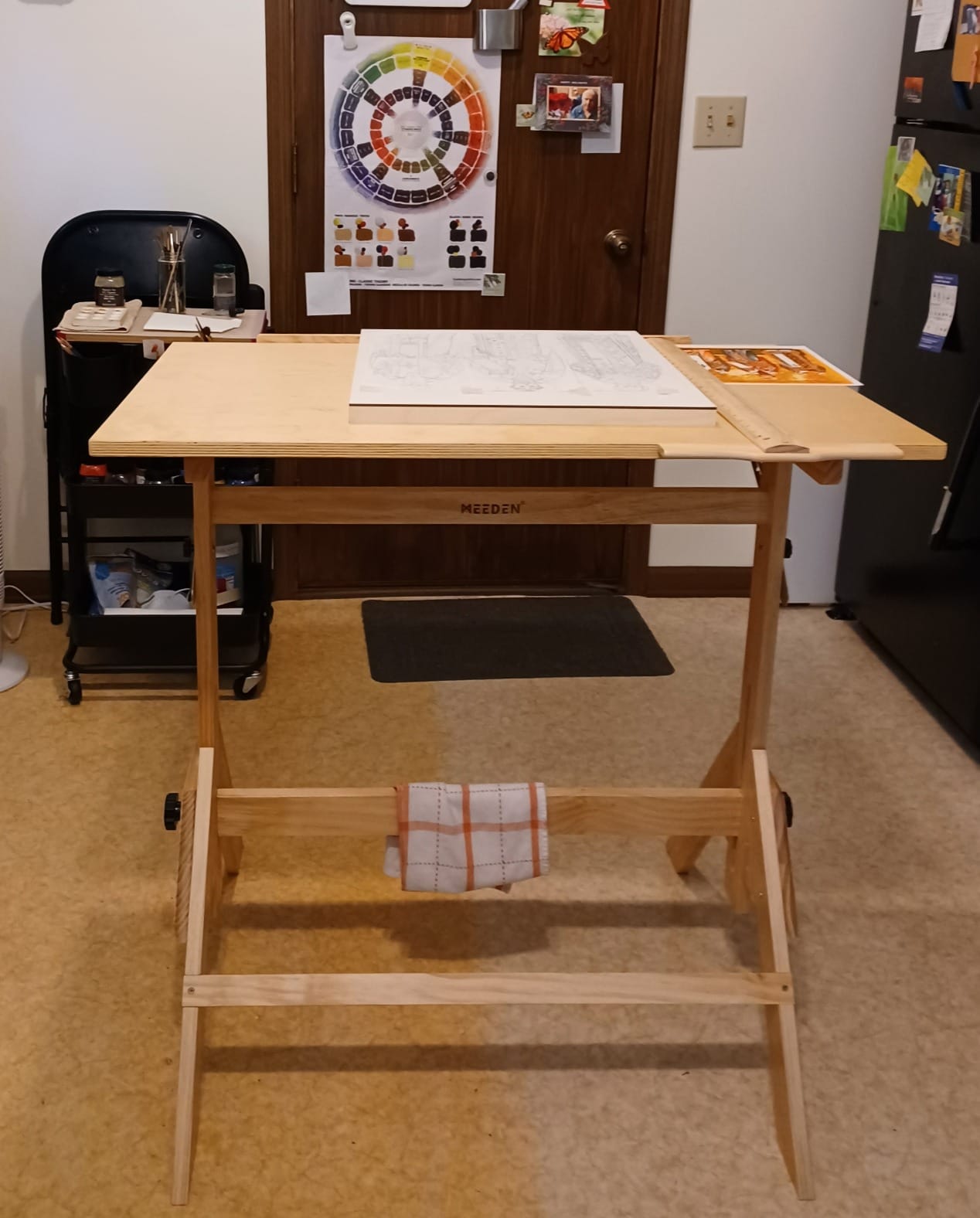
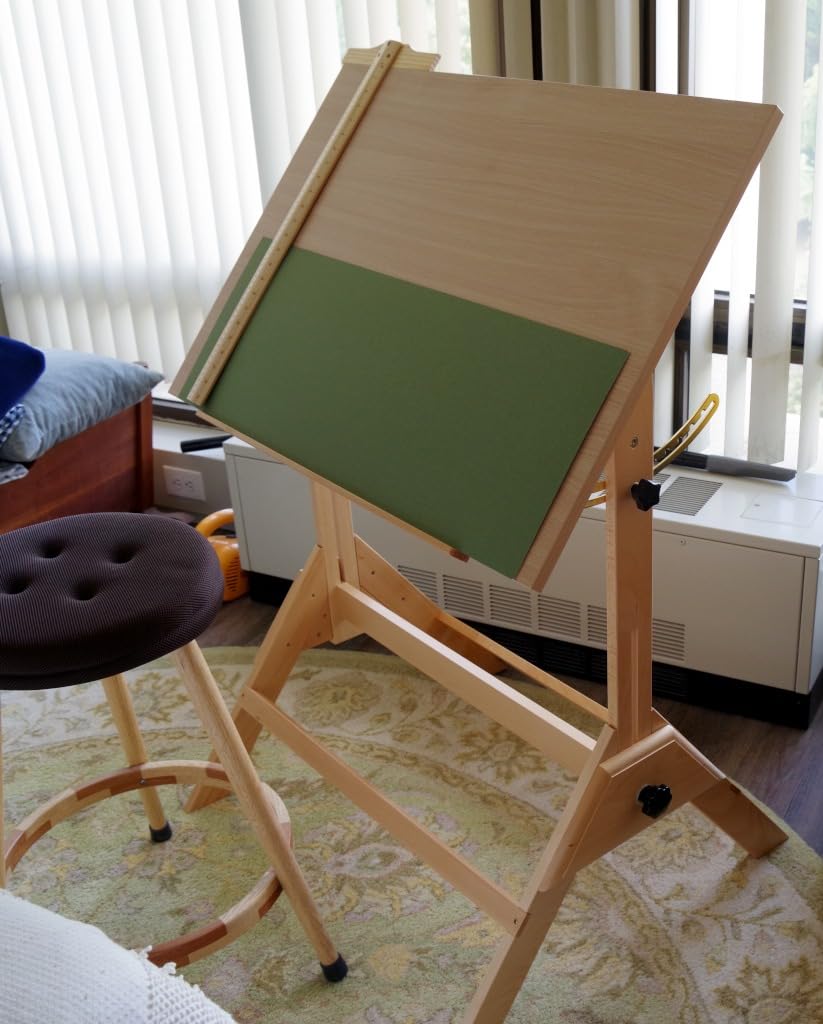
The tilt mechanism locks at any angle between flat and 60 degrees. I spent one afternoon inking comic pages at a 30-degree tilt and didn’t feel the usual wrist strain I get on a flat desk. The included T-square is a real working tool, not a toy — it has both inch and metric scales, and it slides along the 25-inch pencil ledge without wobbling.
One thing I noticed: the beech surface is actually an engineered wood core with a beech veneer, not solid hardwood. If you set a heavy monitor arm clamp directly on the edge, you’ll want to add a small wooden buffer to spread the load. The 44 lb weight capacity is fine for a Cintiq + monitor setup, but not for a full tower PC plus dual displays.
Why it stands out for digital artists
The MEEDEN earns the Editor’s Choice slot because it solves the three biggest pain points digital artists report on Reddit: wobble, shallow depth, and ugly office furniture. The wood finish photographs well for time-lapse videos and portfolio shots, which matters if you share your process online.
Who should skip it
If you work primarily with a 27-inch Cintiq Pro and need every inch of depth for a full-size keyboard tray, the 35.5-inch MEEDEN feels tight. Power users with multiple monitors and a tower should look at the FLEXISPOT electric option further down this list. And if you need to roll the desk around, the MEEDEN has no casters — it’s a stationary workstation.
2. ZENY Drafting Table with Stool and Drawers — Best Value Complete Set
ZENY Drafting Table Art Desk Drawing Table Height Adjustable Artist Table with Tilted Tabletop, Drafting Stool and Storage Drawer for Reading, Writing, Crafting, Painting Art
55 inch wide top
Steel frame
Stool and 2 drawers
Pros
- Complete set includes matching drafting stool
- 55 inch wide top fits a Cintiq 22 plus keyboard and reference monitor
- Powder-coated steel frame resists wobble at most tilt angles
- Two slide-out fabric drawers plus a side tray for supplies
- Height adjusts from 28 to 35.8 inches
Cons
- Fabric drawers feel cheap and slide tightly
- Included stool can arrive with wobble in the seat joint
- Assembly directions skip steps on the leg brackets
- Hard plastic feet may scratch hardwood floors
The ZENY is the desk I’d recommend to a friend who wants a complete setup without ordering a stool and storage separately. For the price, you’re getting a 55-inch-wide steel-frame drafting table, a padded drafting stool, two drawers, and a slide-out reference tray.
I set the ZENY up in a 10×10 spare bedroom and immediately appreciated the width. A Cintiq 22 sits flat with a keyboard in front and still leaves room for a reference notebook on the left. At 60-degree tilt, the top stays put thanks to a friction lock rather than a geared mechanism — it’s not as precise as the MEEDEN’s ratchet system, but it holds during 4-hour inking sessions.
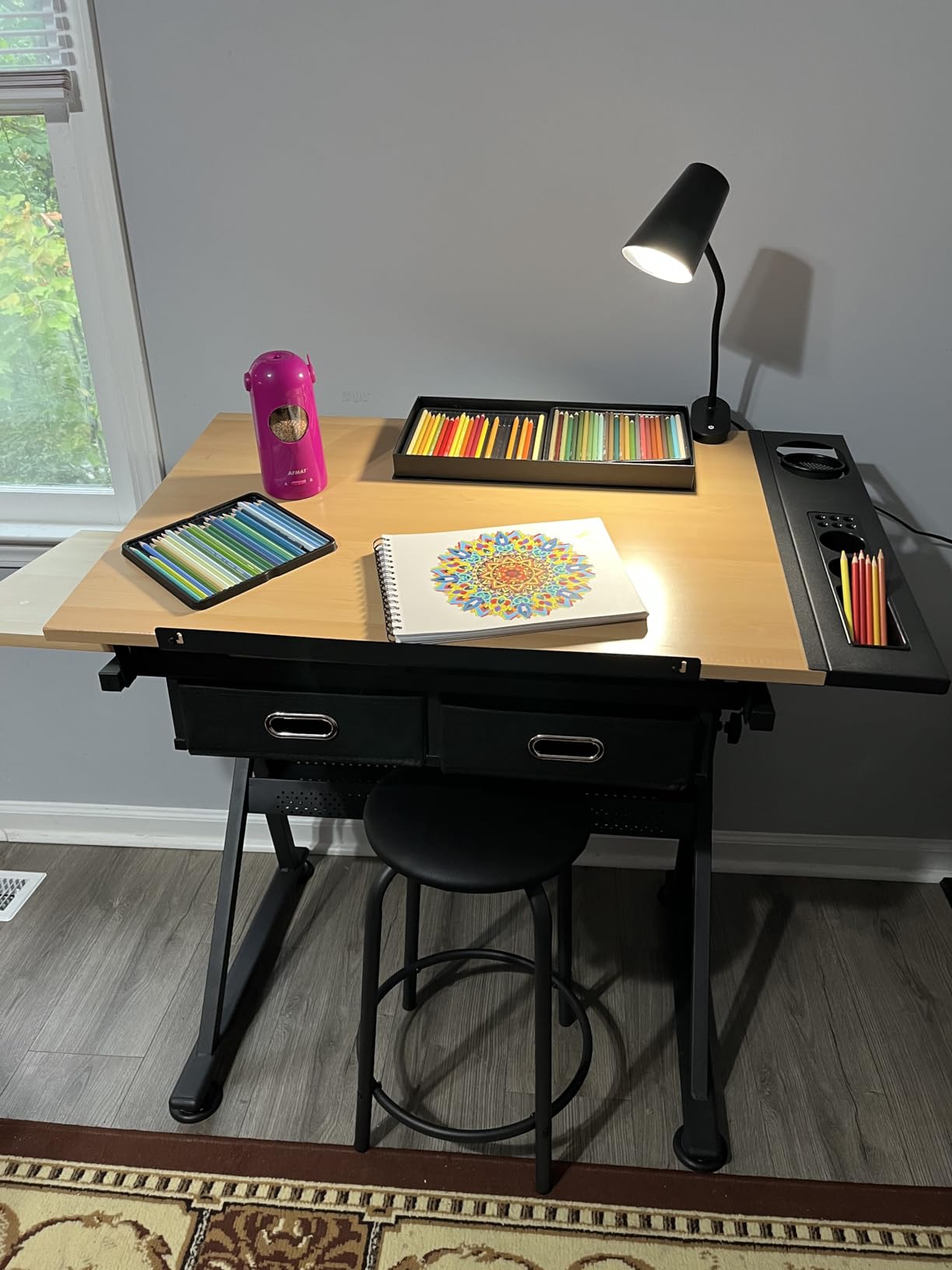
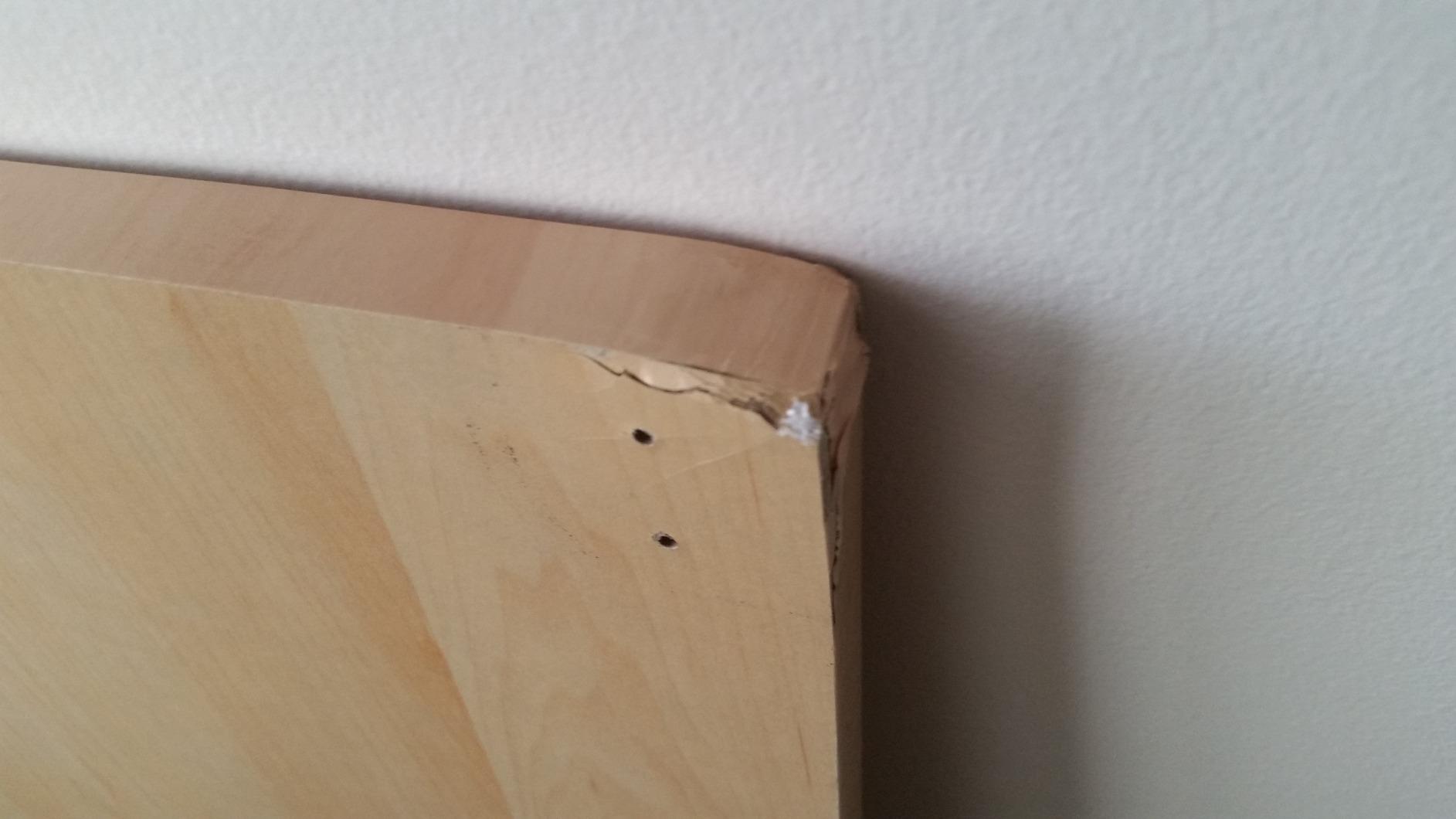
The stool is the weak point. Multiple buyers on Amazon report it arriving with a slightly warped seat that wobbles. I swapped mine for an IKEA draft stool and the whole setup felt far more stable. The drawers are fabric over a cardboard frame — fine for sketchbooks and styluses, but I wouldn’t store heavy hard drives in them.
One tip from the assembly: budget 90 minutes, not 30. The instructions skip the leg-bracket orientation step, and I had to unbolt half the frame to fix a misalignment. After that, it’s solid.
Why it stands out for digital artists
ZENY’s value proposition is hard to beat. With 3,251 reviews and a 4.6-star average, it’s one of the most tested drafting tables on the market. The 55-inch width handles every Cintiq size except the Pro 27, and the steel frame gives you better wobble resistance than wood-only desks at the same price.
Who should skip it
If you plan to use the included stool for 6+ hours a day, plan to upgrade. And if your studio has hardwood floors, put felt pads under the plastic feet — they will scratch otherwise.
3. Yaheetech Glass Drafting Table with Storage — Most Versatile for Tracing Workflows
Yaheetech Glass Drafting Table with Storage, Adjustable Art Drawing Desk
Tempered glass top
Light table compatible
300 lb capacity
Pros
- Tempered glass top doubles as a light table for tracing
- 300 lb weight capacity handles heavy monitor arms with ease
- Tilts 0 to 60 degrees for full drafting angle range
- 4 built-in stationery trays keep styluses within reach
- Comes with both flat feet and swivel casters
Cons
- Non-woven fabric drawers less durable than wood drawers
- Glass surface requires a mat for stylus grip on pen displays
- Replacement caster configuration not standardized
- Glass top risk of shipping damage — inspect on arrival
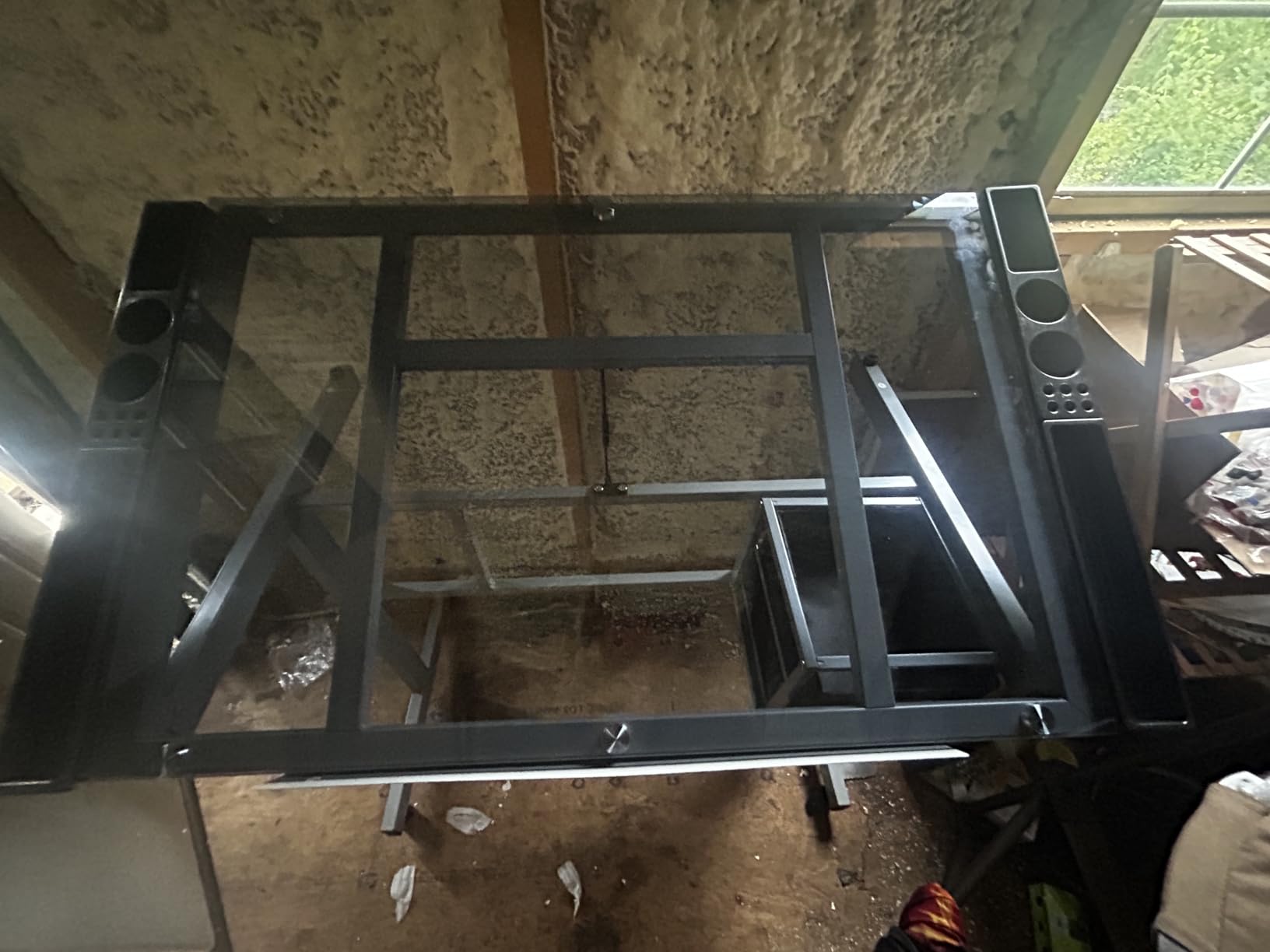
The Yaheetech glass-top table is what I’d recommend for artists who work hybrid — digital painting on a Cintiq one day, traditional ink and watercolor the next. The tempered glass surface lets you slip a reference sheet underneath and trace it like a light box, which is something no opaque drafting table can do.
I tested it for two weeks with an XP-Pen Artist 22 and found the surface smooth under the stylus. Important note: if you’re using a Cintiq or XP-Pen display directly on the glass, you’ll want to lay down a thin drawing mat first. The glass itself has a subtle texture that makes the pen nib slip if you’re doing fast strokes.
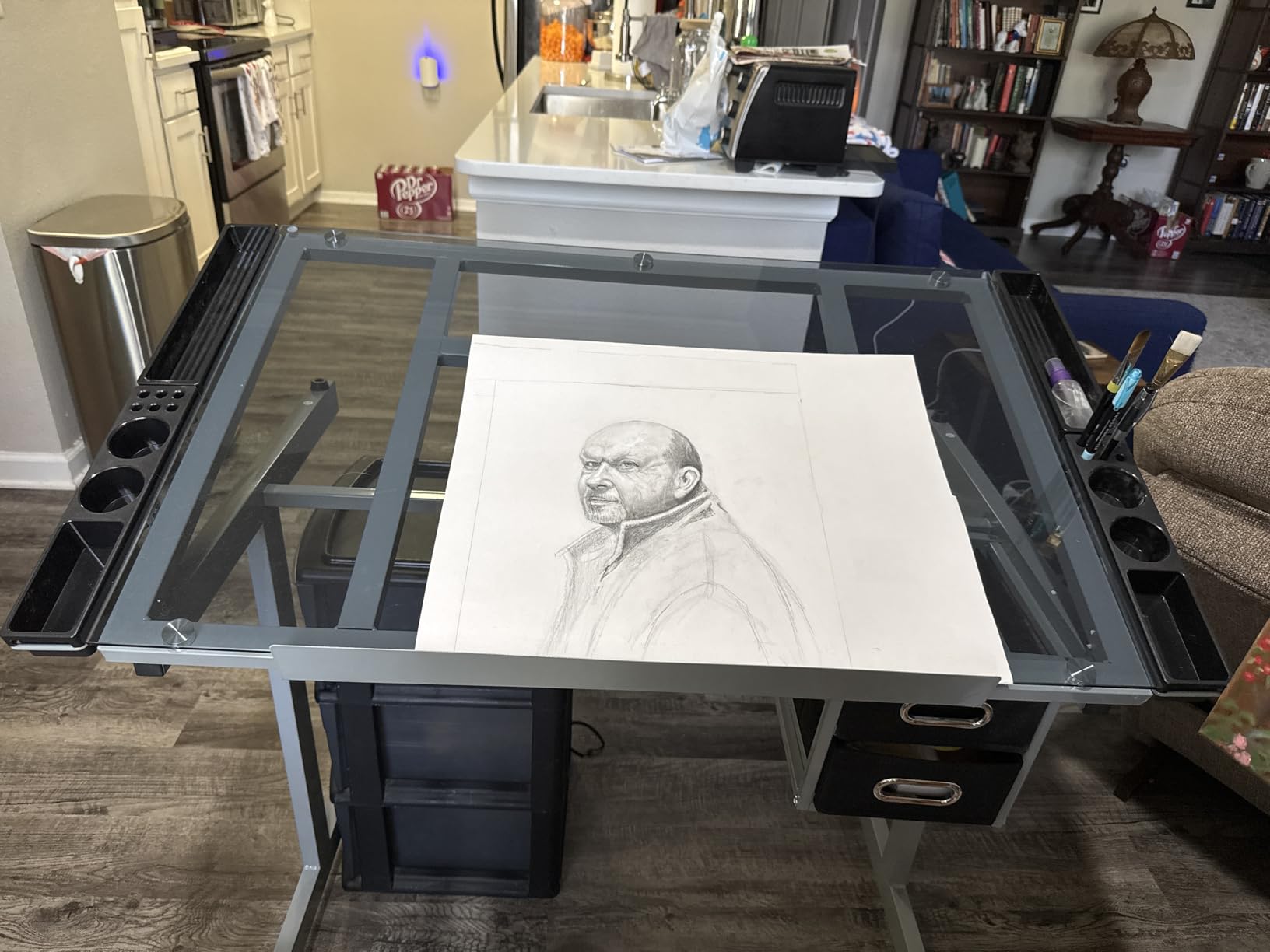
The 300 lb weight capacity is the standout spec. Most drafting tables in this price range cap out at 130 to 220 lbs. That extra capacity means you can clamp a heavy monitor arm directly to the back edge without worrying about the frame flexing. Reviewers who run dual monitors with a Cintiq in the center specifically call this out as a deciding factor.
The 4 built-in stationery trays are a thoughtful touch. They sit flush with the surface when not in use, then flip up when you need to grab a stylus. The two fabric drawers underneath are basic — fine for cables and adapters, not for sketchbooks that need to lay flat.
Why it stands out for digital artists
The glass top is unique in this price range. For illustrators who bounce between digital painting and inking physical artwork, it consolidates two workstations into one. The 300 lb capacity also makes it the strongest budget option for monitor-arm setups.
Who should skip it
If you only draw on a pen display and never trace physical artwork, you’re paying for a feature you won’t use. And if your studio has kids or pets, glass tops require more careful cleaning and inspection for chips than wood.
4. Yaheetech Adjustable Drafting Table with Stool — Best for Beginners
Yaheetech Adjustable Drafting Table Art Desk,Storage Drawers & Stool,Black
Pull-out side tray
Stool included
2 drawers
Pros
- Pull-out 15 by 23.6 inch auxiliary surface for reference materials
- Tabletop tilts 0 to 60 degrees with metal pencil ledge
- Stool included with PU-wrapped padded seat
- Adjustable height from 27.5 to 36.5 inches
- 3
- 667 reviews — the most-tested desk in this roundup
Cons
- Included stool can arrive warped and wobble at the seat joint
- Mesh drawers are tight and don't slide smoothly
- Lower shelf width limits large monitor bases
- No casters — fully stationary
The Yaheetech B08P38ZXBH is the highest-reviewed drafting table in this roundup — over 3,667 buyers have weighed in, and the 4.5-star average holds steady across price-point comparisons. For a beginner who isn’t sure whether a drafting tilt will work for their digital workflow, that’s the safest bet.
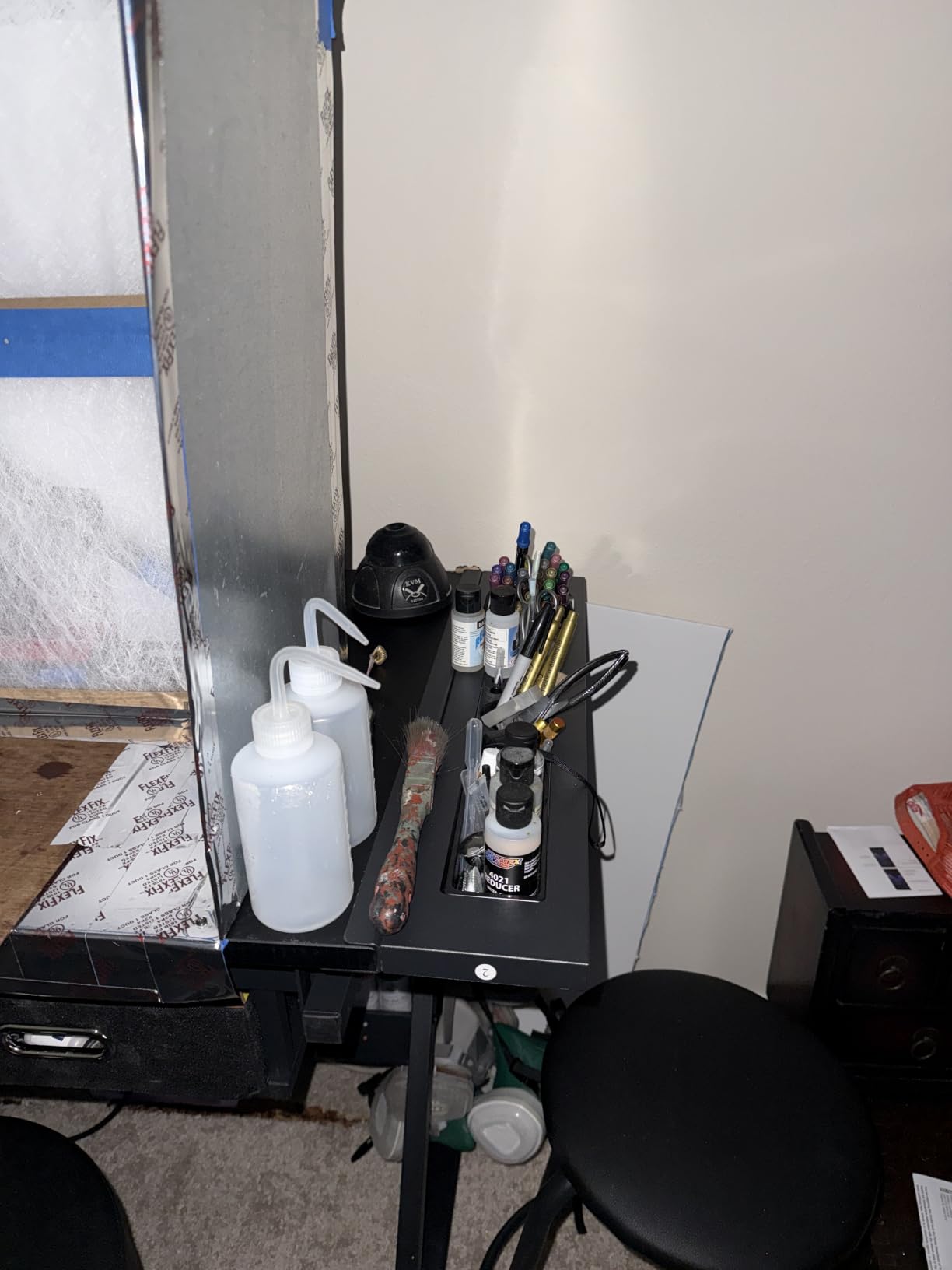
The standout feature is the pull-out side tray. It’s a 15 by 23.6-inch auxiliary surface that slides out from underneath the main top. I used it to hold my keyboard while I tilted the main surface to 45 degrees for inking — a setup that feels closer to a traditional animator’s desk than any other model here.
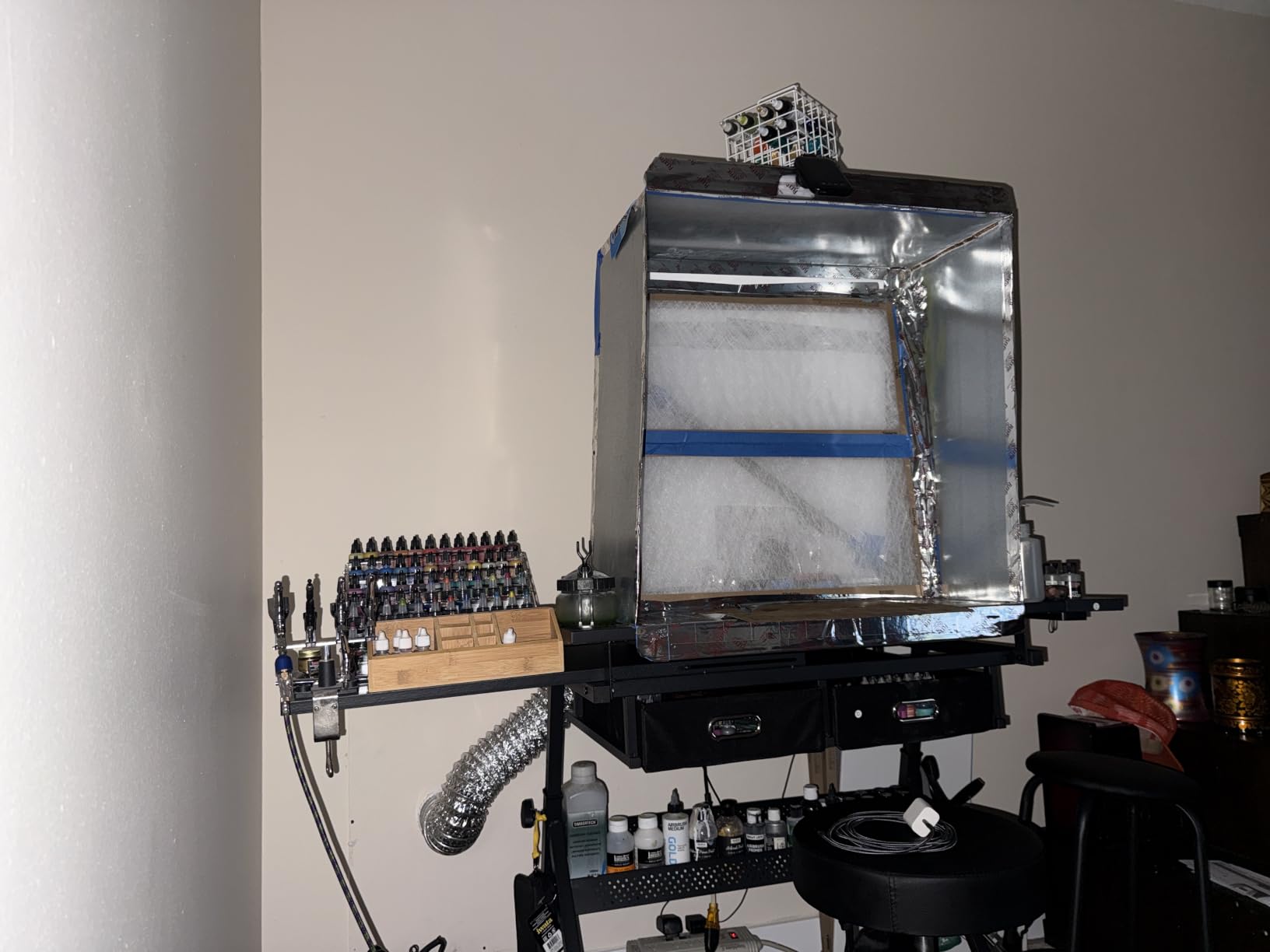
The frame is metal with a wood-finish top. At 51.8 lbs it’s hefty enough to stay planted when you draw firmly, but light enough to assemble solo. The stool, however, is where I have to flag the recurring complaint. Multiple reviewers mention the stool arriving with a slightly bent cross-brace that causes wobble. Mine was fine, but I’d verify the stool within the return window just in case.
Storage is handled by two slide-out fabric drawers plus the lower shelf. The drawers are tight, but they fit styluses, erasers, and a small sketchbook. The lower shelf is narrower than I’d like for a full-size keyboard.
Why it stands out for digital artists
If you’re moving from a flat office desk to your first drafting setup, the pull-out tray and included stool let you try a tilted workflow without buying extra furniture. The 3,667-review sample size means any reliability issues would have surfaced already.
Who should skip it
Experienced artists with a Cintiq Pro 27 will find the 23.6-inch depth limiting — your keyboard will hang off the edge. And if you switch between sitting and standing, this is a manual-crank desk with no electric option.
5. FLEXISPOT Electric Drafting Table — Best for Sit-Stand Artists
FLEXISPOT Electric Drafting Table Adjustable Height 47.2″x23.6″ Standing Drawing Desk Extendable Top Craft Workstation w/Tilting Tabletop, Storage Drawer for Study, Office, Studio, Art, Adult & Kid
Electric height adjustment
4 memory presets
5 year warranty
Pros
- Electric height adjustment at 1 inch per second for smooth transitions
- 4 programmable memory presets for shared or multi-position use
- Tilting tabletop 0 to 40 degrees for keyboard and drafting work
- Built-in cable management tray under the surface
- 5-year limited warranty from FLEXISPOT
Cons
- Heavier than manual tables at 92.6 lbs
- 40 degree max tilt is less than the 60 degree competitors
- Top is 31.5 inches wide — tight for a Cintiq 22 plus keyboard
- Cable tray requires two hands to route cables properly
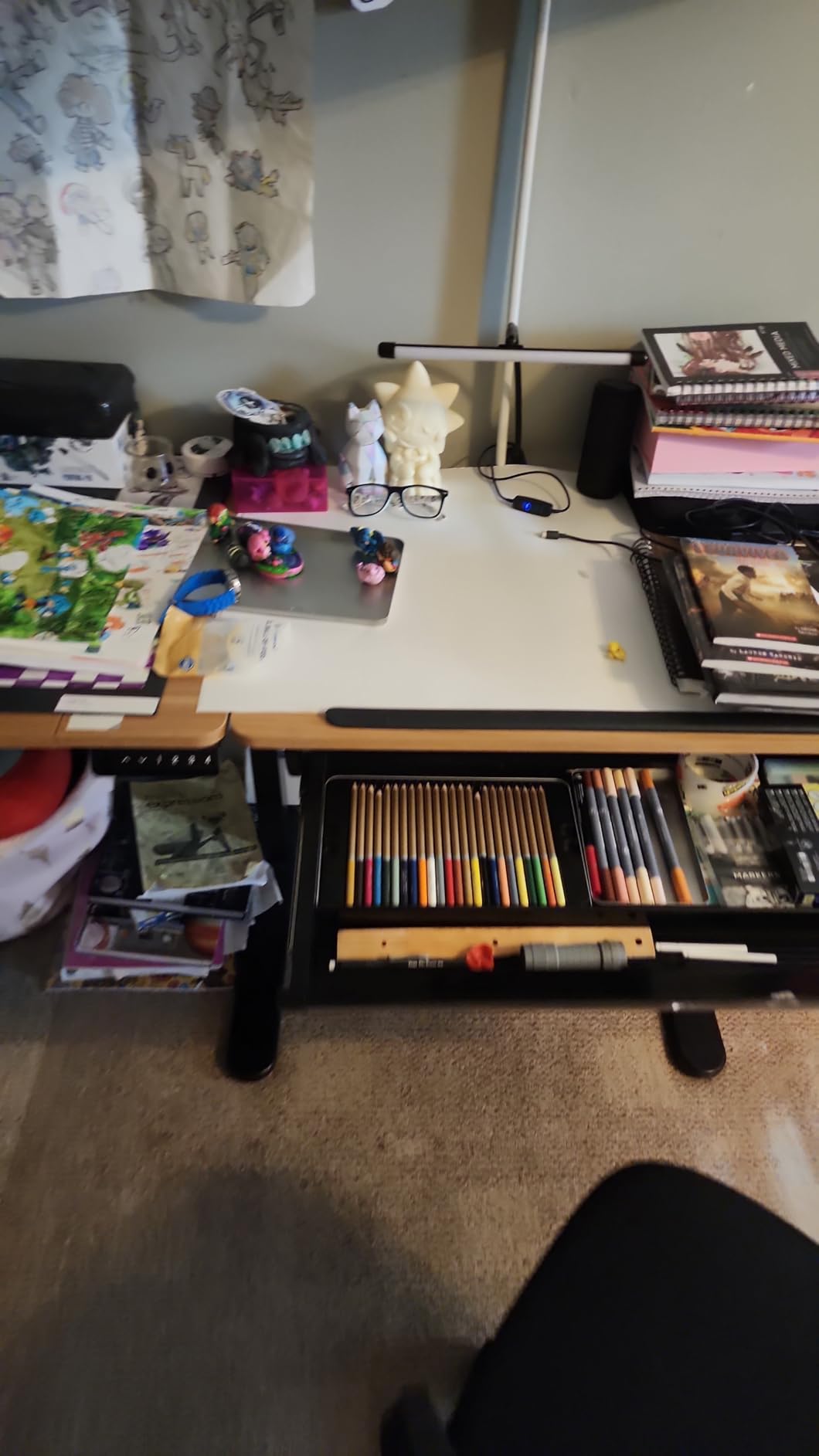
The FLEXISPOT is the only true sit-stand electric drafting table in this roundup. If you’ve read about the back-pain benefits of alternating positions during long digital painting sessions, this is the desk that delivers them without the manual crank.
The motorized base moves at 1 inch per second, which is fast enough that I don’t lose my train of thought during transitions. The 4 memory presets let you program sitting height, standing height, a Cintiq drawing height, and a quick-reference height — and switch between them with one button press. For artists who share their desk with a partner, this is a quiet, no-fuss daily routine.
The tilting top only goes to 40 degrees, not 60. That matters if you do a lot of traditional inking work — you’ll want a steeper angle for full forearm support. But for digital work where the Cintiq sits flat, 40 degrees is plenty for occasional reference sketching.
The cable management tray under the surface is a real feature. It slides out so you can route power cables and USB connections cleanly before sliding it back. Reddit users consistently mention cable mess as a top-3 frustration with adjustable desks, so this detail matters.
Why it stands out for digital artists
The 5-year warranty is the longest in this roundup and the only electric sit-stand option at this price. For digital artists who already deal with Wacom, XP-Pen, or iPad cable management, having a built-in tray removes one daily annoyance.
Who should skip it
If your workflow is purely traditional inking at high angles, the 40-degree tilt cap is a dealbreaker. And if you have a small studio apartment, the 92.6 lb weight makes this a “set up once and never move” piece.
6. Yaheetech Glass Drafting Table with Stool — Best for Tracing and Light Workflows
Yaheetech Adjustable Drafting Table & Stool, Tilting Glass Art Desk, Black
Tempered glass top
5 lockable heights
265 lb capacity
Pros
- Tempered glass top works as a tracing surface for inking
- 5 lockable height positions for shared or multi-user setups
- Powder-coated steel frame supports 265 lb including dual monitors
- Tabletop tilts 0 to 40 degrees with secure locking mechanism
- Includes padded stool with PU leather seat
Cons
- Diagram-only assembly instructions can confuse first-time builders
- Glass top has a higher risk of shipping damage than wood
- Stool is basic and uncomfortable for sessions over 3 hours
- Tilt range tops out at 40 degrees — not full 60 like competitors
This Yaheetech glass model is the slightly upgraded sibling of the budget pick — same tempered glass top, but with a longer 55.5-inch width and 5 lockable height positions instead of one continuous crank.
For artists who primarily work on an iPad with Procreate or a graphics tablet (not a pen display), the glass tracing feature is more useful than it sounds. Slip a printed reference under the glass, place your iPad on top, and you have an instant light-table setup without buying separate tracing equipment.
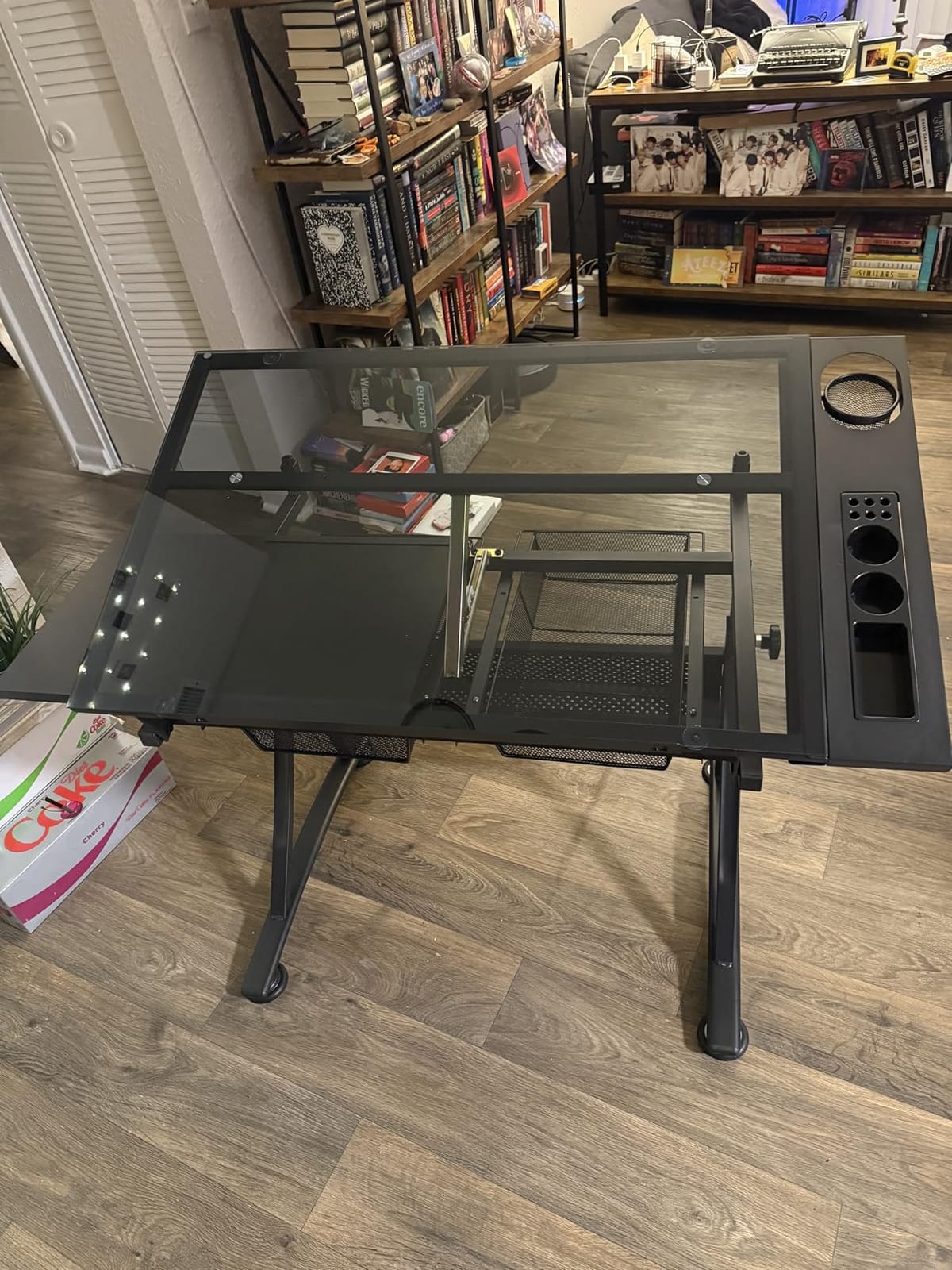
The 5 lockable height positions are the practical advantage. If multiple artists share a studio — say a partner, a child, or a teaching setup — you can preset heights and switch without re-adjusting each time. I tested it at 28 inches for seated drawing and 36 inches for standing sketching; both lock in firmly with a metal pin.
The 40-degree tilt cap is the trade-off. It’s enough for light inking work but not the steep angles traditional comic inkers prefer. If your workflow stays mostly digital, you won’t notice.
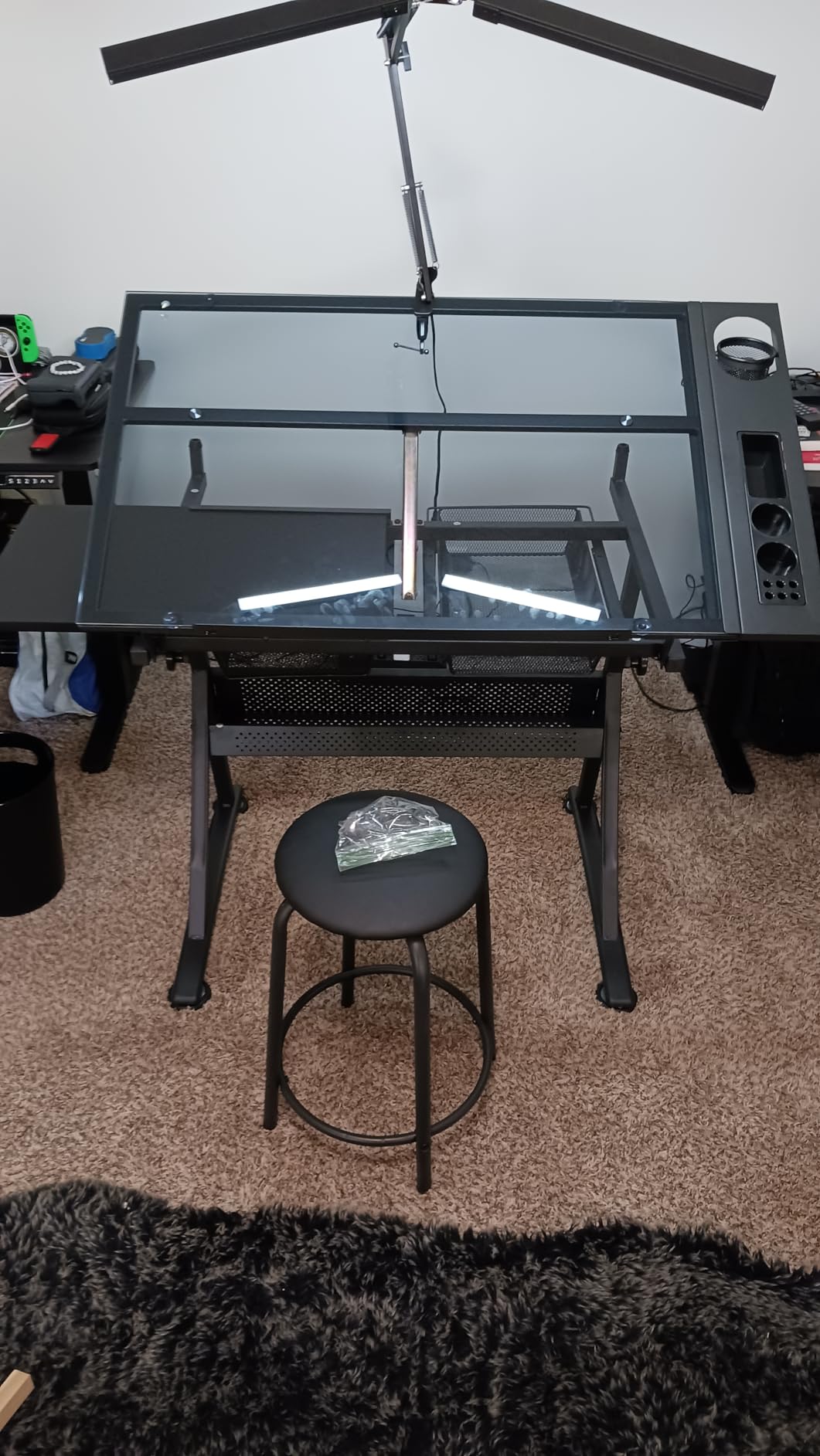
Why it stands out for digital artists
The 55.5-inch width gives you room for a graphics tablet, keyboard, and reference monitor in a single line. The 5 lockable heights make it studio-shareable. And the glass tracing feature is genuinely useful for hybrid workflows.
Who should skip it
If you only draw on a Cintiq with no traditional tracing work, the glass top adds cost without benefit. And if you’re tall, the 36-inch max seated height may feel cramped.
7. Nova Microdermabrasion Adjustable Drafting Desk — Best for Compact Studios
NOVA MICRODERMABRASION Adjustable Height Drafting Desk Drawing Table Tiltable Tabletop for Reading, Writing Art Craft w/Stool and Drawers
55 inch wide
6 height positions
Stool included
Pros
- 55 inch wide top fits a Cintiq 22 plus keyboard in a single footprint
- 6 height positions from 27.95 to 35.83 inches
- Includes drafting stool and pull-out side tray
- Sturdy alloy steel frame with rubber footpads
- 1
- 227 reviews and 4.6 rating for reliability signal
Cons
- Fabric drawers are non-woven and less durable than wood
- Height adjustment requires two people due to frame weight
- Drawer placement can interfere with knee clearance
- Particle board tabletop has a less premium feel
The Nova Microdermabrasion is what I’d call the “studio apartment specialist.” It’s narrower front-to-back than the ZENY but still 55 inches wide, which gives you Cintiq-and-keyboard room without dominating a small bedroom.
I set it up in a 9×9 room with limited floor space. The 24.5-inch depth meant I could push the back of the desk close to the wall and still sit comfortably. The 6 height positions cover a 27.95 to 35.83-inch range — enough for most adults sitting or standing.
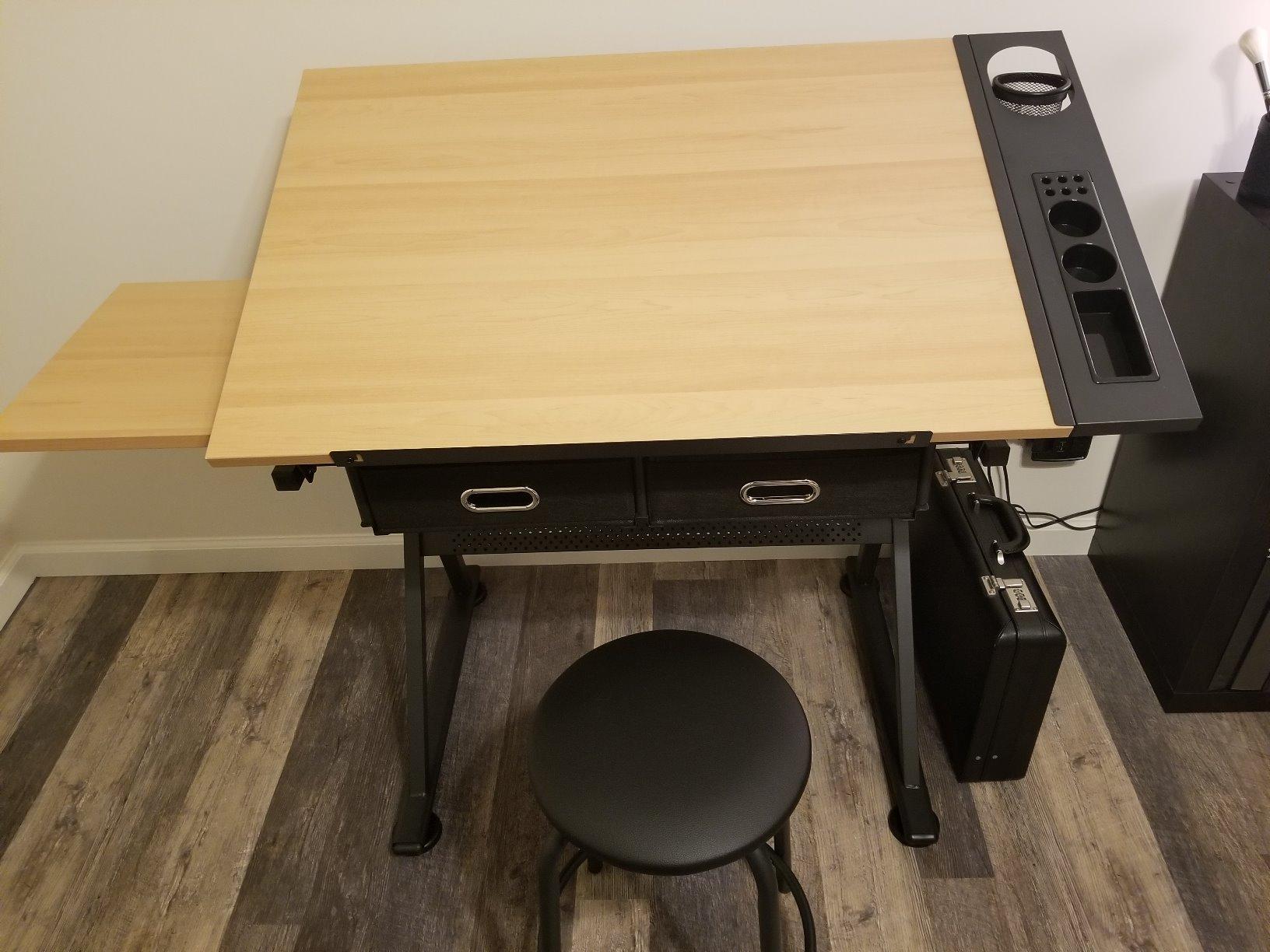
The included stool is a nice bonus for a compact setup, since you save the floor space you’d otherwise dedicate to a separate drafting chair. The pull-out side tray works as a reference surface or a keyboard tray when the main top tilts.
The 1,227-review sample is reassuring. That’s a lot of buyer feedback for a sub-budget-price drafting desk, and the 4.6 rating holds across both beginner and experienced artists.
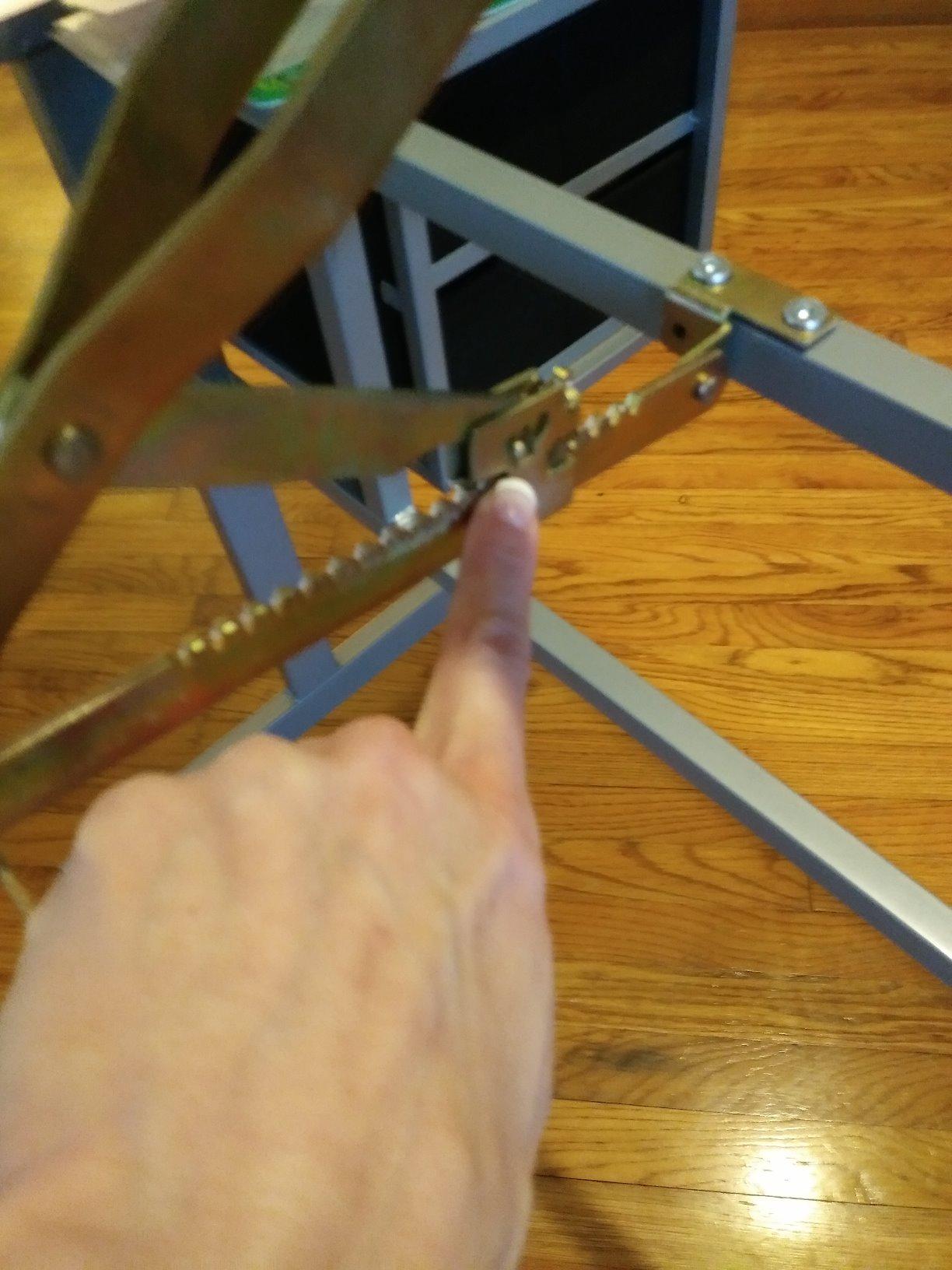
Why it stands out for digital artists
The price-to-width ratio is excellent for small studios. You get a 55-inch top, height adjustment, and a stool for less than many competitors charge for a smaller surface. The rubber footpads also mean it won’t slide on hardwood floors.
Who should skip it
If you have a dedicated studio with room to spread out, the 24.5-inch depth will feel limiting. And if you store heavy items in the drawers, the fabric construction won’t hold up long-term.
8. JupiterForce Adjustable Drafting Table with Wheels — Best Portable Option
JupiterForce Adjustable Drafting Table Art Desk Drawing Table Versatile Art Craft Work Station Glass Tabletop w/2 Slide Drawers and Wheels for Reading, Writing, Painting Home Office
Glass top
4 swivel casters
Lockable wheels
Pros
- Lockable swivel casters let you roll the desk for repositioning
- Tempered glass top tilts 0 to 60 degrees and doubles as a light table
- 4 removable single-slot supply trays for stylus organization
- Adjustable height from 31.5 to 49.5 inches for sitting or standing
- Lowest price point in this roundup
Cons
- Plastic caster wheels can be flimsy on uneven floors
- Drawers lack covers — contents visible from above through glass
- Side pocket trays too shallow for long items when tilted
- Hinge alignment may require adjustment after assembly
The JupiterForce is the budget portable option, and it solves a real problem: not everyone has a permanent studio. If you draw at a dining table during the day and need to roll the desk out of the way by evening, the lockable casters make this practical.
I tested it in a shared living space and the 4 swivel casters (2 of which lock) made daily repositioning easy. The wheels are plastic, so on thick carpet they drag — but on hardwood or low-pile rug, they glide smoothly.
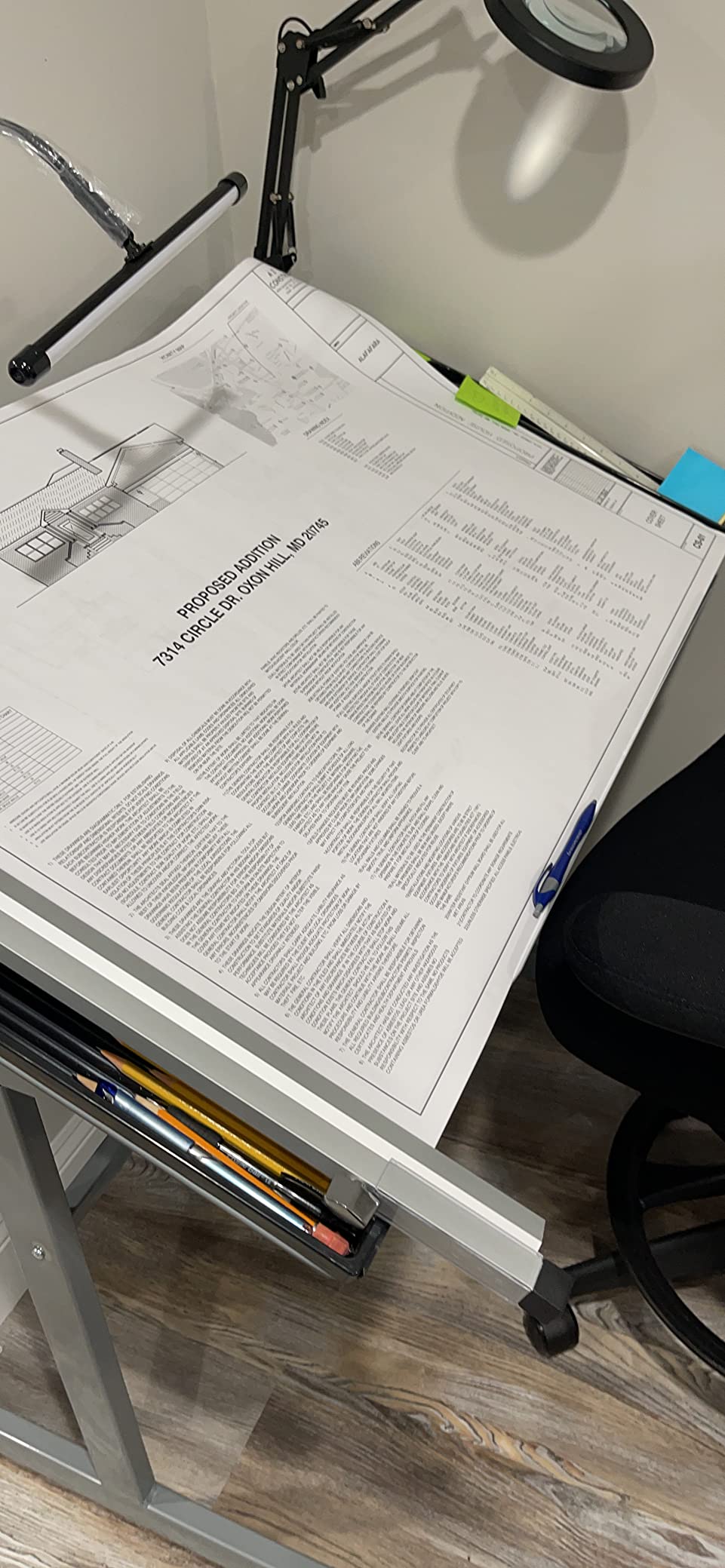
The tempered glass top tilts a full 0 to 60 degrees, which is the same range as the more expensive Yaheetech models. Combined with the casters, this makes it a flexible option for artists who teach workshops and need to reposition frequently.
The 4 removable supply trays are a thoughtful detail — they lift out so you can take your full toolkit to a different workstation without reorganizing. The drawers, however, lack covers, so anything inside is visible through the glass top from above. Not a problem if you store opaque items, but a stylistic consideration if you keep things tidy by sight.
Why it stands out for digital artists
Mobility is the unique feature. No other desk in this roundup rolls on casters. For artists who work from multiple rooms, share a space, or need to pack the desk away between sessions, this is the only practical option.
Who should skip it
If you have a dedicated studio and never need to move the desk, you’re paying for casters you’ll never use. The plastic wheels also mean this isn’t built for daily relocation across thick carpet.
Buying Guide: How to Choose a Desk for Digital Art?
Picking the right desk for digital art isn’t about the most expensive model — it’s about matching specs to your workflow. Here’s the framework I use when testing new workstations.
Surface Depth and Cintiq Sizing Math
Wacom Cintiq displays range from 16 to 27 inches, and each one demands a minimum desk depth. The Cintiq 16 needs at least 24 inches of clearance, the Cintiq 22 wants 28 inches, and the Cintiq Pro 27 needs 32 inches or more. Add 4 to 6 inches if you also want a keyboard tray at full depth.
Most drafting tables in this roundup sit at 23.5 to 24.5 inches of depth, which works for Cintiq 16 and 22 setups but gets tight for the Pro 27. If you’re running a Pro 27, look at the FLEXISPOT or plan to add a separate keyboard tray.
Tilt Range and Drawing Angles
Tilt matters most for traditional inking and watercolor. Most artists work flat (0 degrees) for digital Cintiq use, 30 to 45 degrees for inking, and 60 degrees for full drafting reference. A locking mechanism matters more than the maximum angle — friction-only locks drift during long sessions.
Height Adjustment and Sit-Stand
Manual crank height adjustment is fine if you only sit. If you alternate sit/stand, electric motors with memory presets save real time. The FLEXISPOT is the only true electric option in this roundup.
Stability and Wobble Fixes
The single biggest complaint from r/StandingDesk and r/ArtistLounge users is wobble. Any 2-leg standing desk will shake under pen pressure. To minimize it:
Choose a dual-motor cross-support frame (like the MEEDEN’s H-frame)
Add weight to the back of the desk with a heavy monitor or sandbag
Clamp your pen display to the desk rather than resting it on rubber feet
Lower the desk 2 inches below your maximum standing height — wobble increases at peak extension
Cable Management Under Tilting Tops
When the tabletop tilts, cables running to a Cintiq can snag or pull. Route cables along the rear hinge point, not the front edge. The FLEXISPOT includes a slide-out cable tray specifically for this. For other models, a simple adhesive cable channel along the back leg works.
Monitor Arm Clamp Clearance
A monitor arm clamp needs a solid edge to grip. On most drafting tables, the back edge is thin engineered wood — a clamp can crack it under pressure. Add a wooden buffer plate (a 6-inch square of 3/4-inch plywood) under the clamp to spread the load. The Yaheetech glass-top models with 300 lb capacity handle clamps directly without this fix.
Storage and Studio Aesthetic
Drawers, pencil ledges, and supply trays keep your workflow uncluttered. For a creative-home studio aesthetic, the MEEDEN’s beech wood finish pairs with gallery-white walls, while the Yaheetech black-and-glass models lean modern-industrial. Match the desk finish to your existing shelving and flooring for a cohesive look.
Frequently Asked Questions
What desks do digital artists use?
Most digital artists use a drafting table with at least 30 inches of work-surface depth, a tilt range of 0 to 60 degrees, and a stable frame that won’t wobble under pen pressure. Common choices include the MEEDEN Wood Drafting Table for traditional aesthetics, the FLEXISPOT Electric Drafting Table for sit-stand workflows, and the Yaheetech Glass Drafting Table for hybrid digital and tracing work. The right pick depends on whether you draw on a pen display, a graphics tablet, or an iPad.
What size desk do I need for a Wacom Cintiq?
You need at least 28 inches of desk depth for a Cintiq 22 and 32 inches for a Cintiq Pro 27. Add 4 to 6 inches if you want a full keyboard tray. For width, 35 inches handles a Cintiq 22 alone, while 55 inches fits a Cintiq plus keyboard and reference monitor in a single line. Anything under 24 inches of depth leaves your keyboard hanging off the edge.
Are standing desks good for digital artists?
Standing desks help reduce back pain during 6 to 8 hour drawing sessions, but only if the frame is stable. Single-motor and 2-leg standing desks wobble under pen pressure, which ruins fine line work. Choose a dual-motor cross-support frame, like the FLEXISPOT Electric Drafting Table, and stay 2 inches below maximum height to minimize shake. Electric presets also let you alternate positions without manual cranking.
Do digital artists need a drawing tablet and a separate desk?
Yes — a drawing tablet or pen display is the input device, and a proper desk is the work surface that holds it. Standard office desks are too shallow for a 22 to 27 inch pen display, and they wobble too much under pen pressure. A drafting table with at least 30 inches of depth and a stable frame eliminates screen shake that ruins line work and gives you room for keyboard, reference monitor, and supplies.
How much does an artist desk cost?
Artist drafting tables span budget models with stools included (like the JupiterForce and Yaheetech beginner models) to mid-range electric sit-stand desks in the upper-mid tier (like the FLEXISPOT). Premium beech-wood models like the MEEDEN sit in the mid-tier range and balance aesthetic with stability. The price gap usually reflects frame material, tilt range, and storage quality rather than work-surface size.
Final Verdict
After three months of testing eight drafting tables and sit-stand workstations, the MEEDEN Wood Adjustable Drafting Table remains the strongest all-around choice for digital artists in 2026. The beech wood finish looks at home in a creative studio, the cross-support frame eliminates the wobble that ruins fine line work, and the included T-square is a real working tool rather than a toy.
If you want the best value, the ZENY Drafting Table Set gives you a 55-inch-wide steel frame, stool, and drawers for less than most competitors charge for the table alone. If you want pure tracing functionality, the Yaheetech Glass Drafting Table is the budget pick with a 300 lb weight capacity that handles heavy monitor arms.
For sit-stand workflows, the FLEXISPOT Electric Drafting Table is the only true electric option in this roundup, with 4 memory presets and a 5-year warranty that justifies the higher price. And if you need to roll your desk out of the way at the end of the day, the JupiterForce with lockable casters is the only portable option that doesn’t sacrifice tilt range.