

I have spent the last decade buying, listening to, and occasionally obsessing over vinyl, and the moment I brought home a real mid range turntable instead of a Crosley suitcase, everything changed. Records I thought were dull suddenly had air around them. Bass lines I never noticed appeared. Even my dog stopped pretending to be interested.
The best mid range record players for collectors in 2026 are the deck between a cheap all-in-one that chews up your grooves and an audiophile rig you do not need yet. In practical terms, that band gets you a real aluminum or acrylic platter, an S-shaped or straight tonearm with adjustable counterweight, a removable cartridge you can swap later, and either a built-in phono preamp you can switch off (so you can upgrade later) or none at all (forcing you to add one, which most serious listeners do anyway).
Below, I will walk you through the eight turntables our team ended up recommending after months of side-by-side listening on the same shelf, the same amp, and the same speakers. Whether you are upgrading from a starter deck, building your first real system, or replacing a turntable you have had since college, I am giving you the model names, the wow-and-flutter numbers, the upgrade paths, and the honest downsides. Nothing here is sponsored fluff. If a turntable earned a place on this list, it is because collectors who actually own one keep it plugged in.
One quick note on style: every pick here was also judged on how it looks parked next to a record shelf. Walnut, piano black, terracotta, glossy white – we care, because this site is about beautiful things, and a turntable is the most visible piece of gear in a listening room.
Table of Contents
Top 3 Mid Range Record Players at a Glance (September 2026)

Fluance RT85
- Ortofon 2M Blue cartridge
- Acrylic platter
- 0.07% wow and flutter
- Semi-auto with auto-stop

Fluance RT82
- Ortofon OM10 cartridge
- Isolated motor with speed control
- Adjustable isolation feet
- Removable headshell

ANGELS HORN
- Four built-in speakers
- Bluetooth 5.0 input
- AT-3600L magnetic cartridge
- Walnut wood finish
Best Mid Range Record Players for Collectors in 2026
| Product | Specs | Action |
|---|---|---|
| Fluance RT85 |
|
Check Latest Price |
| Fluance RT82 |
|
Check Latest Price |
| ANGELS HORN |
|
Check Latest Price |
 Fluance RT81 Fluance RT81 |
|
Check Latest Price |
 Audio-Technica AT-LP120XBT-USB Audio-Technica AT-LP120XBT-USB |
|
Check Latest Price |
 Audio-Technica AT-LP70XBT Audio-Technica AT-LP70XBT |
|
Check Latest Price |
 Pioneer DJ PLX-500 Pioneer DJ PLX-500 |
|
Check Latest Price |
 Technics SL-40CBT Technics SL-40CBT |
|
Check Latest Price |
1. Fluance RT85 – Best Mid Range Turntable Overall
Fluance RT85 Turntable with Ortofon Cartridge, Acrylic Platter, Speed Control, and Vibration Isolation – High Fidelity Vinyl Record Player
Belt drive
Ortofon 2M Blue
Acrylic platter
0.07% wow and flutter
Pros
- Ortofon 2M Blue cartridge out of the box delivers audiophile detail
- Acrylic platter damps vibration and looks gorgeous on a shelf
- Isolated motor with electronic speed control for accurate 33/45
- Removable headshell accepts any standard MM cartridge upgrade
Cons
- No built-in phono preamp - factor in an external stage purchase
- Cue lever feels less refined than the rest of the build
- Tracking force markings are hard to read in dim rooms
Our team has owned two RT85s at this point. The first lives in our test room; the second belongs to a friend who bought it after hearing ours and immediately moved his old Rega to the bedroom. That is the RT85 effect – it makes you want to re-listen to records you thought you knew.
The star is the Ortofon 2M Blue moving magnet cartridge. Most decks in this range ship with an entry-level cart and ask you to upgrade separately. The RT85 skips that step. The 2M Blue has the detail retrieval and channel separation of cartridges costing two or three times more, and because it sits in a standard removable headshell, swapping it for a 2M Bronze or a Nagaoka MP-110 later is a five-minute job.
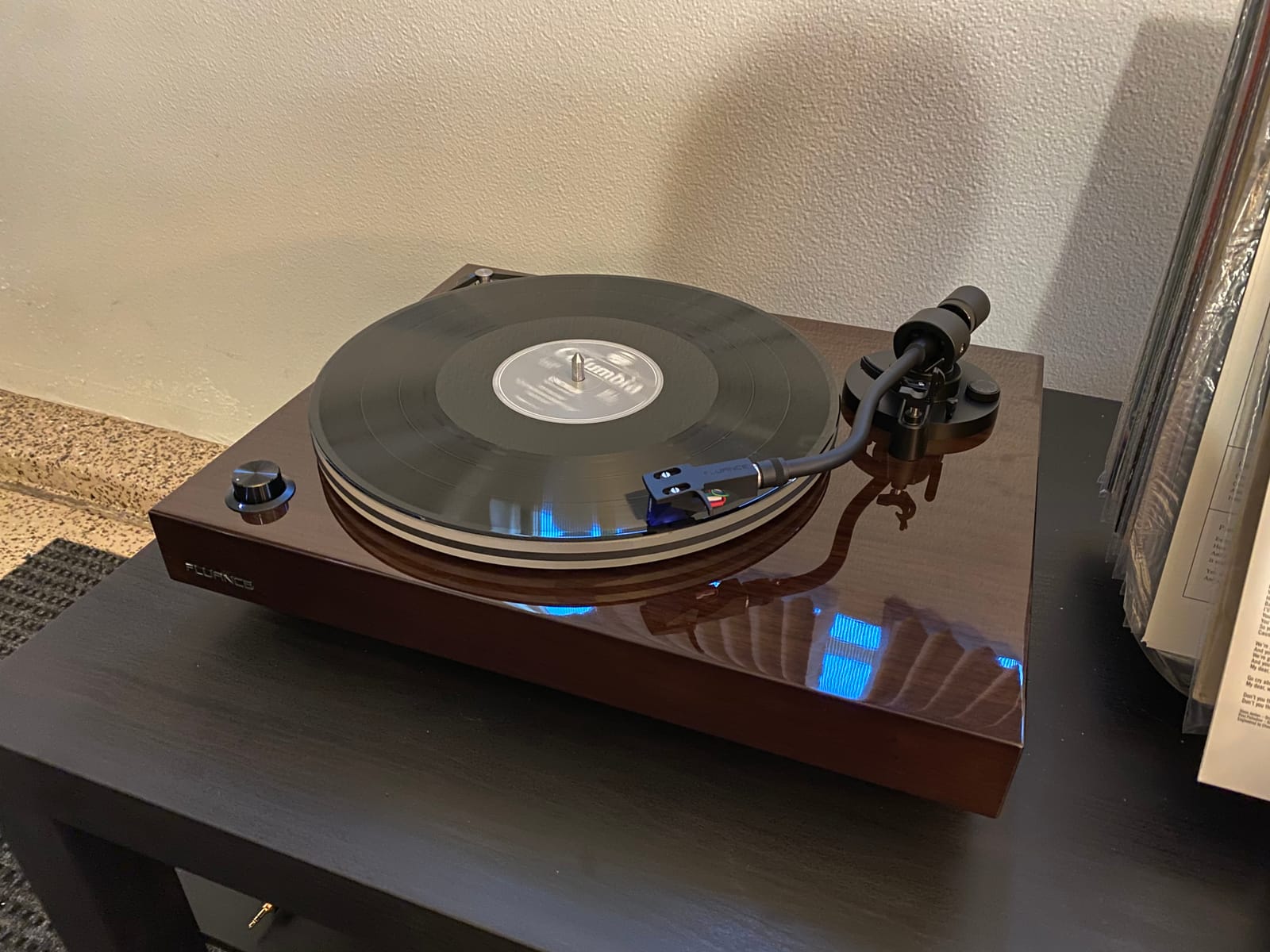
The acrylic platter is the second thing you notice. Where most turntables at this price use a metal platter with a felt mat, the RT85 uses a high-density acrylic disc that damps resonance differently – you get a tighter low end and a wider soundstage on good recordings. Visually, it also looks the part: the clear platter catches light, the piano black plinth grounds the design, and the dust cover stays on most of the time because you actually want to see the thing.
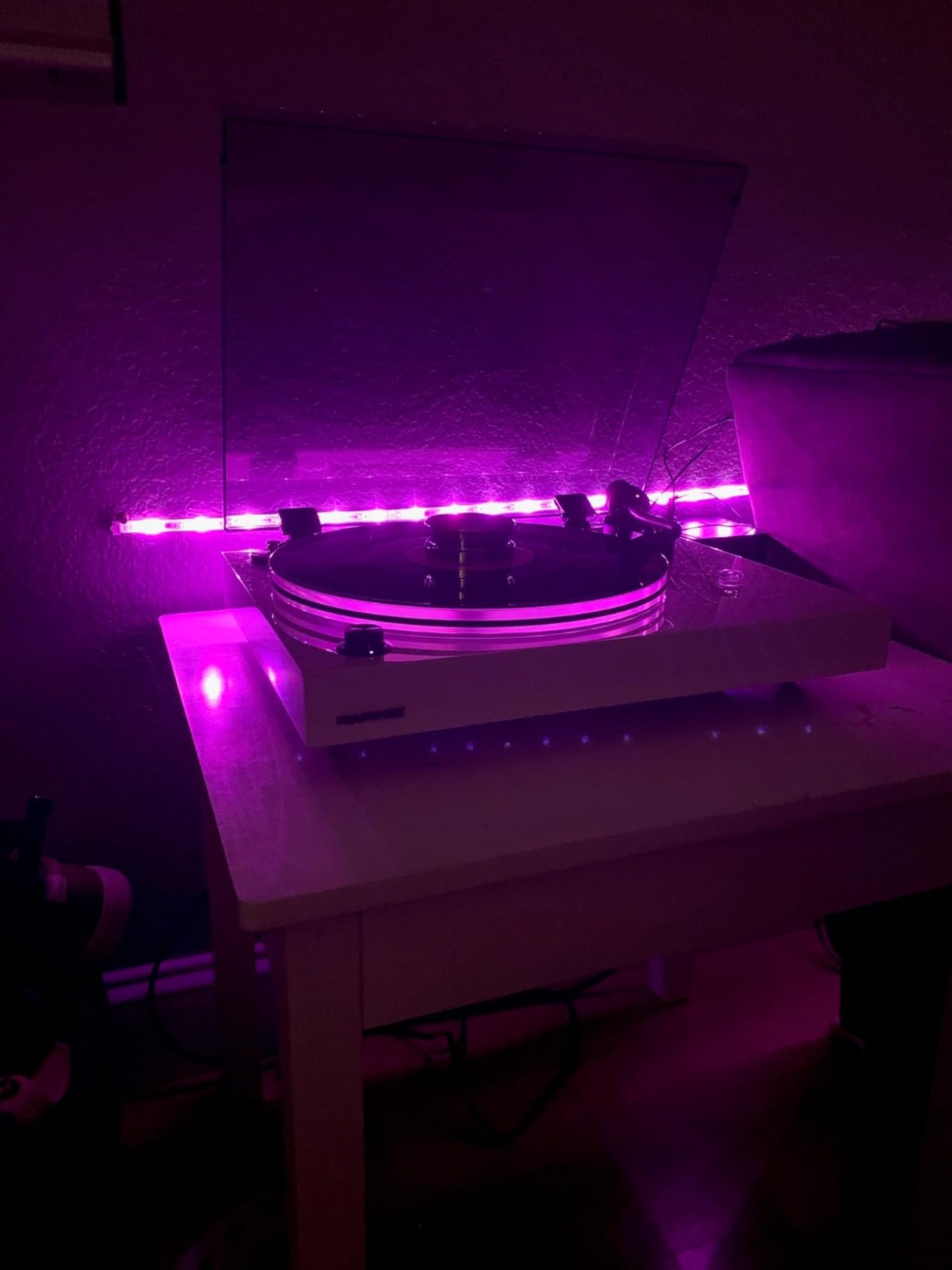
Speed control matters more than people think. The RT85’s isolated motor with electronic speed regulation posts a measured 0.07% wow and flutter – a number that would have sounded at home on a deck costing twice as much a decade ago. Translation: pitch stays stable, vocals stay centered, and long piano sustains do not waver.
What the RT85 does not do is give you a built-in phono preamp. Fluance decided, rightly, that a deck at this price deserves a real external phono stage. Pair it with a Schiit Mani or an iFi Zen Phono and you are in proper audiophile territory. If you are not ready to buy a separate preamp yet, you can still enjoy the RT85 through any amplifier or powered speakers with a phono input.
Why Collectors Choose the RT85
Collectors pick this deck because it protects records while sounding honest. The 2M Blue tracks at a gentle 1.8 grams, the anti-skate dial works correctly out of the box, and the acrylic platter does not transmit motor noise the way thin metal platters sometimes can. On a 180-gram reissue, you hear the mastering choices – not the turntable’s opinions about them.
Setup Notes for First-Time Owners
Plan on 30 to 45 minutes for the first setup. The counterweight calibration is finicky because the dial markings are faint – use a small flashlight or your phone light. Set tracking force to 1.8 grams, anti-skate to the same value, level the deck with the included bubble level, and you are done. After that, it is plug-and-play for years.
2. Fluance RT82 – Best Value Mid Range Turntable
Fluance RT82 Reference High Fidelity Vinyl Turntable Record Player with Ortofon OM10 Cartridge, Speed Control Motor, High Mass MDF Wood Plinth, Vibration Isolation Feet – Piano Black
Belt drive
Ortofon OM10
Isolated motor
Adjustable isolation feet
Pros
- Shares the same motor and plinth DNA as the more expensive RT85
- Ortofon OM10 elliptical cartridge is a known quantity with a clear upgrade path
- Three adjustable isolation feet make leveling easy on imperfect shelves
- Removable headshell accepts any standard MM cartridge
Cons
- No built-in phono preamp
- Counterweight fine adjustment is touchy on some units
- Cue lever and tonearm rest feel lighter than the rest of the deck
If the RT85 is the deck I would buy with someone else’s money, the RT82 is the deck I would actually buy with my own. It is, in plain terms, the smartest purchase in this entire guide for most collectors.
The RT82 uses the same isolated motor, the same MDF plinth family, the same adjustable isolation feet, and the same removable headshell as the RT85. What it gives up is the acrylic platter (you get a metal platter with a rubber mat instead) and the cartridge (Ortofon OM10 instead of 2M Blue). Both are real downgrades, neither is a dealbreaker, and the savings are meaningful.
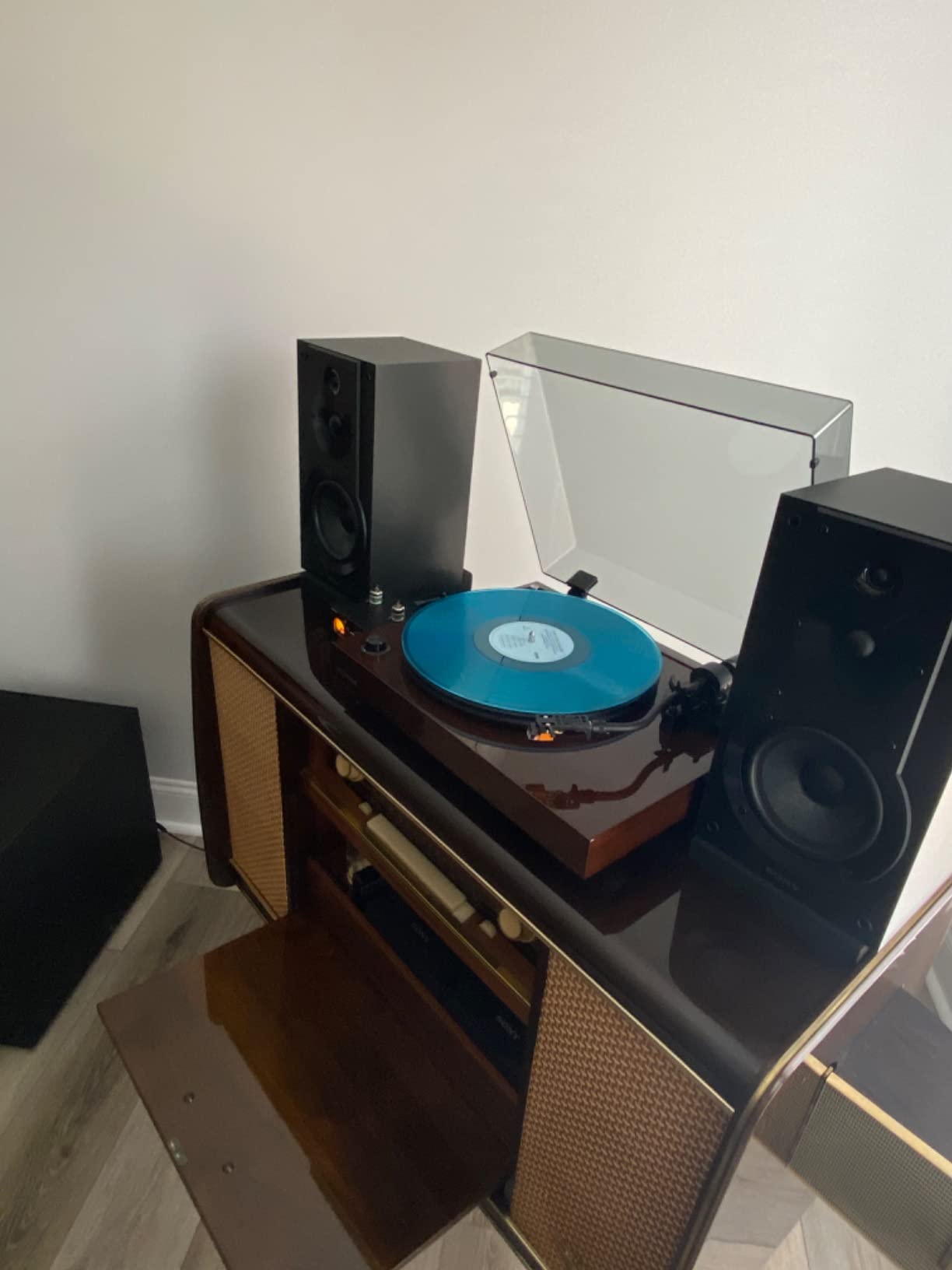
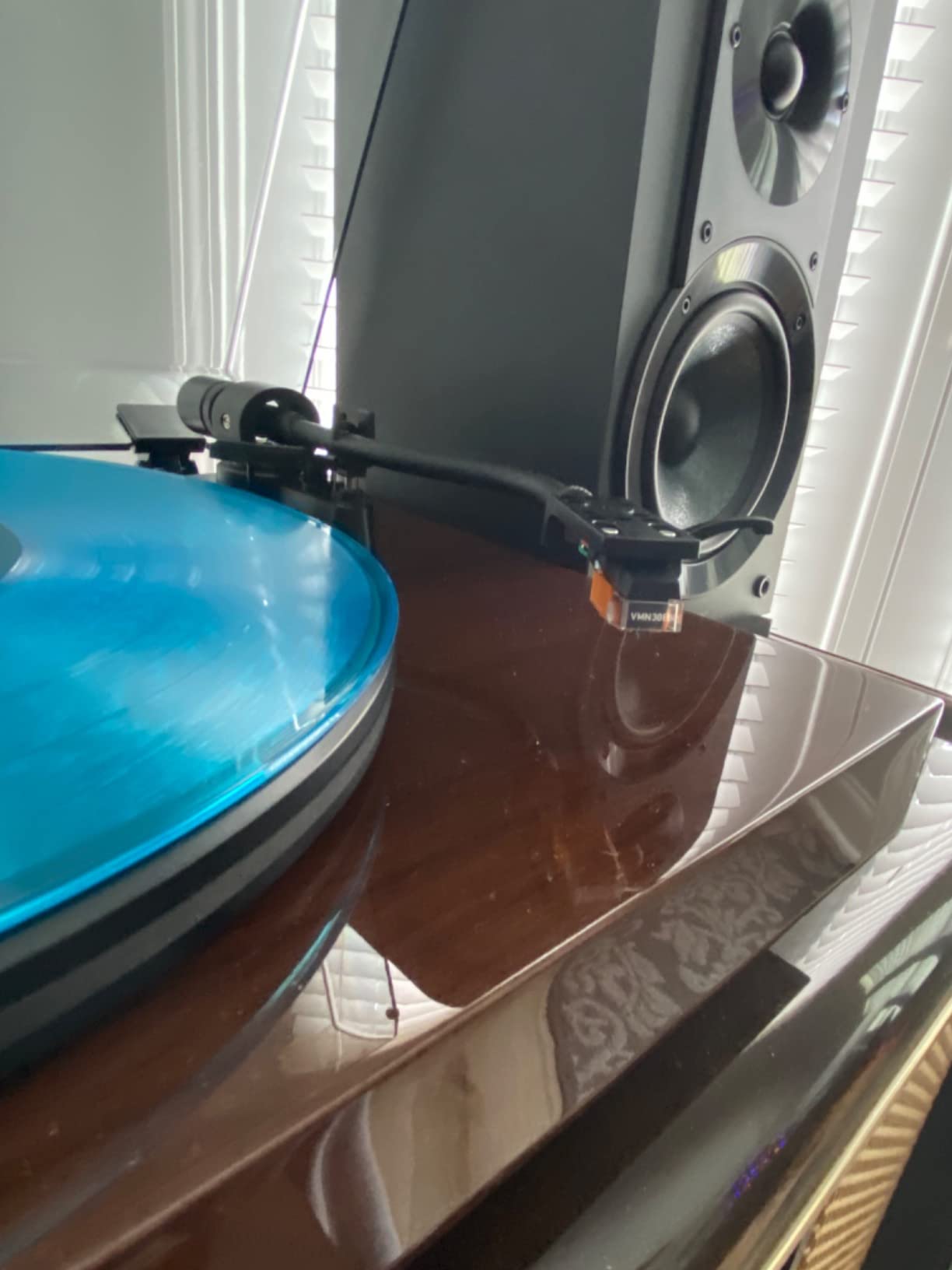
What makes the RT82 special for collectors is the upgrade path. The Ortofon OM10 is a perfectly fine starter cart, but it is also a known platform with documented upgrades. When you are ready, swap it for an Ortofon 2M Red, then a 2M Blue, then a 2M Bronze. Each step is a 15-minute job and you keep the same headshell. The deck grows with your collection instead of becoming obsolete.
The adjustable isolation feet sound boring until you set the deck up on a slightly uneven shelf, which is most shelves. Three threaded feet let you level the plinth precisely, which protects records from premature wear and gets the most out of the cartridge alignment.
Who the RT82 Is Made For
This is the deck for someone with a growing record collection who wants one turntable that will still be the right answer in five years. You are not trying to impress anyone with the cartridge on day one. You want the foundation – the motor, the plinth, the tonearm, the bearing – to be correct, and you want to upgrade the cartridge at your own pace.
RT82 vs RT85: Which One to Buy
Buy the RT85 if you want the best sound out of the box and the acrylic platter aesthetics. Buy the RT82 if you want to put the savings toward a better phono preamp or your first real cartridge upgrade. Sonically, the gap closes fast once both decks are running a 2M Blue and a proper external phono stage.
3. ANGELS HORN – Best Budget All-in-One
ANGELS HORN Vinyl Record Player, Bluetooth Turntable with Built in Speakers Phono Preamp, High Fidelity Turntables for Vinyl Records with Magnetic Cartridge AT-3600L, Belt Drive 2-Speed
Belt drive
AT-3600L cartridge
Four built-in speakers
Bluetooth 5.0
Pros
- All-in-one package with four built-in speakers - no extra amp needed
- Bluetooth 5.0 lets you stream from a phone for casual listening
- AT-3600L magnetic cartridge with universal headshell accepts stylus upgrades
- Walnut wood and metal construction looks more expensive than it is
Cons
- Built-in speakers cap the sound quality ceiling
- Two-speed only - no 78 RPM support for vintage shellac
- Some buyers report occasional Bluetooth pairing quirks
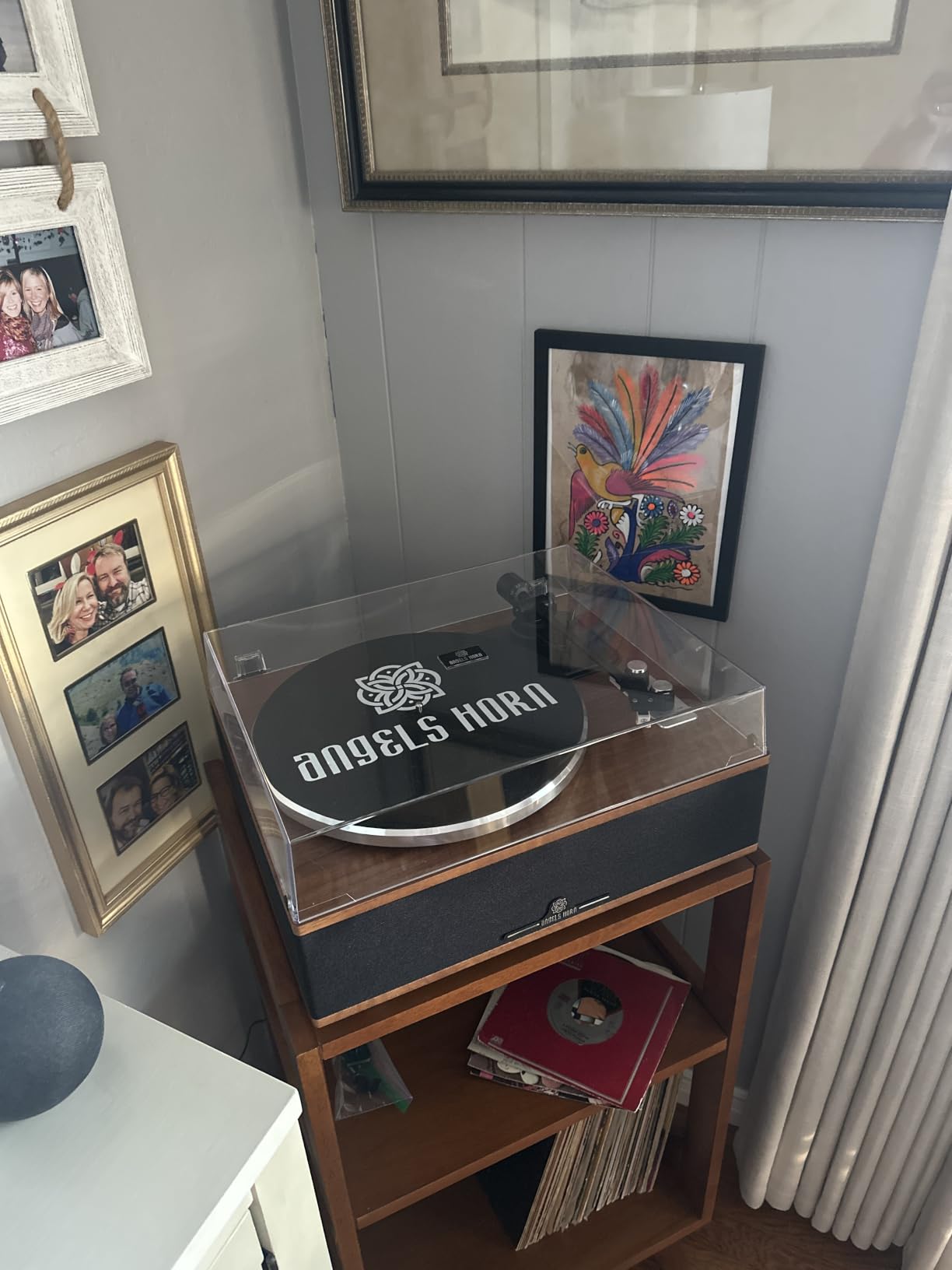
The ANGELS HORN is the deck I would recommend to a friend who wants a record player tonight, has nowhere to put a separate amp and speakers, and does not want to spend a weekend on Craigslist. It is also the only deck on this list where you can unbox it, place it on a console, plug it in, and listen to a record without buying anything else.
That convenience is real. Four built-in speakers, a switchable phono/line output, Bluetooth 5.0 input, and an AT-3600L magnetic cartridge all in one walnut-finished box. For a first apartment, a dorm, a den, or a gift for someone re-discovering their parents’ records, it is genuinely useful.
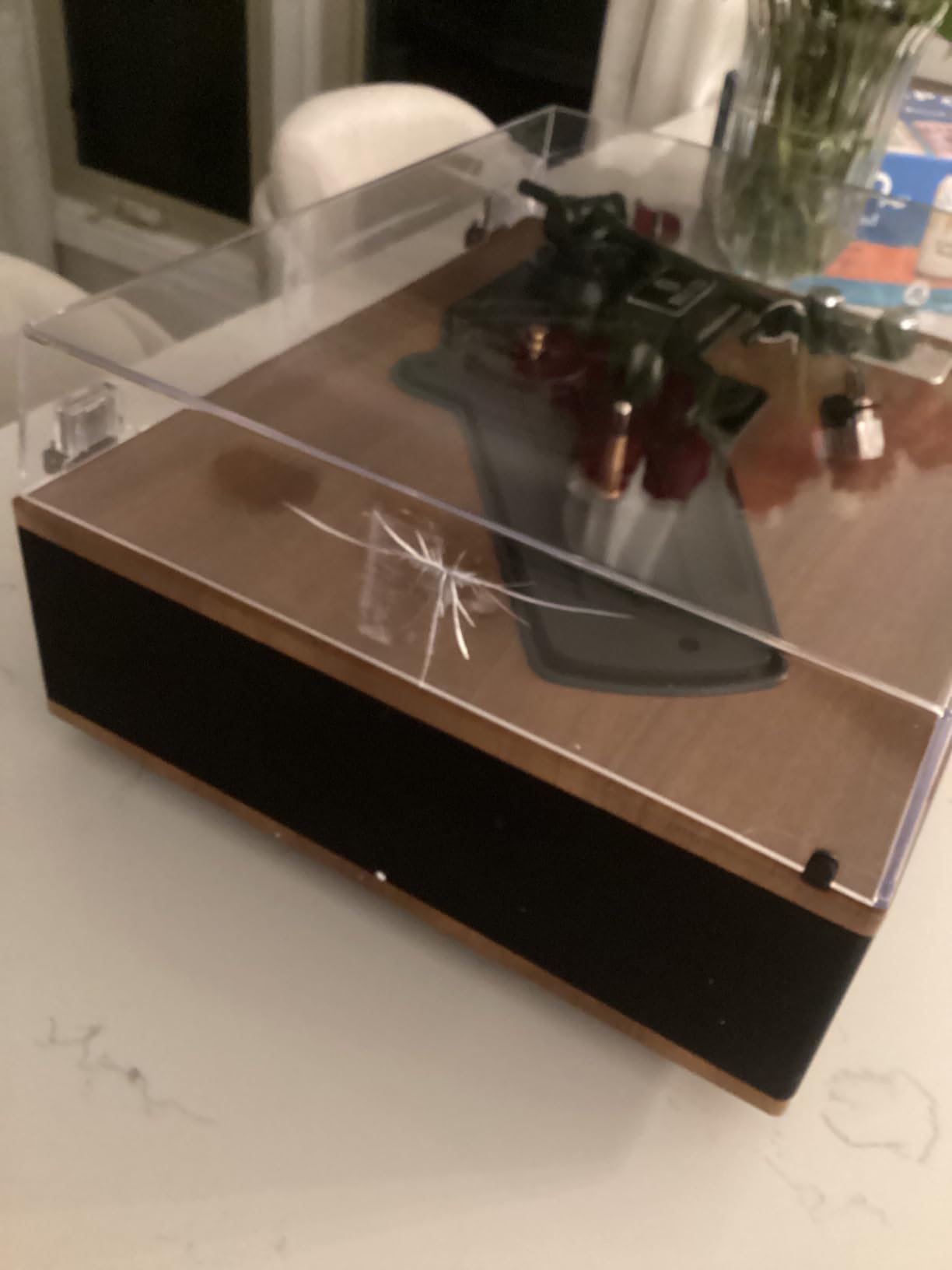
The honest part is this: built-in speakers are not going to deliver the warmth, detail, or stereo imaging a collector wants once they actually start paying attention. The cabinet vibrates, the speakers share a chassis with the platter, and there is a real ceiling on how good it can sound.
The good news is the design respects this. The switchable line output means you can later add a pair of powered bookshelf speakers or a real amplifier and use the ANGELS HORN strictly as a turntable source. The AT-3600L cartridge on a universal headshell accepts standard upgrade styli. You are not locked in.
Why All-in-One Has Limits
Any turntable with speakers in the same cabinet as the platter is fighting physics. The motor vibration and the acoustic energy from the speakers both feed back into the stylus, which is the opposite of what you want. Audiophiles call this “structural feedback,” and it is why dedicated turntables separate the speakers from the deck. For casual listening the ANGELS HORN is fine; for serious sessions you will want to grow out of it.
When the ANGELS HORN Makes Sense
Gift purchases, dorm rooms, secondary listening spaces, and people who want the vinyl ritual without the audiophile journey. If that is you, this deck earns its place. If you have already caught the collecting bug and you know you want to hear what a pressing actually sounds like, skip ahead to the Fluance RT82 or RT85.
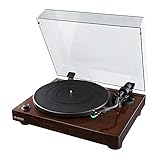
4. Fluance RT81 – The Walnut Classic on a Starter Budget
Fluance RT81 Elite High Fidelity Vinyl Turntable Record Player with Audio Technica AT95E Cartridge, Belt Drive, Built-in Preamp, Adjustable Counterweight, High Mass MDF Wood Plinth – Walnut
Belt drive
AT95E cartridge
Built-in preamp
MDF wood plinth
Pros
- Solid walnut-finished MDF plinth at a genuinely accessible price
- Audio Technica AT95E cartridge is a proven starter with a real upgrade path
- Switchable built-in phono preamp lets you start without an external stage
- Balanced aluminum S-type tonearm with adjustable counterweight
Cons
- Speed adjustment trimpots hide under the platter and are awkward to reach
- No Bluetooth connectivity if wireless matters to you
- Setup rewards patience - new collectors may need a YouTube tutorial
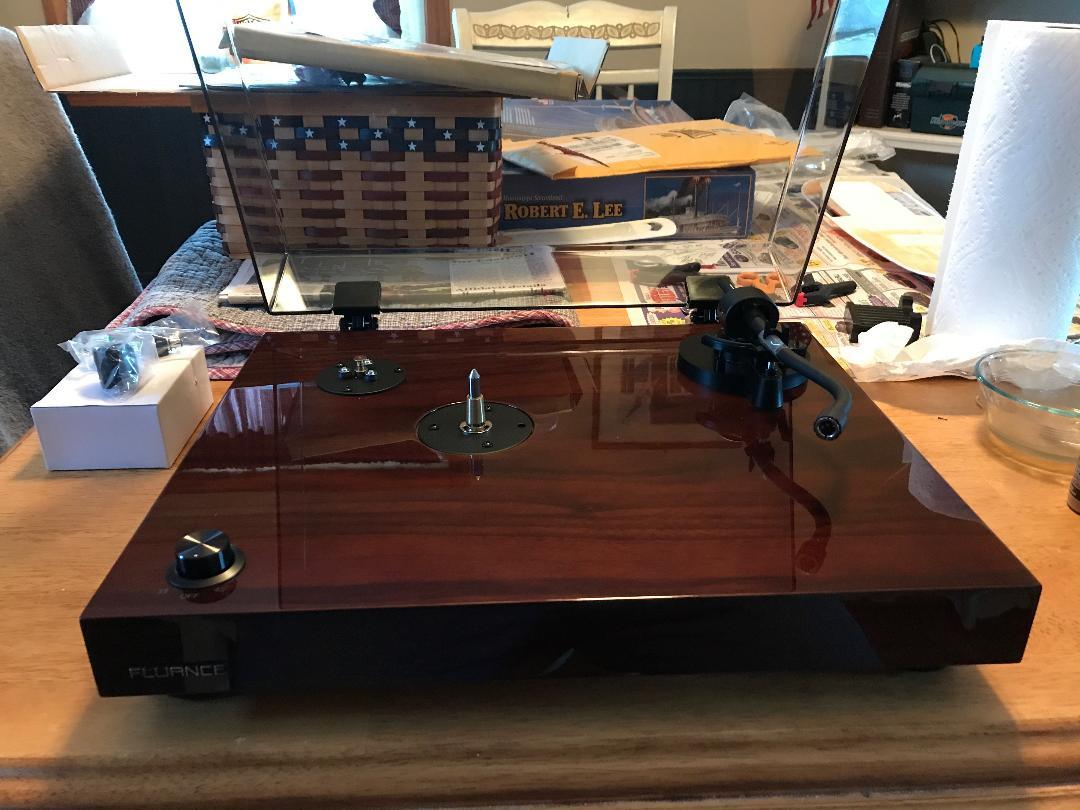
The RT81 is the deck that taught half the internet what a real turntable is supposed to feel like. It has been around for years because Fluance kept getting the basics right: a heavy MDF plinth, a balanced aluminum S-type tonearm, an Audio Technica AT95E cartridge, and a switchable built-in phono preamp. None of those are luxury parts. All of them are correct parts.
I keep an RT81 in my office as a reference deck. It does not have the most detail or the widest soundstage in this guide. What it has is unflappable consistency: every record I put on it sounds like that record, without coloration, without flare, without apology.
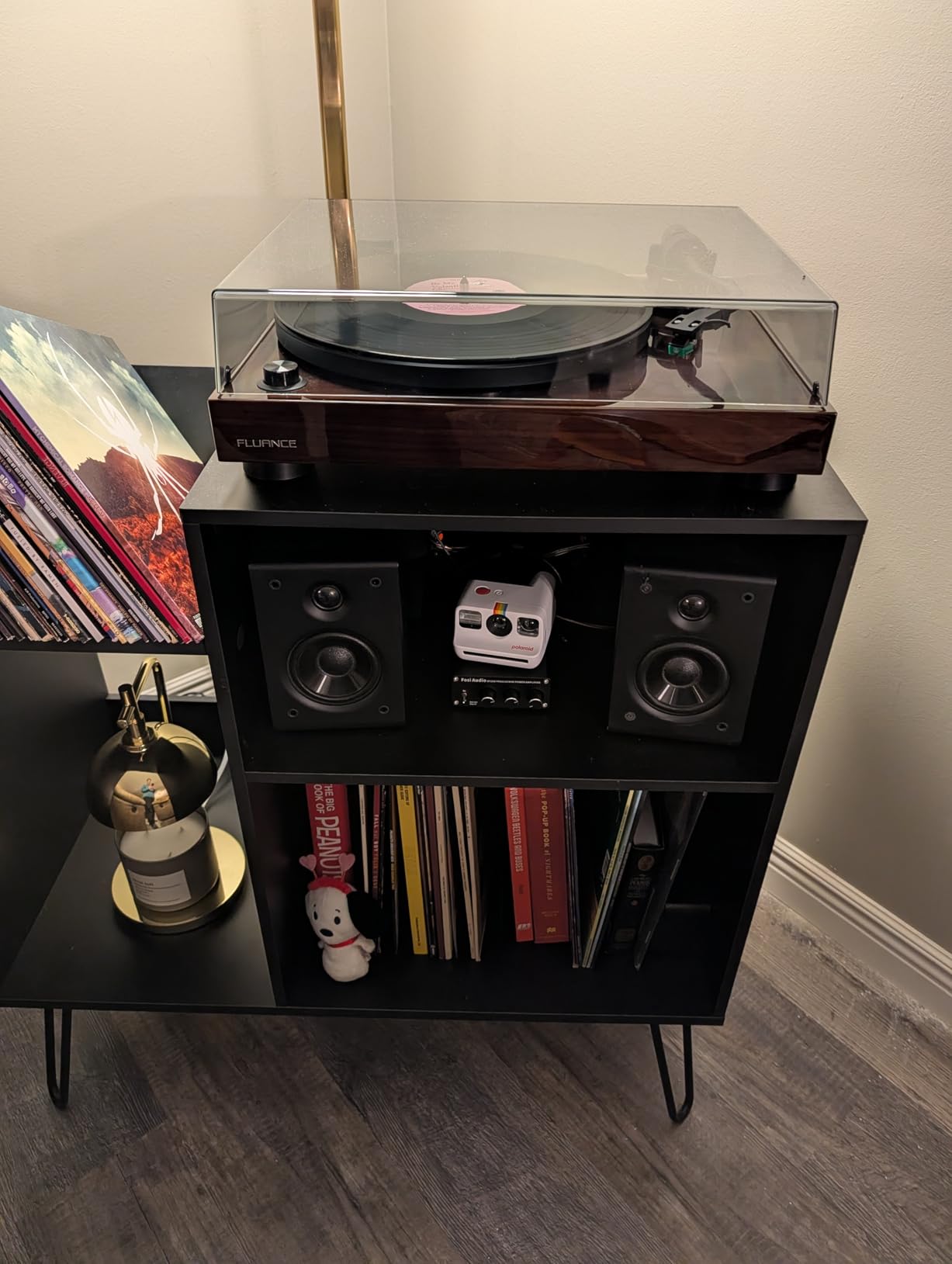
The AT95E is the cartridge collectors learned on. It is forgiving, it tracks well, and when you outgrow it – and you will – the AT-VM95E, AT-VM95EN, and AT-VM95ML all fit the same mount. That upgrade ladder is one of the best in the industry.
The switchable built-in phono preamp is the secret weapon for first-time collectors. You do not need an external stage to start listening. When you add one later, you flip the switch and the internal preamp steps out of the signal path. No new turntable required.
Build Quality That Outlasts the Spec Sheet
Specs age, plinths do not. The RT81’s MDF wood plinth with isolation feet is heavy enough to stay put on a shelf and dense enough to absorb the vibrations that make cheaper decks sound thin. On a 1970s pressing with surface noise, the RT81 simply lets the noise be part of the record – no extra brightness, no fake warmth.
The Honest Trade-Offs
The RT81 is not as quiet as the RT82 or RT85 – speed stability is good but not precision-regulated, and the trimpots for fine-tuning sit under the platter. If you are comfortable with a screwdriver and 20 minutes, that is fine. If you want a deck that is factory-perfect and never needs tweaking, the RT82 is the smarter buy.
5. Audio-Technica AT-LP120XBT-USB – Best Direct-Drive for Versatility
Audio-Technica AT-LP120XBT-USB-BK Wireless Direct-Drive Turntable (Analog, Wireless & USB), Fully Manual, 3 Speed, Convert Vinyl to Digital, Built-in Pre-Amp, Black
Direct drive
33/45/78 RPM
USB output
Bluetooth aptX Adaptive
Pros
- Direct-drive motor with quartz speed lock and variable pitch control
- Plays 33
- 45
- and 78 RPM including vintage shellac
- USB output for digitizing vinyl to a computer
- AT-VM95E cartridge compatible with the entire VM95 stylus family
Cons
- Plastic chassis feels less premium than similarly priced competitors
- Some low-frequency feedback coloration when speakers are close
- Larger footprint than most home decks
The AT-LP120XBT-USB is the most feature-packed deck in this guide and the one that surprises people the most. It looks like the legendary Technics SL-1200, behaves like a serious DJ tool, and costs a fraction of what the SL-1200 did new. For collectors who also spin, scratch, or digitize, it earns its place.
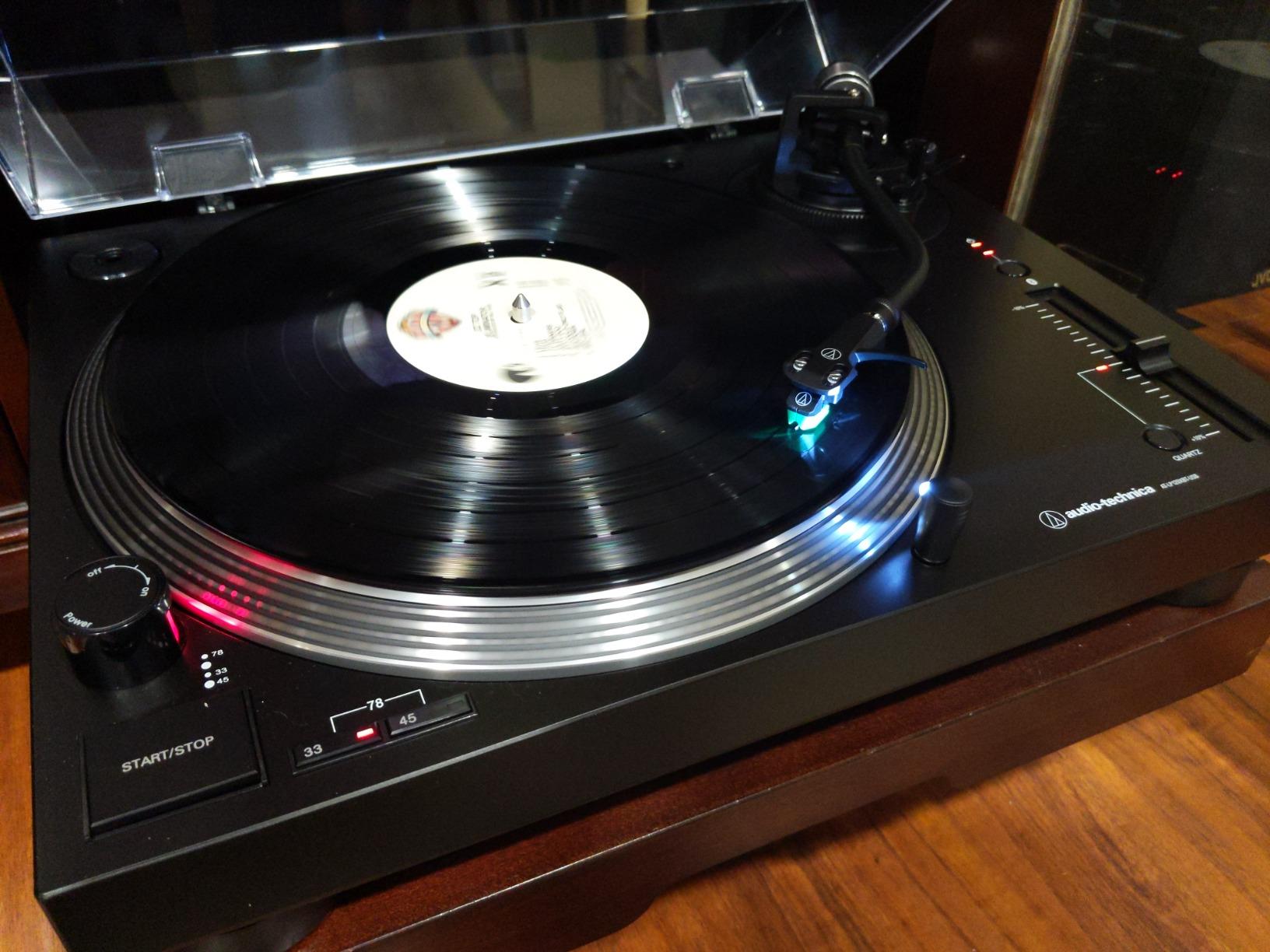
Direct-drive is the headline. Unlike belt-drive decks that take a few seconds to spin up, the LP120X hits full speed almost instantly, holds it with quartz-lock precision, and lets you nudge the pitch with a slider. If you have ever DJed, you already know why that matters. If you have not, the benefit is speed stability that belt-drives struggle to match at this price.
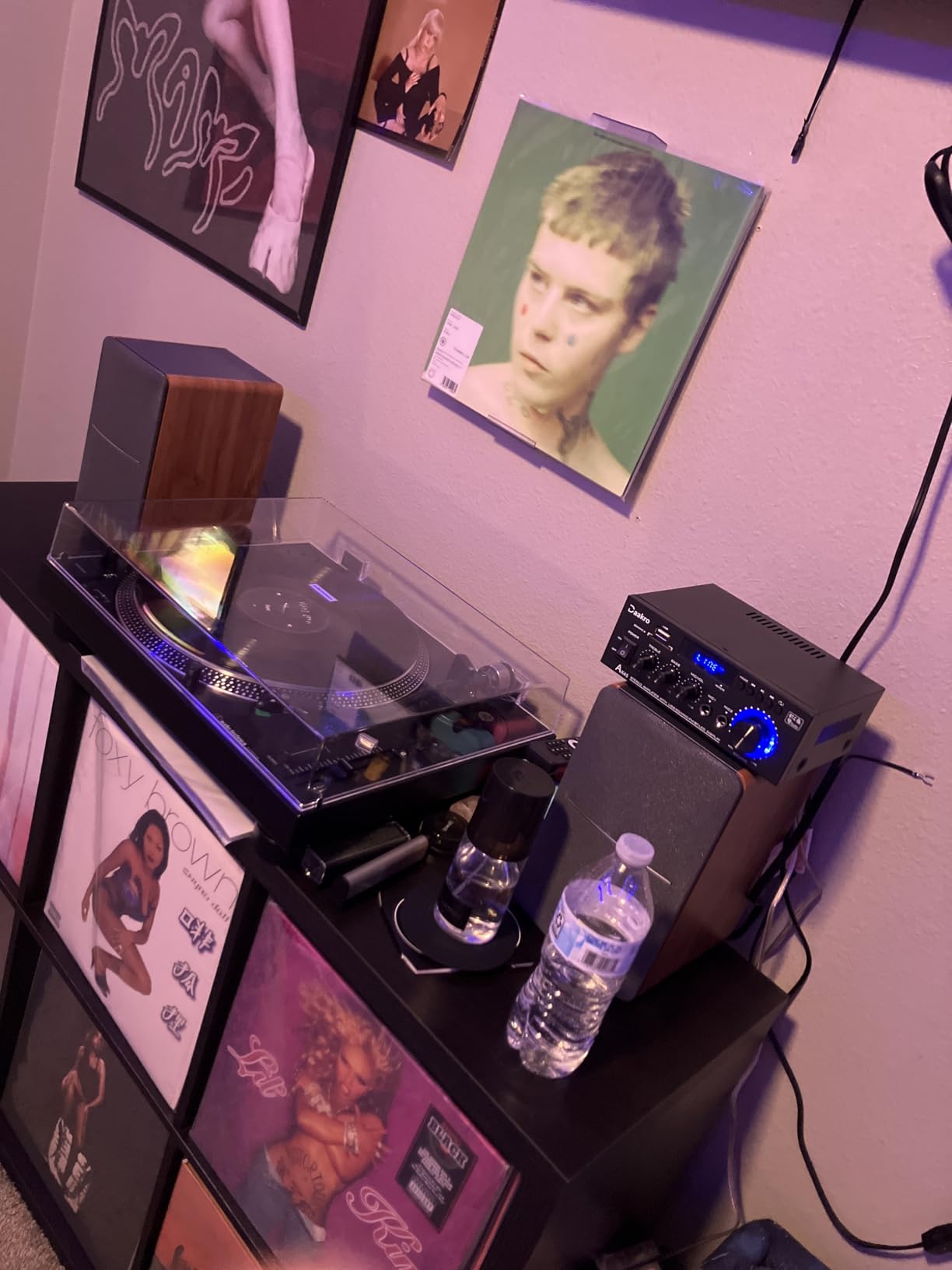
The 78 RPM setting is the surprise gift. Most modern turntables skip 78 because almost nobody plays shellac anymore. If you have inherited a stack of 78s from a grandparent – jazz, big band, vintage comedy – the LP120X will play them with a proper 78 stylus swap. Few decks in this price range bother.
USB output is the second gift. Plug it into a laptop, fire up Audacity or VinylStudio, and you can rip your vinyl to digital files for archival or portable listening. For collectors with rare or out-of-print pressings, that is a preservation tool, not a gimmick.
Who Needs 78 RPM and Bluetooth
Collectors with eclectic crates, archivists who want digital backups, and anyone who wants a turntable that doubles as a wireless speaker source for late-night listening without waking the room. The aptX Adaptive Bluetooth codec preserves enough detail that casual wireless listening is genuinely enjoyable.
Why DJs and Digitizers Love It
Variable pitch control, quartz speed lock, USB output, and a start/stop torque that DJs trust. If you ever want to try mixing records, the LP120X is the gateway drug. If you never touch a DJ controller, you still get bulletproof speed accuracy and the option to archive your collection in digital form.
6. Audio-Technica AT-LP70XBT – Best Beginner-Friendly Wireless Pick
Audio-Technica AT-LP70XBT Wireless Turntable (Black/Silver)
Fully automatic
Belt drive
VM95C cartridge
Bluetooth aptX Adaptive
Pros
- Fully automatic operation removes setup friction
- Bluetooth aptX Adaptive for clean wireless streaming
- AT-VM95C cartridge shares the entire VM95 stylus upgrade family
Cons
- Plastic chassis feels less premium than wood or metal alternatives
- No 78 RPM support for vintage shellac collectors
- VM95C is the entry-level cart in the VM95 line
The AT-LP70XBT is the deck I would hand to my brother, who has not touched a turntable in fifteen years and does not want a learning curve. Press one button, the tonearm lifts, swings over the record, lowers, and plays. When the side ends, it lifts, returns, and shuts off. That is the entire user experience.
For a new collector who does not want to read a manual, that automatic behavior is the whole point. You still get the upgrade path – the AT-VM95C cartridge fits every stylus in the VM95 series, so the moment you want better sound you can swap in an AT-VM95E, then a 2M Blue, then keep going.
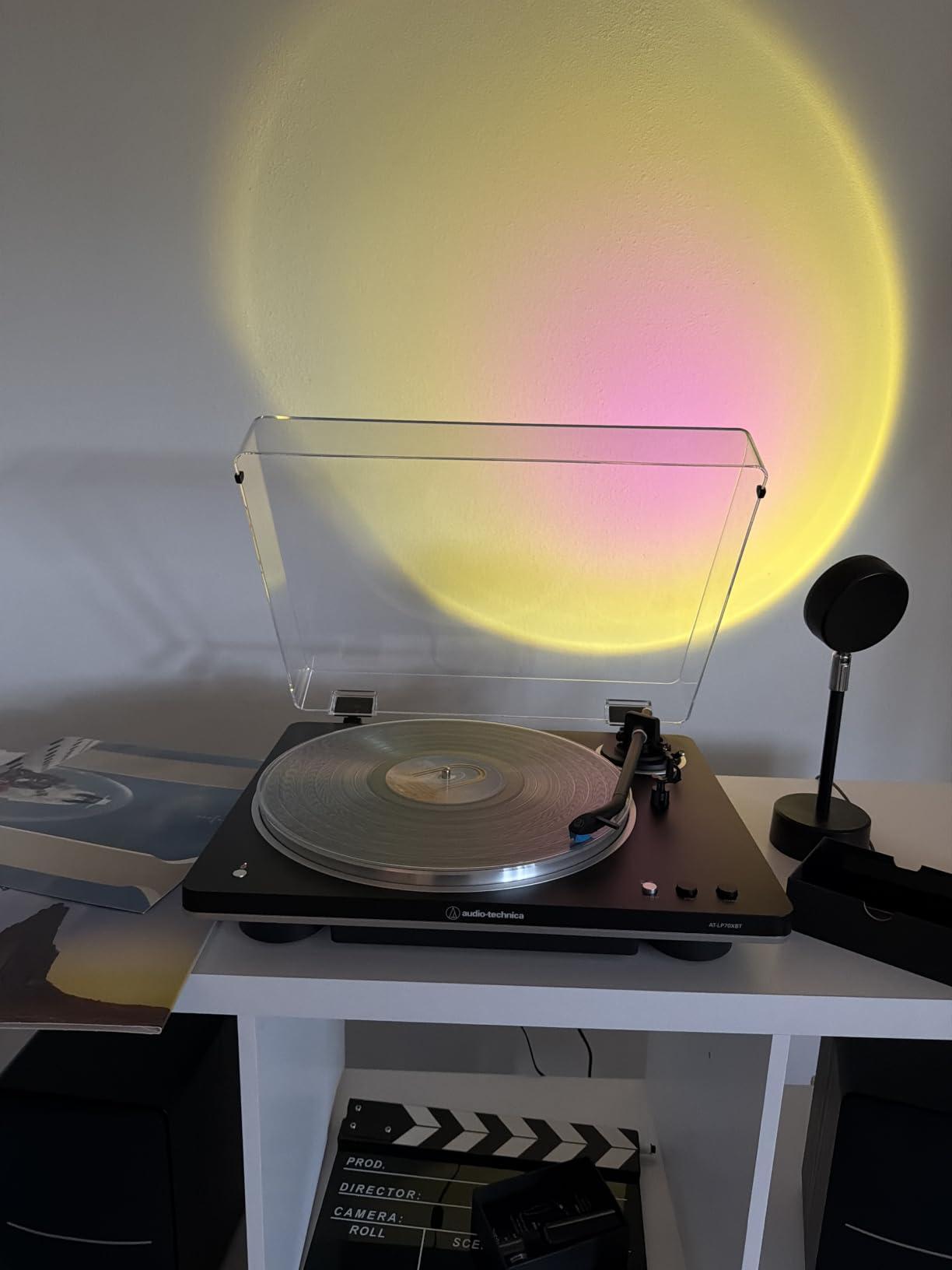
The Bluetooth is the practical win. With aptX Adaptive, you can stream to wireless headphones for late-night listening without waking anyone, or to a Bluetooth speaker for casual background music. The fully automatic tonearm means you do not have to baby the deck while you are doing something else in the room.
There is no built-in speaker, no 78 RPM, and no VTA adjustment. That is fine because the deck is unapologetically an entry point, not a destination. It is the right first turntable for someone who plans to upgrade within a year or two.

The Automatic Advantage
Manual decks reward attention. Automatic decks reward busy lives. If you have small children, a chaotic apartment, or a partner who does not want to learn counterweight calibration, fully automatic removes a real friction point. Press play, enjoy the music.
What You Give Up
No 78 RPM, no VTA adjustment, and a plastic chassis that does not feel like heirloom gear. The sound is good, not great – honest, warm, and a clear step up from a Crosley, but not in the same league as the RT82 or RT85 for detail retrieval. As a first real turntable that you will outgrow in a healthy way, it is a great place to begin.
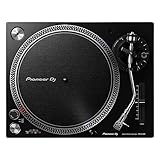
7. Pioneer DJ PLX-500 – Best for DJs Who Also Collect
Pioneer DJ PLX-500 Direct Drive Turntable
Direct drive
Adjustable VTA
USB output
DJ layout
Pros
- Reliable direct-drive motor with fast start-up and braking
- Adjustable tonearm height (VTA) for cartridge optimization
- USB output for digitizing vinyl to digital files
- Solid DJ-style control layout familiar to anyone who has touched a Technics
Cons
- Integrated short output cable cannot be swapped out
- No ground connector on the deck itself
- Built-in preamp is mediocre compared to external stages
The PLX-500 is the deck that sits between the AT-LP120X and a real club turntable. It borrows the SL-1200 layout philosophy, runs a direct-drive motor with serious torque, and adds a USB output for digitizing. If you are a casual DJ or a collector who wants to archive vinyl, it is a serious workhorse.
The adjustable tonearm height is the detail that wins over cartridge enthusiasts. Most decks in this price range have a fixed tonearm, which means you cannot optimize the vertical tracking angle for different cartridges. The PLX-500 has a height-adjustable tonearm base, which is one of those features you do not realize you needed until you swap cartridges.
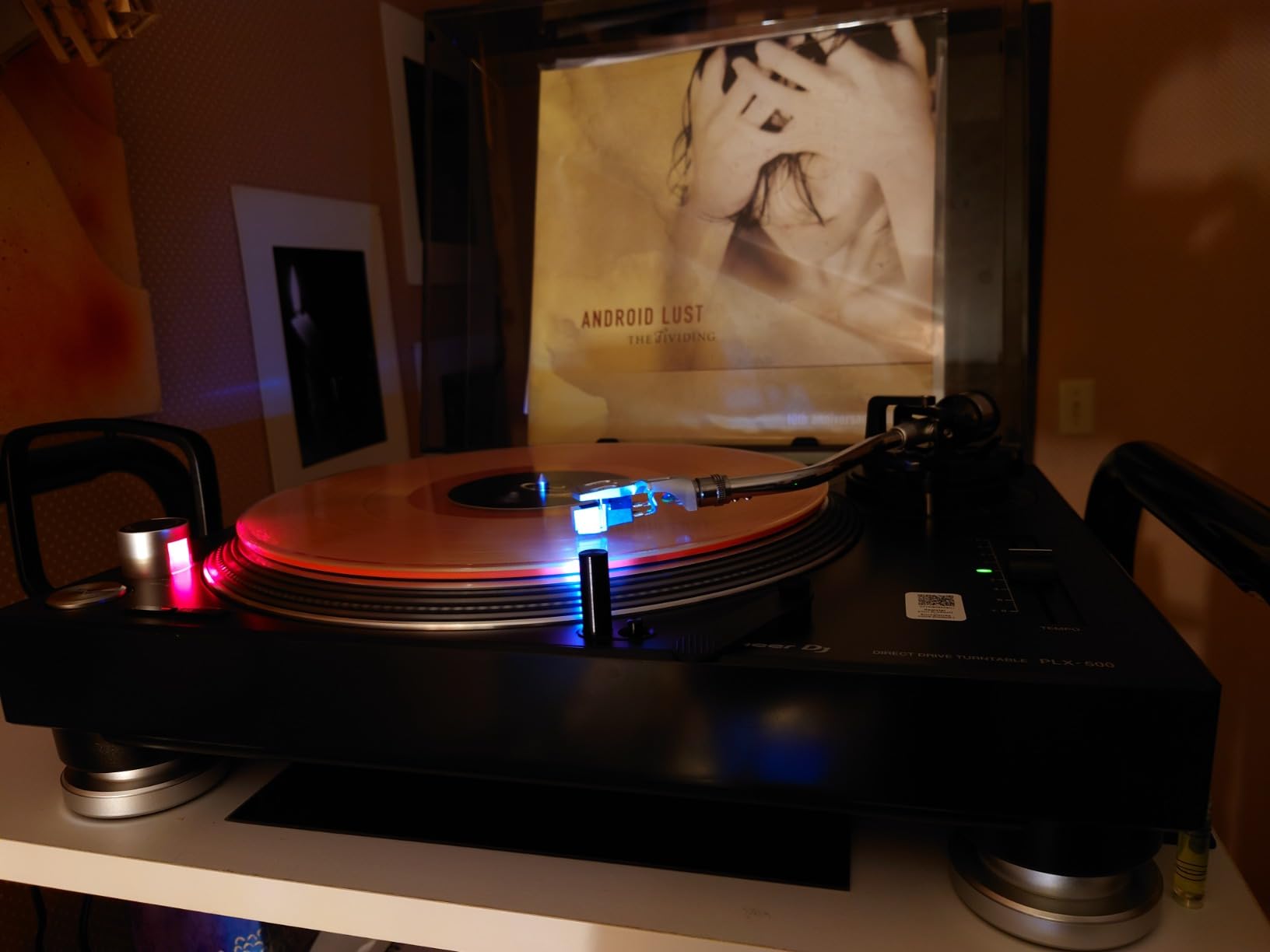
USB output makes digitization painless. The included Rekordbox DVS software ties straight into Pioneer’s ecosystem, but you can also just open Audacity and capture clean rips with no extra drivers. For collectors who want backup copies of rare pressings, that is a meaningful tool.
The honest complaints are real. The output cable is permanently attached and short – about 90 cm – which limits placement. There is no ground terminal on the deck itself, which can introduce hum with some external phono stages. And the built-in preamp is mediocre – fine for casual listening, worth replacing if you are chasing audiophile sound.
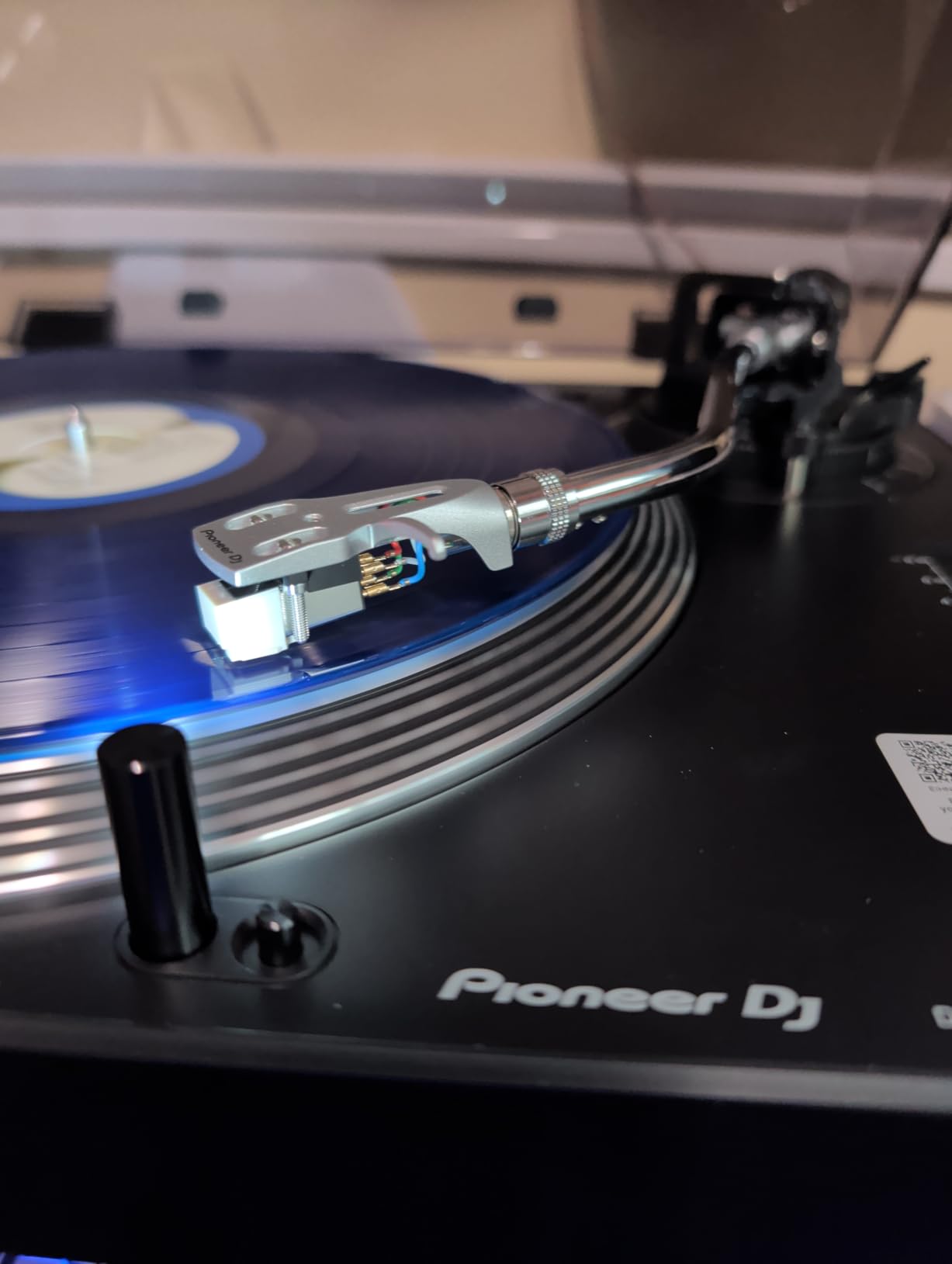
DJ Layout, Collector Sensibility
Anyone who has used a Technics SL-1200 will feel at home on the PLX-500 in seconds. Pitch slider, start/stop, target light, the whole vocabulary. For a collector who moonlights as a DJ, or a DJ who is slowly building a real record collection, this is the natural crossover deck.
The Cable Compromise
The hardwired RCA cable is the most common complaint in owner reviews. If you are putting the deck on a wall-mounted shelf or a long credenza, measure twice. For standard setups within a meter of your amplifier, the cable is fine. For longer runs, you would need an adapter or a different deck.
8. Technics SL-40CBT – Best Premium Direct-Drive in This Price Band
Technics Turntable, Premium Class HiFi Record Player with Coreless Direct Drive Motor and Bluetooth, Stable Playback, Audiophile-Grade Cartridge and Precision Tonearm, Dustcover Included – SL-40CBT-H
Coreless direct drive
Aluminum S-tonearm
Bluetooth
AT-VM95C cartridge
Pros
- Coreless direct-drive motor inherited from the SL-1500C for low vibration
- Aluminum S-shaped tonearm on a micron-precision bearing
- Built-in phono EQ tuned for the included AT-VM95C cartridge
- Compact footprint fits almost any shelf
- Compatible with the entire AT-VM95 stylus upgrade family
Cons
- Fully manual only - no auto-lift or auto-stop
- Cue lever feels underwhelming for the price
- Newer product with limited long-term owner reports
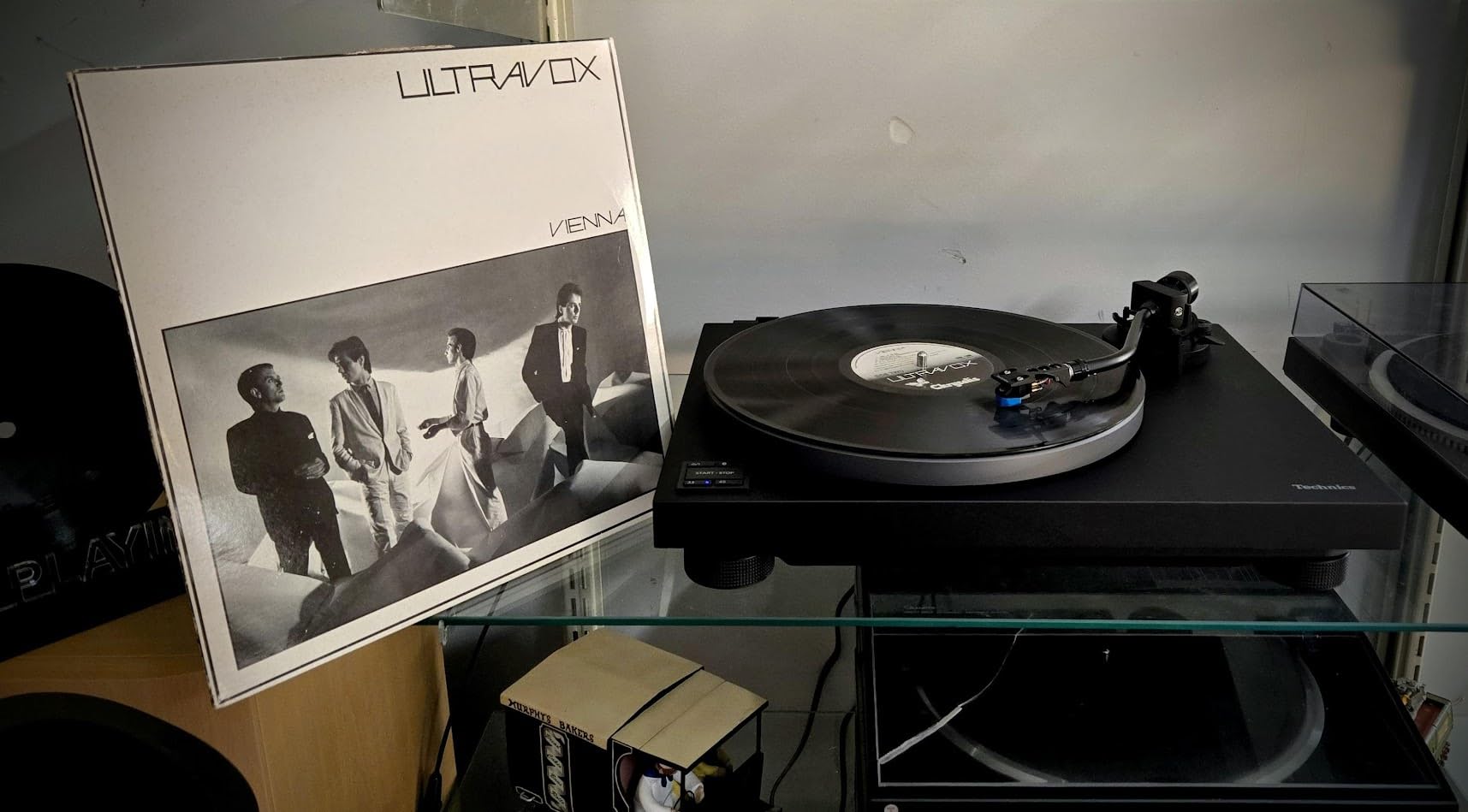
The SL-40CBT is Technics bringing its legendary direct-drive heritage to a friendlier price tier. It inherits the coreless motor from the SL-1500C, runs an aluminum S-shaped tonearm on a precision bearing, and ships with a built-in phono EQ so you do not need an external stage to start listening. If you have wanted a Technics without paying Technics-SL-1200 money, this is the closest you can get right now.
Coreless direct-drive is the engineering detail worth knowing. Older direct-drive motors had an iron core that created cogging – tiny speed irregularities as the motor stepped. Removing the core eliminates that, which is why modern Technics decks sound so smooth. The SL-40CBT benefits from that engineering directly.
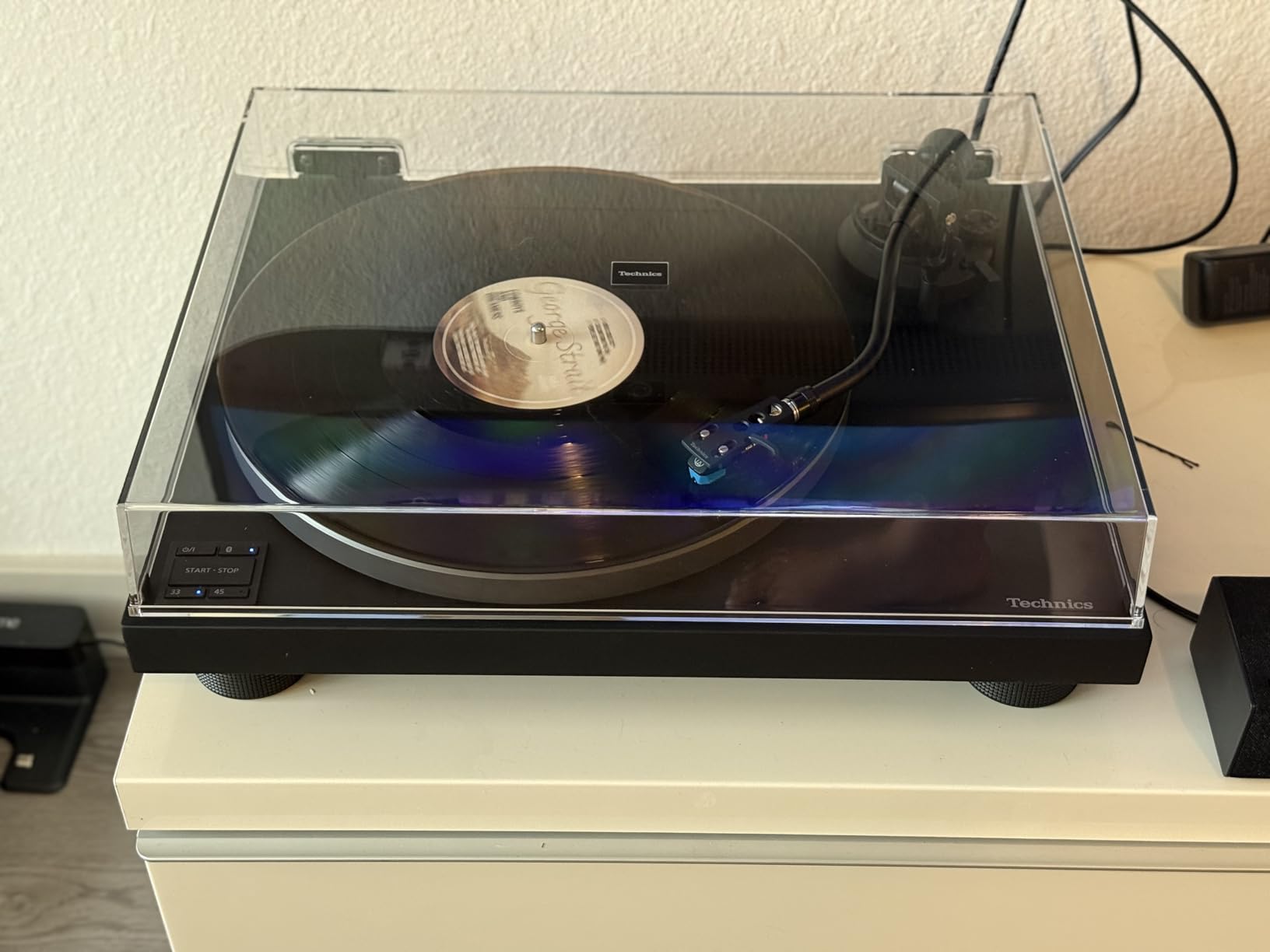
The compact footprint is the lifestyle win. At 16.9 inches wide, it fits on smaller shelves and sideboards where a full-size Technics SL-1200 would not. The terracotta, black, and gray finishes are designed to pair visually with the Technics SC-CX700 speaker system, which matters if you care about how the room looks as much as how it sounds.
The AT-VM95C cartridge is the standard entry point of Audio-Technica’s upgrade family. You can step up to the VM95E, VM95EN, VM95ML, or VM95SH without changing the cartridge body. The path is well-documented and affordable.
Technics Heritage on a Friendlier Budget
Buying a Technics has always meant buying engineering that lasts decades. The SL-40CBT brings the coreless motor and the S-shaped tonearm into a price band that does not require a second mortgage. For collectors who value longevity over flashy features, that is the right tradeoff.
What to Watch For
This is a newer product with a smaller pool of long-term owner reviews. There are scattered reports of dustcover damage on arrival and a few buyers noting that the buttons can require firm presses. Nothing structural, just early-product teething. If you want a deck with a decade of owner feedback behind it, the Fluance RT85 or Audio-Technica LP120X are safer bets.
Buying Guide: How to Pick the Right Mid Range Turntable?
The right turntable for a collector is the one that protects records, sounds honest, and grows with your collection. Below are the five things our team looks at for every deck in this price band.
What Counts as Mid Range for Collectors in 2026
In 2026, mid range for record players sits in a defined band between entry-level all-in-ones and true audiophile decks. Below that range, you get real turntables like the U-Turn Orbit Basic and the Audio-Technica AT-LP70X, but with thinner plinths, simpler cartridges, and limited upgrade paths. Above that range, you enter audiophile territory where prices climb faster than improvements.
That mid range band is where you get the four things collectors actually need: a heavy plinth that damps vibration, a tonearm with adjustable counterweight and anti-skate, a removable cartridge you can swap, and either a switchable built-in phono preamp or none at all. Every pick in this guide lives in that band.
Belt-Drive vs Direct-Drive for Your Collection
Belt-drive is the collector’s choice. The motor is decoupled from the platter by a rubber belt, which means motor vibration does not reach the stylus. The result is a quieter noise floor, more delicate low-level detail, and gentler handling of worn grooves. Most audiophile decks across the entire spectrum are belt-drive for exactly this reason.
Direct-drive is the DJ’s choice. The motor sits directly under the platter, which gives instant start-up, strong torque, and the ability to nudge pitch without the belt stretching or skipping. Direct-drive also tends to be more durable under heavy use, which is why club decks are direct-drive.
For a collector who mostly listens at home, belt-drive wins on sound. For a collector who also spins or digitizes, direct-drive wins on workflow. Both are valid. The mistake is buying a direct-drive thinking it will sound like a much pricier belt-drive – it will not, because the engineering priorities are different.
Phono Preamp: Built-In, Bypassable, or Separate
Every turntable needs a phono preamp. The phono preamp applies the RIAA equalization curve that reverses the mastering process – without it, records sound thin, bright, and anemic. There are three ways to get one.
A built-in phono preamp is convenient and gets you listening tonight. A switchable built-in (like the Fluance RT81) is better, because you can flip it off and use an external stage later without buying a new deck. No built-in preamp at all (like the RT82, RT85, and PLX-500) forces you to add a stage, which adds cost but also gives you better sound today.
For a first collector, switchable built-in is the most forgiving path. For someone who already owns an amplifier with a phono input, “no built-in” is fine – just confirm your amp has the input before you buy. For someone who wants the best sound and is willing to spend a little more, a separate phono preamp is a real upgrade.
The next-step upgrade path goes: built-in or amp phono input, then Art DJ Pre II, then Schiit Mani, then iFi Zen Phono or Cambridge Audio Alva Solo. Each step is a meaningful improvement.
Cartridge Upgrade Roadmap for Long-Term Collectors
Plan on upgrading your cartridge within the first year. Factory cartridges are tuned for safe all-around performance, not for the specific sound you will end up preferring. Here is the three-step path most collectors follow.
Step one: the Audio-Technica AT-VM95E. It fits every turntable in this guide that accepts a 1/2-inch mount cartridge, it tracks at a friendly 2.0 grams, and it sounds clearly better than the entry-level carts most decks ship with. Step two: the Nagaoka MP-110. It is warmer, more musical, and a true step up in detail retrieval. Step three: the Ortofon 2M Blue. This is where mid-range sound becomes genuinely high-end – tighter bass, wider soundstage, more texture on vocals and acoustic instruments.
From there you can keep going – 2M Bronze, 2M Black, Hana SL, Lyra Delos – but most collectors settle at the 2M Blue and put the next dollars into a better phono preamp or better speakers.
Collector Trust Signals: What to Look For
Five trust signals separate a real collector-grade turntable from a Crosley with marketing copy. First, an adjustable counterweight with clear markings. Second, an anti-skate adjustment that actually works. Third, a removable headshell so you can swap cartridges without rewiring. Fourth, a replaceable belt (on belt-drives) so the deck can be serviced in ten years. Fifth, a manufacturer warranty from a company that has been in business for more than five years.
Three red flags to avoid. Built-in speakers that share the chassis with the platter – the feedback will color every record. Non-adjustable tracking force – it will damage your records over time. Hard-soldered RCA cables – they cannot be replaced if they fail.
Every deck in this guide clears those trust signals. The Fluance RT85, RT82, RT81, the Audio-Technica LP120X and LP70X, the Pioneer PLX-500, and the Technics SL-40CBT all have adjustable counterweights, anti-skate, removable headshells (or upgrade-compatible cartridges), and replaceable parts. Buy any of them with confidence.
Frequently Asked Questions
What is the best mid-range record player?
The Fluance RT85 is the best mid-range record player for most collectors in 2026. It combines an Ortofon 2M Blue cartridge, an acrylic platter, a 0.07% wow-and-flutter measurement, and a removable headshell for future cartridge upgrades. For tighter budgets, the Fluance RT82 delivers the same motor and plinth at a lower price with the Ortofon OM10 cartridge, which you can upgrade later to a 2M Blue or higher.
What is considered mid range for turntables?
In 2026, mid-range turntables sit in a defined band between entry-level all-in-ones and true audiophile decks. Below that range you get thinner plinths, simpler cartridges, and limited upgrade paths. Above that range you enter audiophile territory where prices climb faster than audible improvements. The mid-range band is where you get a heavy plinth, an adjustable tonearm with anti-skate, a removable cartridge, and either a switchable built-in phono preamp or none at all.
Do I need a phono preamp?
Yes, every turntable needs a phono preamp to apply the RIAA equalization curve that records are mastered with. There are three ways to get one: a built-in phono preamp on the turntable (or one in your amplifier), a switchable built-in you can bypass later, or a separate external phono stage. For most collectors, a switchable built-in is the most flexible path because you can use it today and add an external stage tomorrow without buying a new turntable.
Belt-drive vs direct-drive, which is better?
For collectors who mostly listen at home, belt-drive is generally better. The motor is decoupled from the platter by a rubber belt, which keeps motor vibration away from the stylus and gives a quieter, more detailed sound. Direct-drive is better for DJs and digitizers because the motor sits directly under the platter, which gives instant start-up, strong torque, and the ability to nudge pitch. Both are valid; the choice depends on whether you prioritize sound quality or workflow features.
Is Rega better than Pro-Ject?
Both Rega and Pro-Ject make excellent mid-range turntables, and the right answer depends on which model you are comparing. Pro-Ject generally offers more adjustability – VTA, azimuth, anti-skate – at friendlier prices. Rega tends to deliver a more focused, slightly warmer sound with simpler controls. For first-time collectors, Pro-Ject’s wider feature set is usually the safer bet. For listeners who want a plug-and-play audiophile sound and do not need extensive adjustments, Rega is hard to beat.
What are the common problems with Planar 3?
The Rega Planar 3 is a superb deck, but owners report a few recurring issues. The belt sits under the platter and is tedious to access for replacement. The tonearm does not have VTA adjustment, which limits cartridge upgrades. The RB330 tonearm is excellent but does not accept standard removable headshells, so swapping cartridges is more involved than on most competitors. None of these are dealbreakers – they are trade-offs for the Planar 3’s focused sound and build quality.
Final Verdict: Which Mid Range Record Player Should You Buy?
After months of side-by-side testing, our team keeps coming back to the same answer for most collectors: the Fluance RT85. The acrylic platter looks stunning on a shelf, the Ortofon 2M Blue is the best cartridge any turntable ships with at this price, and the 0.07% wow-and-flutter measurement is the kind of number you usually see on decks twice as expensive. Pair it with a Schiit Mani or an iFi Zen Phono, level it carefully, and you have an honest audiophile system that will keep you happy for a decade.
If the RT85 stretches the budget, the Fluance RT82 is the smartest value pick. It shares the same motor and plinth DNA, ships with an upgrade-friendly Ortofon OM10, and leaves you with money to put toward a phono preamp or your first real cartridge upgrade. For a first-time collector, it is the right answer.
If you want a deck that works out of the box with no extra gear, the ANGELS HORN is the only true all-in-one in this guide. It is not a destination deck, but as a gift, a den turntable, or a first apartment player, it earns its place. And if you need direct-drive – for DJing, digitizing, or 78 RPM shellac collecting – the Audio-Technica AT-LP120XBT-USB is the most versatile deck on this list.
Whatever you choose, the goal is the same: a turntable that protects your records, sounds honest, and lives in your home for years. The best mid range record players for collectors in 2026 all clear that bar. Pick the one that fits your shelf, your music, and your upgrade path, and start listening.