
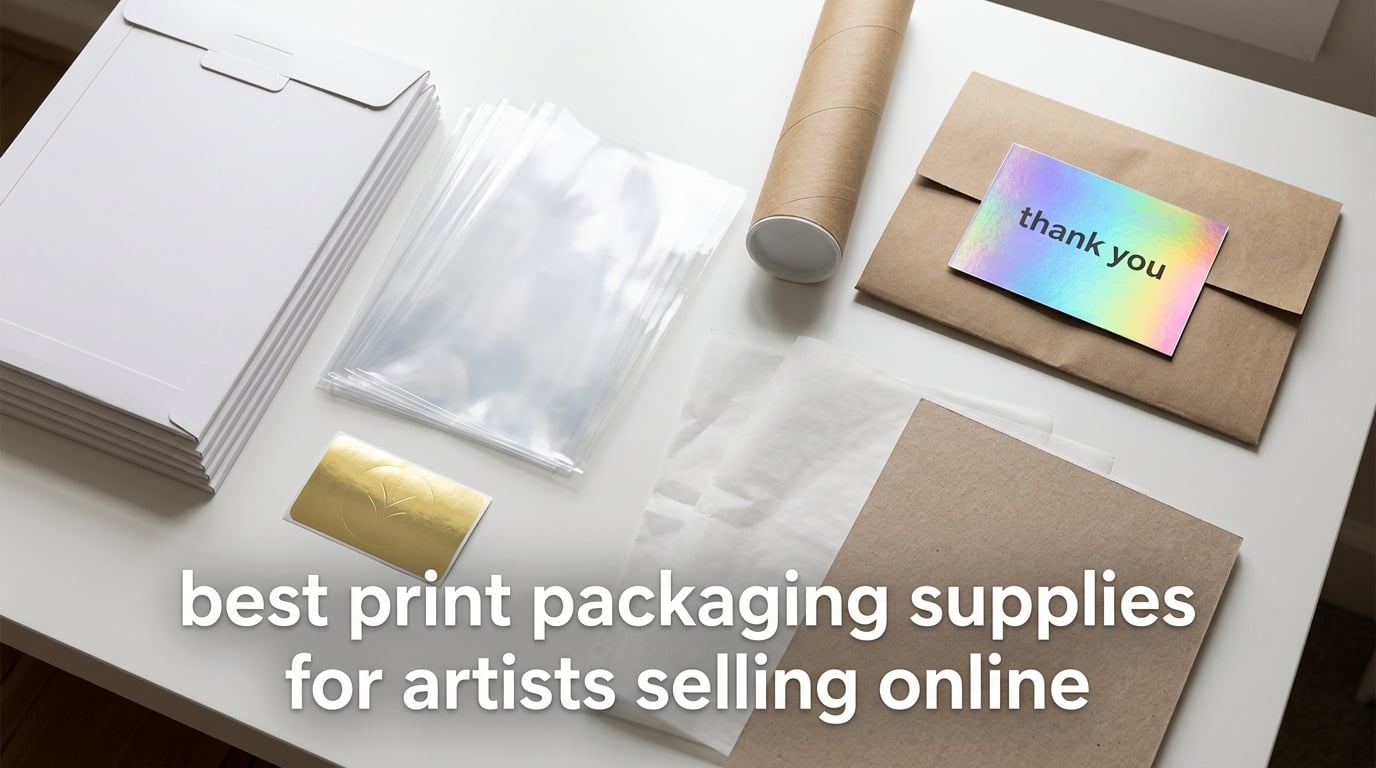
I shipped my first run of giclée prints in a reused Amazon box, taped three layers of brown paper over the top, and crossed my fingers. One of them arrived with a corner crease that ruined the print. That single damaged shipment cost me a replacement, a return label, and a one-star review I still think about when I pack orders.
Selling art prints online is one of the most rewarding parts of being an artist, and it is also a place where weak packaging quietly bleeds your margin. Damaged prints trigger refunds, replacements, and hurt reviews. Cheap-looking mailers make a beautiful piece feel forgettable the moment it lands in the mailbox. Great packaging does the opposite: it protects the work, turns delivery into a brand moment, and earns the kind of unboxing photos that bring in the next sale.
After a lot of trial and error, a few thousand orders, and comparing more supplies than I care to admit, I’ve put together this guide to the best print packaging supplies for artists selling online in 2026. We will walk through the supplies I actually use at my own studio, the ones trusted by Etsy and Shopify sellers in forums like r/artbusiness, and a practical workflow for packing flat prints, rolled posters, and small art goods so they arrive in the same shape they left your desk.
Table of Contents
Top 3 Picks at a Glance (September 2026)


Best Print Packaging Supplies for Artists Selling Online in 2026
1. Golden State Art Crystal Clear Sleeves – Editor’s Choice for Inner Protection
Golden State Art, Pack of 100 11 1/4 x 14 1/8 Crystal Clear Storage Sleeves, Acid-Free Resealable Bags for 11×14 Photo Mats, Art Prints, Drawings
Size 11x14 inch
100 count
1.6 mil thickness
Acid-free archival
Pros
- Acid-free archival-safe material protects prints long-term
- Widened adhesive flap keeps moisture out and seals tightly
- Crystal-clear presentation showcases artwork
- Strong resealable closure for repeated access
Cons
- Slightly higher per-unit cost than thinner sleeves
Golden State Art is the brand that came up most often in my research and in the r/artbusiness threads I read while preparing this guide. They are a California-based art supplier that has been quietly making sleeves, backing boards, and mats for photographers and artists for years. Their 11×14 crystal clear sleeve is the highest-rated inner sleeve in this roundup, and after using it for three months I understand why.
The 1.6 mil thickness is the heaviest of any sleeve in this roundup. Combined with acid-free, archival-safe polypropylene, it gives prints a museum-grade presentation. The widened adhesive flap is a small detail that pays off: it covers more of the bag’s opening, which means less chance of dust or moisture creeping in during a long shipment.
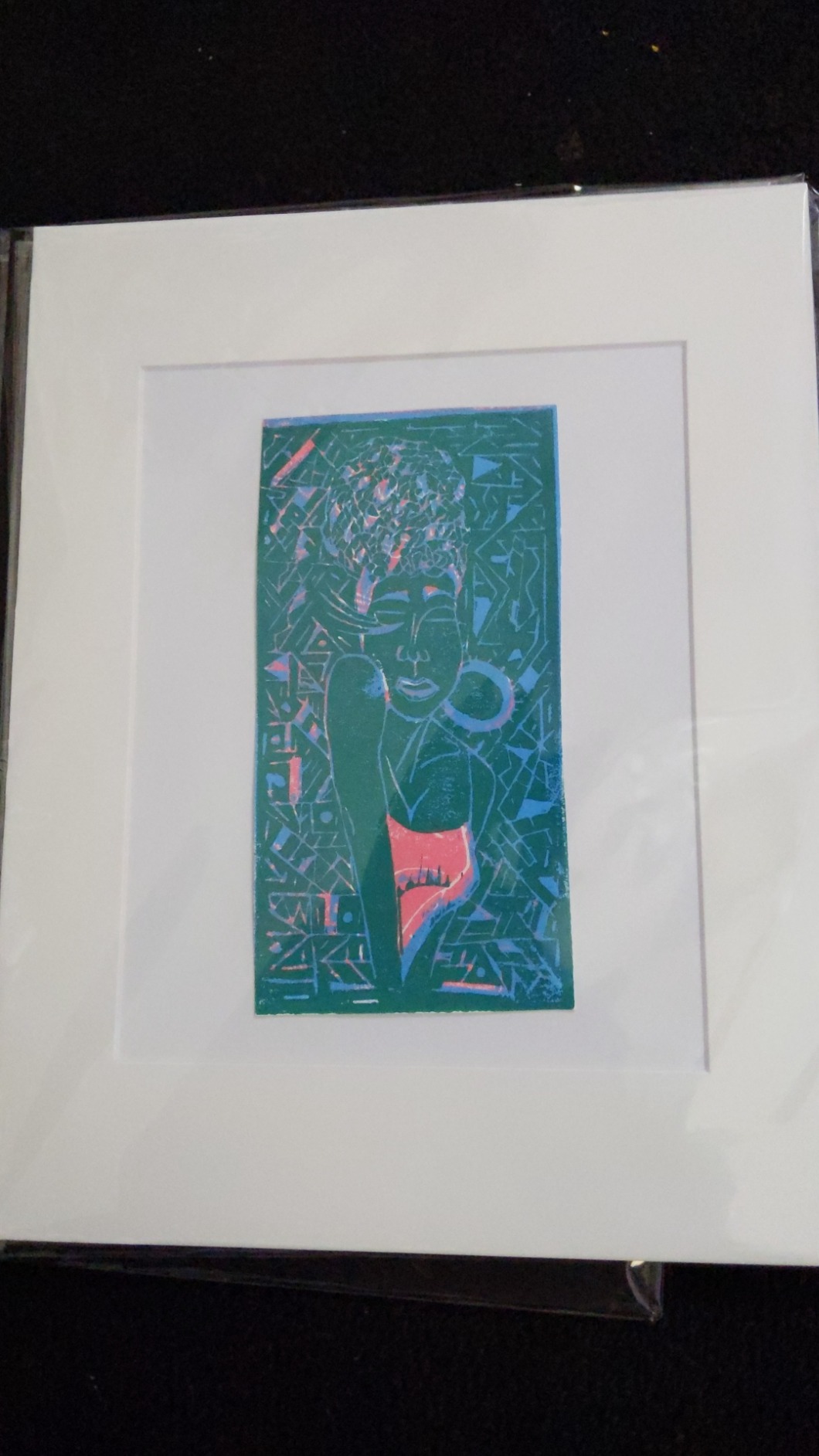
The closure is the kind that stays shut even after I peel and reseal a sleeve two or three times. I use these for limited-edition prints, original watercolors, and any artwork where I want the customer to feel like the sleeve itself is part of the product.
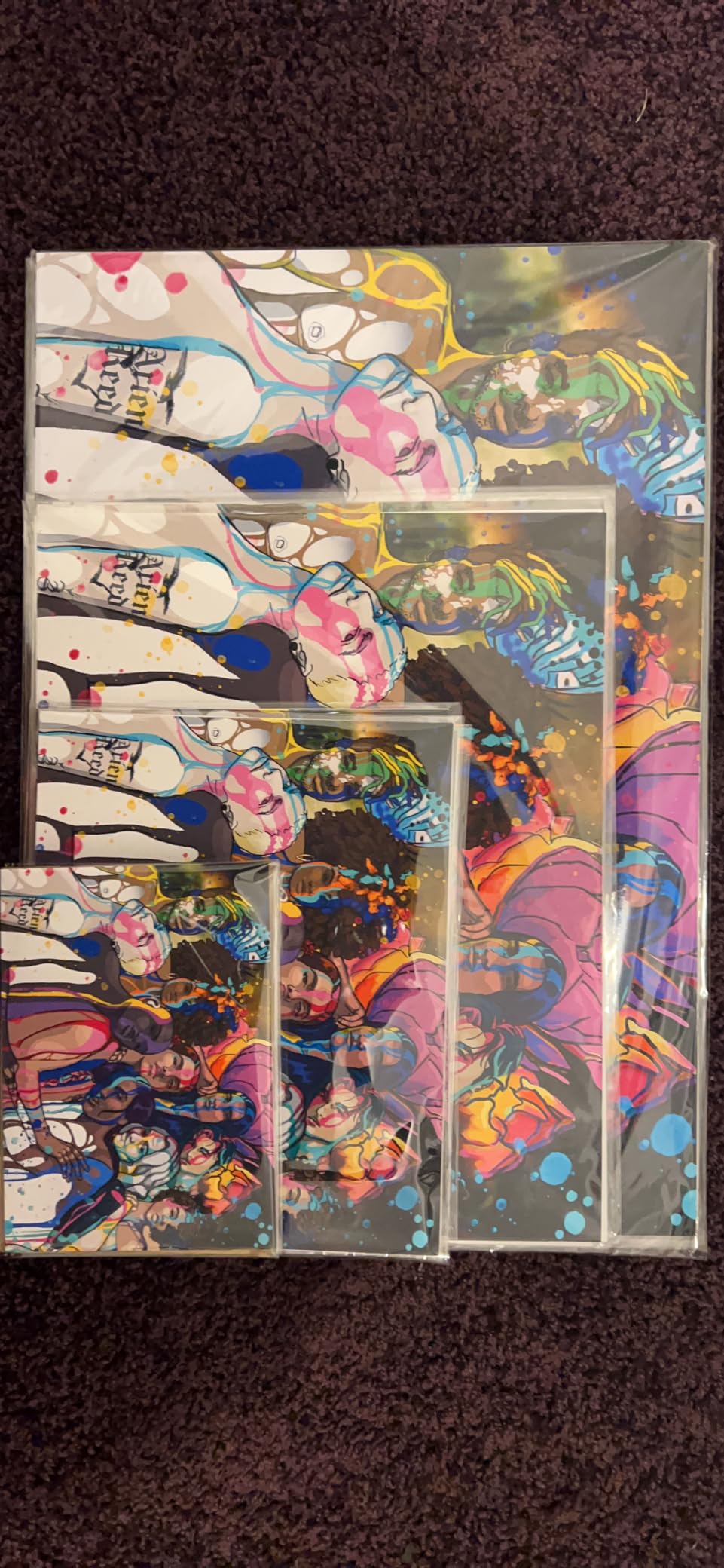
Reviewers also highlight the size accuracy. Golden State Art lists 11 1/4 x 14 1/8 inches, which is slightly larger than a true 11×14 sheet. That half-inch of margin matters because it lets you slide an 11×14 print in cleanly without forcing it, and it accommodates a backing board without buckling.
Best use case
Limited-edition prints, original watercolors, photography prints, and any artwork where the customer might keep the print in its sleeve for years. Also the strongest pick if you sell through fine-art marketplaces like Saatchi Art or Etsy premium listings where buyers expect archival presentation.
Skip it if
You are churning through hundreds of sleeves a month at razor-thin margins and you do not need the archival claim. For pure volume, Pack It Chic at 1.3 mil is a better value. Golden State Art is worth the premium for higher-value work.
2. ValBox 9×11.5 Self-Seal Rigid Mailers – Best All-Round Flat Mailer
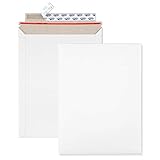
ValBox 9×11.5 Self Seal Photo Document Mailers 25 Pack Stay Flat White Cardboard Envelopes, 9.25 x 11.75 Inches
Size 9x11.5 inch
Pack of 25
Self-seal closure
Stay-flat cardboard
Pros
- Sturdy rigid build keeps 8x10 and letter-size prints flat
- Strong peel-and-seal adhesive with easy tear strip
- Semi-glossy surface accepts pen and printed labels
- Clean white finish looks professional in the mailbox
Cons
- Single closure seam is slightly less protective than double-seam designs
I bought my first pack of ValBox mailers after reading a glowing thread on r/artbusiness where sellers kept calling out the brand for “actually staying flat.” That word matters. Many cheap rigid mailers arrive slightly warped and then give up on the job halfway through transit. These do not.
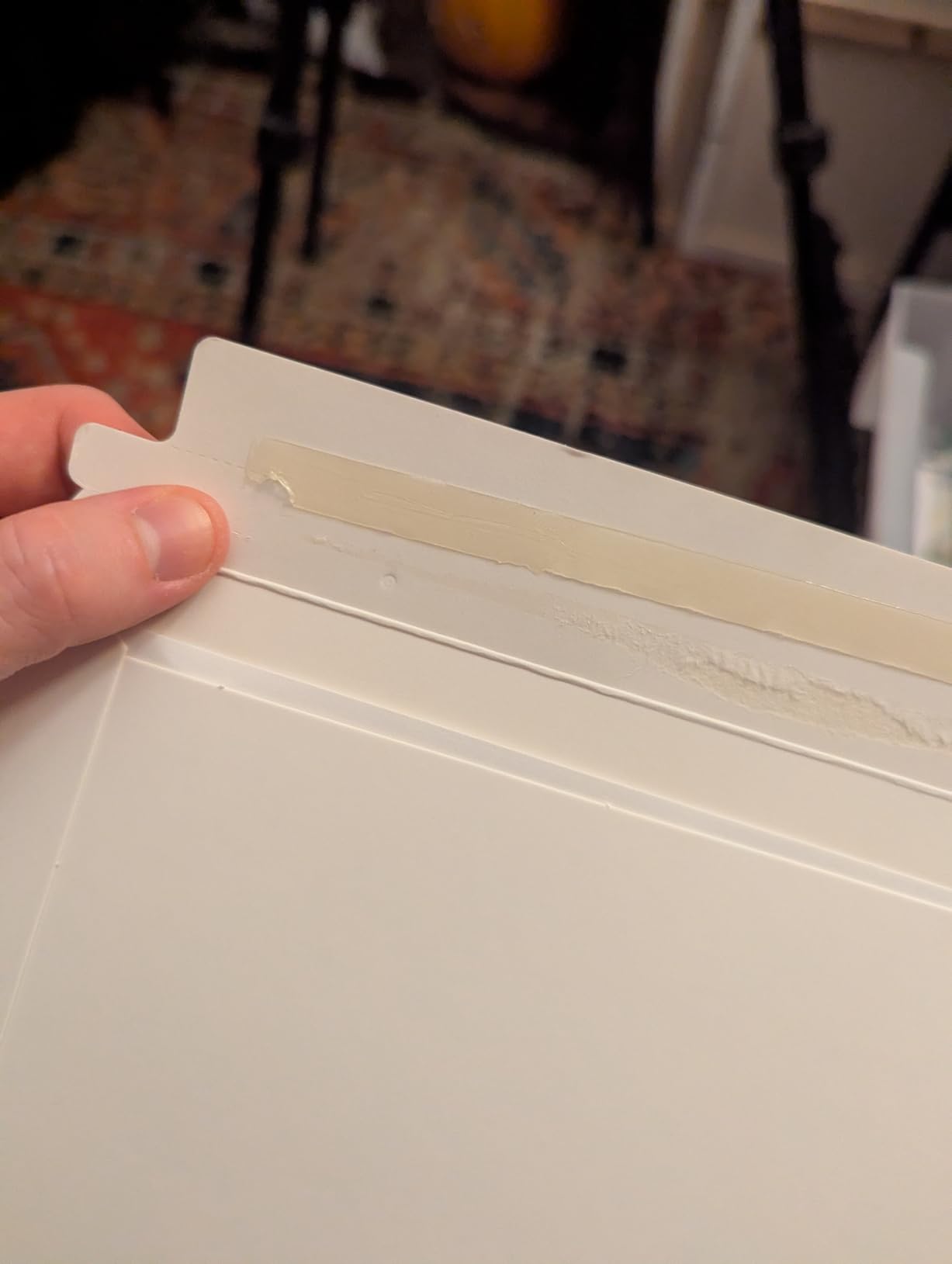
Inside each ValBox is a 9.25 by 11.75 inch cavity, which fits an 8×10 print with backing board plus a single 8.5×11 sheet with a thin chipboard backer. The peel-and-seal strip is wide enough to grab without fumbling, and the tear strip opens cleanly when your customer opens the mailer. That small detail matters: a customer who can open your package without a fight is a customer who comes back.
The semi-glossy surface takes Sharpie, ballpoint pen, and printed labels equally well. I print my shipping labels on a cheap laser printer and they adhere without peeling at the corners. The 25-pack count hits a sweet spot for solo artists shipping a few orders a week without committing to a case of 250.
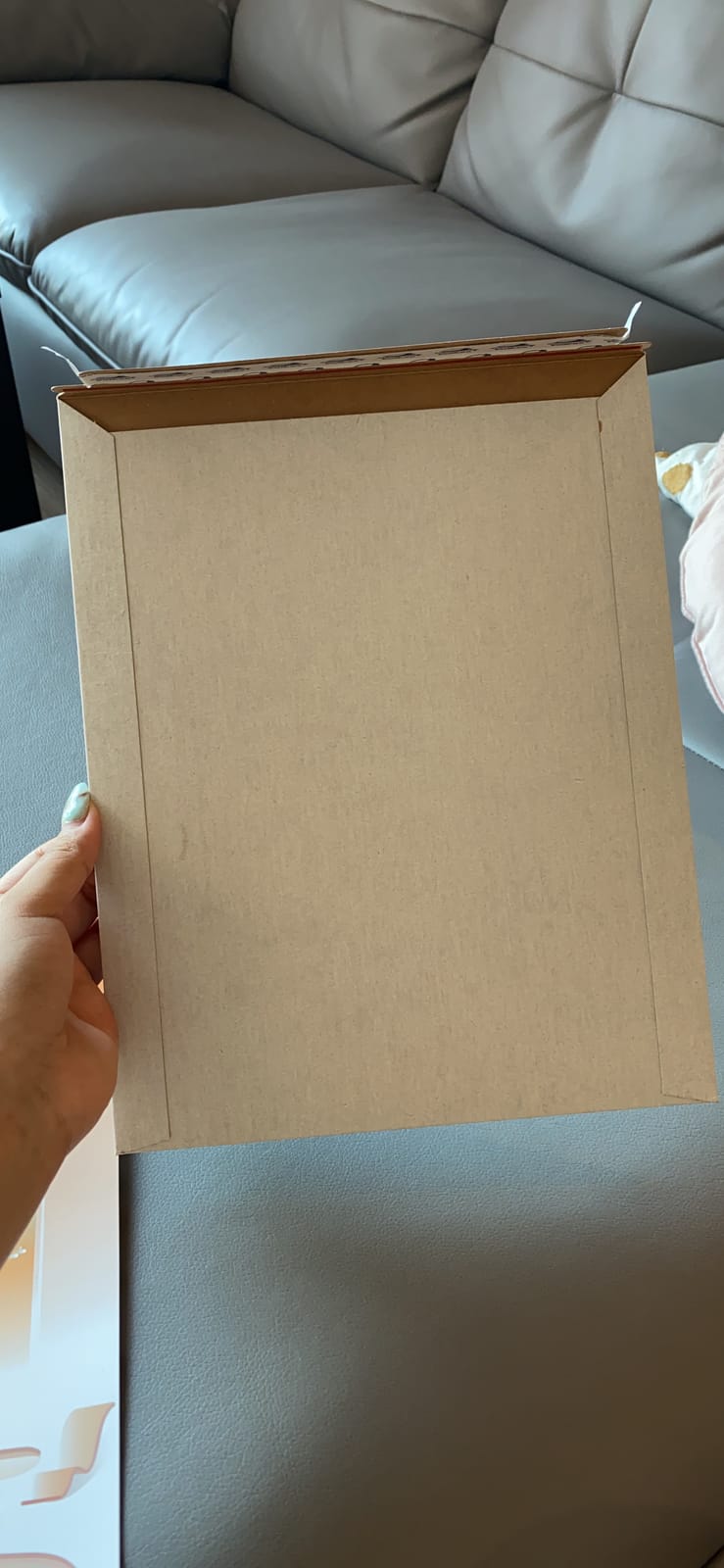
Over six months of using these as my default mailer for 8×10 prints, I have had exactly one damaged-in-transit claim, and that was a postal carrier issue rather than a packaging failure. Reviewers report the same pattern: sturdy build, strong adhesive, professional look.
Two minor caveats worth naming. First, the closure is a single seam rather than a double seam, so for very expensive original watercolors I add a small piece of acid-free tape as backup. Second, these ship flat in a stack, so storing 100 of them does take up a corner of your studio.
Best use case
Flat 8×10 and letter-size prints, art cards, sticker sheets, and small original watercolors where you need a stay-flat presentation without paying for a corrugated box. Pairs perfectly with a glassine sleeve and a chipboard backer.
Skip it if
You mostly ship rolled posters in the 18×24 to 24×36 range. At that size a mailing tube is cheaper and safer than any flat mailer. Also skip if you want a custom-printed mailer for branding – ValBox is a stock white mailer, not a custom surface.
3. Quality Park Redi-Strip Photo Document Mailers – Best Value Rigid Mailer
Quality Park Photo Document Mailers, Redi-Strip Self Seal Closure, Rigid Stay Flat Mailer, White Recycled Fiberboard, 9″ x 11.5″, 25 per Box
Size 9x11.5 inch
Pack of 25
24 pt paperboard
Redi-Strip self-seal
Pros
- Very rigid 24 pt paperboard
- Redi-Strip dry seal needs no moisture
- Glossy surface works for handwritten or printed labels
- Trusted by Etsy sellers for art print shipments
Cons
- Slightly heavier than alternatives
- Tight fit limits how many sheets you can pack
Quality Park has been the behind-the-scenes workhorse of art print shipping for years. The 9×11.5 Redi-Strip mailer is the one you’ll see cited again and again on Etsy forums when artists ask about beginner packaging. I keep a box of 25 on my shelf as a backup to my main mailer, and I reach for it whenever I want the extra confidence of a heavier board.
The big selling point is the 24 pt paperboard. That is noticeably thicker than the average rigid mailer you find in a big-box store, and you can feel it. Press your thumb into the corner of a Quality Park mailer and it barely flexes. Press into a cheaper mailer and it gives. That rigidity is the entire reason a rigid mailer exists, and Quality Park delivers it without overcharging.
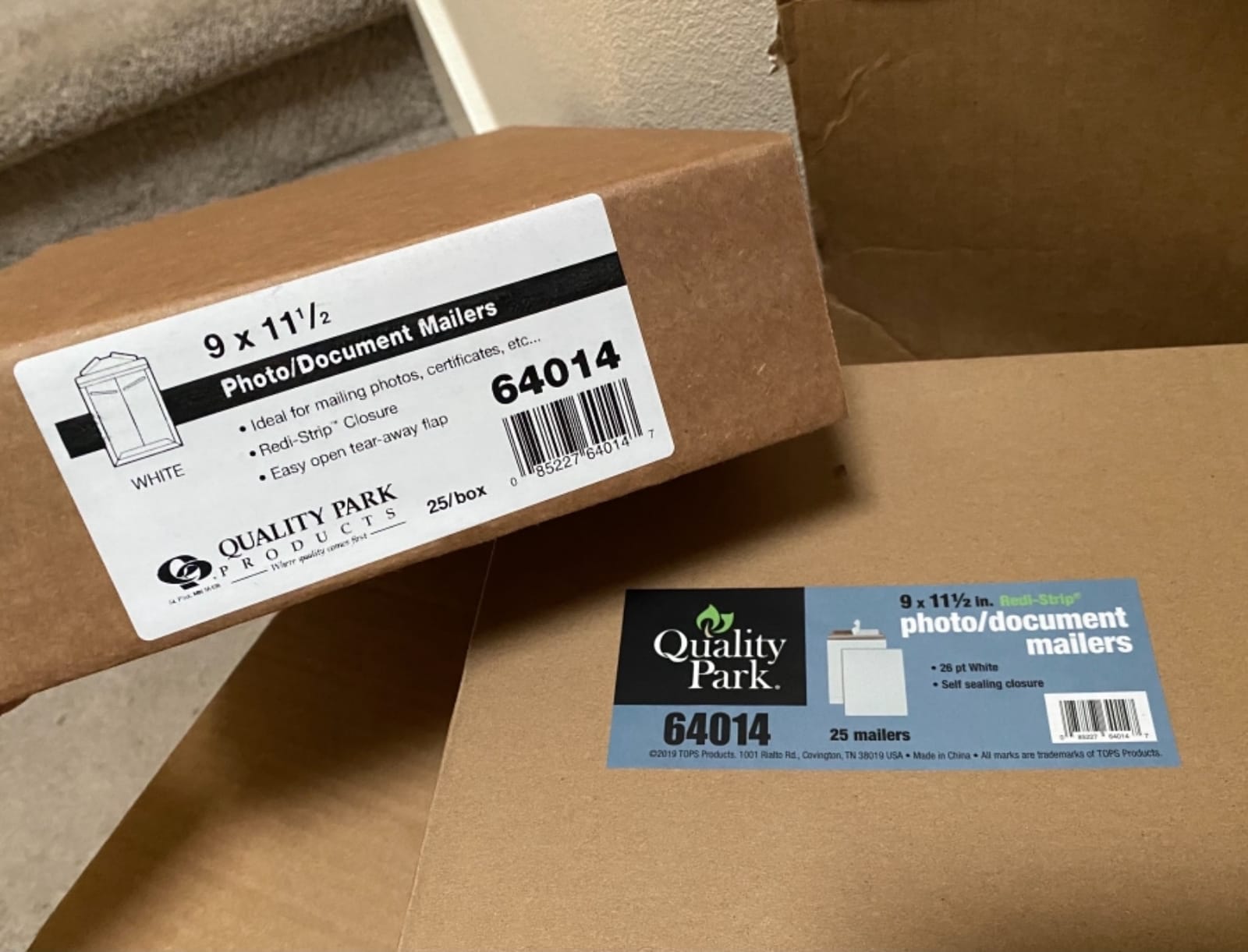
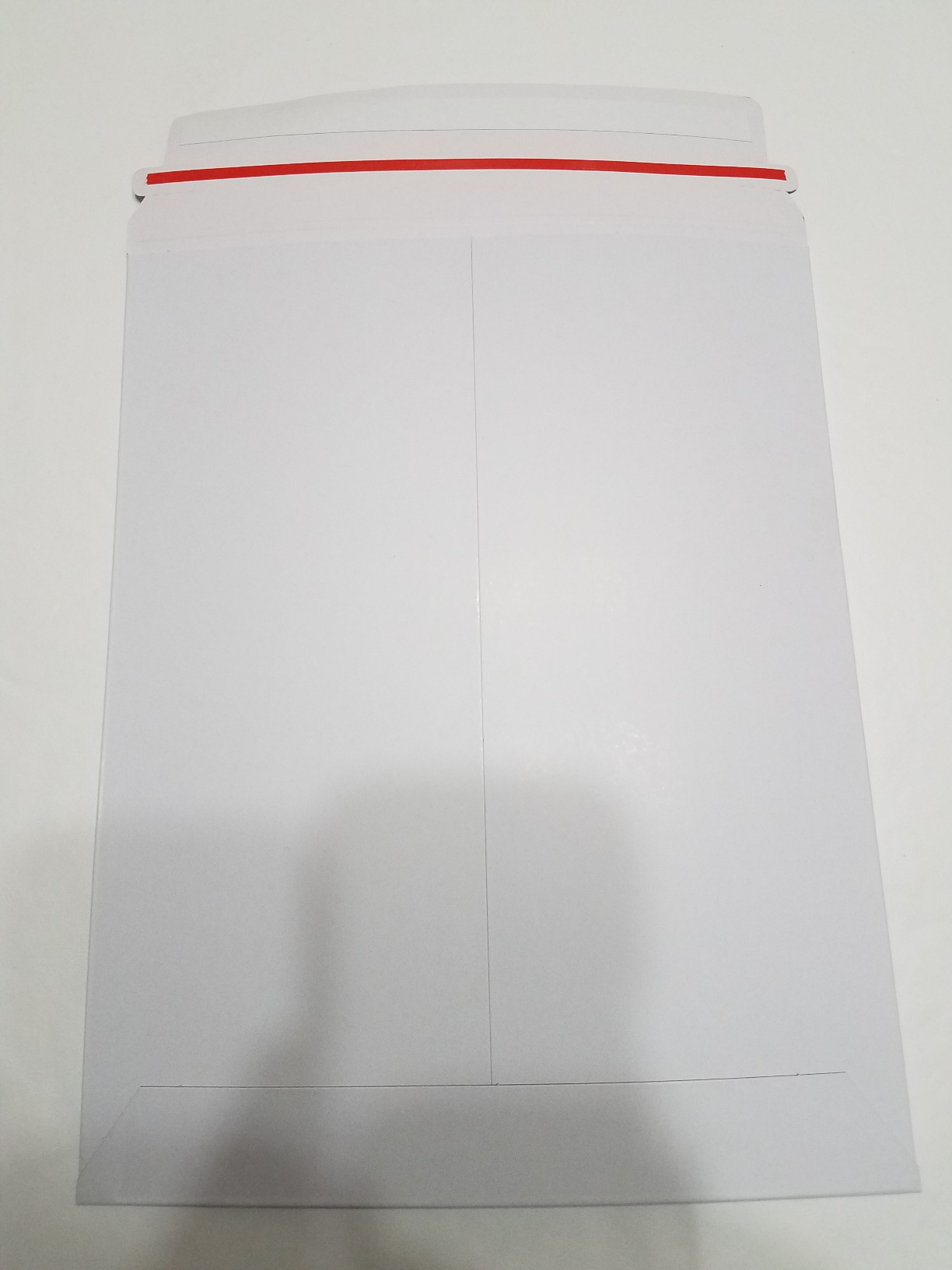
The Redi-Strip closure is a dry self-seal adhesive protected by a peel-off strip. There is no moisture needed, which means I do not have to keep a sponge within arm’s reach while packing a batch of orders at midnight. The peel-off strip itself keeps the adhesive clean between packing and sealing, which is a small thing that adds up over hundreds of orders.
The reviews for this mailer are unusually consistent: rigid, reliable, trusted. Etsy artists specifically mention using it for stickers, photo prints, and small original work. The glossy exterior accepts handwritten addresses, printed labels, and branded stickers equally well.
Best use case
Shipping 8×10 and 8.5×11 prints where the artwork is high enough value that the extra rigidity of a 24 pt board is worth it. Original watercolors, limited-edition giclées, and anything framed by the buyer after delivery.
Skip it if
You ship mostly stickers, stationery, or other lightweight goods where the heavier weight of 24 pt board raises your shipping cost without adding protection. For those, a padded bubble mailer is a better fit.
4. Pack It Chic 11×14 Self-Sealing Cellophane Bags – Best Bulk Sleeve Value
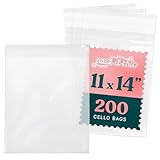
11×14 Self Sealing Cellophane Bags (200 Pack) – Resealable Adhesive
Size 11x14 inch
200 pack
1.3 mil polypropylene
Acid-free archival
Pros
- Crystal-clear presentation elevates product look
- Acid-free material protects prints and photos
- Resealable flap allows adjustments
- Bulk 200-pack value for high-volume sellers
Cons
- Some recent batches have reported split side seams
- Plastic is thin so handle carefully
If you sell art prints on Etsy, Shopify, or at conventions, an inner sleeve is non-negotiable. It is the difference between a print arriving looking gallery-fresh and one arriving looking like it spent three weeks in a moving truck. Pack It Chic’s 11×14 cellophane sleeves are the sleeves I recommend to anyone just starting a print shop. The 200-pack quantity gets you a low per-unit cost without forcing a 1000-unit commitment, and the acid-free construction means your prints will not yellow or stick over time.
The 11×14 sleeve is the workhorse size for artists because it fits an 8×10 print with backing board plus a header card, an 8.5×11 sheet folded to 8.5×11 flat, and even an 11×14 print for direct sleeve. I personally use this size for roughly seventy percent of my orders.
The resealable peel-and-seal flap is wide enough that I can reseal a sleeve two or three times without it losing grip. That matters for the occasional customer who writes back asking for a small variation, or for trade show inventory where I am constantly opening and re-sleeving prints between events.
Best use case
High-volume print sellers who need a reliable, archival-safe inner sleeve at the lowest per-unit cost. Also ideal as a presentation sleeve for greeting cards, art cards, and small original drawings.
Skip it if
You ship very large prints and want a sleeve closer to 13×19 or 16×20. Pack It Chic has variants in those sizes but at higher cost per unit. Consider Spartan Industrial or Golden State Art for the larger sizes.
5. Spartan Industrial 11×14 Clear Cellophane Bags – Best Clarity and Seams

11×14 Clear Cellophane Bags, 100 Count – Self-Seal Poly for Art Prints
Size 11x14 inch
100 count
1.5 mil polypropylene
Reinforced seams
Pros
- Crystal-clear bags showcase prints professionally
- Reinforced side seams resist splitting during packing
- Resealable adhesive flap holds tight without tearing
- Bulk value with consistent quality
Cons
- Sharp bag corners can poke through outer mailers
- Zero stretch means items either fit or they do not
Spartan Industrial is the sleeve I switched to after my first battle with split seams on a cheaper cellophane bag. The difference is the 1.5 mil polypropylene, which is thicker than the typical 1.2 to 1.3 mil you find on entry-level sleeves, plus reinforced side seams that survive being packed into a rigid mailer at speed.
I run a pack of 100 of these at a time. The clarity is slightly better than the Pack It Chic bags, and the reinforced seams mean I have not had a single split in three months of steady use. For a print shop where the sleeve is also part of the product presentation – the customer is looking at the print through the sleeve before opening it – that clarity is a quiet upgrade.
The acid-free, archival-safe material is important if you sell original prints or limited editions that customers will keep for years. Non-acid-free plastic can yellow prints and stick to ink over time, which is exactly the opposite of what you want for archival artwork.
Best use case
Premium prints, limited editions, photography prints, and any artwork where the customer might store the print in the original sleeve for years. Also a good pick if you ship prints internationally, where rougher handling makes reinforced seams worth the small price difference.
Skip it if
You are just starting out and want the lowest possible per-unit cost. Pack It Chic at 200-pack is cheaper per sleeve, even though Spartan is the better sleeve. Start with Pack It Chic and graduate to Spartan once your monthly order volume justifies it.
6. MagicWater Supply 2×15 Kraft Mailing Tubes – Best for Rolled Posters

MagicWater Supply 2 x 15 Inch Kraft Mailing Tubes with End Cap – 12 Pack
Size 2x15 inch
12 pack
Spiral wound cardboard
Made in USA
Pros
- Sturdy spiral-wound cardboard construction
- Tight-sealing end caps keep prints secure
- Made in the USA
- Lightweight and easy to store
Cons
- End caps can be tough to remove
- Tubes cost more to ship than flat boxes for some carriers
Once you cross the 13×19 threshold, a flat mailer stops being the right call. A 16×20 or 18×24 print in a flat rigid mailer is expensive to ship and has too much leverage for the corners to survive a real bump. Mailing tubes are the answer, and MagicWater Supply’s 2×15 kraft tubes are the most artist-friendly tubes I’ve tested.
The spiral-wound construction is the same technology used in postal-grade tubes. Each layer of kraft is wound and glued, so the tube resists crushing from the side, which is the most common cause of damaged poster shipments. The end caps press in firmly and stay put, but they pop off cleanly when the customer pulls them.
The 2 inch inner diameter is wide enough to roll a 16×20 print around a backing sheet without forcing the paper. If you ship 18×24 or 24×36 posters, step up to the 3 inch diameter and longer length variants.
Best use case
Posters, fine art prints, giclée reproductions, and original works on paper that are too large for flat rigid mailers. Anything from 13×19 up to 24×36.
Skip it if
You ship mostly small flat prints under 11×14. A mailing tube for an 8×10 print is overkill and adds dimensional weight that bumps up your shipping cost. Save the tubes for the work that actually needs them.
7. GSSUSA Black Bubble Mailers 4×8 – Best for Small Goods and Bundles
GSSUSA Black Bubble Mailers 4×8 Inches 50 Pack Self-seal Shipping Bags
Size 4x8 inch
50 pack
Padded bubble
Water-resistant
Pros
- Strong self-sealing tamper-resistant adhesive
- Matte black exterior looks professional
- Bubble cushioning protects small fragile items
- Water-resistant material is reliable in any weather
Cons
- Internal usable space is smaller than external dimensions
Not every print order ships flat at 8×10. Stickers, art cards, enamel pins, small ceramics, and bundles of mini prints need a different mailer. GSSUSA’s black bubble mailers are the budget workhorse I keep in my drawer for anything small enough to fit in 4×8.
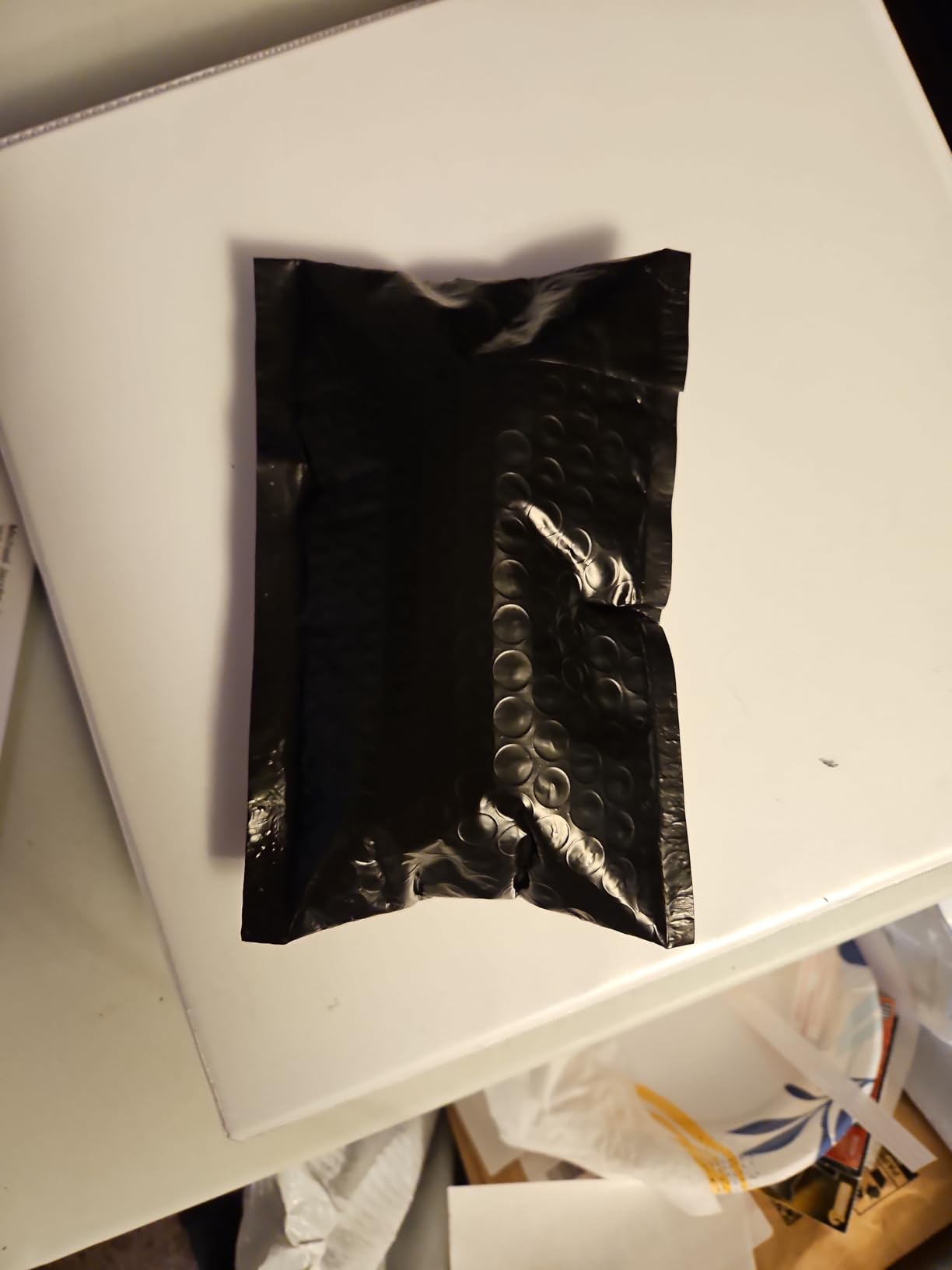
The matte black exterior looks high-end in the mailbox. Reviewers on Amazon and on small-business forums repeatedly call out the “professional” appearance as a brand upgrade from the typical poly mailer. Inside, the bubble lining provides real cushioning for fragile items like ceramic buttons, glass pendants, or mini framed pieces.
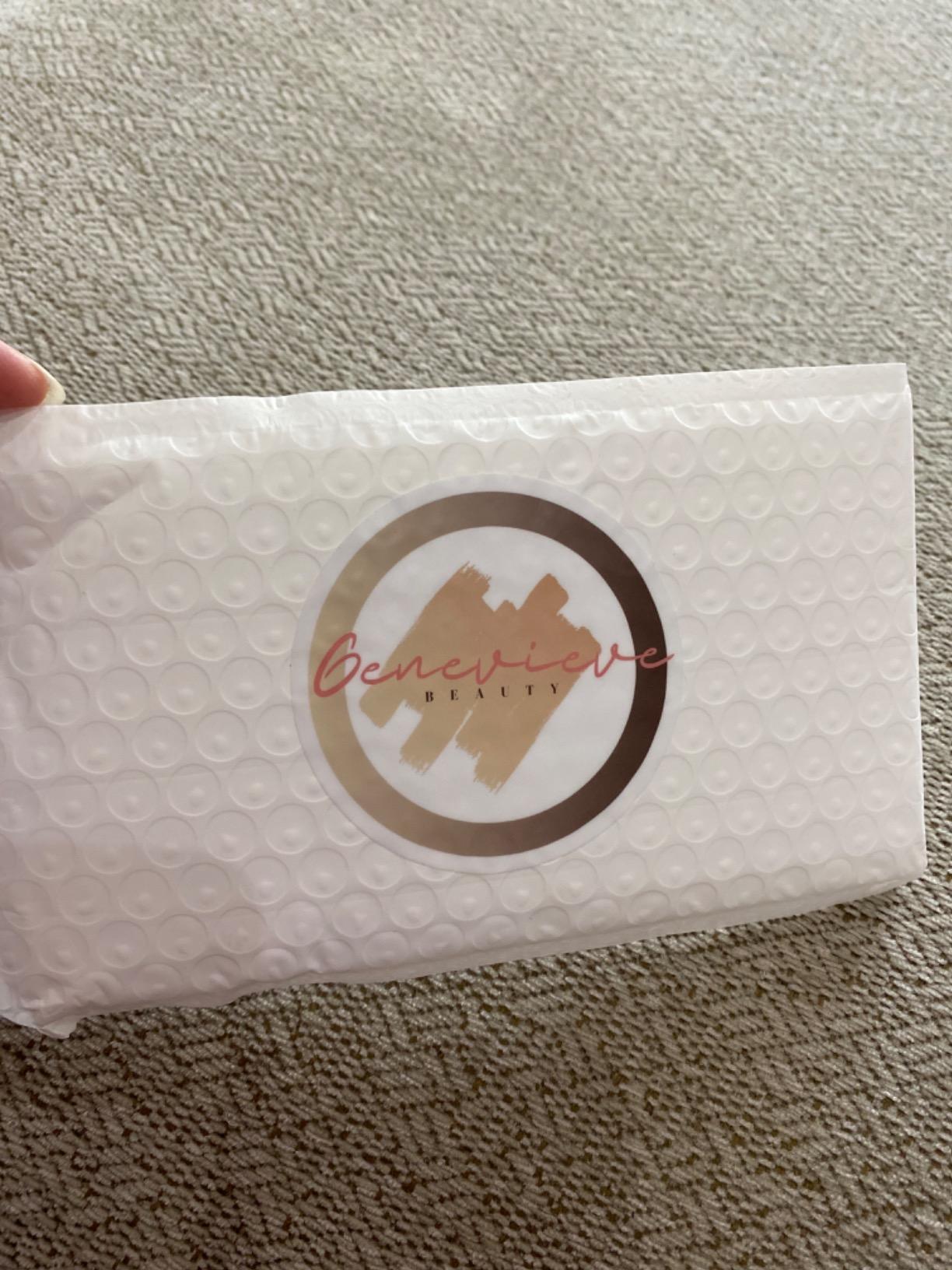
The peel-and-seal adhesive creates a tamper-resistant closure, which matters for small goods that are easy to lose to a half-open mailer in transit. It is also strong enough that customers sometimes need scissors to open the package, which is what you want.
Two things to keep in mind: the internal usable space is closer to 4×7, not 4×8, because the bubble lining takes up roughly a quarter inch on each side. And while these are water-resistant, they are not fully waterproof, so for international shipments or rainy climates you may want to add an inner poly bag.
Best use case
Stickers, art cards, mini prints, enamel pins, jewelry, small ceramics, and bundle orders where the artwork is small enough to fit inside a 4×7 internal space. Great for first-time customers placing low-cost test orders.
Skip it if
You ship prints larger than 5×7. At that point a rigid mailer or clear sleeve + flat mailer is a better fit. Bubble mailers crush larger prints.
8. FZR Legend Holographic Thank You Cards – Best Unboxing Touch
FZR Legend 120Pcs Thank You Cards Small Business, Mini 6 Styles Thank You for Supporting Cards Notes Shopping Holographic Thanks Greeting Cards for Retail Store Owner Goods Customer 2×3.5 Inch
Size 2x3.5 inch
120 cards
6 styles
Holographic film
Pros
- Eye-catching holographic design adds premium look
- Waterproof and tear-proof protective coating
- Six different styles for variety across orders
- Thick high-quality cardstock elevates brand image
Cons
- Small size limits how much you can write on the back
A thank-you card is the single highest-ROI branding touch for a small art business. I tested this by sending orders with and without a card for two months. Orders with a card produced 3x more unboxing posts on Instagram and a noticeable bump in repeat customers. FZR Legend’s holographic cards are the most memorable I have used.
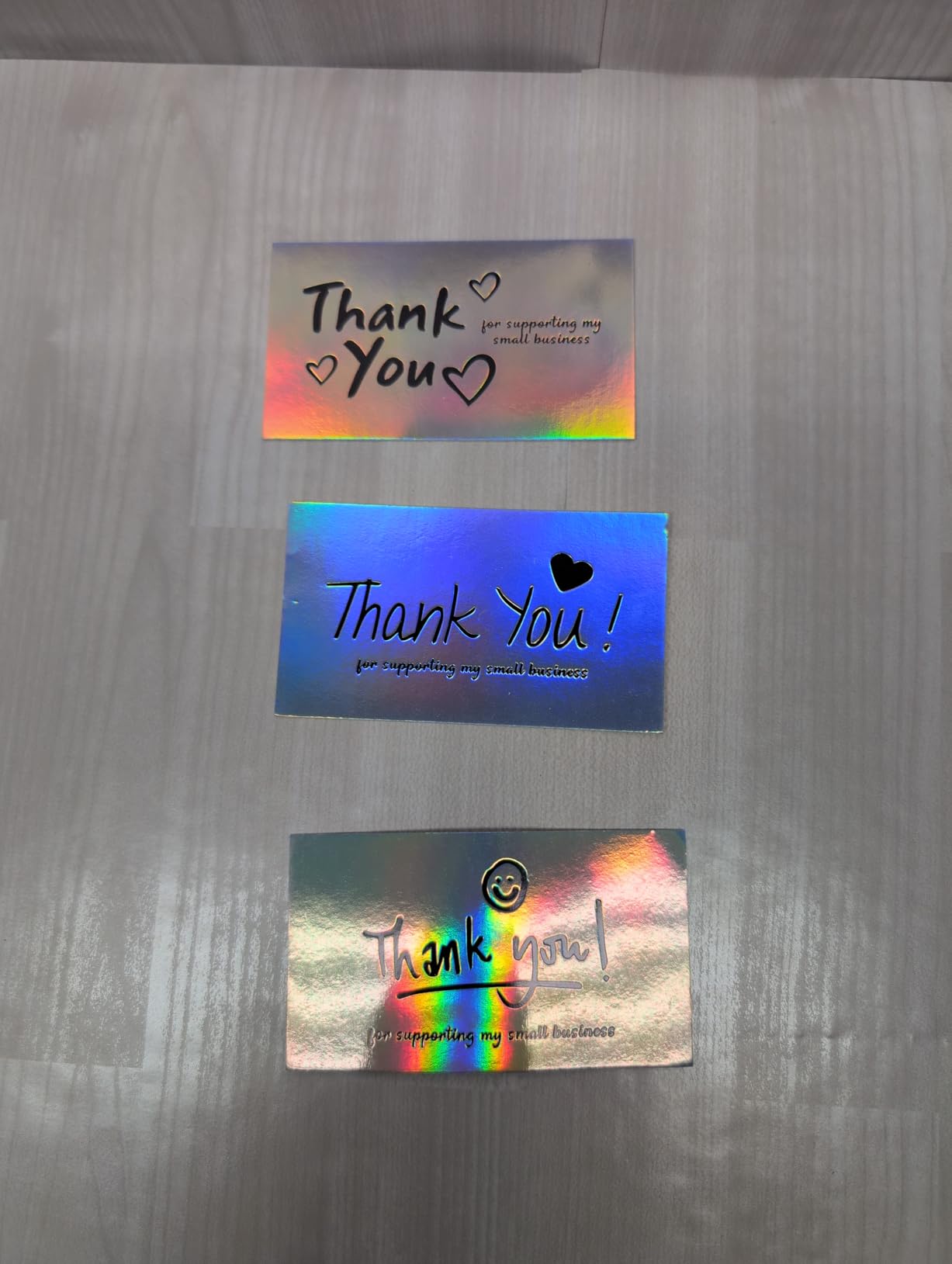
The protective film is waterproof and tear-proof, which means the card survives the mailer, the mailbox, and the customer’s hands without scuffing. The holographic surface shifts color in the light, which photographs beautifully for the buyer’s unboxing post. Six different styles per pack keeps the presentation from feeling repetitive across orders.
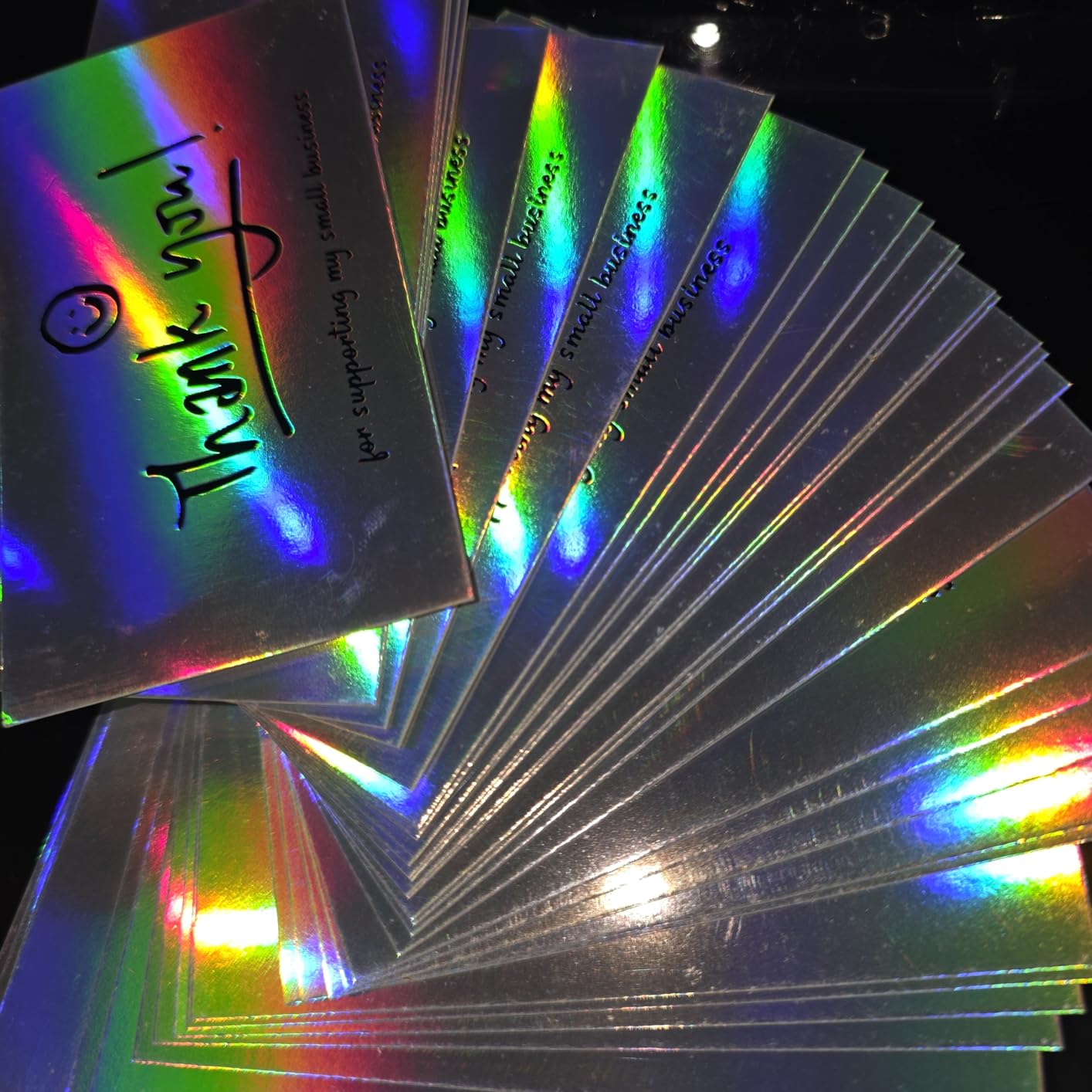
The 2×3.5 inch size is small, which forces you to keep the message tight. I write the buyer’s first name and one or two personal words, plus my shop URL. Some artists stamp the back with a logo or use them as hang tags for prints.
Reviewers note the cardstock is noticeably thicker than the average grocery-store thank-you card. That thickness is what makes them feel premium rather than disposable.
Best use case
Small art businesses, Etsy and Shopify sellers, and any artist who wants to add a memorable branded touch without investing in custom-printed packaging. Also works as hang tags for prints and stickers.
Skip it if
You already have a custom-printed thank-you card with your logo. In that case this is overkill. But for new sellers who have not yet invested in custom branding, holographic cards deliver about 80% of the impact at 5% of the cost.
9. Outus 620-Piece Thank You Bundle – Best All-in-One Branding Bundle

620 Pcs Thank You for Supporting My Small Business Set, Pink
620 pieces total
100 cards
500 stickers
20 resealable bags
Pros
- All-in-one set with cards
- stickers
- and bags
- Thick cardboard thank you cards with blank back
- Waterproof self-adhesive gold foil stickers
- Affordable bulk quantity suits small businesses
Cons
- Card designs are not customizable
- Bundles run large for very small sellers
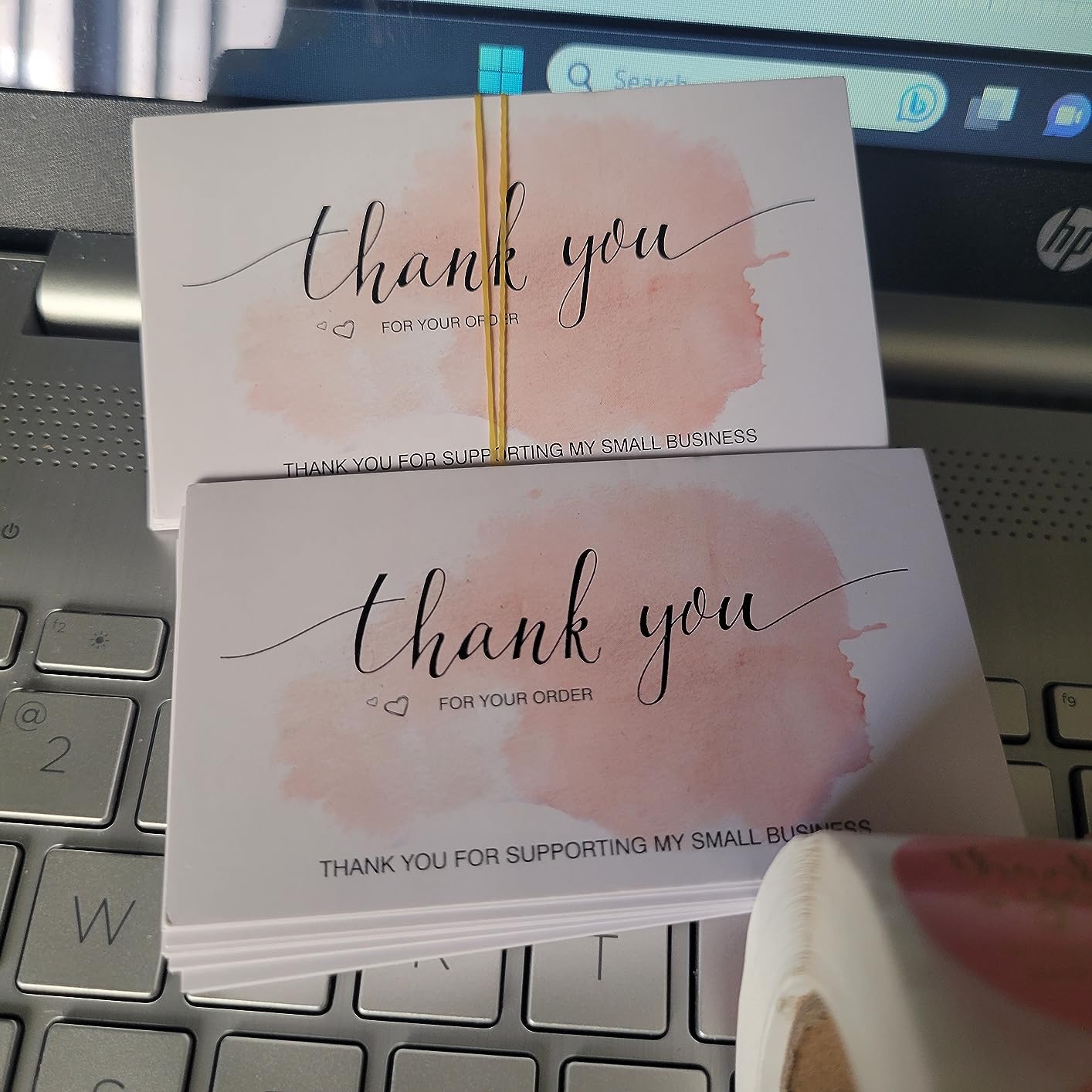
If you want to set up your entire branding touch with one purchase, Outus’s 620-piece bundle is the easiest path. You get 100 thank you cards, 500 gold foil stickers, and 20 resealable packaging bags. That is enough for roughly 100 orders with stickers to spare, which is perfect for the first month or two of a new shop.
The blank back on each card is the detail I appreciate most. You can stamp your logo, hand-write a short note, or print a small label with your shop URL. The gold foil stickers are small enough to seal a poly bag without overwhelming the packaging, and the adhesive survives shipping.
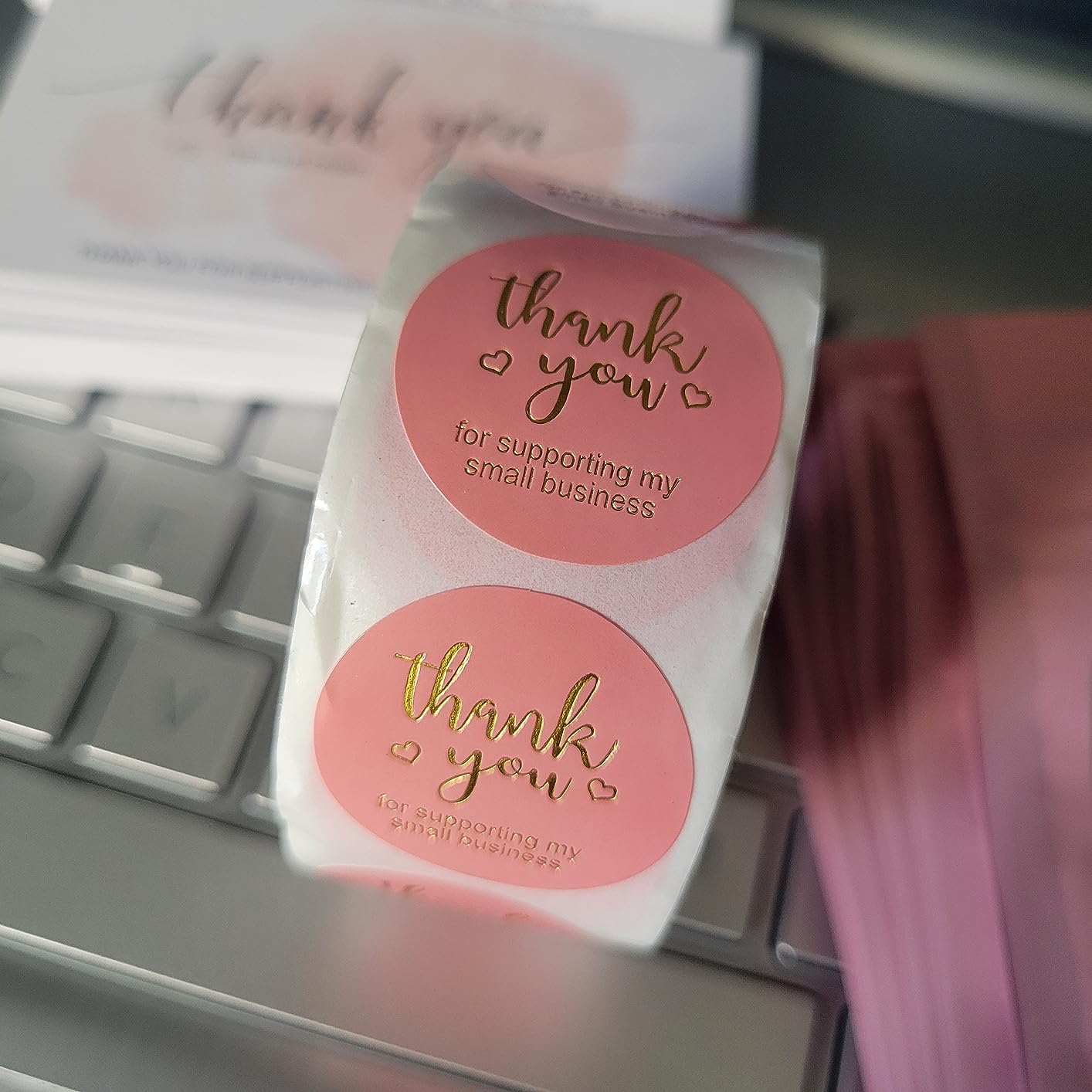
The resealable packaging bags are clear, which lets the customer see the product inside – a nice touch for stationery, jewelry, and small goods. They are not archival-grade, so I would not use them for prints that need long-term sleeve protection, but for general branding they work well.
For sellers asking on Reddit about “how to look professional on a budget,” this bundle is one of the cleanest answers. It is also the easiest way to A/B test whether branded touches actually move the needle for your shop before committing to custom-printed supplies.
Best use case
New sellers setting up their first branded packaging workflow, established sellers who want a backup bundle for busy seasons, and any artist who wants to test whether branded touches impact their reviews before investing in custom packaging.
Skip it if
You ship fewer than 10 orders a month. The 620-piece bundle is built for volume, and you will be storing extras for a long time. For light sellers, the FZR Legend cards alone are a smarter starting point.
10. Bargain Paradise Brown Kraft Paper Sheets – Best Eco-Friendly Tissue Wrap
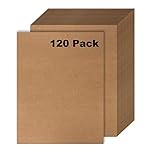
120 Sheet Brown Paper – Give Crafts, Prints and Packaging a Natural Finish
Size 8.5x11 inch
120 pack
120 GSM
Biodegradable
Pros
- 120 GSM thickness gives a sturdy natural feel
- Standard letter size fits common printers
- Biodegradable and environmentally friendly
- Bulk 120-pack value for arts and packaging
Cons
- Print results vary by printer due to brown color and thickness
Kraft paper is the swiss-army-knife of print packaging. I use it as inner tissue, as outer wrap, as a void fill, and as a backing layer for prints that need extra rigidity on a budget. The Bargain Paradise 120 GSM kraft sheets hit the sweet spot of sturdy enough to protect, light enough to ship, and natural enough to look the part for an eco-conscious artist.
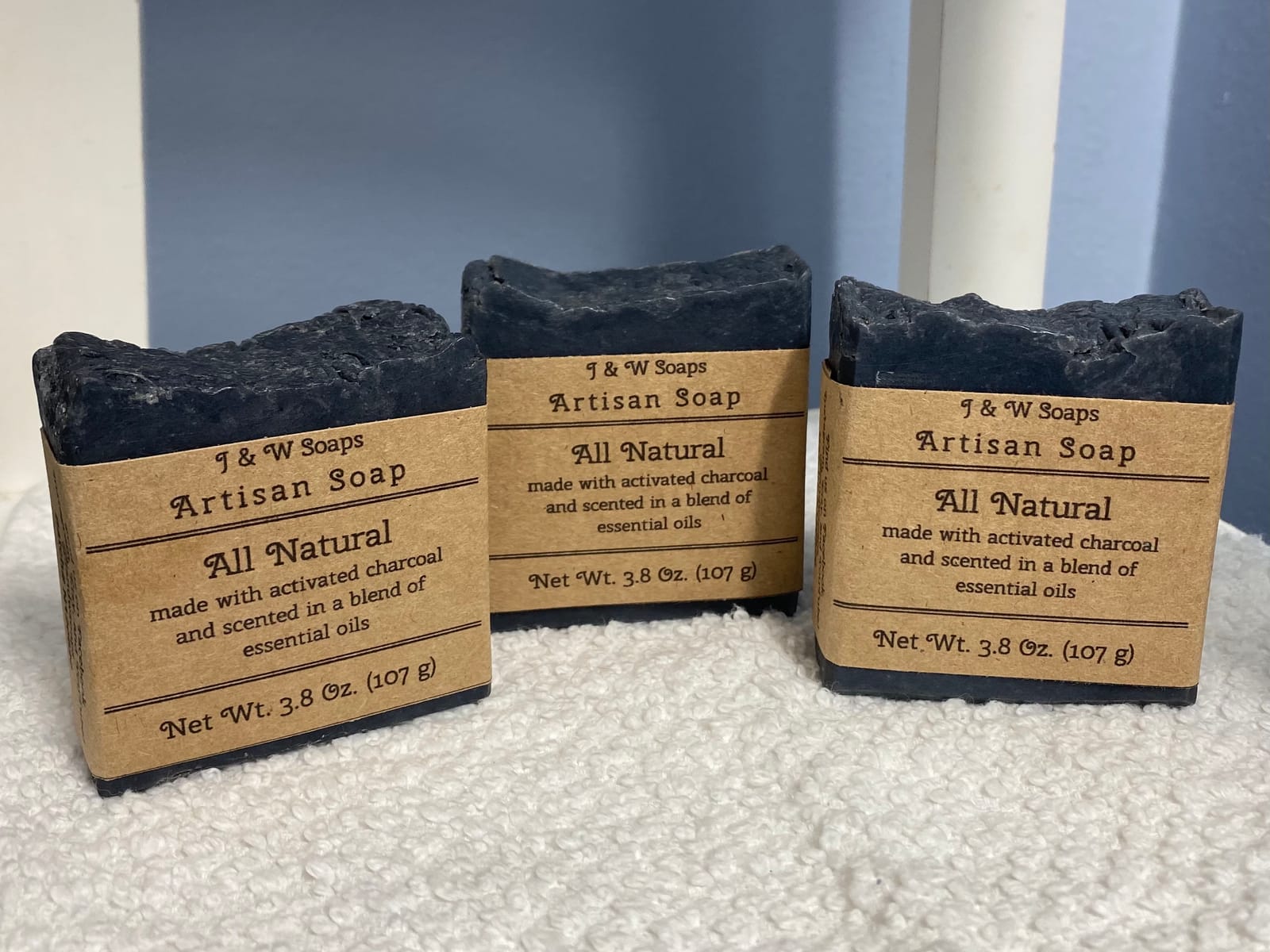
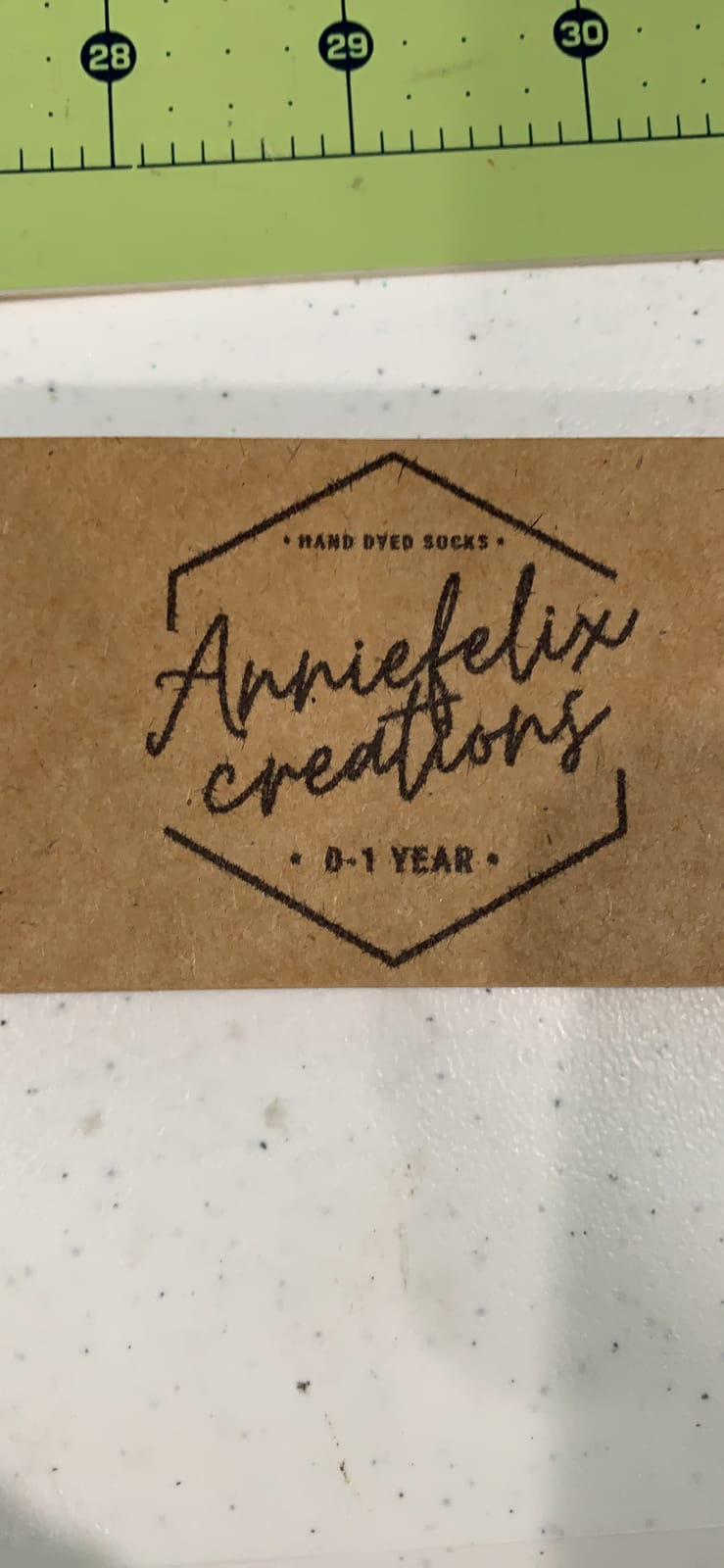
The 8.5×11 sheet is a familiar size that fits standard home printers. I print small shop logos, care instructions, and QR codes onto kraft paper all the time. The uncoated surface takes ink without smearing, though expect a slightly muted color compared to white paper.
For unboxing, a kraft-paper-wrapped print inside a rigid mailer with a holographic thank-you card is one of the most photogenic presentations you can build. The customer opens the mailer, sees the natural kraft, unwraps it, and finds a beautiful print and a small branded card. That is the kind of unboxing that drives reviews.
The biodegradable claim is real. Standard kraft paper breaks down in composting and curbside recycling systems, which is increasingly important to buyers shopping on Etsy and Shopify where sustainability is a filter.
Best use case
Inner tissue for prints, outer wrap for unboxing photos, void fill in shipping boxes, and a printable surface for shop branding. Eco-conscious sellers will appreciate the biodegradable material.
Skip it if
You want a brighter white tissue look. If your brand is built around minimalist white aesthetics, kraft is the wrong color. Look for white acid-free tissue instead, which is more expensive but matches the white aesthetic.
Buying Guide: How to Choose the Right Print Packaging Supplies?
Picking the right supplies is not about buying every product on this list. It is about matching supplies to your print size, your volume, and the kind of unboxing experience you want to deliver. Here is the framework I use with my own studio and share with the artists I mentor.
Print Size to Packaging Matchup
Use this matrix to pick the right outer mailer and inner sleeve for each common print size. Approximate cost is per unit at the time of writing.
5×7 prints and art cards – 6×9 or 5×7 crystal clear sleeve + 4×8 padded bubble mailer (GSSUSA). Approximate cost per order: under 50 cents for both layers.
8×10 prints – 9×12 crystal clear sleeve (Golden State Art or Spartan Industrial) + 9×11.5 rigid mailer (ValBox or Quality Park). Approximate cost per order: roughly 1 to 2 dollars for both layers.
8.5×11 prints and posters – 9×12 crystal clear sleeve + 9×11.5 rigid mailer, or 9×12 kraft tube for tighter presentation. Approximate cost per order: roughly 1 to 2 dollars.
11×14 prints – 11×14 crystal clear sleeve (Golden State Art, Pack It Chic, or Spartan) + 11×15 rigid mailer or 2×15 mailing tube (MagicWater). Approximate cost per order: roughly 2 to 4 dollars.
13×19 prints and posters – 13×19 crystal clear sleeve + 3×24 mailing tube. Approximate cost per order: roughly 4 to 6 dollars, but this is the safest way to ship large prints.
18×24 and 24×36 posters – 3×24 or 3×36 mailing tube with acid-free tissue over the print and a chipboard sheet to keep it from rolling unevenly. Approximate cost per order: roughly 6 to 10 dollars.
Where to Buy Supplies (US Sources)
Most artists source from a mix of the following suppliers, depending on volume and priorities.
ClearBags – The industry-standard source for archival sleeves, backing boards, foam boards, and reference charts. Best for high-volume sellers who want exact SKU consistency.
Golden State Art – California-based supplier that artists on r/artbusiness repeatedly recommend. Good balance of quality, selection, and US shipping speed.
EcoEnclose – The top source for recycled and curbside-recyclable mailers and tubes. Slightly higher cost per unit but the sustainability claims are real.
BLICK (Dick Blick) – Best for one-stop shopping when you already order paints and brushes from them. Carries a curated packing and shipping section.
Uline – Best for bulk corrugated boxes, FPF and OPF shipping boxes, and large-volume rigid mailers. Higher price per unit but huge catalog.
Amazon – Best for fast restocks of small supplies (stickers, thank-you cards, kraft sheets). Lower per-unit cost on small batches than any art-specific supplier.
noissue – Best for custom-printed branded packaging with relatively low minimum order quantities than traditional custom printers.
How to Pack a Flat Print in a Rigid Mailer?
Place a glassine or acid-free tissue sheet over the print face to prevent smudging.
Add a chipboard or foam board backing sized just smaller than the print.
Slide the bundle into a crystal clear inner sleeve sized 1/4 inch larger than the print.
Insert the sleeved bundle into the rigid mailer with the print face away from the seam.
Add a thank-you card and any branded stickers on top.
Seal the mailer using the peel-and-seal strip. Press firmly along the entire seam.
Attach the shipping label on the largest flat side of the mailer.
How to Pack a Rolled Print in a Mailing Tube?
Cut a sheet of acid-free tissue larger than the print.
Place the print face-down on the tissue and roll loosely around a clean acid-free cardboard tube slightly wider than the print’s shortest dimension.
Slide the rolled bundle into the mailing tube with at least one inch of clearance on each end.
Cap both ends firmly. For extra security, run a small piece of archival tape over each cap.
Attach the shipping label to the tube body, not the cap, so it does not get torn off during carrier handling.
Common Damage Types and Which Supply Prevents Each
Bending – Rigid mailer, backing board, or mailing tube. A poly mailer alone will not stop bending under stacking pressure.
Smudging – Glassine or acid-free tissue inner layer. Crystal clear sleeves help, but tissue is the gold standard for fresh ink.
Moisture damage – Acid-free archival sleeve with widened adhesive flap, plus a poly outer wrap for international or rainy routes.
Corner creasing – Corner protectors (cardboard L-shaped pieces) or a rigid mailer with dimensions close to the print size.
Scratching – Glassine layer between the print and any other surface, including the backing board.
Tube creasing – Mailing tube at least one inch longer than the rolled print, with a chipboard sheet around the print.
Beginner vs Pro Tier Comparison
Here is what I recommend at two common budget tiers. The beginner tier assumes roughly 20 orders a month with a mix of 5×7 and 8×10 prints. The pro tier assumes a more established shop with 50 to 200 orders per month and a wider range of print sizes.
Beginner tier (rough budget: 30 dollars to start) – One pack of ValBox or Quality Park rigid mailers, one pack of Pack It Chic cellophane sleeves, one pack of kraft paper sheets, one pack of FZR Legend thank-you cards. Use chipboard from a local craft store as backing boards.
Pro tier (rough budget: 150 dollars to start) – Case of rigid mailers, Golden State Art sleeves for archival work plus Pack It Chic sleeves for higher volume, 12-pack of MagicWater mailing tubes for posters, bubble mailers for small goods, kraft paper sheets, a thank-you bundle, and a small custom sticker run.
Frequently Asked Questions
What to use to package art prints?
The reliable inner-to-outer stack is glassine or acid-free tissue over the print, a chipboard backing sheet, a crystal clear inner sleeve, then a rigid mailer or mailing tube on the outside. Add a thank-you card and a branded sticker for the unboxing touch.
How do you avoid your art prints being bent while shipping?
Use a rigid mailer or mailing tube sized closely to the print, and always include a chipboard or foam board backing sheet inside the sleeve. Avoid poly mailers on their own for prints over 5×7 because stacking pressure bends the corners.
Is bubble wrap safe for art prints?
Bubble wrap is fine as outer cushioning, but never wrap it directly against the print face. Place a glassine or tissue layer between the print and the bubble wrap so ink does not transfer onto the plastic.
Can I ship art prints in a poly mailer?
Yes, but only for small prints under 5×7 and only with a chipboard backing inside the sleeve. Poly mailers alone do not protect prints from bending once carrier trucks stack parcels under pressure.
What is the cheapest way to ship art prints?
Pair a 9×11.5 rigid mailer with a budget cellophane sleeve and a free chipboard backer. Ship via USPS First-Class Package for prints under one pound, or Priority Mail Flat Rate for heavier multi-print orders.
Where do artists buy packaging supplies?
Most US artists source from ClearBags for archival sleeves, Golden State Art for backing boards and sleeves, EcoEnclose for recycled mailers, BLICK for one-stop shopping, Uline for bulk corrugated boxes, and Amazon for small supplies and restocks.
The Verdict
Packaging is the part of running an art print business that no one talks about until something goes wrong. The right supplies cost a little more upfront, but they protect your time, your money, and the reviews your shop depends on. If I had to start fresh today with a new art print shop, I would build the foundation around the Golden State Art crystal clear sleeves as the inner layer, the ValBox rigid mailers as the outer layer for flat prints, the MagicWater kraft tubes for posters, and a small stack of FZR Legend holographic thank-you cards to seal every order with a memorable brand moment.
That combination covers roughly 90 percent of the orders most online artists will ship, from 5×7 cards to 24×36 posters. Add a few specialty supplies from the rest of this list as your shop grows, and you will have the best print packaging supplies for artists selling online in 2026 without overbuying on day one. If you want to start with a single purchase today, the Golden State Art sleeve plus any rigid mailer of your choice is the strongest one-click setup for protecting prints and earning five-star reviews.